





.avif)

| Duration | 7 days (classic north circuit) |
| Starting point | Arusha / Kilimanjaro International Airport (JRO) |
| Parks covered | Tarangire, Serengeti, Ngorongoro, Lake Manyara |
| Best dry season | June to October |
| Best for migration crossings | July to October (north/Mara River) |
| Visa | eTA available online before travel |
| Currency | USD cash recommended for tips and park extras |
If you are wondering what to see in Tanzania in 7 days, here is the practical guide that we use in Trio Travelto optimize every hour. In a week you can link Tarangire, Serengeti, Ngorongoro and Manyarawithout haste, with many options of fauna and diverse landscapes. In addition, we offer you real variants of safari 3 days Tanzania, safari 4 days Tanzaniaand safari 5 days Tanzaniafor those who have less time, and clear answers to how many days to go to Tanzaniaaccording to your profile.
Quick map of the “classic north”
The classic circuit departs from Arusha and combines four iconic areas:
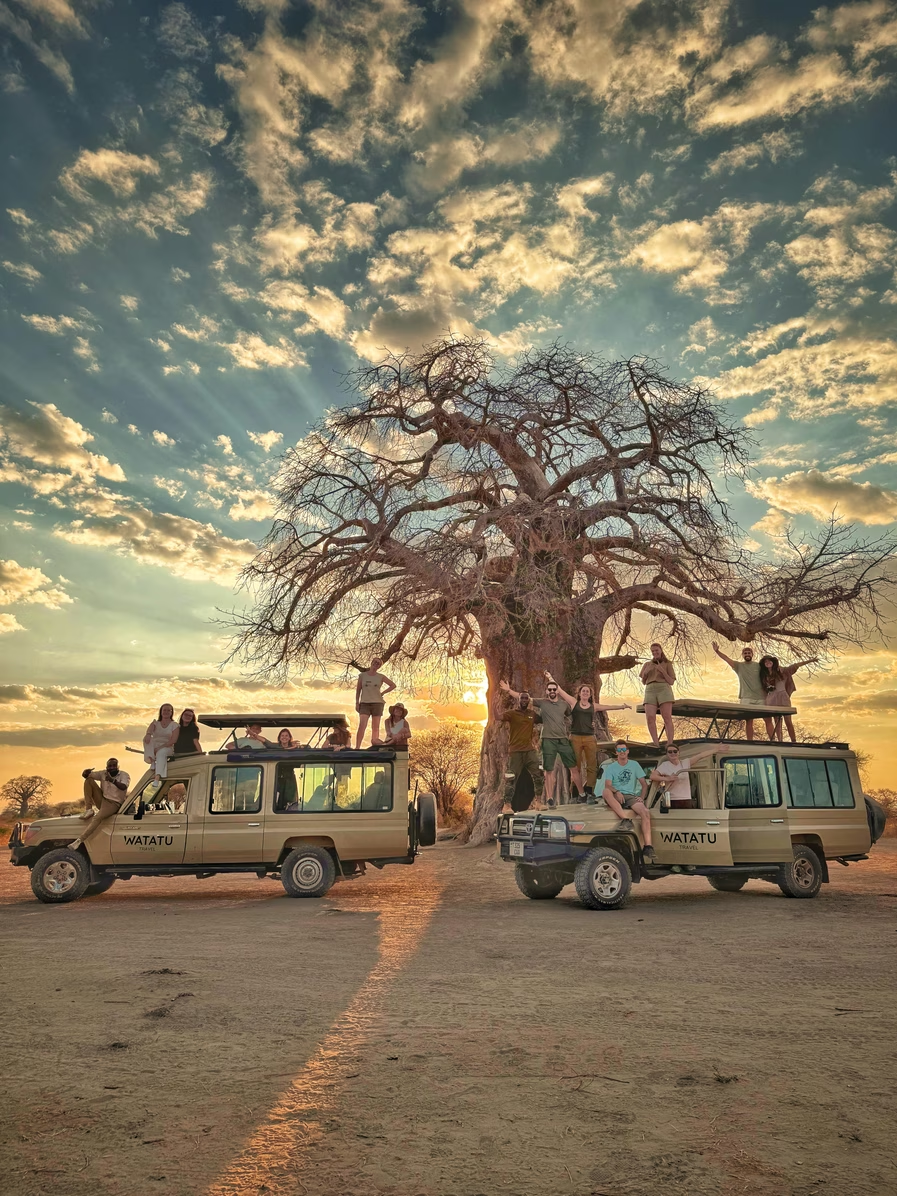
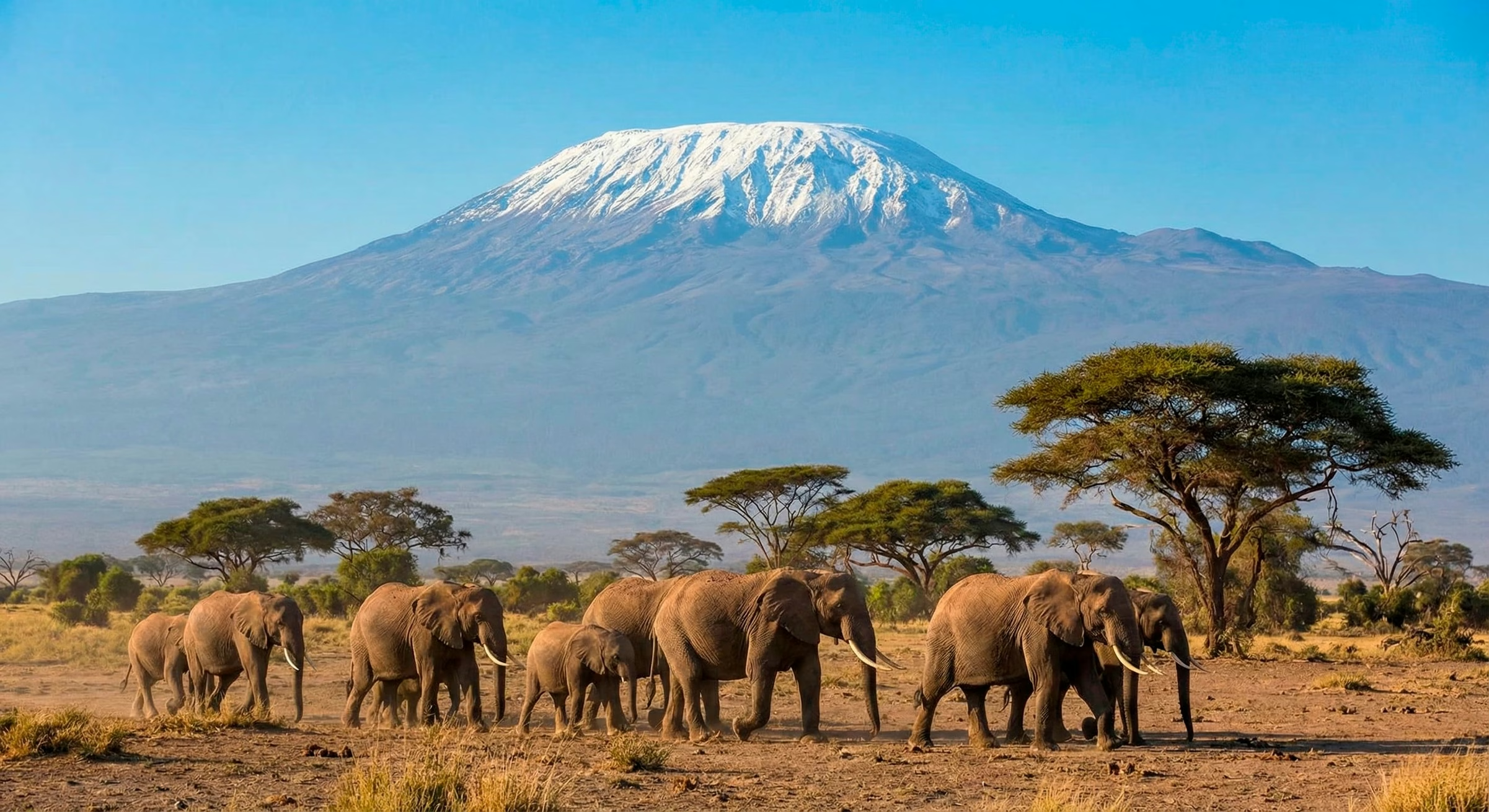
- Tarangire National Park- famous for baobabs and large herds of elephants. Useful reference to calculate transfers: ~120 km southwest of Arusha.
- Lake Manyara National Park: at the base of the Rift, known for Lions Climbing Treesand the underground forest of permanent waters.
- Parka Neteweyî ya Serengeti: UNESCO heritage, home of the Great Migrationand huge concentrations of fauna.
- Ngorongoro Conservation Area: volcanic crater with a unique density of fauna and Strict access times.
Recommended order (dry season):Tarangire → Serengeti → Ngorongoro → Manyara → return to Arusha. In the wet season, reversing the passage through Manyara can square better.
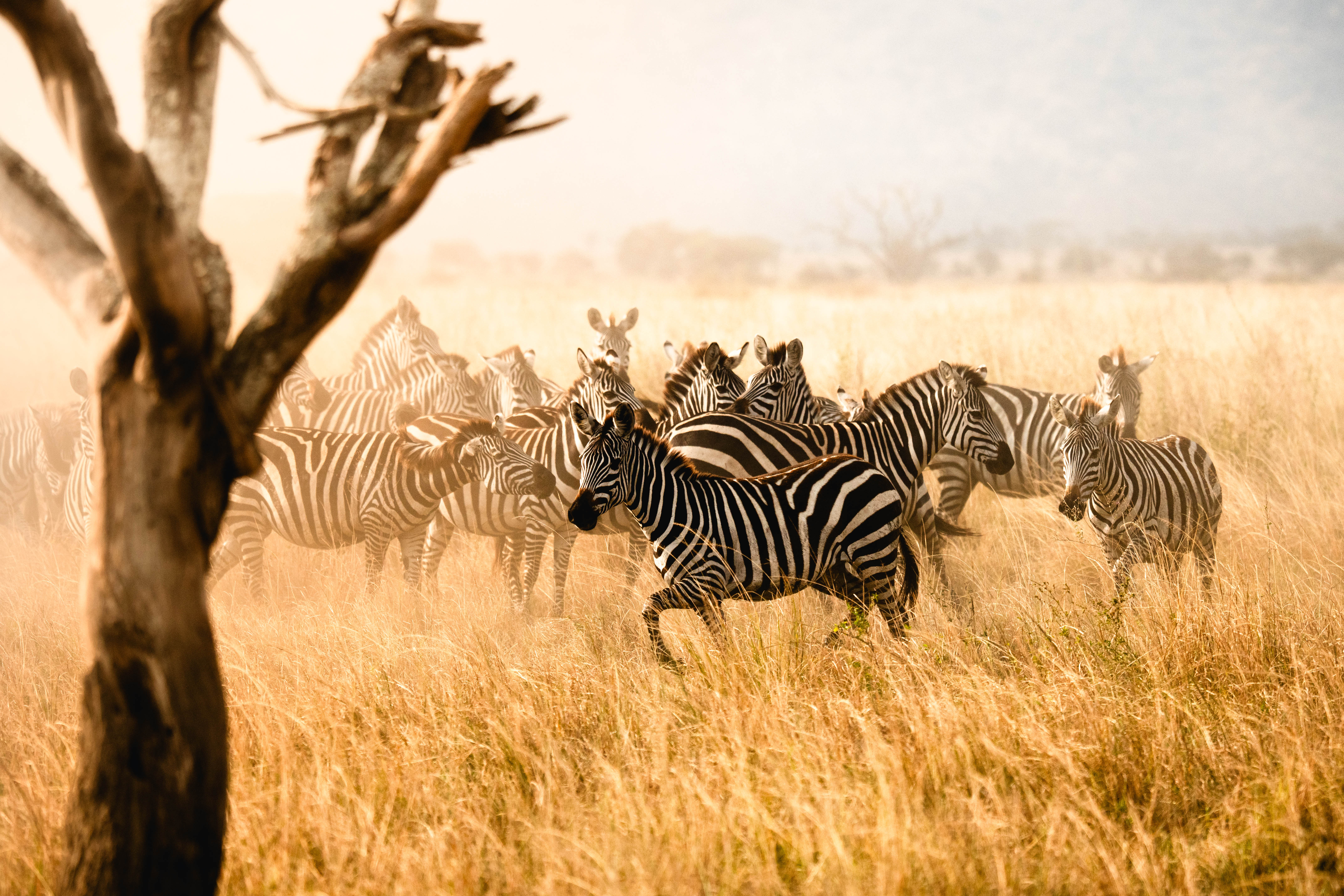
Detailed itinerary: 7 days in Tanzania (day by day)
Objective: maximize sightings, minimize long transfers on consecutive days and leave room for surprises (yes, there are).
Day 1, Arrival in JRO/Arusha
Reception and briefingwith your Watatu Travel guide. Currency exchange, purchase of local SIM, last overhaul of the equipment. Suggestion: Have dinner early and rest to start strong.
Day 2, Tarangire: baobabs and elephants
Morning and game driveto Tarangire. In the dry season, the river concentrates life: elephants, buffaloes, giraffes, zebras and predators lurking. Pro tip: first and last hour of the day for active felines; at noon, focus on birds (more than 500 species). After the safari, transfer to the area of Reado Mosquito Riverto sleep closer to Ngorongoro. (Reference distance: Arusha, Tarangire ~120 km).
Day 3, Head to the Serengeti (Naabi Hill) + first safari
Departure to Serengetiby Neighbouring Hill Gate. The transfer is part of the journey: landscapes change, they appear copiesand, inside the park, the picnic can be under an acacia tree while you watch herds of nyus. Driving up to Seronera (Central Serengeti)round 6 - 7 hfrom Arusha according to conditions and stops; that is why we prefer to leave from Readby shorten time.
Day 4, Full Serengeti: Predators and Plains
A whole day in the heart of the Serengeti. If you're looking for action, first hour and last light are gold. Optional: Balloons at dawn(activity with supplement). Where to put the focus?
- Seronera- lions, leopards in acacias, large herbivores.
- West (May, June): possible crossings of the Grumets.
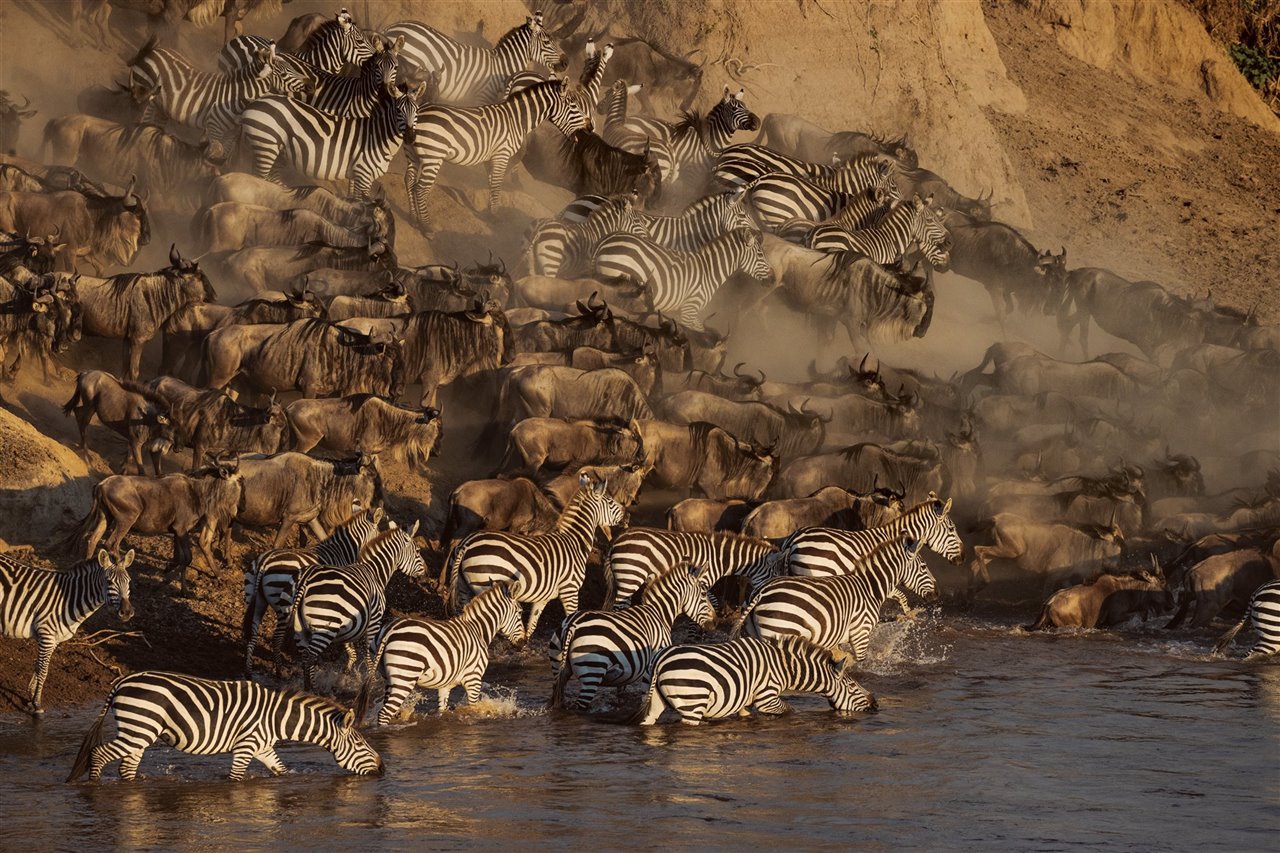
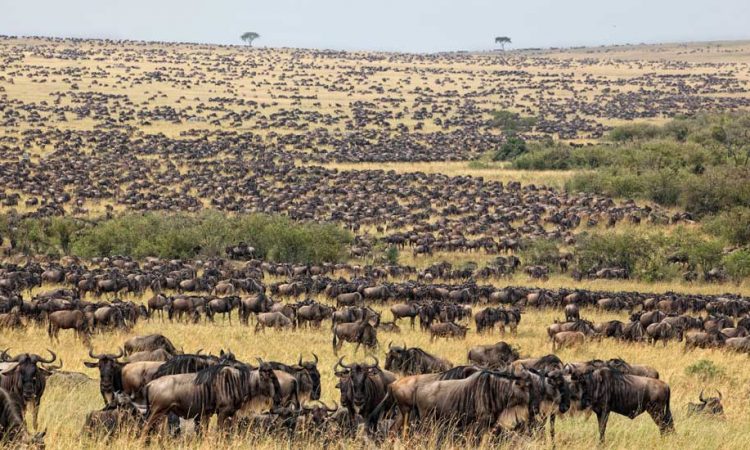
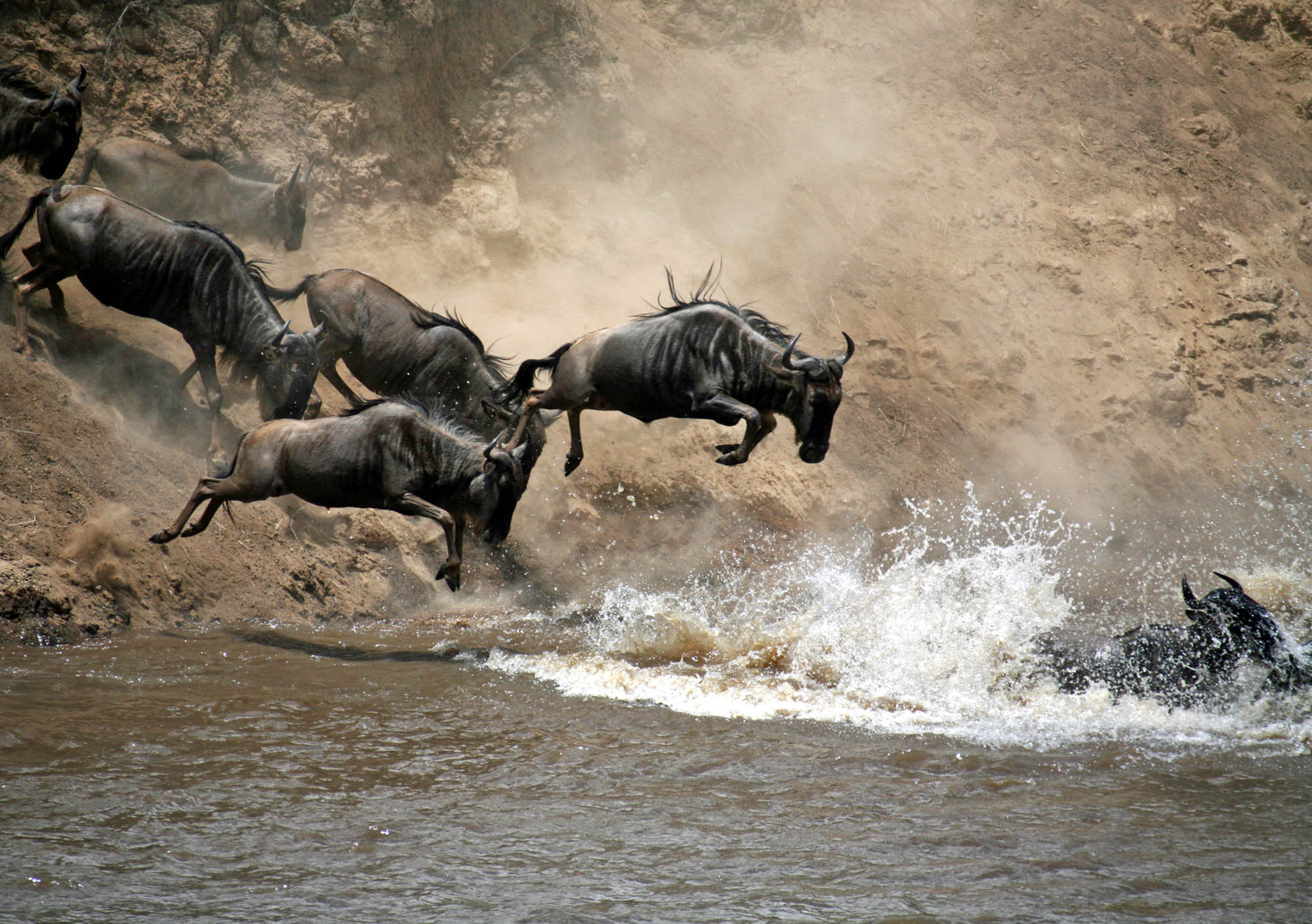
- North (July, October): river Maraand iconic crossings.
The optimal location depends on the month and the Great Migration; below you have an indicative mini-calendar.
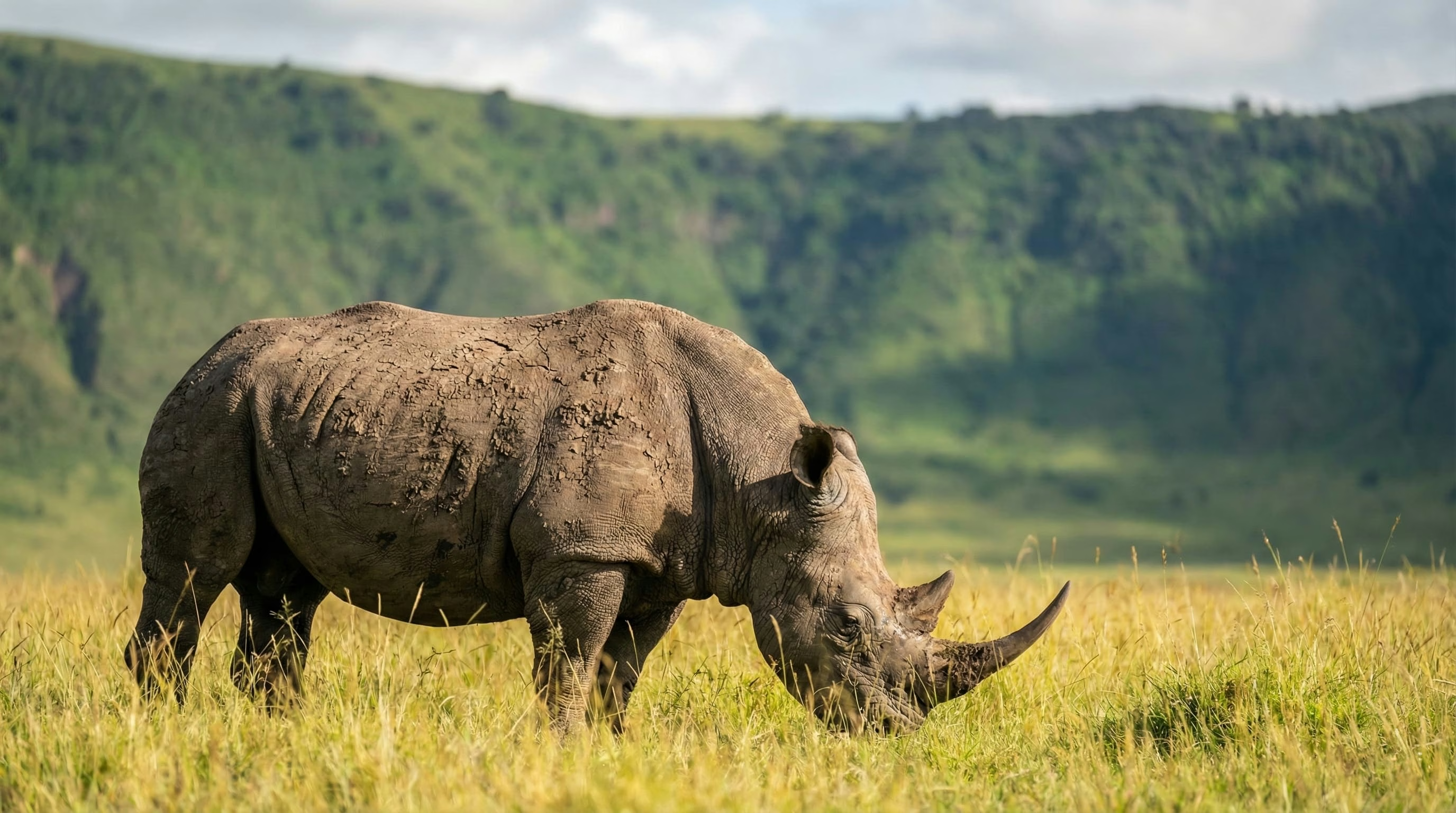
Day 5, Ngorongoro Crater: Big Five in a natural amphitheater
Early departure to Crater Rim, descent and safari day inside the crater. The NCAA brand opening 06:00, 18:00for the area and access to the crater 06:00, 16:00(plan the descent within this window). It is an environment with strict rules that help its conservation.
Day 6, Manyara
- Manyara: ideal for contrasting habitats (forest, lake, hot springs) and possible lions that climb trees.
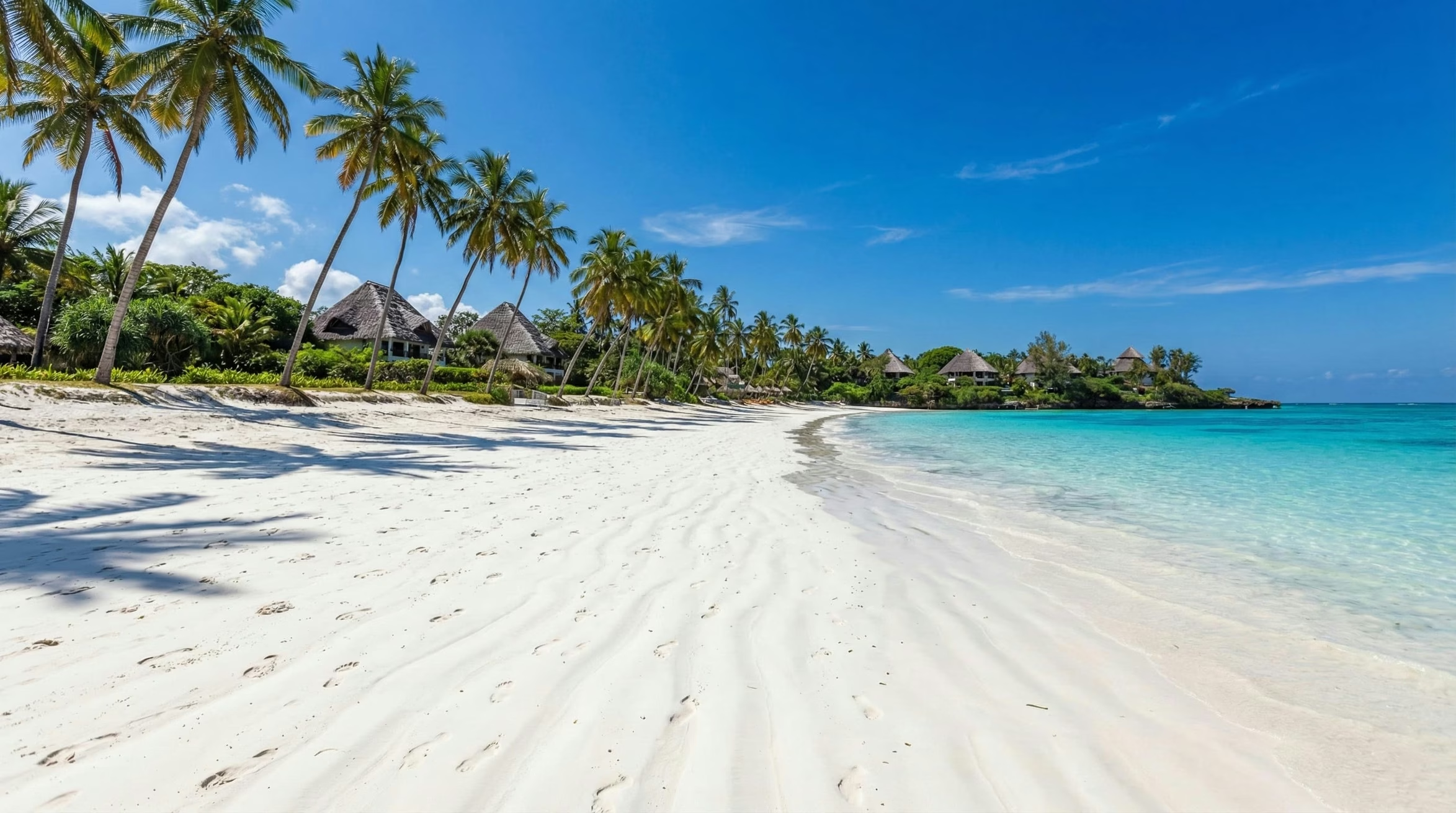
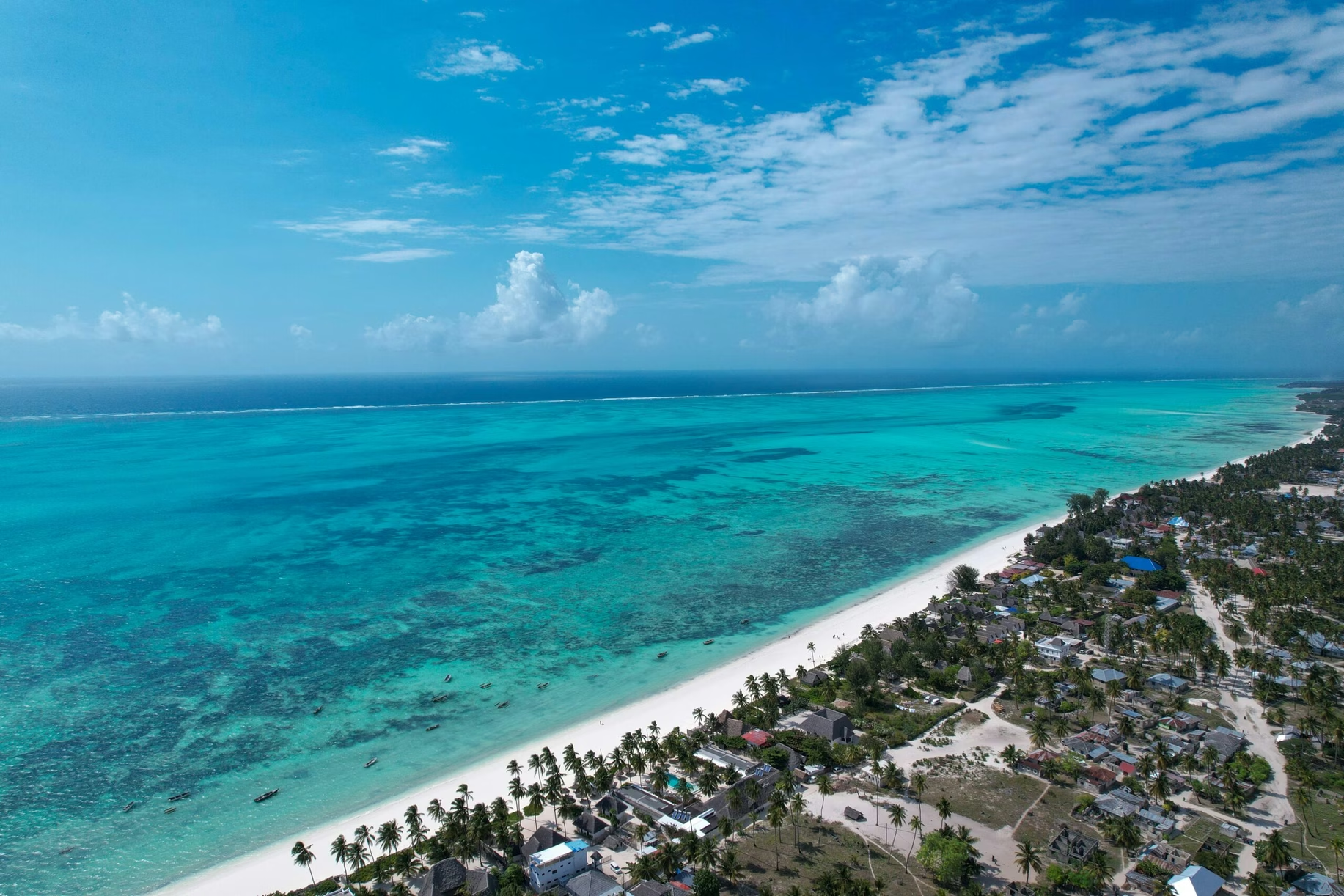
Day 7, Departure or extension to Zanzibar
Transfer to JRO/ARC. If you have room, add 3 to 4 nights of beach to close the trip in slow mode.
How many days to go to Tanzania?
Honest answer: the sweet spot is 7, 10 daysfor the first time with the classic north. In 5 daysyou can already make a powerful circuit (below you have an example) and, if you are very fair, a 3 or 4 day safariworks like a “taster” with a high probability of seeing the essentials. Key factors:
- Temporality of the Great Migration: if you are looking for river crossings, prioritize July, October(north); for calving(delar), January, February(Sud/Ndutu).
- Transfers: between Arusha and the gates of the Serengeti calculates 5.5, 6 happrox. according to route and stops; that is why we recommend sleeping strategically at Readand dins/stuck in the parkwhenever possible.
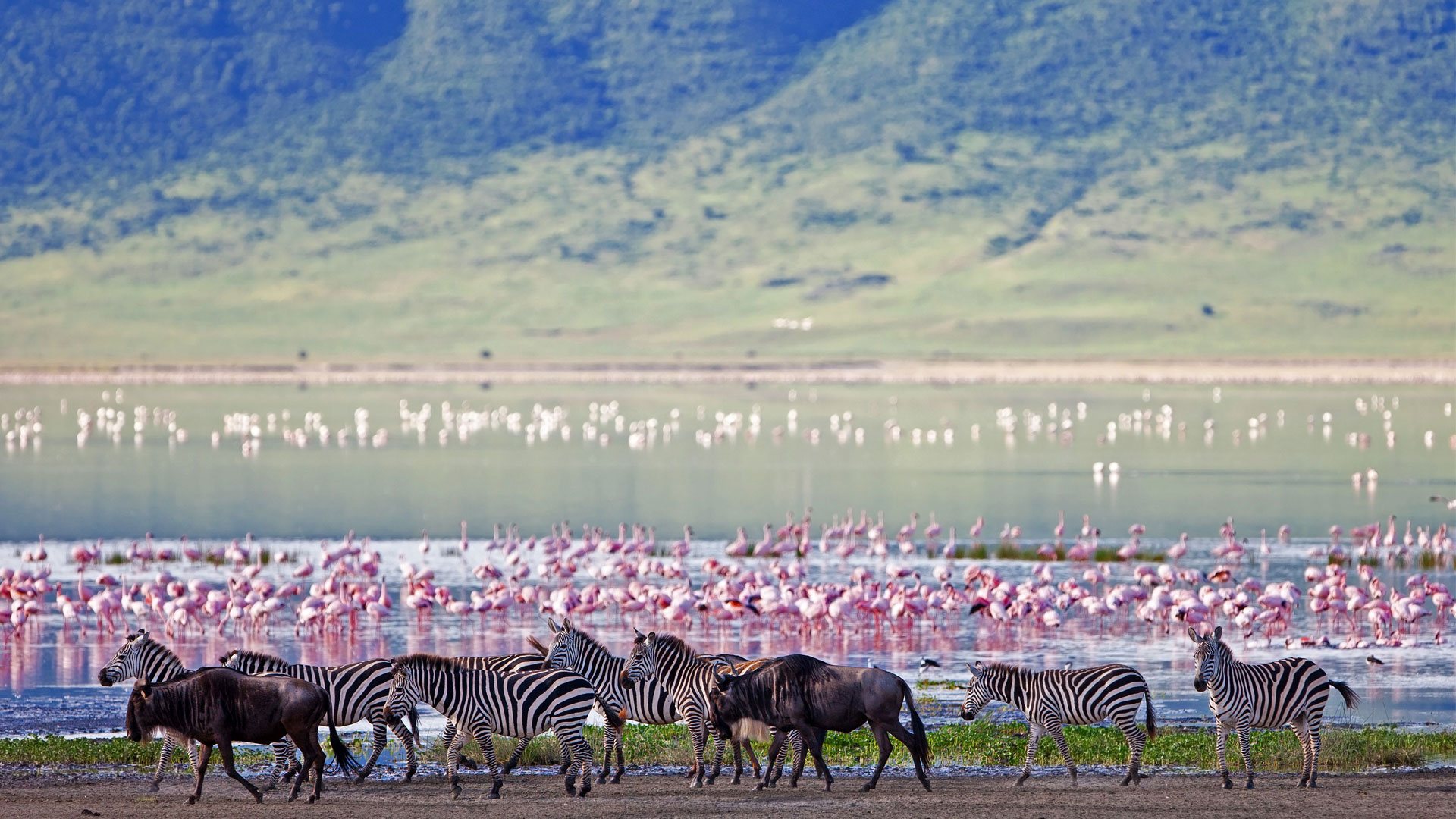
Express alternatives: 3/4/5 days safari in Tanzania
Safari 3 days Tanzania, “Elephants + Crater”
- Day 1: Tarangire (morning and noon) → night in Read.
- Day 2: Ngorongoroearly (descent within the schedule) → free afternoon in Karatu.
- Day 3: Manyarahalf day → return to Arusha.
For whom: very fair time travelers who want “a lot in little”. Pros: variety and good ratio of sightings. Cons: without Serengeti.
Safari 4 days Tanzania, “Short Classic”
Option A (Tarangire + Serengeti)
- Day 1: Tarangire → Reading.
- Day 2: Transfer to Serengeti (Neighbor)+ game drive.
- Day 3: Complete Serengeti.
- Day 4: Departure from Serengeti to Arusha (or internal flight).
For whom- dreams of Serengeti even if he touches squeeze.
Option B (Manyara + Ngorongoro + Tarangire)
- Day 1: Manyara → Reading.
- Day 2: Ngorongoro Crater.
- Day 3: Tarangire.
- Day 4: Return.
For whom- wants to minimize long transfers without losing variety.
Safari 5 days Tanzania, “Mini-classic”
- Day 1: Tarangire → Reading.
- Day 2: Serengeti(input by Naabi) + game drive.
- Day 3: Full Serengeti (adjust zone according to month/migration).
- Day 4: Ngorongoro(descent soon).
- Day 5: Manyarao cultural → Arusha.
For whom: 5 days in Tanzaniawith focus on top fauna and reasonable pace.
Ready to plan your Tanzania safari?
Our 7-day classic north itinerary is available as a fully tailored trip. Check our most popular Tanzania route and request your personalised quote. 6 days, from 2.095 € per person. Tanzania - Classic Safari
Indicative costs and fees (clear summary)
- Budget per person/day (private group)
- Economical: from ~220, 300 USD(basic/external campsites, shared vehicle in some sections).
- Medium: ~350-500 USD(lodges 3, 4*, comfortable tented camps).
- Bottom: ~550-900 USD(tented camps/lodges 4, 5*, premium locations).
They often include 4x4 with guide, accommodation, full board and park tickets; ranges vary by season and level.
- Economical: from ~220, 300 USD(basic/external campsites, shared vehicle in some sections).
- Park Taxes: TANAPAand theNCAAactualize tariffsand rulesperiodically; there is conservation feesper person/day and, in Ngorongoro, rate of descent to the crater by vehicle. We confirm current amounts in the budget and pay them through official channels.
Essential Logistics
- Best time
- Dry (Jun, Oct): firmer slopes, low vegetation, crossings of the Marain the north of the Serengeti; TarangireThere is an abundance of wildlife around the river.
- Green (Nov, May): spectacular landscapes, less dust and calvingfrom nyus to the south (January, Feb).
- Dry (Jun, Oct): firmer slopes, low vegetation, crossings of the Marain the north of the Serengeti; TarangireThere is an abundance of wildlife around the river.
- Rules within the park
- Staying on track; respecting distances; not feeding animals; a Ngorongoro, comply access windows.
- Staying on track; respecting distances; not feeding animals; a Ngorongoro, comply access windows.
- Visa/Insurance
- Visas eTAand travel insurance recommended; we advise you on the process when booking (requirements according to nationality).
- Visas eTAand travel insurance recommended; we advise you on the process when booking (requirements according to nationality).
- Connection and payments
- Irregular coverage outside the lodges. Bring cash (USD) in good condition for tips and extras; electronic payments available in many accommodations.
- Irregular coverage outside the lodges. Bring cash (USD) in good condition for tips and extras; electronic payments available in many accommodations.
- Transport
- 4x4 with lifting roof, refrigerator and 12V sockets. Domestic flightsuseful for Shorten transfers(e.g. Serengeti → Arusha).
- 4x4 with lifting roof, refrigerator and 12V sockets. Domestic flightsuseful for Shorten transfers(e.g. Serengeti → Arusha).
Where to sleep (camp vs. lodge)
- Inside the park: you maximize wildlife time (you leave earlier, come back later). Ideal for Serengetiif you are looking for migration to the right area.
- Outside the park (Karatu/Mto wa Mbu): cost more content and easy logistics for Ngorongoroand Manyara.
- Recommended areas
- Seronera(center) for a balanced first contact in the Serengeti.
- Readto sleep near the door Toys(Ngorongoro).
- Mosquito Riverif you combine Manyara/Tarangire at the beginning or at the end.
- Seronera(center) for a balanced first contact in the Serengeti.
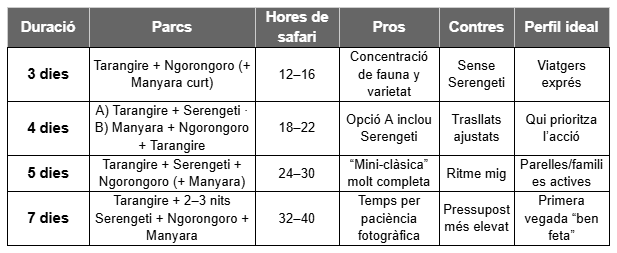
Comparative table: 3/4/5/7 days
Three Travel Tips: en 7 days in Tanzaniayour guide can “read” the weather and migration reports to move between areas and multiply sightings.
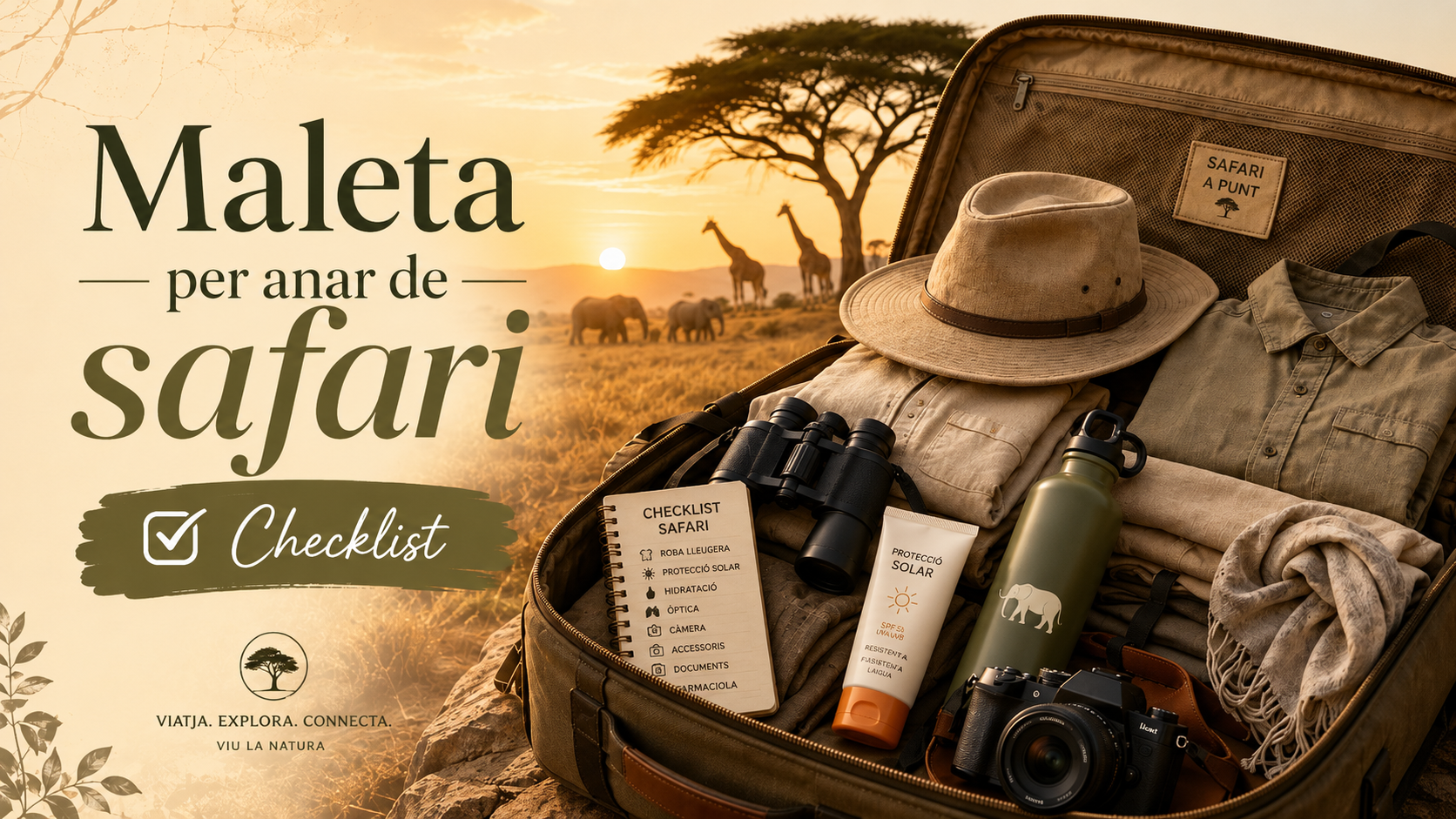
Checklist for your safari
- Documentation: valid passport, eTA visa (if applicable), insurance policy.
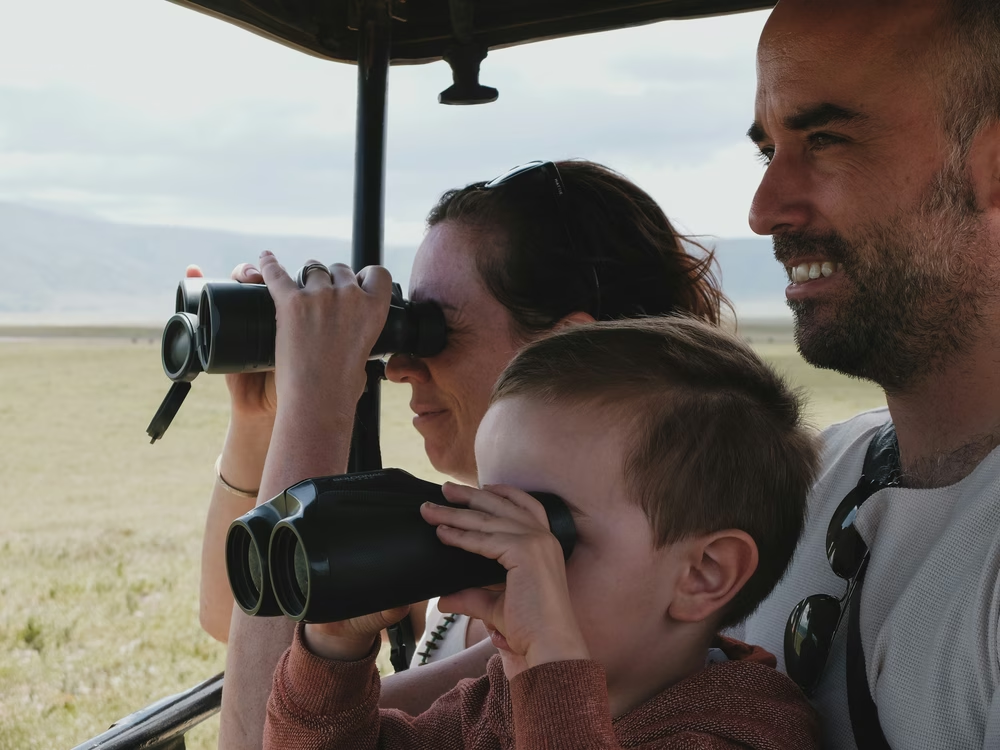
- Team: binoculars 8×32/10×42, 200, 400 mm telephoto lens (if you like the photo), power bank, D/G type adapter.
- Merchandise: by layers (cool morning, hot noon), neutral colors, light windbreaker, cap and bufffor dust.
- Hi: basic medicine chest, sunscreen, repellent, reusable bottle.
- Diners- cash in USD for tips (envelope), card for extras at the lodges.
Frequently Asked Questions (FAQ) - Frequently asked questions about a 7-day trip to Tanzania
Is it possible to see the Great Migration in 7 days?
Yes, with good choice of area according to month: January, February(Sud/Ndutu, parts), July, October(north/Mara River), April, June(west/Grumeti corridor). The phenomenon is natural, but locationCorrect raises the options a lot.
Which itinerary should I choose if I travel in March-May (rainy)?
Bet on Central or western Serengeti(depending on the progress of the herds) and maintains camp flexibility. We adapt every night according to migration reports.
Can you combine with Zanzibar in a week?
Yes: 4, 5 nights safari + 2, 3 beach nights with internal flight Serengeti/Arusha → Zanzibar. It is perfect for couples.
Better Manyara or Tarangire in dry season?
Tarangireshines when rivers concentrate fauna; Manyaraprovides contrast of habitats and the possibility (not guaranteed) of Lions Climbing Trees.
Is a self-guided safari viable in 7 days?
Technically possible, but not recommendedfor a first time: rules, tracks and logistics (e.g. access windows to Ngorongoro) take away useful time. With local guide maximizes sightings and safety.
How many days to go to Tanzania if I travel with young children?
5, 7 daysSafari tours work very well with gentle rhythms, alternating long and short days and our Tanzania family safari, 7 days, from 2.495 € per person.
Conclusion
Tanzania is the place where a minute changes your journey: a cheetah on a termite tree, an unexpected crossing of nyus or an elephant emerging among baobabs. With Trio TravelWe design your route tailored, dates, profile, budget, so that these minutes pass truthfully.
Do we see it together? Request a quote now or speak with an advisor.
Experience the Great Migration with expert guidance
Join one of our specialist Tanzania journeys, designed to put you in the right place at the right time. Places are limited each season. 9 days, from 3.350 € per person. Tanzania - Crossroads of the Great Migration
| Duration | 7 days (classic north circuit) |
| Starting point | Arusha / Kilimanjaro International Airport (JRO) |
| Parks covered | Tarangire, Serengeti, Ngorongoro, Lake Manyara |
| Best dry season | June to October |
| Best for migration crossings | July to October (north/Mara River) |
| Visa | eTA available online before travel |
| Currency | USD cash recommended for tips and park extras |
If you are wondering what to see in Tanzania in 7 days, here is the practical guide that we use in Trio Travelto optimize every hour. In a week you can link Tarangire, Serengeti, Ngorongoro and Manyarawithout haste, with many options of fauna and diverse landscapes. In addition, we offer you real variants of safari 3 days Tanzania, safari 4 days Tanzaniaand safari 5 days Tanzaniafor those who have less time, and clear answers to how many days to go to Tanzaniaaccording to your profile.
Quick map of the “classic north”
The classic circuit departs from Arusha and combines four iconic areas:
- Tarangire National Park- famous for baobabs and large herds of elephants. Useful reference to calculate transfers: ~120 km southwest of Arusha.
- Lake Manyara National Park: at the base of the Rift, known for Lions Climbing Treesand the underground forest of permanent waters.
- Parka Neteweyî ya Serengeti: UNESCO heritage, home of the Great Migrationand huge concentrations of fauna.
- Ngorongoro Conservation Area: volcanic crater with a unique density of fauna and Strict access times.
Recommended order (dry season):Tarangire → Serengeti → Ngorongoro → Manyara → return to Arusha. In the wet season, reversing the passage through Manyara can square better.
Detailed itinerary: 7 days in Tanzania (day by day)
Objective: maximize sightings, minimize long transfers on consecutive days and leave room for surprises (yes, there are).
Day 1, Arrival in JRO/Arusha
Reception and briefingwith your Watatu Travel guide. Currency exchange, purchase of local SIM, last overhaul of the equipment. Suggestion: Have dinner early and rest to start strong.
Day 2, Tarangire: baobabs and elephants
Morning and game driveto Tarangire. In the dry season, the river concentrates life: elephants, buffaloes, giraffes, zebras and predators lurking. Pro tip: first and last hour of the day for active felines; at noon, focus on birds (more than 500 species). After the safari, transfer to the area of Reado Mosquito Riverto sleep closer to Ngorongoro. (Reference distance: Arusha, Tarangire ~120 km).
Day 3, Head to the Serengeti (Naabi Hill) + first safari
Departure to Serengetiby Neighbouring Hill Gate. The transfer is part of the journey: landscapes change, they appear copiesand, inside the park, the picnic can be under an acacia tree while you watch herds of nyus. Driving up to Seronera (Central Serengeti)round 6 - 7 hfrom Arusha according to conditions and stops; that is why we prefer to leave from Readby shorten time.
Day 4, Full Serengeti: Predators and Plains
A whole day in the heart of the Serengeti. If you're looking for action, first hour and last light are gold. Optional: Balloons at dawn(activity with supplement). Where to put the focus?
- Seronera- lions, leopards in acacias, large herbivores.
- West (May, June): possible crossings of the Grumets.
- North (July, October): river Maraand iconic crossings.
The optimal location depends on the month and the Great Migration; below you have an indicative mini-calendar.
Day 5, Ngorongoro Crater: Big Five in a natural amphitheater
Early departure to Crater Rim, descent and safari day inside the crater. The NCAA brand opening 06:00, 18:00for the area and access to the crater 06:00, 16:00(plan the descent within this window). It is an environment with strict rules that help its conservation.
Day 6, Manyara
- Manyara: ideal for contrasting habitats (forest, lake, hot springs) and possible lions that climb trees.
Day 7, Departure or extension to Zanzibar
Transfer to JRO/ARC. If you have room, add 3 to 4 nights of beach to close the trip in slow mode.
How many days to go to Tanzania?
Honest answer: the sweet spot is 7, 10 daysfor the first time with the classic north. In 5 daysyou can already make a powerful circuit (below you have an example) and, if you are very fair, a 3 or 4 day safariworks like a “taster” with a high probability of seeing the essentials. Key factors:
- Temporality of the Great Migration: if you are looking for river crossings, prioritize July, October(north); for calving(delar), January, February(Sud/Ndutu).
- Transfers: between Arusha and the gates of the Serengeti calculates 5.5, 6 happrox. according to route and stops; that is why we recommend sleeping strategically at Readand dins/stuck in the parkwhenever possible.
Express alternatives: 3/4/5 days safari in Tanzania
Safari 3 days Tanzania, “Elephants + Crater”
- Day 1: Tarangire (morning and noon) → night in Read.
- Day 2: Ngorongoroearly (descent within the schedule) → free afternoon in Karatu.
- Day 3: Manyarahalf day → return to Arusha.
For whom: very fair time travelers who want “a lot in little”. Pros: variety and good ratio of sightings. Cons: without Serengeti.
Safari 4 days Tanzania, “Short Classic”
Option A (Tarangire + Serengeti)
- Day 1: Tarangire → Reading.
- Day 2: Transfer to Serengeti (Neighbor)+ game drive.
- Day 3: Complete Serengeti.
- Day 4: Departure from Serengeti to Arusha (or internal flight).
For whom- dreams of Serengeti even if he touches squeeze.
Option B (Manyara + Ngorongoro + Tarangire)
- Day 1: Manyara → Reading.
- Day 2: Ngorongoro Crater.
- Day 3: Tarangire.
- Day 4: Return.
For whom- wants to minimize long transfers without losing variety.
Safari 5 days Tanzania, “Mini-classic”
- Day 1: Tarangire → Reading.
- Day 2: Serengeti(input by Naabi) + game drive.
- Day 3: Full Serengeti (adjust zone according to month/migration).
- Day 4: Ngorongoro(descent soon).
- Day 5: Manyarao cultural → Arusha.
For whom: 5 days in Tanzaniawith focus on top fauna and reasonable pace.
Ready to plan your Tanzania safari?
Our 7-day classic north itinerary is available as a fully tailored trip. Check our most popular Tanzania route and request your personalised quote. 6 days, from 2.095 € per person. Tanzania - Classic Safari
Indicative costs and fees (clear summary)
- Budget per person/day (private group)
- Economical: from ~220, 300 USD(basic/external campsites, shared vehicle in some sections).
- Medium: ~350-500 USD(lodges 3, 4*, comfortable tented camps).
- Bottom: ~550-900 USD(tented camps/lodges 4, 5*, premium locations).
They often include 4x4 with guide, accommodation, full board and park tickets; ranges vary by season and level.
- Economical: from ~220, 300 USD(basic/external campsites, shared vehicle in some sections).
- Park Taxes: TANAPAand theNCAAactualize tariffsand rulesperiodically; there is conservation feesper person/day and, in Ngorongoro, rate of descent to the crater by vehicle. We confirm current amounts in the budget and pay them through official channels.
Essential Logistics
- Best time
- Dry (Jun, Oct): firmer slopes, low vegetation, crossings of the Marain the north of the Serengeti; TarangireThere is an abundance of wildlife around the river.
- Green (Nov, May): spectacular landscapes, less dust and calvingfrom nyus to the south (January, Feb).
- Dry (Jun, Oct): firmer slopes, low vegetation, crossings of the Marain the north of the Serengeti; TarangireThere is an abundance of wildlife around the river.
- Rules within the park
- Staying on track; respecting distances; not feeding animals; a Ngorongoro, comply access windows.
- Staying on track; respecting distances; not feeding animals; a Ngorongoro, comply access windows.
- Visa/Insurance
- Visas eTAand travel insurance recommended; we advise you on the process when booking (requirements according to nationality).
- Visas eTAand travel insurance recommended; we advise you on the process when booking (requirements according to nationality).
- Connection and payments
- Irregular coverage outside the lodges. Bring cash (USD) in good condition for tips and extras; electronic payments available in many accommodations.
- Irregular coverage outside the lodges. Bring cash (USD) in good condition for tips and extras; electronic payments available in many accommodations.
- Transport
- 4x4 with lifting roof, refrigerator and 12V sockets. Domestic flightsuseful for Shorten transfers(e.g. Serengeti → Arusha).
- 4x4 with lifting roof, refrigerator and 12V sockets. Domestic flightsuseful for Shorten transfers(e.g. Serengeti → Arusha).
Where to sleep (camp vs. lodge)
- Inside the park: you maximize wildlife time (you leave earlier, come back later). Ideal for Serengetiif you are looking for migration to the right area.
- Outside the park (Karatu/Mto wa Mbu): cost more content and easy logistics for Ngorongoroand Manyara.
- Recommended areas
- Seronera(center) for a balanced first contact in the Serengeti.
- Readto sleep near the door Toys(Ngorongoro).
- Mosquito Riverif you combine Manyara/Tarangire at the beginning or at the end.
- Seronera(center) for a balanced first contact in the Serengeti.
Comparative table: 3/4/5/7 days
Three Travel Tips: en 7 days in Tanzaniayour guide can “read” the weather and migration reports to move between areas and multiply sightings.
Checklist for your safari
- Documentation: valid passport, eTA visa (if applicable), insurance policy.
- Team: binoculars 8×32/10×42, 200, 400 mm telephoto lens (if you like the photo), power bank, D/G type adapter.
- Merchandise: by layers (cool morning, hot noon), neutral colors, light windbreaker, cap and bufffor dust.
- Hi: basic medicine chest, sunscreen, repellent, reusable bottle.
- Diners- cash in USD for tips (envelope), card for extras at the lodges.
Frequently Asked Questions (FAQ) - Frequently asked questions about a 7-day trip to Tanzania
Is it possible to see the Great Migration in 7 days?
Yes, with good choice of area according to month: January, February(Sud/Ndutu, parts), July, October(north/Mara River), April, June(west/Grumeti corridor). The phenomenon is natural, but locationCorrect raises the options a lot.
Which itinerary should I choose if I travel in March-May (rainy)?
Bet on Central or western Serengeti(depending on the progress of the herds) and maintains camp flexibility. We adapt every night according to migration reports.
Can you combine with Zanzibar in a week?
Yes: 4, 5 nights safari + 2, 3 beach nights with internal flight Serengeti/Arusha → Zanzibar. It is perfect for couples.
Better Manyara or Tarangire in dry season?
Tarangireshines when rivers concentrate fauna; Manyaraprovides contrast of habitats and the possibility (not guaranteed) of Lions Climbing Trees.
Is a self-guided safari viable in 7 days?
Technically possible, but not recommendedfor a first time: rules, tracks and logistics (e.g. access windows to Ngorongoro) take away useful time. With local guide maximizes sightings and safety.
How many days to go to Tanzania if I travel with young children?
5, 7 daysSafari tours work very well with gentle rhythms, alternating long and short days and our Tanzania family safari, 7 days, from 2.495 € per person.
Conclusion
Tanzania is the place where a minute changes your journey: a cheetah on a termite tree, an unexpected crossing of nyus or an elephant emerging among baobabs. With Trio TravelWe design your route tailored, dates, profile, budget, so that these minutes pass truthfully.
Do we see it together? Request a quote now or speak with an advisor.
Experience the Great Migration with expert guidance
Join one of our specialist Tanzania journeys, designed to put you in the right place at the right time. Places are limited each season. 9 days, from 3.350 € per person. Tanzania - Crossroads of the Great Migration







.avif)




.avif)










.avif)


.avif)


.avif)

.avif)

.jpeg)










.png)