






| Location | Kajiado County, southern Kenya, near the Tanzanian border |
| Distance from Nairobi | Approximately 200 to 250 km (around 4 to 5 hours by road) |
| Main gate | Kimana Gate (via Nairobi, Emali and Loitokitok road) |
| Best dry seasons | June to October (long dry) and January to February (short dry) |
| Iconic wildlife | Elephants, buffaloes, hippos, giraffes, zebras, lions and over 400 bird species |
| Recommended stay | 2 to 3 nights minimum; 3 to 4 nights ideal |
| Nearest airstrip | Amboseli Airstrip, connected to Wilson Airport in Nairobi |
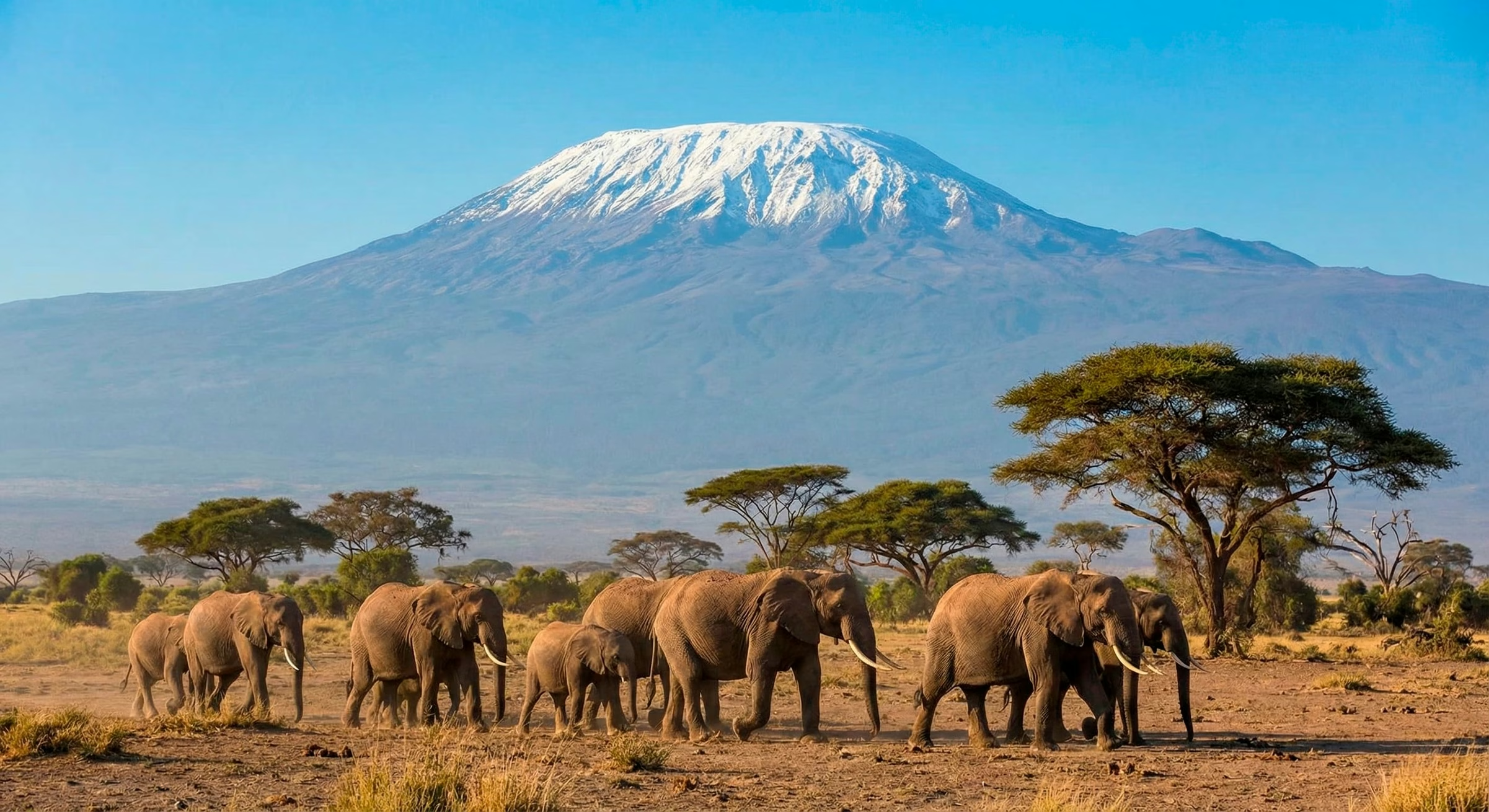
Amboseli National Park Kenyacondenses in a few kilometers what many imagine when they think of a safari: open plains, swamps shining in the sun, elephantsat a short distance and, on clear mornings, the Kilimanjaropresiding over the horizon. If you are looking for a destination close to the capital for a first taste of Kenya, Bothit is a safe bet: good accessibility from Nairobi, great density of fauna and landscapes that make photographers and families alike fall in love.
In this guide I tell you where it is (Amboseli National Park location), how to get there (Nairobi to Amboseli distanceand routes), by which door to enter, what is the weather in AmboseliDepending on the time, how do they work? Amboseli entrance fee/park feeWhat to expect from Amboseli trip, ideas ofitineraries, options ofamboseli accommodationwithout mentioning brands and how to combine it with other parks in the country. We also add FAQand checklistso that your journey is round.
Where is and how is the park (location and ecosystem)
Bothis located in South of Kenya, close to the Tanzanian border, in Kajiado County. If you are looking for”Amboseli National Park location” on a map, you will see it at the foot of the Kilimanjaro, whose presence conditions the landscape: under the semi-arid savannah, aquifers circulate that feed wetlandand Temporary gaps, which is why life is concentrated here even in the middle of the dry season. That's why you'll hear about Amboseli lake (Amboseli lake), a saline plain that is flooded with rains and cracks in drought.
Historically it was the Amboseli Game Reserve(also referred to as Amboseli National Reserve), until consolidated as national park(Amboseli National Parko Amboseli National Park). Today it is a protected area famous for its elephants, them Amboseli elephants, and for the clarity with which the movements of fauna are read: large herds of herbivores surround the wetlands at noon and disperse through the glidesat the first and last minute, when the light is soft and the Kilimanjaro Amboseliis shown more often.
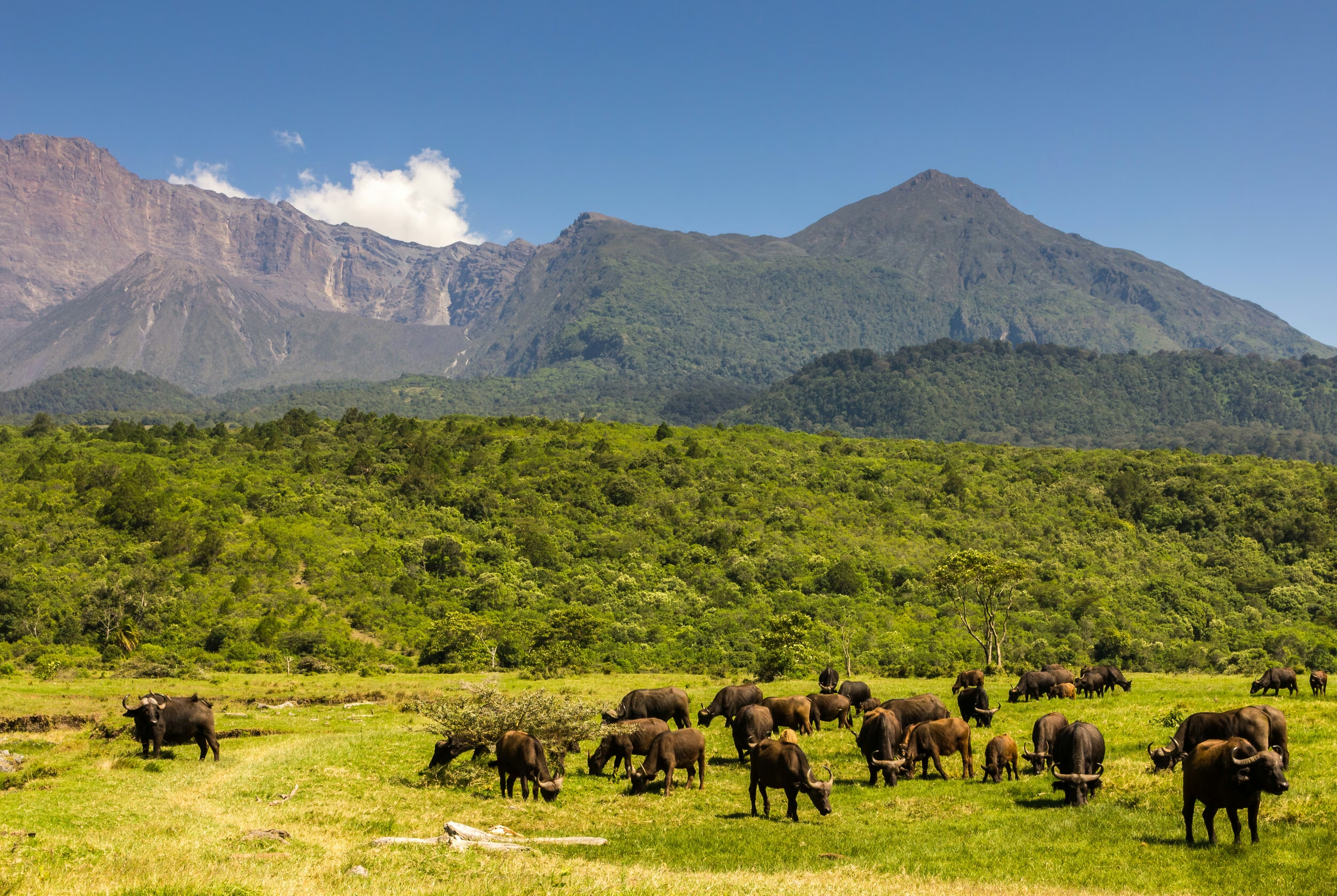
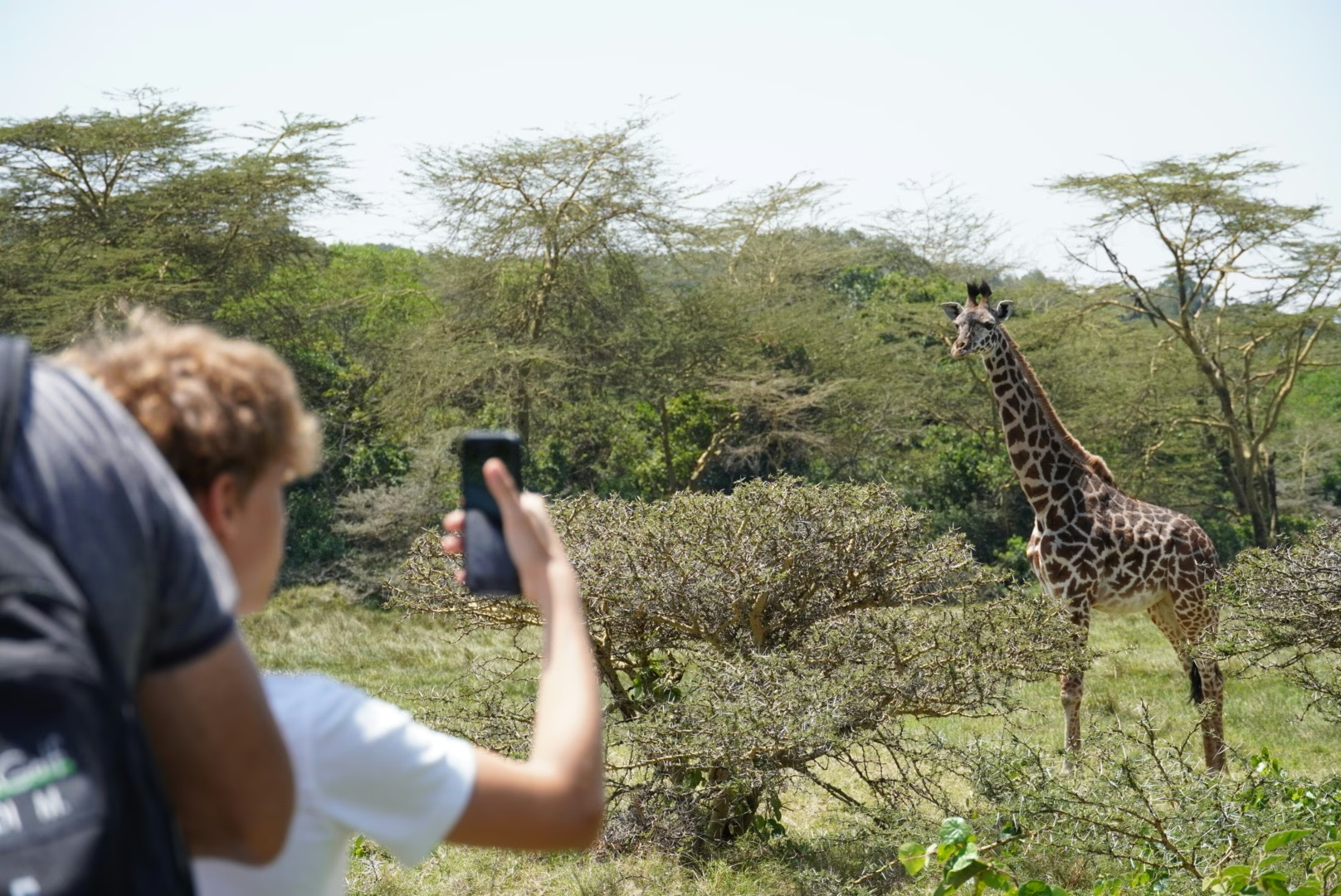
In addition to elephants, you will see buffaloes, giraffes, zebras, antelopes, hippos in the canals and a wide variety of waterfowl. On windy days, the fine dust of the savannah draws beautiful backlights. If you come for photos with the Kili in the background, patience and morning: the SunriseThey are your winning window.
How to get from Nairobi (routes and times)
The Nairobi to Amboseli distancevaries depending on the door you choose, but the usual one is around 200, 250 km. The most commonly used link is Nairobi → Emalie (A109)and diversion to Loitokitokto enter for Kimana Gate. This itinerary usually lasts 4, 5 hoursunder normal conditions, a little more if there is traffic at the exit from the capital or if the last sections are bumpy after rains.
Practical tips:
- Get out early: you gain margin in case any unforeseen arises and you make sure game drivein the afternoon.
- Fuel and cash/card: fills in en route and brings the payment method ready for Amboseli festival.
- Local driver-guide- if you don't know the clues, it's the most efficient way to get in and optimize your time.
- Internal flight: if you are short of days, consider the link to the Amboseli airstrip/Amboseli airport(See it below).
.jpg)
Access doors and basic orientation (gates & mind map)
The Amboseli NP Kimana Gateis the most used entry when you come from Nairobiby Emali, Loitokitok: comfortable, clear and with good access to wetlands and central plains. There are also other doors such as Iremito, Meshanani, Kittiruaand Kulunyiet, which may suit you depending on where you arrive or where you stay (within or in community corridors). The usual hours of the park are approx. 06:00, 19:00, with control of ticketat the entrance and exit.
To locate yourself without the need for one Amboseli mapphysical, create this mind map:
- Central wetlands(fed by aquifers of Chile) - elephants, hippos and birds are concentrated here at noon.
- Open plans- territory of large herbivores and predators; the first and last hours are gold.
- Hills viewpoint- gentle elevations from where you can see the salt plain of Lake Amboseliand, on clear days, the glacier of Kilimanjaro.
- Main Tracks- connect wetlands, plains and viewpoints; in wet weather, it adjusts time and avoids leaving the track.
Rhythm Suggestion: Sunriseon the plains for light and active felines, noonstuck in the wetlands to see elephants in the water and sundownwith a clear horizon towards Kili.
Weather and best time to go (Amboseli weather)
The weather in Amboseliand semiaridwith two dry and two rainy seasons:
- Long drought (June, October): low grass, more concentrated puddles, generally clearer skies. It is the favorite option to see a lot of fauna in a short time and for photos with the Kilimanjaronet.
- Short drought (January, February): heat and high visibility, very photogenic days; dust creates cinematic environments at sunset.
- Short rains (November-December): Afternoon/night sprays, greener landscape, less dust and good bird activity.
- Long rains (March, May): more frequent precipitation, tall grass and possibility of slippery slopes; wildlife is still present, but the game is more leisurely.
Indicative temperature: Temperate to cool nightsand hot lunchesalmost all year. If you check”Amboseli National Park weather” or”weather Amboseli National Park” before you go out, you will know if extra layer is needed at dawn or if it is advisable to focus areas of firm track after rains.
When there are more opportunities to see the Kilimanjaronet? In dry(June, Oct and January, Feb) and, within each day, Sunriseand last lightThese are usually the best times.
Park fees and rules (Amboseli entrance fee)
The Amboseli park entry feeare paid per person per day, with differentiated rates for non-residents, residentsand townspeople. There is also vehicle feesand, sometimes, conservation feesadditional. The price for non-residents has recently hovered around the 90 US$ per adult/day, but check the current amountwith the park manager or with your operator before traveling.
Essential guidelines:
- Keep the ticket(physical or digital) during the stay.
- Respect the fauna: prudent distance, silence in sightings, never feed animals.
- Speed- limited within the park; in addition, wildlife can cross the tracks.
- Schedules: plan entrances and exits so as not to rush them with the sunset.
If you are looking for”Tickets for Amboseli National Park”, remember that the purchase method and conditions may vary; the most comfortable thing is that the your authorized operatorManage access.
Safaris in Amboseli: routes and typical itineraries
The key to one Amboseli tripRemarkable is balancing lightand habitat. The planes operate in the early and last hours; the wetlandThey give a lot to noonwith elephant and bird baths in full activity. Here are templates ofAmboseli National Park tourswithout long runs:
2 days/1 night (express)
- Day 1: Early departure from Nairobi, input by Kimana Gate, gentle circuit through wetlands and plains; sunset overlooking the Kili if opened.
- Day 2: Sunriseon the plain, tracking felines and large herds; departure in the middle of the morning to return calmly.
3 days/2 nights (ideal)
- Day 1: arrival and short game drive; recognition of main wetlands.
- Day 2: double departure (dawn + afternoon) and noon at the touch of the wetlands; time for birds and familiar scenes of elephants.
- Day 3: Last early departure focused on the light with the Kilimanjaro.
4 days/3 nights (with break)
- Add a full morning to explore less-traveled areas and another afternoon focused on behavior (hatchlings, herd interaction). Perfect for photo and families.
Rhythm Tips:
- Photography: prioritizes sunrises/sunsets on the plain with the Kili in the background.
- Families: alternates short exits with midday breaks in areas of close observation.
- Ornithology- noon and early afternoon, stuck in the wetlands.
Ready to plan your Amboseli safari?
Our Kenya Classic Safari covers Amboseli with expert guides, hand-picked camps and seamless logistics, so you can focus entirely on the wildlife. Tanzania
.jpg)
Accommodation and camping
- Lodges within the park: excellent location close to wetlands or plains, you save time on transfers and maximize light. They usually have medium/high rates and limited places in season.
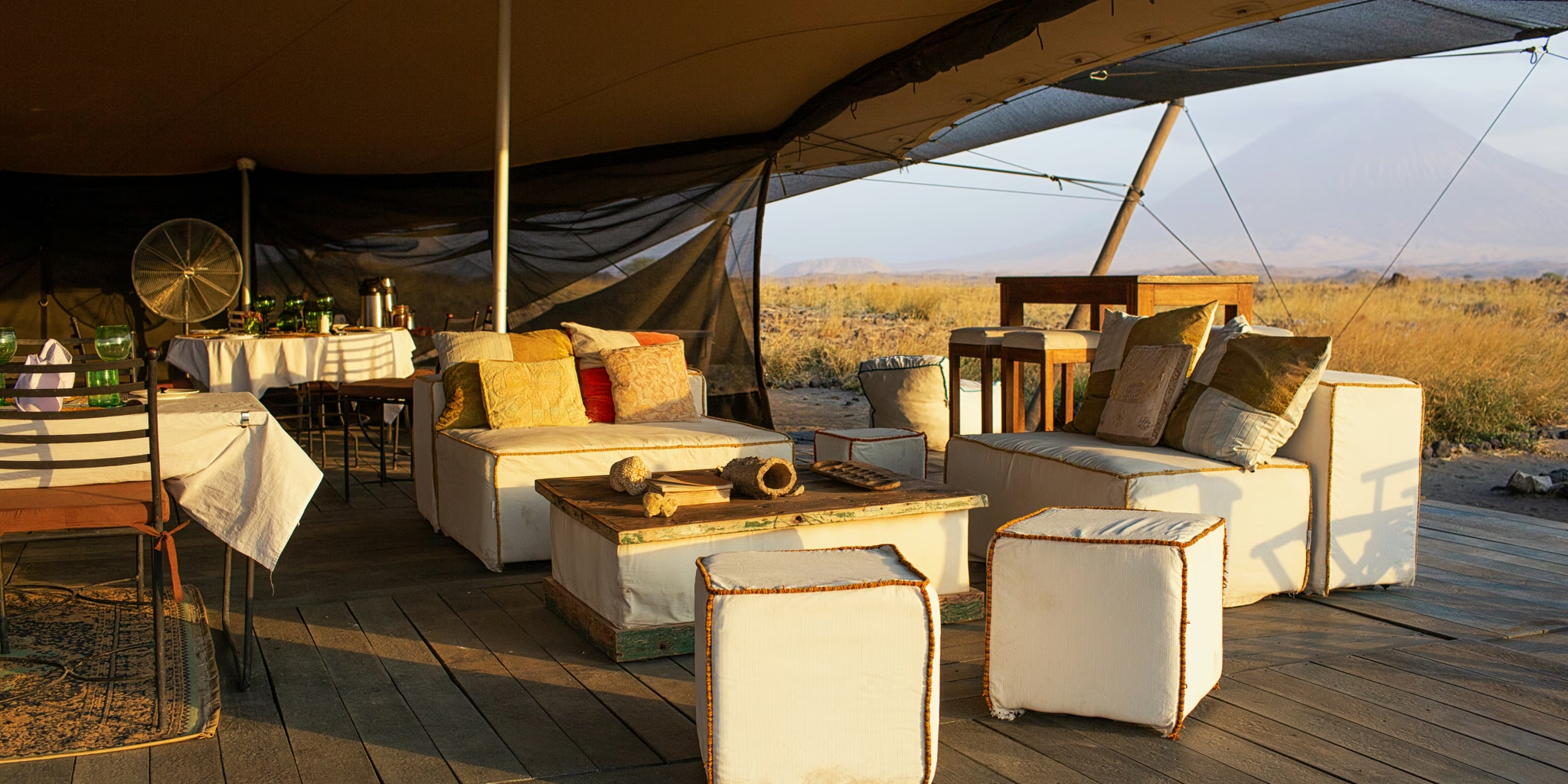
- Tented camps(includes bush campand eco camp): from basic to superior, total immersion in the environment, great nature/comfort ratio. Some are located in community corridorsbordering the park.
- Accommodation outside the park- wider options for price and styles; it is worth choosing wearsof close entry (for example, areas of Quimanafor quick access to dawn).
- Campsite in Amboseli: there is Designated areas; confirms whether advance booking is required, what services are available (water, firewood) and safety rules.
Flying to Amboseli: airfields and connections
The park has Amboseli airstrip(you will often see Aeropuerto de Amboselito searchers), connected to the airfield WilsonNairobi and other parks. Fly saves hoursroad and is useful when linking with circuits of the northor with a cost, but it reduces the flexibilityof stops and makes the whole thing more expensive.
When it compensates:
- Tenses few daysand you want to insure two outputscomplete safari.
- Connect Amboseli → another parkthe same day.
- Avoid roads in times of rainsif you are concerned about the condition of the tracks.
Remember: luggage soft and limitedon airplane flights, and coordinates transferswith your operator upon landing.
Combinations with other parks (Amboseli or Masai Mara/Samburu?)
- Amboseli o Masai Mara (amboseli or masai mara/amboseli masai mara)
- Both: icon Kilimanjaro + elephants + wetlands, easy wildlife reading, shorter routes for short stays.
- Masai Mara- very active predators and, according to dates, migration(Jul, Oct).
- If you have 3, 4 days, triad oneand express it; with 6, 8, combines.
- Both: icon Kilimanjaro + elephants + wetlands, easy wildlife reading, shorter routes for short stays.
- Samburu o Amboseli (amboseli o samburu/samburu o amboseli)
- Samburu(arid north) - “unique to the north” species (gerenuk, Grevy's zebra, oryx beige).
- Both: classic postcardwith Kili and elephants; ideal for iconic first photos of Kenya.
- Samburu(arid north) - “unique to the north” species (gerenuk, Grevy's zebra, oryx beige).
- Amboseli + Tsavo West
- Logical link towest, with volcanic landscapes, lava caves and the possibility of ending up in the Indian Coast.
- Logical link towest, with volcanic landscapes, lava caves and the possibility of ending up in the Indian Coast.
FAQs about Amboseli National Park
How many days to devote to Amboseli NP?
With 2 nightsyou already enjoy wetlands and plains; 3, 4 nightsallow you to calmly explore and hunt various lights with Kilimanjaro.
What is the best time to see Kilimanjaro clean from the park?
In dry(June, Oct and January, Feb) there are more options. Within the day, Sunriseand last lightThese are usually the times with the least cloudiness.
Is it possible to go back and forth in one day from Nairobi?
It is possible, but righteous(4, 5 h per direction). Much better 1, 2 nightsto enjoy without haste.
Is it very hot? How is the weather in Amboseli in July/August and January?
July/August- dry, less moisture and cool mornings. January: dry short, warmer midday and often clear skies.
Is there a campsite in Amboseli and is it safe?
Yes, in Designated areasand following rules. Keep your distance from the wildlife, keep your food and respect the schedules.
Which door is suitable if I arrive from Nairobi?
Generally Kimana Gatealong the route Nairobi, Emali, Loitokitok. Other doors (Iremito, Meshanani, etc.) may be square depending on the location of your accommodation.
Amboseli or Masai Mara if I only have 3 days?
If you enter by Nairobiand you want to minimize trips, BothIt is very practical and photogenic. Masai MaraShine with more days.
Conclusion
Bothis an ideal park for beginners and repeaters: accessible from Nairobi, very photogenic and with a density of elephantswhich impresses. If you keys epoch, wearsand rhythmof outings, you will have the perfect combo: nearby wildlife, wetlands full of life and Kilimanjaroin your album.
Do you want us to adjust your route with Exact days, ideal gate and rhythm of game drives?Request a quoteand I propose a closed planning according to season, travel style and if you combine with other parks.
Let us build your perfect Kenya itinerary
Whether you want a short escape or a longer adventure combining multiple parks, our Kenya Star Route is tailored to make every sunrise count. Tanzania
| Location | Kajiado County, southern Kenya, near the Tanzanian border |
| Distance from Nairobi | Approximately 200 to 250 km (around 4 to 5 hours by road) |
| Main gate | Kimana Gate (via Nairobi, Emali and Loitokitok road) |
| Best dry seasons | June to October (long dry) and January to February (short dry) |
| Iconic wildlife | Elephants, buffaloes, hippos, giraffes, zebras, lions and over 400 bird species |
| Recommended stay | 2 to 3 nights minimum; 3 to 4 nights ideal |
| Nearest airstrip | Amboseli Airstrip, connected to Wilson Airport in Nairobi |
Amboseli National Park Kenyacondenses in a few kilometers what many imagine when they think of a safari: open plains, swamps shining in the sun, elephantsat a short distance and, on clear mornings, the Kilimanjaropresiding over the horizon. If you are looking for a destination close to the capital for a first taste of Kenya, Bothit is a safe bet: good accessibility from Nairobi, great density of fauna and landscapes that make photographers and families alike fall in love.
In this guide I tell you where it is (Amboseli National Park location), how to get there (Nairobi to Amboseli distanceand routes), by which door to enter, what is the weather in AmboseliDepending on the time, how do they work? Amboseli entrance fee/park feeWhat to expect from Amboseli trip, ideas ofitineraries, options ofamboseli accommodationwithout mentioning brands and how to combine it with other parks in the country. We also add FAQand checklistso that your journey is round.
Where is and how is the park (location and ecosystem)
Bothis located in South of Kenya, close to the Tanzanian border, in Kajiado County. If you are looking for”Amboseli National Park location” on a map, you will see it at the foot of the Kilimanjaro, whose presence conditions the landscape: under the semi-arid savannah, aquifers circulate that feed wetlandand Temporary gaps, which is why life is concentrated here even in the middle of the dry season. That's why you'll hear about Amboseli lake (Amboseli lake), a saline plain that is flooded with rains and cracks in drought.
Historically it was the Amboseli Game Reserve(also referred to as Amboseli National Reserve), until consolidated as national park(Amboseli National Parko Amboseli National Park). Today it is a protected area famous for its elephants, them Amboseli elephants, and for the clarity with which the movements of fauna are read: large herds of herbivores surround the wetlands at noon and disperse through the glidesat the first and last minute, when the light is soft and the Kilimanjaro Amboseliis shown more often.
In addition to elephants, you will see buffaloes, giraffes, zebras, antelopes, hippos in the canals and a wide variety of waterfowl. On windy days, the fine dust of the savannah draws beautiful backlights. If you come for photos with the Kili in the background, patience and morning: the SunriseThey are your winning window.
How to get from Nairobi (routes and times)
The Nairobi to Amboseli distancevaries depending on the door you choose, but the usual one is around 200, 250 km. The most commonly used link is Nairobi → Emalie (A109)and diversion to Loitokitokto enter for Kimana Gate. This itinerary usually lasts 4, 5 hoursunder normal conditions, a little more if there is traffic at the exit from the capital or if the last sections are bumpy after rains.
Practical tips:
- Get out early: you gain margin in case any unforeseen arises and you make sure game drivein the afternoon.
- Fuel and cash/card: fills in en route and brings the payment method ready for Amboseli festival.
- Local driver-guide- if you don't know the clues, it's the most efficient way to get in and optimize your time.
- Internal flight: if you are short of days, consider the link to the Amboseli airstrip/Amboseli airport(See it below).
Access doors and basic orientation (gates & mind map)
The Amboseli NP Kimana Gateis the most used entry when you come from Nairobiby Emali, Loitokitok: comfortable, clear and with good access to wetlands and central plains. There are also other doors such as Iremito, Meshanani, Kittiruaand Kulunyiet, which may suit you depending on where you arrive or where you stay (within or in community corridors). The usual hours of the park are approx. 06:00, 19:00, with control of ticketat the entrance and exit.
To locate yourself without the need for one Amboseli mapphysical, create this mind map:
- Central wetlands(fed by aquifers of Chile) - elephants, hippos and birds are concentrated here at noon.
- Open plans- territory of large herbivores and predators; the first and last hours are gold.
- Hills viewpoint- gentle elevations from where you can see the salt plain of Lake Amboseliand, on clear days, the glacier of Kilimanjaro.
- Main Tracks- connect wetlands, plains and viewpoints; in wet weather, it adjusts time and avoids leaving the track.
Rhythm Suggestion: Sunriseon the plains for light and active felines, noonstuck in the wetlands to see elephants in the water and sundownwith a clear horizon towards Kili.
Weather and best time to go (Amboseli weather)
The weather in Amboseliand semiaridwith two dry and two rainy seasons:
- Long drought (June, October): low grass, more concentrated puddles, generally clearer skies. It is the favorite option to see a lot of fauna in a short time and for photos with the Kilimanjaronet.
- Short drought (January, February): heat and high visibility, very photogenic days; dust creates cinematic environments at sunset.
- Short rains (November-December): Afternoon/night sprays, greener landscape, less dust and good bird activity.
- Long rains (March, May): more frequent precipitation, tall grass and possibility of slippery slopes; wildlife is still present, but the game is more leisurely.
Indicative temperature: Temperate to cool nightsand hot lunchesalmost all year. If you check”Amboseli National Park weather” or”weather Amboseli National Park” before you go out, you will know if extra layer is needed at dawn or if it is advisable to focus areas of firm track after rains.
When there are more opportunities to see the Kilimanjaronet? In dry(June, Oct and January, Feb) and, within each day, Sunriseand last lightThese are usually the best times.
Park fees and rules (Amboseli entrance fee)
The Amboseli park entry feeare paid per person per day, with differentiated rates for non-residents, residentsand townspeople. There is also vehicle feesand, sometimes, conservation feesadditional. The price for non-residents has recently hovered around the 90 US$ per adult/day, but check the current amountwith the park manager or with your operator before traveling.
Essential guidelines:
- Keep the ticket(physical or digital) during the stay.
- Respect the fauna: prudent distance, silence in sightings, never feed animals.
- Speed- limited within the park; in addition, wildlife can cross the tracks.
- Schedules: plan entrances and exits so as not to rush them with the sunset.
If you are looking for”Tickets for Amboseli National Park”, remember that the purchase method and conditions may vary; the most comfortable thing is that the your authorized operatorManage access.
Safaris in Amboseli: routes and typical itineraries
The key to one Amboseli tripRemarkable is balancing lightand habitat. The planes operate in the early and last hours; the wetlandThey give a lot to noonwith elephant and bird baths in full activity. Here are templates ofAmboseli National Park tourswithout long runs:
2 days/1 night (express)
- Day 1: Early departure from Nairobi, input by Kimana Gate, gentle circuit through wetlands and plains; sunset overlooking the Kili if opened.
- Day 2: Sunriseon the plain, tracking felines and large herds; departure in the middle of the morning to return calmly.
3 days/2 nights (ideal)
- Day 1: arrival and short game drive; recognition of main wetlands.
- Day 2: double departure (dawn + afternoon) and noon at the touch of the wetlands; time for birds and familiar scenes of elephants.
- Day 3: Last early departure focused on the light with the Kilimanjaro.
4 days/3 nights (with break)
- Add a full morning to explore less-traveled areas and another afternoon focused on behavior (hatchlings, herd interaction). Perfect for photo and families.
Rhythm Tips:
- Photography: prioritizes sunrises/sunsets on the plain with the Kili in the background.
- Families: alternates short exits with midday breaks in areas of close observation.
- Ornithology- noon and early afternoon, stuck in the wetlands.
Ready to plan your Amboseli safari?
Our Kenya Classic Safari covers Amboseli with expert guides, hand-picked camps and seamless logistics, so you can focus entirely on the wildlife. Tanzania
Accommodation and camping
- Lodges within the park: excellent location close to wetlands or plains, you save time on transfers and maximize light. They usually have medium/high rates and limited places in season.
- Tented camps(includes bush campand eco camp): from basic to superior, total immersion in the environment, great nature/comfort ratio. Some are located in community corridorsbordering the park.
- Accommodation outside the park- wider options for price and styles; it is worth choosing wearsof close entry (for example, areas of Quimanafor quick access to dawn).
- Campsite in Amboseli: there is Designated areas; confirms whether advance booking is required, what services are available (water, firewood) and safety rules.
Flying to Amboseli: airfields and connections
The park has Amboseli airstrip(you will often see Aeropuerto de Amboselito searchers), connected to the airfield WilsonNairobi and other parks. Fly saves hoursroad and is useful when linking with circuits of the northor with a cost, but it reduces the flexibilityof stops and makes the whole thing more expensive.
When it compensates:
- Tenses few daysand you want to insure two outputscomplete safari.
- Connect Amboseli → another parkthe same day.
- Avoid roads in times of rainsif you are concerned about the condition of the tracks.
Remember: luggage soft and limitedon airplane flights, and coordinates transferswith your operator upon landing.
Combinations with other parks (Amboseli or Masai Mara/Samburu?)
- Amboseli o Masai Mara (amboseli or masai mara/amboseli masai mara)
- Both: icon Kilimanjaro + elephants + wetlands, easy wildlife reading, shorter routes for short stays.
- Masai Mara- very active predators and, according to dates, migration(Jul, Oct).
- If you have 3, 4 days, triad oneand express it; with 6, 8, combines.
- Both: icon Kilimanjaro + elephants + wetlands, easy wildlife reading, shorter routes for short stays.
- Samburu o Amboseli (amboseli o samburu/samburu o amboseli)
- Samburu(arid north) - “unique to the north” species (gerenuk, Grevy's zebra, oryx beige).
- Both: classic postcardwith Kili and elephants; ideal for iconic first photos of Kenya.
- Samburu(arid north) - “unique to the north” species (gerenuk, Grevy's zebra, oryx beige).
- Amboseli + Tsavo West
- Logical link towest, with volcanic landscapes, lava caves and the possibility of ending up in the Indian Coast.
- Logical link towest, with volcanic landscapes, lava caves and the possibility of ending up in the Indian Coast.
FAQs about Amboseli National Park
How many days to devote to Amboseli NP?
With 2 nightsyou already enjoy wetlands and plains; 3, 4 nightsallow you to calmly explore and hunt various lights with Kilimanjaro.
What is the best time to see Kilimanjaro clean from the park?
In dry(June, Oct and January, Feb) there are more options. Within the day, Sunriseand last lightThese are usually the times with the least cloudiness.
Is it possible to go back and forth in one day from Nairobi?
It is possible, but righteous(4, 5 h per direction). Much better 1, 2 nightsto enjoy without haste.
Is it very hot? How is the weather in Amboseli in July/August and January?
July/August- dry, less moisture and cool mornings. January: dry short, warmer midday and often clear skies.
Is there a campsite in Amboseli and is it safe?
Yes, in Designated areasand following rules. Keep your distance from the wildlife, keep your food and respect the schedules.
Which door is suitable if I arrive from Nairobi?
Generally Kimana Gatealong the route Nairobi, Emali, Loitokitok. Other doors (Iremito, Meshanani, etc.) may be square depending on the location of your accommodation.
Amboseli or Masai Mara if I only have 3 days?
If you enter by Nairobiand you want to minimize trips, BothIt is very practical and photogenic. Masai MaraShine with more days.
Conclusion
Bothis an ideal park for beginners and repeaters: accessible from Nairobi, very photogenic and with a density of elephantswhich impresses. If you keys epoch, wearsand rhythmof outings, you will have the perfect combo: nearby wildlife, wetlands full of life and Kilimanjaroin your album.
Do you want us to adjust your route with Exact days, ideal gate and rhythm of game drives?Request a quoteand I propose a closed planning according to season, travel style and if you combine with other parks.
Let us build your perfect Kenya itinerary
Whether you want a short escape or a longer adventure combining multiple parks, our Kenya Star Route is tailored to make every sunrise count. Tanzania






.avif)



.avif)





.avif)

.avif)

.avif)
.avif)


.avif)










.png)