





| Height | 108 metres |
| Width | 1,708 metres |
| Local name | Mosi-oa-Tunya (the smoke that thunders) |
| Countries | Zambia and Zimbabwe |
| Best months for balance | June to August |
| Devil's Pool season | Mid-August to mid-January (subject to river levels) |
| Heritage status | UNESCO World Heritage Site |
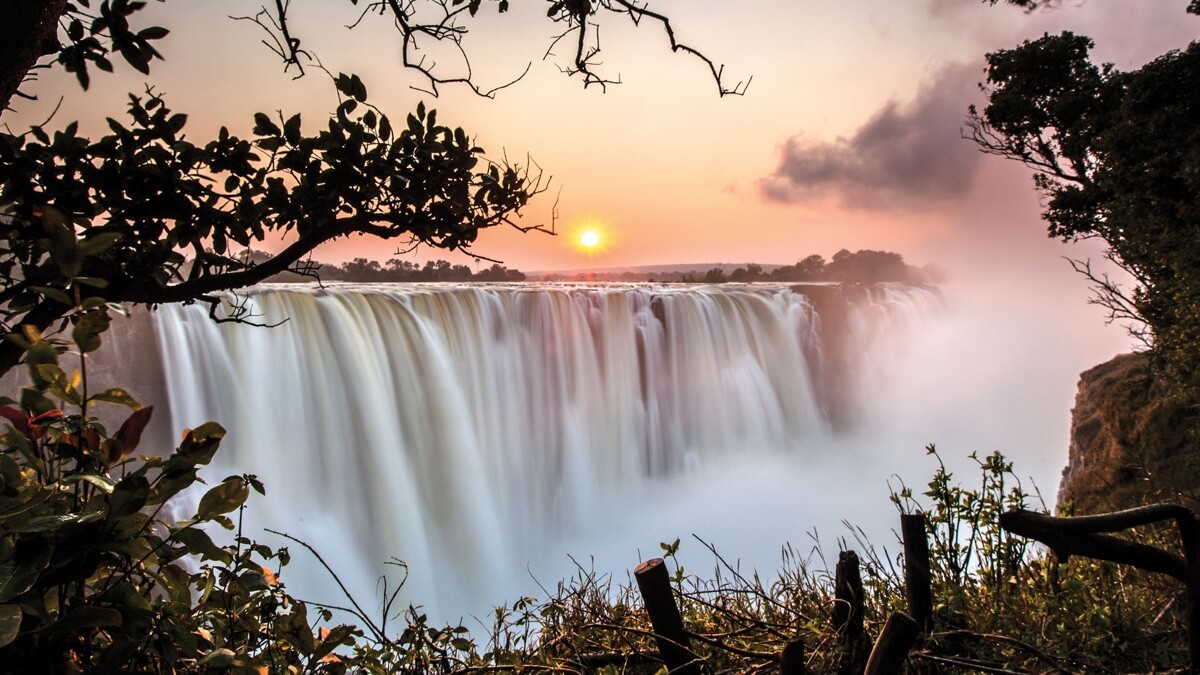
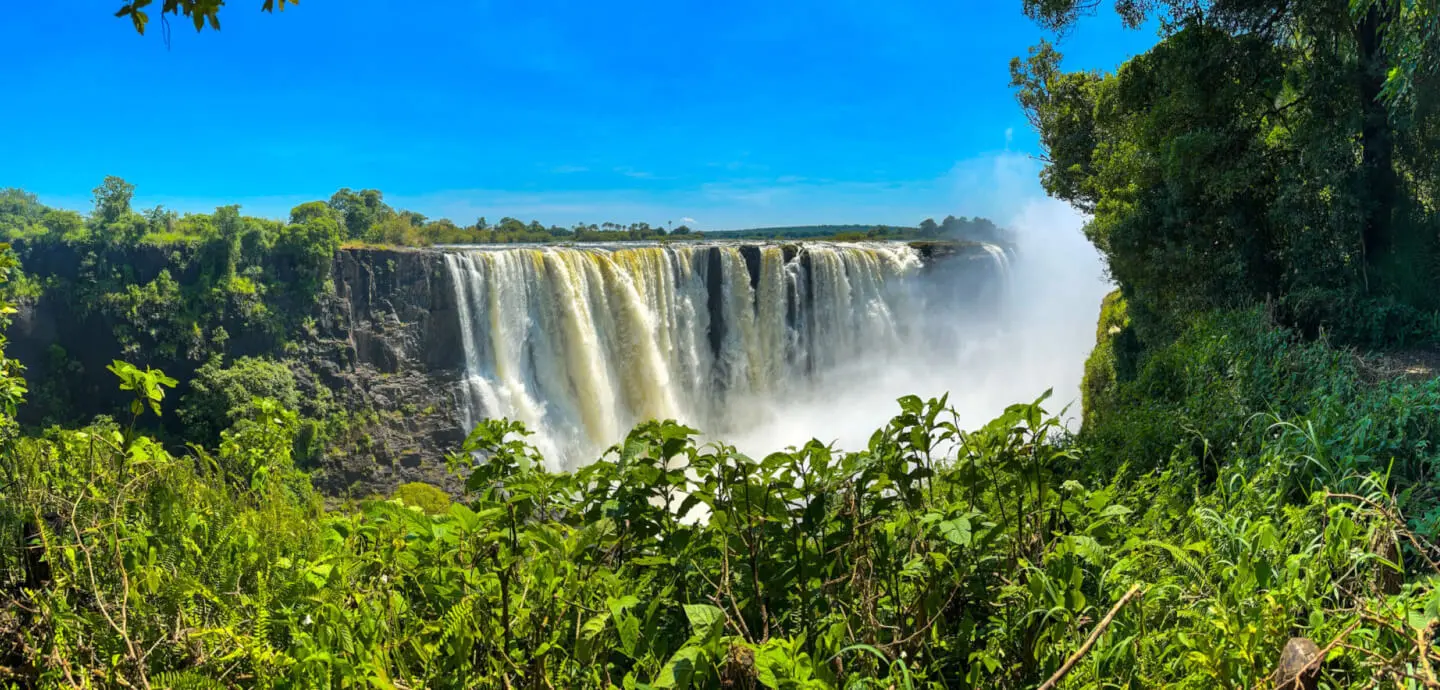
You don't visit Victoria Falls in silence. First you hear them. Then a white cloud appears on the horizon. And finally comes the surprise: the Zambezi River plunging into an enormous crack between Zambia and Zimbabwe.
It's one of the great natural spectacles of southern Africa and a perfect stop to combine with safaris in Botswana, South Africa, Namibia or Zimbabwe. But it takes proper planning. Travelling at peak water levels is not the same as going when the water drops and activities like Devil's Pool open up.
In this guide you'll find what to see at Victoria Falls, when to go, which side to choose, the best activities and how to organise a trip that makes sense, without improvising more than you need to.
Where Victoria Falls is and what makes it so special
Victoria Falls sits in southern Africa, on the natural border between Zambia and Zimbabwe.
The falls are formed by the Zambezi River, which drops into a deep basalt gorge and creates one of the most impressive curtains of water on the planet. Its local name is Mosi-oa-Tunya, usually translated as "the smoke that thunders". The cloud of mist can be seen from kilometres away when the water is high.
The site is protected as a UNESCO World Heritage Site and includes conservation areas in both countries: Mosi-oa-Tunya National Park in Zambia and Victoria Falls National Park in Zimbabwe. The official UNESCO listing highlights its scale, the geological landscape and the scenic power of the Zambezi gorge.
The falls reach around 108 metres in height and stretch for approximately 1,708 metres. We're not talking about a waterfall for a quick photo, but a monumental wall of water.
What to see at Victoria Falls
The Zimbabwe side: the most complete panorama
If you could only choose one side, Zimbabwe is usually the safest bet for a first visit. From Victoria Falls National Park you access a network of trails and viewpoints that let you take in a large part of the curtain of water.
It's the most rewarding side for panoramic photos, especially between June and August, when there's still plenty of water but the spray cloud doesn't hide everything. In the months of peak flow, the experience is overwhelming, though you'll probably end up wetter than you expected.
It's worth setting aside at least two or three hours here. The route isn't technically difficult, but it's best enjoyed unhurried. The viewpoints change a lot with the time of year: some offer a clean view of the gorge and others end up wrapped in mist.
The Zambia side: closer to the water
The Zambian side offers a different experience. From the Mosi-oa-Tunya National Park area, near Livingstone, the visit feels more intimate. It doesn't always have the most complete panorama, but it lets you get close to some truly spectacular spots, especially when the water levels cooperate.
Highlights on this side include Knife Edge Bridge, the paths along the rim of the gorge and access to Livingstone Island, where the famous Devil's Pool is run when river conditions allow.
The key is the season. With very low water, some sections of the Zambian side can lose visual impact. With high water, on the other hand, the setting turns wild, damp and very photogenic.
The Victoria Falls Bridge
The Victoria Falls Bridge links Zambia and Zimbabwe over the Zambezi gorge. It's much more than a border crossing: it's one of the most iconic spots in the area and the stage for several adrenaline activities.
From the bridge there are magnificent views of the gorge, the river and, depending on the angle, the cloud of spray rising from the falls. It's also where the bungee jump, the bridge swing and the zipline take place.
Victoria Falls Town or Livingstone: where to stay
For sleeping, the two main bases are Victoria Falls Town, in Zimbabwe, and Livingstone, in Zambia.
Victoria Falls Town is very convenient if you want to focus on the viewpoints on the Zimbabwean side. It has accommodation across several categories, restaurants, activity agencies and quick access to the park.
Livingstone, for its part, works very well for anyone who wants to explore the Zambian side, do Livingstone Island, visit Devil's Pool in season or combine the visit with more relaxed experiences along the Zambezi.
Our practical recommendation? If it's your first time and you're short on days, stay in Victoria Falls Town. If you have two or three nights, try to cross over and see both sides. The trip gains a lot from it.
Zambia or Zimbabwe: which side to choose
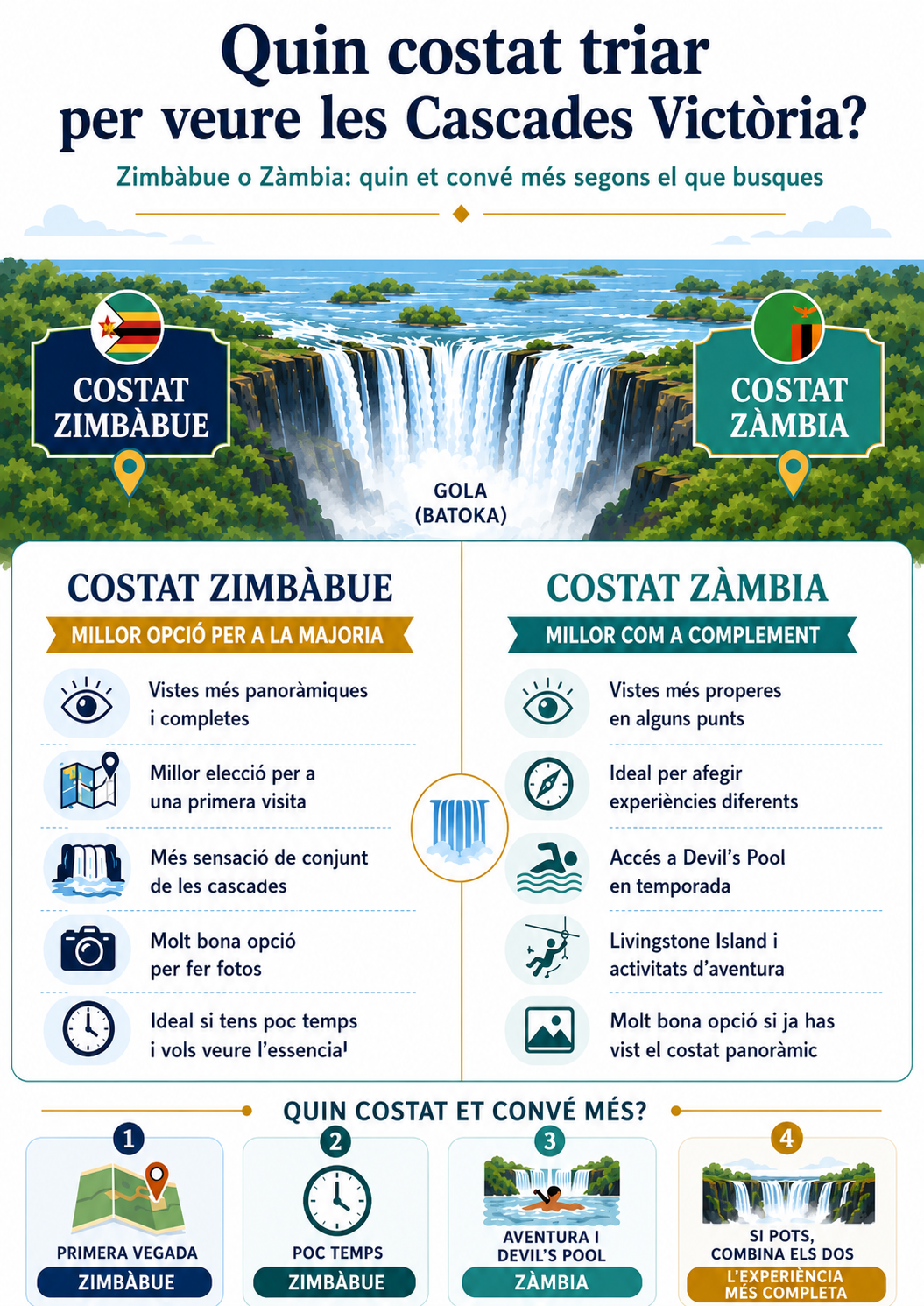
The best answer is simple: if you can, visit both sides. You can't fully understand Victoria Falls from a single angle.
That said, if you only have a few hours or one day, prioritise Zimbabwe for the breadth of the views. If you're travelling in the right season and Devil's Pool tempts you, include Zambia no matter what.
When to go to Victoria Falls: the best time for your kind of trip
The best time to visit Victoria Falls depends on what you're after: maximum water flow, the best photos, adventure activities or a safari combination.

February to May: peak water flow
Between February and May, the falls usually show their most powerful side. The Zambezi comes down loaded and the sheer volume of water creates an enormous cloud of spray. It's the most impressive season in terms of raw natural force.
The less comfortable part: visibility can be limited. At some viewpoints, rather than seeing the falls, you "live" them in tropical-shower format. Bring a raincoat, protection for your camera and a sense of humour.
It's an ideal time if you want to feel the power of Mosi-oa-Tunya, but not so much if your priority is crisp photos of the gorge.
June to August: a balance of water, visibility and safari
For many travellers, June, July and August are the most balanced months. There's still enough water for the falls to look spectacular, but visibility tends to be better than in the peak-flow months.
On top of that, these months pair very well with safaris in southern Africa. In many areas, the dry season concentrates wildlife around waterholes and makes sightings easier.
If you're thinking about a trip to South Africa and Victoria Falls, or about combining Botswana with the falls, this window is usually a very solid option.
September to January: less water, more adventure
Between September and November the water level drops. That might sound like a downside, but for some travellers it's exactly the opposite. There's better visibility of the gorge, better conditions for certain adventure activities and the chance to visit Devil's Pool.
The official Devil's Pool website indicates that this activity is usually available between mid-August and mid-January, always depending on the levels of the Zambezi.
October can be very hot. If you're travelling on these dates, book activities for early in the day and leave the middle hours for the pool, some shade or a rest at your hotel.
The best activities at Victoria Falls
Walking the viewpoints
This is the essential activity. No matter how many flights, safaris or cruises you do: Victoria Falls has to be walked.
Give the viewpoints on the Zimbabwean side the time they deserve and, if you can, add the Zambian side. Bring comfortable footwear, clothes that can get wet and a waterproof pouch for your phone. In the high-water season, the spray can soak you in seconds.
One tip: don't rush the route. The falls change with the light, the wind and the angle. The best thing is to stop, listen and let the place do its work.
Helicopter or microlight flight
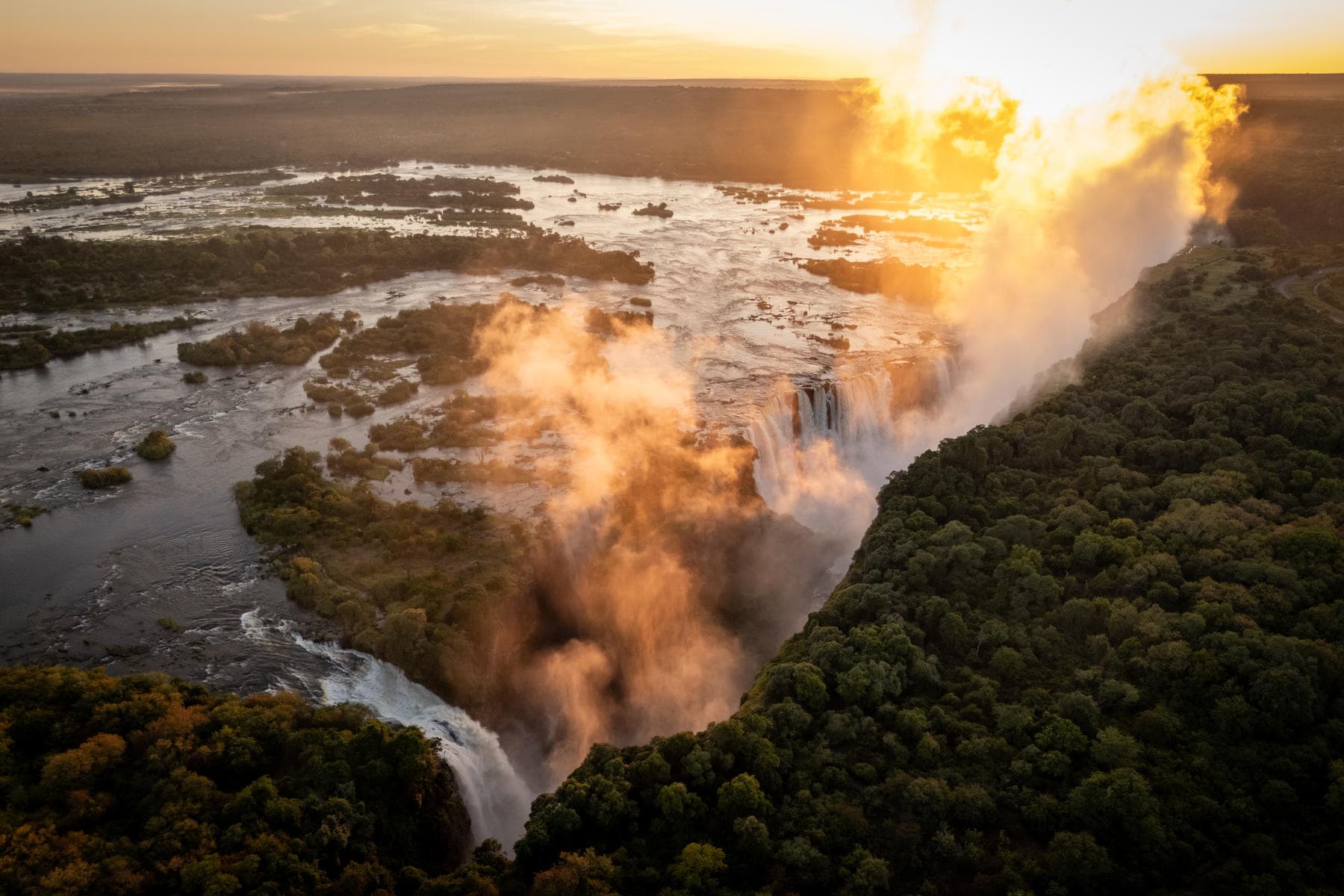
The scenic flight is one of the most famous activities. It's known as the Flight of Angels, in reference to the phrase attributed to David Livingstone about the beauty of the place. Local companies such as Shearwater offer panoramic flights over the falls, the Batoka Gorge, the bridge and the Zambezi.
Is it worth it? Yes, if the budget allows. From the ground you feel the force; from the air you grasp the scale. The view of the river spreading into channels before dropping into the gorge is hard to forget.
For photography, it usually works best in months of medium or high visibility. With too much mist, the experience is still spectacular, but visually less clean.
Devil's Pool
Devil's Pool is a natural rock pool next to Livingstone Island, right on the lip of the falls, on the Zambian side. It's one of the most sought-after experiences and also one that needs planning.
It isn't open all year round. It depends on the flow of the Zambezi and is only done with authorised guides. When the water is too high, the activity closes for safety. Devil's Pool's own website stresses that opening depends on river levels.
It's ideal for adventurous travellers, but not for everyone. If you have a serious fear of heights, little confidence in the water or simply prefer calmer experiences, there are plenty of other ways to enjoy the falls without sitting on the edge of the abyss.
Rafting on the Zambezi
Rafting on the Zambezi is one of the area's great adventure activities. It runs through the rapids of the gorge, below the falls, and is considered one of the most powerful descents in Africa.
It tends to be more common when the flow isn't at its peak, since some sections can be too dangerous with a high river.
It's a physical, intense and hugely fun activity if you like adrenaline. Don't underestimate it. Best done with reliable operators, checking conditions and taking out good travel insurance.
Sunset cruise on the Zambezi
After so much falling water, it's also a pleasure to watch it flow calmly. The sunset cruise on the Zambezi is a gentle, very enjoyable activity and perfect for closing out the day.
During the cruise you may spot hippos, crocodiles, birds and, with luck, elephants on the banks. It's not a safari in the strict sense, but it is a beautiful way to connect with the landscape.
It's an especially good option for couples, families or travellers who want to alternate adventure with more relaxed moments.
Bungee jump, zipline and bridge swing
The Victoria Falls Bridge is the epicentre of the adrenaline activities. Here you can bungee jump, ride the zipline or do the bridge swing over the gorge.
They're very visual, memorable activities, though not for every set of nerves. If you love strong emotions, they can be a great addition. If not, watching from the bridge has its own appeal.
Day trip to Chobe National Park
One of the best combinations from Victoria Falls is a getaway to Chobe National Park, in Botswana. Many itineraries include a full-day excursion with a transfer to the border, a boat safari on the Chobe River and a 4x4 safari in the afternoon.
Chobe is famous for its elephants, hippos, crocodiles and riverside wildlife. If your trip doesn't include other longer safaris, adding Chobe can lift the whole experience.
How to get to Victoria Falls from Spain
There are usually no direct flights from Spain to Victoria Falls. The most common option is to fly with one or two stopovers, normally via major African or international hubs, and connect to one of these airports:
- Victoria Falls Airport, in Zimbabwe.
- Harry Mwanga Nkumbula International Airport, in Livingstone, Zambia.
- Johannesburg, as a gateway if you're combining South Africa and Victoria Falls.
The most common route for an organised trip from Spain usually includes South Africa, Botswana or both. For example:
- Madrid or Barcelona + Johannesburg + Kruger Park + Victoria Falls.
- Victoria Falls + Chobe + Okavango Delta.
- Namibia + Botswana + Victoria Falls.
- South Africa + Victoria Falls as a honeymoon trip.
Before travelling, it's worth reviewing documentation, visas, health requirements and official advice. Spain's Ministry of Foreign Affairs publishes specific recommendations for Zambia and Zimbabwe, and the Ministry of Health advises consulting an International Vaccination Centre for personalised advice before a trip of this kind.
How many days to spend at Victoria Falls
1-day visit
One day is short, but doable if you're passing through. In that case, the priority should be clear: the viewpoints on the Zimbabwe side plus one extra activity, such as a sunset cruise or a helicopter flight.
It's a useful option on very tight trips, though it leaves little margin to cross into Zambia or adjust plans if the weather doesn't cooperate.
Ideal route: 2 days / 3 nights
For most travellers, the most balanced option is to spend two full days and three nights here.
A sensible itinerary would be:
- Day 1: arrival, viewpoints on the Zimbabwe side and a Zambezi cruise.
- Day 2: Zambia side, the bridge, a helicopter flight or Devil's Pool if it's open.
- Day 3: departure for Chobe, Kruger, Johannesburg or your next stage.
This format lets you see the essentials without rushing and leaves room for activities.
A full trip of 4 days or more
If you have four days or more, you can add Chobe, an extra night in a lodge, a cultural excursion or more downtime by the river.
This option fits beautifully with honeymoons, tailor-made trips and premium routes through southern Africa. The falls aren't just a visit: they can be the perfect finale to a safari or the start of a great adventure.
Practical tips for visiting Victoria Falls
Bring comfortable, quick-drying clothes. In the high-water season, a raincoat is not optional. It's also worth carrying a waterproof case for your phone or camera, especially if you want to take photos close to the viewpoints.
Your footwear should have good grip. The paths are usually easy, but they can be wet and slippery.
Don't forget sunscreen, sunglasses, a cap and repellent. In the hottest months, temperatures can be demanding, especially if you're combining outdoor activities.
Book the important activities in advance, especially the helicopter, Devil's Pool, rafting and Chobe excursions in high season.
Carry a little cash in US dollars for one-off payments, tips or local fees, although more and more services accept cards.
And above all, don't plan Devil's Pool as if it were a guaranteed activity. It's seasonal and depends on water levels. Have a plan B that's just as appealing: helicopter, cruise, the Zambian side or Chobe.
Victoria Falls trip and safari: recommended combinations
Victoria Falls works wonderfully as part of a bigger trip through southern Africa. Here are some very appealing combinations:
Victoria Falls + Chobe
Perfect if you're short on days and want to add a safari without overcomplicating things. Chobe is relatively close and offers both boat and vehicle safaris.
Victoria Falls + Okavango Delta
A spectacular combination for nature lovers. First the roaring water of the Zambezi; then the silence of the Okavango channels by mokoro or motorboat.
South Africa + Kruger + Victoria Falls
One of the most popular routes. It combines Cape Town, the winelands, a Kruger safari and a grand finale at Victoria Falls.
Namibia + Botswana + Victoria Falls
A longer, wonderfully varied route, perfect for anyone after extreme landscapes: deserts, wildlife, the delta, rivers and one of the world's great waterfalls.
Honeymoon in southern Africa
Victoria Falls fits beautifully into a honeymoon with special lodges, scenic flights, riverside dinners and private safaris. It's not your typical beach trip, and that's exactly the charm.
Is Victoria Falls worth visiting?
Yes, especially if you're travelling through southern Africa. Victoria Falls is one of those places that justify the detour.
It's worth it for nature travellers, photography lovers, honeymooning couples, adventurous families and anyone who wants to add a truly memorable moment to their trip.
The experience changes a lot depending on the season. If you want maximum spectacle, travel at high water. If you want activities like Devil's Pool or rafting, look at the dry season. If you're after balance, aim for June, July or August.
And if you'd rather not drive yourself mad juggling flights, visas, safaris and activities, the best move is to design the itinerary with expert help.
You can browse our tailor-made Victoria Falls trip proposals, combine it with a South Africa and Victoria Falls trip or simply request a quote for a trip to Africa.
Frequently asked questions about Victoria Falls
Where is Victoria Falls?
Victoria Falls is on the border between Zambia and Zimbabwe, on the Zambezi River. The main bases for visiting are Victoria Falls Town, in Zimbabwe, and Livingstone, in Zambia.
What is the best time to visit Victoria Falls?
It depends on the goal of the trip. From February to May there's peak flow and a lot of mist. From June to August there's usually a good balance of water, visibility and safari. From September to November there's less water, better visibility of the gorge and better conditions for activities like rafting or Devil's Pool.
Is it better to see Victoria Falls from Zambia or from Zimbabwe?
For a first visit, Zimbabwe usually offers the better panoramic views. Zambia brings an experience closer to the water and access to Livingstone Island and Devil's Pool in season. Ideally, visit both sides.
How many days do you need to visit Victoria Falls?
The best plan is two full days and three nights. With one day you can see the essentials, but the trip feels very tight. With three or four days you can add activities, Chobe or some downtime.
When can you visit Devil's Pool?
Devil's Pool usually opens between mid-August and mid-January, although the exact dates change with the level of the Zambezi River. It must always be done with authorised operators and never on your own.
Can you combine Victoria Falls with a safari?
Yes. In fact, it's one of the best ways to include the falls in a southern Africa trip. The most popular combinations are Victoria Falls with Chobe, the Okavango Delta, Kruger Park, Hwange, Namibia or Botswana.
Conclusion
Victoria Falls is much more than a photo stop. It's landscape, noise, spray, adventure and a magnificent gateway to the great safaris of southern Africa.
To get it right, first decide what kind of trip you want: maximum water power, great photos, adventure activities or a combined safari. Then choose your dates, the side to stay on and the experiences that suit you best.
Want to organise a trip to Victoria Falls without getting lost among flights, seasons and border crossings? Get in touch with us and we'll prepare personalised information and a quote to design a tailor-made route through Africa.
| Height | 108 metres |
| Width | 1,708 metres |
| Local name | Mosi-oa-Tunya (the smoke that thunders) |
| Countries | Zambia and Zimbabwe |
| Best months for balance | June to August |
| Devil's Pool season | Mid-August to mid-January (subject to river levels) |
| Heritage status | UNESCO World Heritage Site |
You don't visit Victoria Falls in silence. First you hear them. Then a white cloud appears on the horizon. And finally comes the surprise: the Zambezi River plunging into an enormous crack between Zambia and Zimbabwe.
It's one of the great natural spectacles of southern Africa and a perfect stop to combine with safaris in Botswana, South Africa, Namibia or Zimbabwe. But it takes proper planning. Travelling at peak water levels is not the same as going when the water drops and activities like Devil's Pool open up.
In this guide you'll find what to see at Victoria Falls, when to go, which side to choose, the best activities and how to organise a trip that makes sense, without improvising more than you need to.
Where Victoria Falls is and what makes it so special
Victoria Falls sits in southern Africa, on the natural border between Zambia and Zimbabwe.
The falls are formed by the Zambezi River, which drops into a deep basalt gorge and creates one of the most impressive curtains of water on the planet. Its local name is Mosi-oa-Tunya, usually translated as "the smoke that thunders". The cloud of mist can be seen from kilometres away when the water is high.
The site is protected as a UNESCO World Heritage Site and includes conservation areas in both countries: Mosi-oa-Tunya National Park in Zambia and Victoria Falls National Park in Zimbabwe. The official UNESCO listing highlights its scale, the geological landscape and the scenic power of the Zambezi gorge.
The falls reach around 108 metres in height and stretch for approximately 1,708 metres. We're not talking about a waterfall for a quick photo, but a monumental wall of water.
What to see at Victoria Falls
The Zimbabwe side: the most complete panorama
If you could only choose one side, Zimbabwe is usually the safest bet for a first visit. From Victoria Falls National Park you access a network of trails and viewpoints that let you take in a large part of the curtain of water.
It's the most rewarding side for panoramic photos, especially between June and August, when there's still plenty of water but the spray cloud doesn't hide everything. In the months of peak flow, the experience is overwhelming, though you'll probably end up wetter than you expected.
It's worth setting aside at least two or three hours here. The route isn't technically difficult, but it's best enjoyed unhurried. The viewpoints change a lot with the time of year: some offer a clean view of the gorge and others end up wrapped in mist.
The Zambia side: closer to the water
The Zambian side offers a different experience. From the Mosi-oa-Tunya National Park area, near Livingstone, the visit feels more intimate. It doesn't always have the most complete panorama, but it lets you get close to some truly spectacular spots, especially when the water levels cooperate.
Highlights on this side include Knife Edge Bridge, the paths along the rim of the gorge and access to Livingstone Island, where the famous Devil's Pool is run when river conditions allow.
The key is the season. With very low water, some sections of the Zambian side can lose visual impact. With high water, on the other hand, the setting turns wild, damp and very photogenic.
The Victoria Falls Bridge
The Victoria Falls Bridge links Zambia and Zimbabwe over the Zambezi gorge. It's much more than a border crossing: it's one of the most iconic spots in the area and the stage for several adrenaline activities.
From the bridge there are magnificent views of the gorge, the river and, depending on the angle, the cloud of spray rising from the falls. It's also where the bungee jump, the bridge swing and the zipline take place.
Victoria Falls Town or Livingstone: where to stay
For sleeping, the two main bases are Victoria Falls Town, in Zimbabwe, and Livingstone, in Zambia.
Victoria Falls Town is very convenient if you want to focus on the viewpoints on the Zimbabwean side. It has accommodation across several categories, restaurants, activity agencies and quick access to the park.
Livingstone, for its part, works very well for anyone who wants to explore the Zambian side, do Livingstone Island, visit Devil's Pool in season or combine the visit with more relaxed experiences along the Zambezi.
Our practical recommendation? If it's your first time and you're short on days, stay in Victoria Falls Town. If you have two or three nights, try to cross over and see both sides. The trip gains a lot from it.
Zambia or Zimbabwe: which side to choose
The best answer is simple: if you can, visit both sides. You can't fully understand Victoria Falls from a single angle.
That said, if you only have a few hours or one day, prioritise Zimbabwe for the breadth of the views. If you're travelling in the right season and Devil's Pool tempts you, include Zambia no matter what.
When to go to Victoria Falls: the best time for your kind of trip
The best time to visit Victoria Falls depends on what you're after: maximum water flow, the best photos, adventure activities or a safari combination.
February to May: peak water flow
Between February and May, the falls usually show their most powerful side. The Zambezi comes down loaded and the sheer volume of water creates an enormous cloud of spray. It's the most impressive season in terms of raw natural force.
The less comfortable part: visibility can be limited. At some viewpoints, rather than seeing the falls, you "live" them in tropical-shower format. Bring a raincoat, protection for your camera and a sense of humour.
It's an ideal time if you want to feel the power of Mosi-oa-Tunya, but not so much if your priority is crisp photos of the gorge.
June to August: a balance of water, visibility and safari
For many travellers, June, July and August are the most balanced months. There's still enough water for the falls to look spectacular, but visibility tends to be better than in the peak-flow months.
On top of that, these months pair very well with safaris in southern Africa. In many areas, the dry season concentrates wildlife around waterholes and makes sightings easier.
If you're thinking about a trip to South Africa and Victoria Falls, or about combining Botswana with the falls, this window is usually a very solid option.
September to January: less water, more adventure
Between September and November the water level drops. That might sound like a downside, but for some travellers it's exactly the opposite. There's better visibility of the gorge, better conditions for certain adventure activities and the chance to visit Devil's Pool.
The official Devil's Pool website indicates that this activity is usually available between mid-August and mid-January, always depending on the levels of the Zambezi.
October can be very hot. If you're travelling on these dates, book activities for early in the day and leave the middle hours for the pool, some shade or a rest at your hotel.
The best activities at Victoria Falls
Walking the viewpoints
This is the essential activity. No matter how many flights, safaris or cruises you do: Victoria Falls has to be walked.
Give the viewpoints on the Zimbabwean side the time they deserve and, if you can, add the Zambian side. Bring comfortable footwear, clothes that can get wet and a waterproof pouch for your phone. In the high-water season, the spray can soak you in seconds.
One tip: don't rush the route. The falls change with the light, the wind and the angle. The best thing is to stop, listen and let the place do its work.
Helicopter or microlight flight
The scenic flight is one of the most famous activities. It's known as the Flight of Angels, in reference to the phrase attributed to David Livingstone about the beauty of the place. Local companies such as Shearwater offer panoramic flights over the falls, the Batoka Gorge, the bridge and the Zambezi.
Is it worth it? Yes, if the budget allows. From the ground you feel the force; from the air you grasp the scale. The view of the river spreading into channels before dropping into the gorge is hard to forget.
For photography, it usually works best in months of medium or high visibility. With too much mist, the experience is still spectacular, but visually less clean.
Devil's Pool
Devil's Pool is a natural rock pool next to Livingstone Island, right on the lip of the falls, on the Zambian side. It's one of the most sought-after experiences and also one that needs planning.
It isn't open all year round. It depends on the flow of the Zambezi and is only done with authorised guides. When the water is too high, the activity closes for safety. Devil's Pool's own website stresses that opening depends on river levels.
It's ideal for adventurous travellers, but not for everyone. If you have a serious fear of heights, little confidence in the water or simply prefer calmer experiences, there are plenty of other ways to enjoy the falls without sitting on the edge of the abyss.
Rafting on the Zambezi
Rafting on the Zambezi is one of the area's great adventure activities. It runs through the rapids of the gorge, below the falls, and is considered one of the most powerful descents in Africa.
It tends to be more common when the flow isn't at its peak, since some sections can be too dangerous with a high river.
It's a physical, intense and hugely fun activity if you like adrenaline. Don't underestimate it. Best done with reliable operators, checking conditions and taking out good travel insurance.
Sunset cruise on the Zambezi
After so much falling water, it's also a pleasure to watch it flow calmly. The sunset cruise on the Zambezi is a gentle, very enjoyable activity and perfect for closing out the day.
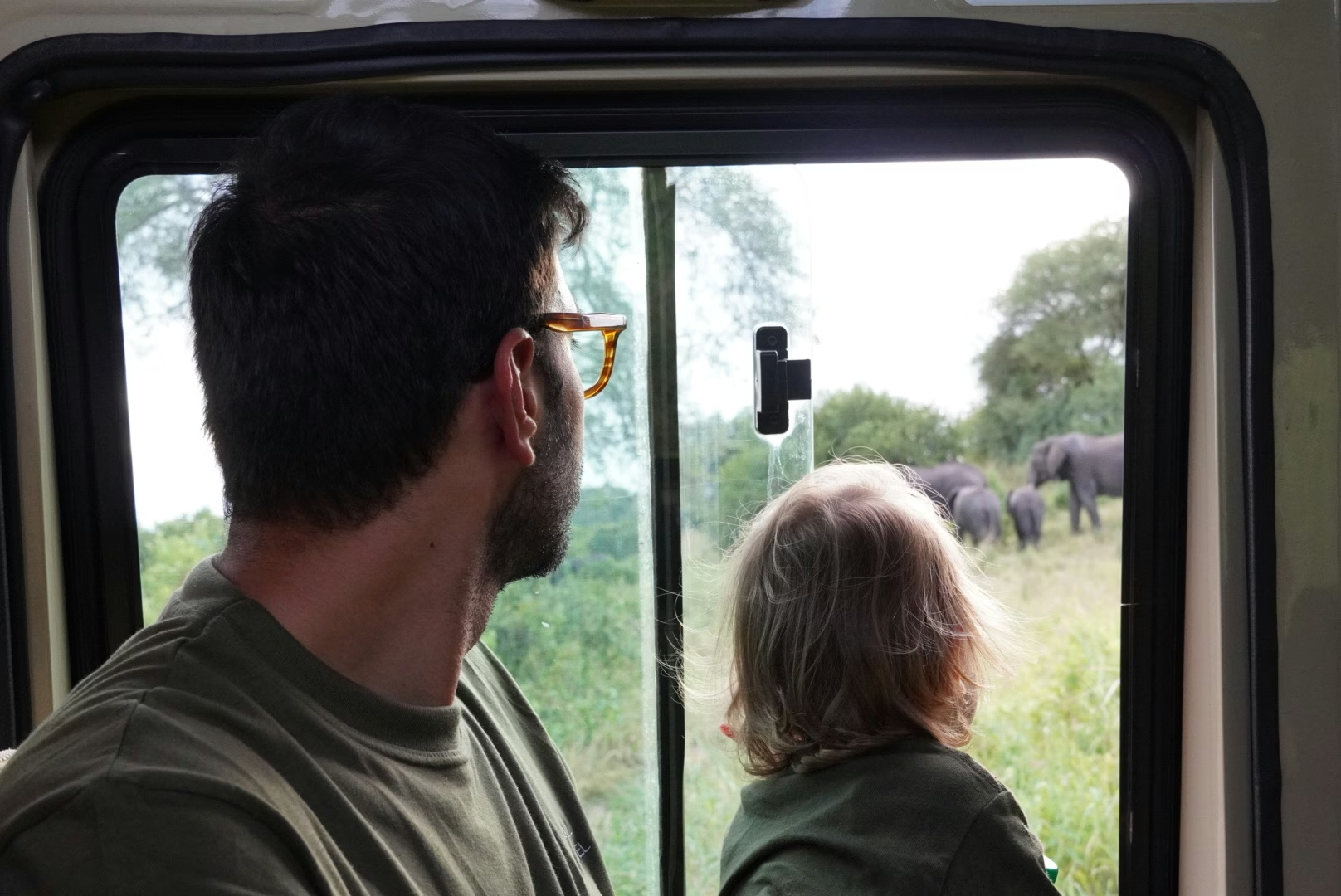
During the cruise you may spot hippos, crocodiles, birds and, with luck, elephants on the banks. It's not a safari in the strict sense, but it is a beautiful way to connect with the landscape.
It's an especially good option for couples, families or travellers who want to alternate adventure with more relaxed moments.
Bungee jump, zipline and bridge swing
The Victoria Falls Bridge is the epicentre of the adrenaline activities. Here you can bungee jump, ride the zipline or do the bridge swing over the gorge.
They're very visual, memorable activities, though not for every set of nerves. If you love strong emotions, they can be a great addition. If not, watching from the bridge has its own appeal.
Day trip to Chobe National Park
One of the best combinations from Victoria Falls is a getaway to Chobe National Park, in Botswana. Many itineraries include a full-day excursion with a transfer to the border, a boat safari on the Chobe River and a 4x4 safari in the afternoon.
Chobe is famous for its elephants, hippos, crocodiles and riverside wildlife. If your trip doesn't include other longer safaris, adding Chobe can lift the whole experience.
How to get to Victoria Falls from Spain
There are usually no direct flights from Spain to Victoria Falls. The most common option is to fly with one or two stopovers, normally via major African or international hubs, and connect to one of these airports:
- Victoria Falls Airport, in Zimbabwe.
- Harry Mwanga Nkumbula International Airport, in Livingstone, Zambia.
- Johannesburg, as a gateway if you're combining South Africa and Victoria Falls.
The most common route for an organised trip from Spain usually includes South Africa, Botswana or both. For example:
- Madrid or Barcelona + Johannesburg + Kruger Park + Victoria Falls.
- Victoria Falls + Chobe + Okavango Delta.
- Namibia + Botswana + Victoria Falls.
- South Africa + Victoria Falls as a honeymoon trip.
Before travelling, it's worth reviewing documentation, visas, health requirements and official advice. Spain's Ministry of Foreign Affairs publishes specific recommendations for Zambia and Zimbabwe, and the Ministry of Health advises consulting an International Vaccination Centre for personalised advice before a trip of this kind.
How many days to spend at Victoria Falls
1-day visit
One day is short, but doable if you're passing through. In that case, the priority should be clear: the viewpoints on the Zimbabwe side plus one extra activity, such as a sunset cruise or a helicopter flight.
It's a useful option on very tight trips, though it leaves little margin to cross into Zambia or adjust plans if the weather doesn't cooperate.
Ideal route: 2 days / 3 nights
For most travellers, the most balanced option is to spend two full days and three nights here.
A sensible itinerary would be:
- Day 1: arrival, viewpoints on the Zimbabwe side and a Zambezi cruise.
- Day 2: Zambia side, the bridge, a helicopter flight or Devil's Pool if it's open.
- Day 3: departure for Chobe, Kruger, Johannesburg or your next stage.
This format lets you see the essentials without rushing and leaves room for activities.
A full trip of 4 days or more
If you have four days or more, you can add Chobe, an extra night in a lodge, a cultural excursion or more downtime by the river.
This option fits beautifully with honeymoons, tailor-made trips and premium routes through southern Africa. The falls aren't just a visit: they can be the perfect finale to a safari or the start of a great adventure.
Practical tips for visiting Victoria Falls
Bring comfortable, quick-drying clothes. In the high-water season, a raincoat is not optional. It's also worth carrying a waterproof case for your phone or camera, especially if you want to take photos close to the viewpoints.
Your footwear should have good grip. The paths are usually easy, but they can be wet and slippery.
Don't forget sunscreen, sunglasses, a cap and repellent. In the hottest months, temperatures can be demanding, especially if you're combining outdoor activities.
Book the important activities in advance, especially the helicopter, Devil's Pool, rafting and Chobe excursions in high season.
Carry a little cash in US dollars for one-off payments, tips or local fees, although more and more services accept cards.
And above all, don't plan Devil's Pool as if it were a guaranteed activity. It's seasonal and depends on water levels. Have a plan B that's just as appealing: helicopter, cruise, the Zambian side or Chobe.
Victoria Falls trip and safari: recommended combinations
Victoria Falls works wonderfully as part of a bigger trip through southern Africa. Here are some very appealing combinations:
Victoria Falls + Chobe
Perfect if you're short on days and want to add a safari without overcomplicating things. Chobe is relatively close and offers both boat and vehicle safaris.
Victoria Falls + Okavango Delta
A spectacular combination for nature lovers. First the roaring water of the Zambezi; then the silence of the Okavango channels by mokoro or motorboat.
South Africa + Kruger + Victoria Falls
One of the most popular routes. It combines Cape Town, the winelands, a Kruger safari and a grand finale at Victoria Falls.
Namibia + Botswana + Victoria Falls
A longer, wonderfully varied route, perfect for anyone after extreme landscapes: deserts, wildlife, the delta, rivers and one of the world's great waterfalls.
Honeymoon in southern Africa
Victoria Falls fits beautifully into a honeymoon with special lodges, scenic flights, riverside dinners and private safaris. It's not your typical beach trip, and that's exactly the charm.
Is Victoria Falls worth visiting?
Yes, especially if you're travelling through southern Africa. Victoria Falls is one of those places that justify the detour.
It's worth it for nature travellers, photography lovers, honeymooning couples, adventurous families and anyone who wants to add a truly memorable moment to their trip.
The experience changes a lot depending on the season. If you want maximum spectacle, travel at high water. If you want activities like Devil's Pool or rafting, look at the dry season. If you're after balance, aim for June, July or August.
And if you'd rather not drive yourself mad juggling flights, visas, safaris and activities, the best move is to design the itinerary with expert help.
You can browse our tailor-made Victoria Falls trip proposals, combine it with a South Africa and Victoria Falls trip or simply request a quote for a trip to Africa.
Frequently asked questions about Victoria Falls
Where is Victoria Falls?
Victoria Falls is on the border between Zambia and Zimbabwe, on the Zambezi River. The main bases for visiting are Victoria Falls Town, in Zimbabwe, and Livingstone, in Zambia.
What is the best time to visit Victoria Falls?
It depends on the goal of the trip. From February to May there's peak flow and a lot of mist. From June to August there's usually a good balance of water, visibility and safari. From September to November there's less water, better visibility of the gorge and better conditions for activities like rafting or Devil's Pool.
Is it better to see Victoria Falls from Zambia or from Zimbabwe?
For a first visit, Zimbabwe usually offers the better panoramic views. Zambia brings an experience closer to the water and access to Livingstone Island and Devil's Pool in season. Ideally, visit both sides.
How many days do you need to visit Victoria Falls?
The best plan is two full days and three nights. With one day you can see the essentials, but the trip feels very tight. With three or four days you can add activities, Chobe or some downtime.
When can you visit Devil's Pool?
Devil's Pool usually opens between mid-August and mid-January, although the exact dates change with the level of the Zambezi River. It must always be done with authorised operators and never on your own.
Can you combine Victoria Falls with a safari?
Yes. In fact, it's one of the best ways to include the falls in a southern Africa trip. The most popular combinations are Victoria Falls with Chobe, the Okavango Delta, Kruger Park, Hwange, Namibia or Botswana.
Conclusion
Victoria Falls is much more than a photo stop. It's landscape, noise, spray, adventure and a magnificent gateway to the great safaris of southern Africa.
To get it right, first decide what kind of trip you want: maximum water power, great photos, adventure activities or a combined safari. Then choose your dates, the side to stay on and the experiences that suit you best.
Want to organise a trip to Victoria Falls without getting lost among flights, seasons and border crossings? Get in touch with us and we'll prepare personalised information and a quote to design a tailor-made route through Africa.





.avif)


.avif)




.avif)

.avif)
.avif)

.avif)

.jpeg)









.png)