

15-Day Rwanda and Uganda Safari: The Katuna Border Route Through Four Parks
The direct answer to the question most people ask us: yes, you can do gorilla trekking in Rwanda and Uganda on the same trip, cross the Katuna border in a day, and fit Nyungwe chimps and Akagera game drives into the same circuit. Budget €4,800 to €8,500 per person depending on lodge category. No domestic flights needed if you run the direction right. The difference between this itinerary and a standard Rwanda trip is the Bwindi leg, and the Katuna crossing is where most self-planned attempts break down.
| Detail | Info |
|---|---|
| Best months | Jun, Jul, Aug, Dec, Jan (dry seasons) |
| Price range | €4,800 to €8,500 per person (all-inclusive) |
| Gorilla permit (Rwanda) | USD 1,500 per person per trek |
| Gorilla permit (Uganda/Bwindi) | USD 800 per person per trek |
| Closest airport | Kigali International (KGL) |
| Visa | Rwanda: visa-free for most nationalities or e-visa at migration.gov.rw |
| Currency | Rwandan Franc (RWF); USD widely accepted |
What makes this route different from a standard Rwanda safari?
Most Rwanda itineraries stay in-country: Volcanoes, Nyungwe, Akagera and back to Kigali. This one adds a cross-border leg to Bwindi Impenetrable Forest in Uganda, and that single decision changes the budget, the permit logistics and the trekking experience. You trek gorillas twice, in two completely different ecosystems, using two different national park systems.
Bwindi has over 20 habituated gorilla families spread across four sectors. Volcanoes has 10. The permit is also cheaper: USD 800 in Uganda against USD 1,500 in Rwanda. That price gap funds a decent night's accommodation. What it costs you is a border crossing, some paperwork and roughly six hours of driving from Kigali. We have made that crossing more times than we can count, and it is very manageable with the right preparation.
What does the 15-day circuit actually cover?
Four parks, two countries, one airport. Volcanoes National Park for mountain gorillas and golden monkeys sits 2.5 hours north of Kigali. Nyungwe Forest, the largest montane forest in East Africa, is 4.5 hours south of Musanze. Akagera, Rwanda's Big Five savanna park on the Tanzanian border, is another five hours east. Bwindi, accessed via the Katuna border post, closes the loop back toward Kigali on the final days.
Nights break down roughly as two in Kigali (arrival and final departure buffer), three at Volcanoes, two or three at Nyungwe, three at Akagera, and three at Bwindi. That structure gives you one full trekking day in each gorilla forest, two solid game drive days in Akagera and enough time in Nyungwe for both chimpanzee tracking and the canopy walkway.
What is the best direction to run this itinerary?
Start in Kigali, drive north to Volcanoes the same afternoon (2.5 hours from the airport). From Musanze head south through the Congo Nile Trail corridor to Nyungwe. Then east to Akagera. Return to Kigali for one night, then southwest to the Katuna border and on to Bwindi for the Uganda leg.
Running it clockwise like this puts Katuna at the end, which matters. By day 12 you know the pace, you have already completed both Rwanda permits, and your Ugandan permit and sector allocation are confirmed. Arriving at Bwindi via Katuna saves roughly 40 minutes compared to the Cyanika crossing and the road condition on the Ugandan side from that direction is noticeably better. Doing it in reverse puts Katuna on day two, when jet lag is still real and you have no buffer if anything at the border takes longer than expected.
Where do you sleep each night? Day-by-day breakdown
- Day 1: Arrive Kigali. Radisson Blu or Ubumwe Grande, around USD 150-250 per night.
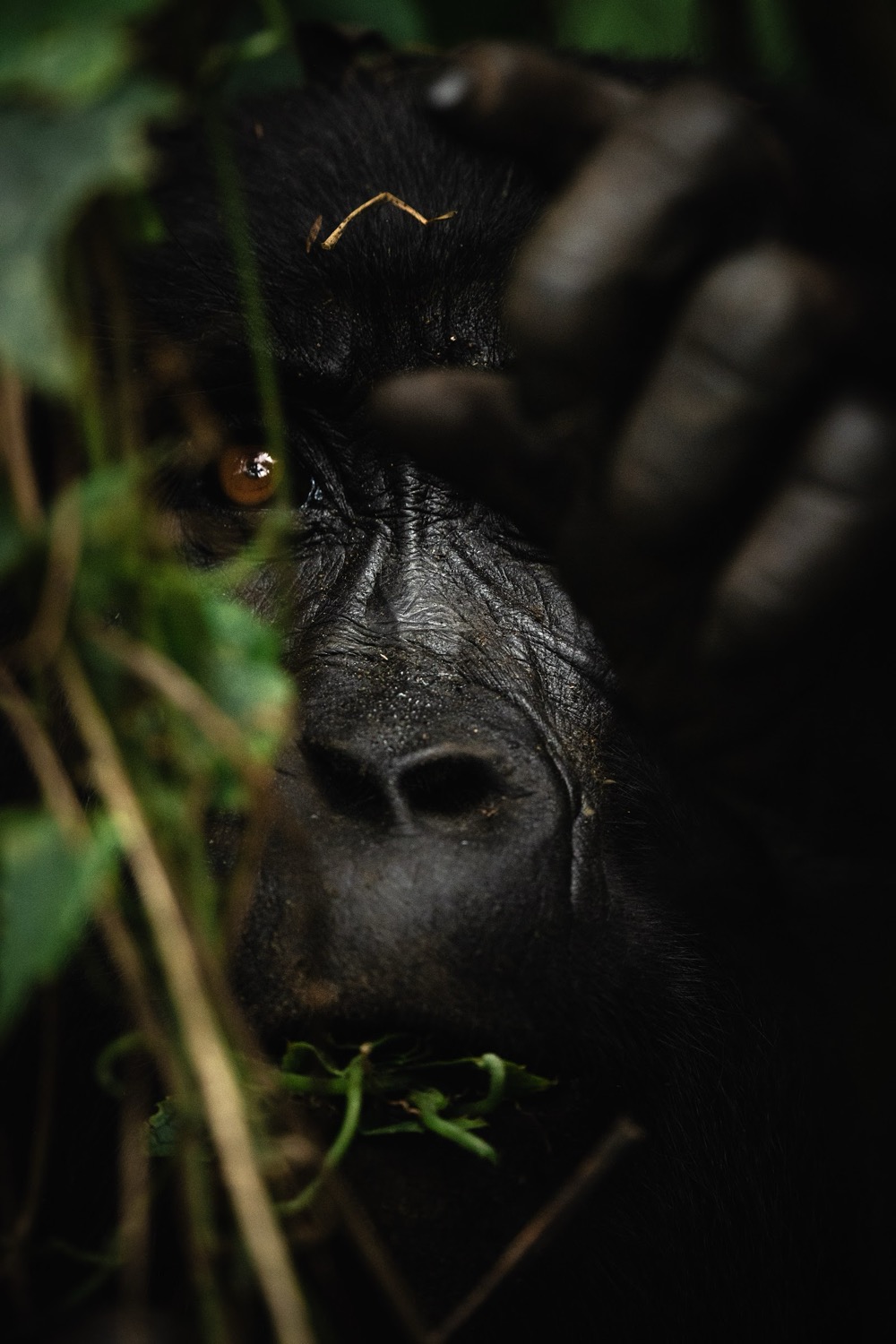
- Days 2-4: Volcanoes National Park. Gorilla trek on day 3, golden monkey tracking on day 4. Bisate Lodge from USD 1,900 per person per night at the top end; Muhabura Hotel from USD 90 midrange.
- Days 5-7: Nyungwe Forest. Chimpanzee tracking on day 6, canopy walkway on day 7. One&Only Nyungwe House for luxury; Nyungwe Top View Hill Hotel for a solid midrange option.
- Days 8-10: Akagera National Park. Two full game drive days inside the park. Akagera Game Lodge sits at midrange; Magashi Camp is the luxury choice.
- Day 11: Return to Kigali. The Kigali Genocide Memorial is worth an afternoon, and Kigali's restaurant scene around KG 9 Ave is good enough that you won't be disappointed by a final city dinner.
- Days 12-14: Cross to Uganda via Katuna, Bwindi Impenetrable Forest. Gorilla trek on day 13. Buhoma Community Rest Camp from USD 80 budget; Mahogany Springs from USD 350 midrange.
- Day 15: Return to Kigali for departure. The drive back from Katuna is around four hours to the airport, so a midday flight is tight; aim for late afternoon.
How does the Katuna border crossing actually work?
This is the question that comes up in every planning call. Katuna is a land border between Gatuna on the Rwandan side and Katuna on the Ugandan side. It opens at 6am and closes at 10pm. You exit Rwanda, walk across, enter Uganda, and your driver picks you up on the other side (a different vehicle if you are switching country guides, same vehicle if your guide holds both licences).
The whole process takes 45 minutes to two hours depending on the day and queue length. We crossed in January 2026 with a group of four and it took 55 minutes total, which is typical outside of public holidays. East African Community passport holders move faster. European and American passports need a Ugandan e-visa in advance, available at Uganda's immigration portal. Getting this wrong, meaning arriving without the e-visa, adds hours and is stressful. Sort it two weeks before departure.
The trickier logistics issue is what happens after the border. Bwindi has four sectors: Buhoma, Ruhija, Rushaga and Nkuringo. Your permit is locked to one sector on the day of purchase. Your lodge has to be in the same sector. We had a client who booked Rushaga permits through one operator and a lodge in Buhoma through another. That is a 90-minute drive on an unpaved road at 5am before briefing. We caught it two weeks before departure and fixed it, but just barely.
How do the four parks compare for a first-time visitor?
| Park | Country | Highlight | Best month | Entry fee |
|---|---|---|---|---|
| Volcanoes NP | Rwanda | Mountain gorillas, golden monkeys | Jun-Sep, Dec-Jan | USD 1,500 (gorilla permit) |
| Nyungwe Forest NP | Rwanda | Chimpanzees, canopy walkway | Jun-Sep | USD 90 (chimp trek) |
| Akagera NP | Rwanda | Big Five, lake circuit | Jun-Sep | USD 40/day plus USD 40/vehicle |
| Bwindi Impenetrable Forest | Uganda | Mountain gorillas, different families | Jun-Sep, Dec-Feb | USD 800 (gorilla permit) |
Is Nyungwe worth the long drive from Volcanoes?
Short answer: yes, and the drive itself is part of it. The 4.5-hour road south from Musanze follows the Congo Nile Trail along Lake Kivu. We stop at a viewpoint above Kibuye that nobody ever photographs on the way because they're too focused on getting to the lodge. Build in 20 minutes there.
Nyungwe holds 13 primate species. Chimpanzee tracking success depends on where the chimps decide to be that morning, which is unpredictable in a way gorilla trekking is not. We had a group in August 2025 that spent three hours in steep forest before finding the community, but when they did, the chimps were at eye level in a fruiting tree not five metres away. The canopy walkway is a separate activity and the views over the forest canopy at 50 metres are unlike anything in the other three parks.
How much do gorilla permits cost and how do you book them?
Rwanda permits cost USD 1,500 per person, booked through the Rwanda Development Board. Uganda permits for Bwindi cost USD 800 per person, through the Uganda Wildlife Authority. Both sell out months ahead, particularly June through September.
For a July 2027 departure the Rwanda permit window is already open as of mid-2026. Uganda's window opens slightly later but fills fast for peak season. Book both before you book flights. That sequencing is not instinctive for most travellers, but permits are the constraint that everything else is scheduled around.
How we do it
If you want to travel it with us: 11 days, from 3.995 € per person. Uganda - The Wild Jungle
What does the full 15-day trip cost, broken down?
For one person, midrange lodges, sharing a double room:
- Rwanda gorilla permit: USD 1,500
- Uganda gorilla permit (Bwindi): USD 800
- Chimp tracking permit, Nyungwe: USD 90
- Akagera park fees, 3 days: approximately USD 240
- Accommodation, 14 nights midrange: USD 1,200 to 2,500
- Private guide and 4x4 vehicle: USD 900 to 1,400 shared across 2-4 people
- Meals (mostly included in lodge rates): USD 0 to 300 extra
- Total per person estimate, midrange: USD 5,200 to 7,000
Luxury lodges push total costs significantly higher. Bisate Lodge alone at USD 1,900 per night adds roughly USD 3,800 just for the Volcanoes section of the trip. Travellers using community camps and local guesthouses at Bwindi and Nyungwe can keep non-permit costs well below the midrange estimate above.
Do you need vaccinations or health precautions for this route?
Yellow fever vaccination is mandatory for Uganda entry. Rwanda also requires it if you are arriving from a country on the yellow fever risk list. Malaria prophylaxis makes sense for Akagera and Bwindi, both at lower altitude where mosquito pressure is real. Volcanoes and Nyungwe sit above 2,500m, though the road transfers between parks pass through lower zones. Current advice is at WHO International Travel Health and worth checking close to departure since recommendations update periodically.
What is the best time of year for this itinerary?
June to September. Trails are drier, Akagera game-viewing is sharper with less vegetation, gorilla trekking is more comfortable. December and January work well for the Uganda section specifically, where Bwindi's steeper trails are manageable in the short dry season.
April and May are a different story. We ran this route in April once, with an experienced group who understood what they were signing up for. Nyungwe trails were knee-deep in places. Bwindi in heavy rain tests everyone, including the guides. The trekking still happens, but success rates drop and the physical toll is higher. If your dates are fixed in the wet season, we shift the emphasis toward Akagera and Kigali and manage expectations on the forest sections honestly.
FAQ
Can I do this itinerary without a private guide?
Rwanda has public transport connecting Kigali to Musanze (for Volcanoes) and to Huye near Nyungwe. But Akagera requires a vehicle, and the Uganda crossing with luggage involves multiple steps that take most of a day independently. A private guide and vehicle runs USD 900 to 1,400 total over 15 days shared across the group. Once people see what the Katuna border crossing involves on their own, most find that cost easy to justify.
Can I trek gorillas twice, once in Rwanda and once in Uganda?
Yes, and the two treks are different enough to be worth both permits. Volcanoes has 10 habituated groups on open volcanic slopes where you can sometimes see the Virunga peaks in the background. Bwindi is denser, the terrain is steeper, and the forest feels older somehow. Combined permit cost is USD 2,300 per person, the single largest line item on the budget, and for most people the clearest memory they bring home.
How physically demanding is gorilla trekking?
It depends where the gorilla group moved that morning. In Volcanoes it ranges from 30 minutes to 4 hours. Bwindi runs longer and the ground is steeper and often wetter. Moderate fitness is enough for most people. Porter services are available at both parks for USD 10 to 20 (tip separately) and make a genuine difference on the harder Bwindi terrain. We have seen 70-year-olds complete the trek and 35-year-olds struggle. Physical condition matters more than age.
Is Rwanda safe for tourists?
Rwanda consistently ranks among Africa's lowest-risk destinations for visitors. Kigali has low street crime and all national park treks include professional ranger escorts. The UK Foreign Office, EU travel advisories and US State Department all rated Rwanda as low risk for tourist travel as of 2026. Check current advisories before departure, as assessments can shift.
Can families with children do this itinerary?
Gorilla trekking minimum age is 15 in both Rwanda and Uganda. Nyungwe chimpanzee tracking has a minimum of 12. Golden monkey trekking at Volcanoes and game drives in Akagera have no age restriction. Families with teenagers can complete the full route. Those with younger children often do better adding extra Akagera days in place of one of the trekking permits, which also brings the total cost down meaningfully.
Your next step
If you want to travel it with us: 11 days, from 3.995 € per person. Uganda - The Wild Jungle
15-Day Rwanda and Uganda Safari: The Katuna Border Route Through Four Parks
The direct answer to the question most people ask us: yes, you can do gorilla trekking in Rwanda and Uganda on the same trip, cross the Katuna border in a day, and fit Nyungwe chimps and Akagera game drives into the same circuit. Budget €4,800 to €8,500 per person depending on lodge category. No domestic flights needed if you run the direction right. The difference between this itinerary and a standard Rwanda trip is the Bwindi leg, and the Katuna crossing is where most self-planned attempts break down.
| Detail | Info |
|---|---|
| Best months | Jun, Jul, Aug, Dec, Jan (dry seasons) |
| Price range | €4,800 to €8,500 per person (all-inclusive) |
| Gorilla permit (Rwanda) | USD 1,500 per person per trek |
| Gorilla permit (Uganda/Bwindi) | USD 800 per person per trek |
| Closest airport | Kigali International (KGL) |
| Visa | Rwanda: visa-free for most nationalities or e-visa at migration.gov.rw |
| Currency | Rwandan Franc (RWF); USD widely accepted |
What makes this route different from a standard Rwanda safari?
Most Rwanda itineraries stay in-country: Volcanoes, Nyungwe, Akagera and back to Kigali. This one adds a cross-border leg to Bwindi Impenetrable Forest in Uganda, and that single decision changes the budget, the permit logistics and the trekking experience. You trek gorillas twice, in two completely different ecosystems, using two different national park systems.
Bwindi has over 20 habituated gorilla families spread across four sectors. Volcanoes has 10. The permit is also cheaper: USD 800 in Uganda against USD 1,500 in Rwanda. That price gap funds a decent night's accommodation. What it costs you is a border crossing, some paperwork and roughly six hours of driving from Kigali. We have made that crossing more times than we can count, and it is very manageable with the right preparation.
What does the 15-day circuit actually cover?
Four parks, two countries, one airport. Volcanoes National Park for mountain gorillas and golden monkeys sits 2.5 hours north of Kigali. Nyungwe Forest, the largest montane forest in East Africa, is 4.5 hours south of Musanze. Akagera, Rwanda's Big Five savanna park on the Tanzanian border, is another five hours east. Bwindi, accessed via the Katuna border post, closes the loop back toward Kigali on the final days.
Nights break down roughly as two in Kigali (arrival and final departure buffer), three at Volcanoes, two or three at Nyungwe, three at Akagera, and three at Bwindi. That structure gives you one full trekking day in each gorilla forest, two solid game drive days in Akagera and enough time in Nyungwe for both chimpanzee tracking and the canopy walkway.
What is the best direction to run this itinerary?
Start in Kigali, drive north to Volcanoes the same afternoon (2.5 hours from the airport). From Musanze head south through the Congo Nile Trail corridor to Nyungwe. Then east to Akagera. Return to Kigali for one night, then southwest to the Katuna border and on to Bwindi for the Uganda leg.
Running it clockwise like this puts Katuna at the end, which matters. By day 12 you know the pace, you have already completed both Rwanda permits, and your Ugandan permit and sector allocation are confirmed. Arriving at Bwindi via Katuna saves roughly 40 minutes compared to the Cyanika crossing and the road condition on the Ugandan side from that direction is noticeably better. Doing it in reverse puts Katuna on day two, when jet lag is still real and you have no buffer if anything at the border takes longer than expected.
Where do you sleep each night? Day-by-day breakdown
- Day 1: Arrive Kigali. Radisson Blu or Ubumwe Grande, around USD 150-250 per night.
- Days 2-4: Volcanoes National Park. Gorilla trek on day 3, golden monkey tracking on day 4. Bisate Lodge from USD 1,900 per person per night at the top end; Muhabura Hotel from USD 90 midrange.
- Days 5-7: Nyungwe Forest. Chimpanzee tracking on day 6, canopy walkway on day 7. One&Only Nyungwe House for luxury; Nyungwe Top View Hill Hotel for a solid midrange option.
- Days 8-10: Akagera National Park. Two full game drive days inside the park. Akagera Game Lodge sits at midrange; Magashi Camp is the luxury choice.
- Day 11: Return to Kigali. The Kigali Genocide Memorial is worth an afternoon, and Kigali's restaurant scene around KG 9 Ave is good enough that you won't be disappointed by a final city dinner.
- Days 12-14: Cross to Uganda via Katuna, Bwindi Impenetrable Forest. Gorilla trek on day 13. Buhoma Community Rest Camp from USD 80 budget; Mahogany Springs from USD 350 midrange.
- Day 15: Return to Kigali for departure. The drive back from Katuna is around four hours to the airport, so a midday flight is tight; aim for late afternoon.
How does the Katuna border crossing actually work?
This is the question that comes up in every planning call. Katuna is a land border between Gatuna on the Rwandan side and Katuna on the Ugandan side. It opens at 6am and closes at 10pm. You exit Rwanda, walk across, enter Uganda, and your driver picks you up on the other side (a different vehicle if you are switching country guides, same vehicle if your guide holds both licences).
The whole process takes 45 minutes to two hours depending on the day and queue length. We crossed in January 2026 with a group of four and it took 55 minutes total, which is typical outside of public holidays. East African Community passport holders move faster. European and American passports need a Ugandan e-visa in advance, available at Uganda's immigration portal. Getting this wrong, meaning arriving without the e-visa, adds hours and is stressful. Sort it two weeks before departure.
The trickier logistics issue is what happens after the border. Bwindi has four sectors: Buhoma, Ruhija, Rushaga and Nkuringo. Your permit is locked to one sector on the day of purchase. Your lodge has to be in the same sector. We had a client who booked Rushaga permits through one operator and a lodge in Buhoma through another. That is a 90-minute drive on an unpaved road at 5am before briefing. We caught it two weeks before departure and fixed it, but just barely.
How do the four parks compare for a first-time visitor?
| Park | Country | Highlight | Best month | Entry fee |
|---|---|---|---|---|
| Volcanoes NP | Rwanda | Mountain gorillas, golden monkeys | Jun-Sep, Dec-Jan | USD 1,500 (gorilla permit) |
| Nyungwe Forest NP | Rwanda | Chimpanzees, canopy walkway | Jun-Sep | USD 90 (chimp trek) |
| Akagera NP | Rwanda | Big Five, lake circuit | Jun-Sep | USD 40/day plus USD 40/vehicle |
| Bwindi Impenetrable Forest | Uganda | Mountain gorillas, different families | Jun-Sep, Dec-Feb | USD 800 (gorilla permit) |
Is Nyungwe worth the long drive from Volcanoes?
Short answer: yes, and the drive itself is part of it. The 4.5-hour road south from Musanze follows the Congo Nile Trail along Lake Kivu. We stop at a viewpoint above Kibuye that nobody ever photographs on the way because they're too focused on getting to the lodge. Build in 20 minutes there.
Nyungwe holds 13 primate species. Chimpanzee tracking success depends on where the chimps decide to be that morning, which is unpredictable in a way gorilla trekking is not. We had a group in August 2025 that spent three hours in steep forest before finding the community, but when they did, the chimps were at eye level in a fruiting tree not five metres away. The canopy walkway is a separate activity and the views over the forest canopy at 50 metres are unlike anything in the other three parks.
How much do gorilla permits cost and how do you book them?
Rwanda permits cost USD 1,500 per person, booked through the Rwanda Development Board. Uganda permits for Bwindi cost USD 800 per person, through the Uganda Wildlife Authority. Both sell out months ahead, particularly June through September.
For a July 2027 departure the Rwanda permit window is already open as of mid-2026. Uganda's window opens slightly later but fills fast for peak season. Book both before you book flights. That sequencing is not instinctive for most travellers, but permits are the constraint that everything else is scheduled around.
How we do it
If you want to travel it with us: 11 days, from 3.995 € per person. Uganda - The Wild Jungle
What does the full 15-day trip cost, broken down?
For one person, midrange lodges, sharing a double room:
- Rwanda gorilla permit: USD 1,500
- Uganda gorilla permit (Bwindi): USD 800
- Chimp tracking permit, Nyungwe: USD 90
- Akagera park fees, 3 days: approximately USD 240
- Accommodation, 14 nights midrange: USD 1,200 to 2,500
- Private guide and 4x4 vehicle: USD 900 to 1,400 shared across 2-4 people
- Meals (mostly included in lodge rates): USD 0 to 300 extra
- Total per person estimate, midrange: USD 5,200 to 7,000
Luxury lodges push total costs significantly higher. Bisate Lodge alone at USD 1,900 per night adds roughly USD 3,800 just for the Volcanoes section of the trip. Travellers using community camps and local guesthouses at Bwindi and Nyungwe can keep non-permit costs well below the midrange estimate above.
Do you need vaccinations or health precautions for this route?
Yellow fever vaccination is mandatory for Uganda entry. Rwanda also requires it if you are arriving from a country on the yellow fever risk list. Malaria prophylaxis makes sense for Akagera and Bwindi, both at lower altitude where mosquito pressure is real. Volcanoes and Nyungwe sit above 2,500m, though the road transfers between parks pass through lower zones. Current advice is at WHO International Travel Health and worth checking close to departure since recommendations update periodically.
What is the best time of year for this itinerary?
June to September. Trails are drier, Akagera game-viewing is sharper with less vegetation, gorilla trekking is more comfortable. December and January work well for the Uganda section specifically, where Bwindi's steeper trails are manageable in the short dry season.
April and May are a different story. We ran this route in April once, with an experienced group who understood what they were signing up for. Nyungwe trails were knee-deep in places. Bwindi in heavy rain tests everyone, including the guides. The trekking still happens, but success rates drop and the physical toll is higher. If your dates are fixed in the wet season, we shift the emphasis toward Akagera and Kigali and manage expectations on the forest sections honestly.
FAQ
Can I do this itinerary without a private guide?
Rwanda has public transport connecting Kigali to Musanze (for Volcanoes) and to Huye near Nyungwe. But Akagera requires a vehicle, and the Uganda crossing with luggage involves multiple steps that take most of a day independently. A private guide and vehicle runs USD 900 to 1,400 total over 15 days shared across the group. Once people see what the Katuna border crossing involves on their own, most find that cost easy to justify.
Can I trek gorillas twice, once in Rwanda and once in Uganda?
Yes, and the two treks are different enough to be worth both permits. Volcanoes has 10 habituated groups on open volcanic slopes where you can sometimes see the Virunga peaks in the background. Bwindi is denser, the terrain is steeper, and the forest feels older somehow. Combined permit cost is USD 2,300 per person, the single largest line item on the budget, and for most people the clearest memory they bring home.
How physically demanding is gorilla trekking?
It depends where the gorilla group moved that morning. In Volcanoes it ranges from 30 minutes to 4 hours. Bwindi runs longer and the ground is steeper and often wetter. Moderate fitness is enough for most people. Porter services are available at both parks for USD 10 to 20 (tip separately) and make a genuine difference on the harder Bwindi terrain. We have seen 70-year-olds complete the trek and 35-year-olds struggle. Physical condition matters more than age.
Is Rwanda safe for tourists?
Rwanda consistently ranks among Africa's lowest-risk destinations for visitors. Kigali has low street crime and all national park treks include professional ranger escorts. The UK Foreign Office, EU travel advisories and US State Department all rated Rwanda as low risk for tourist travel as of 2026. Check current advisories before departure, as assessments can shift.
Can families with children do this itinerary?
Gorilla trekking minimum age is 15 in both Rwanda and Uganda. Nyungwe chimpanzee tracking has a minimum of 12. Golden monkey trekking at Volcanoes and game drives in Akagera have no age restriction. Families with teenagers can complete the full route. Those with younger children often do better adding extra Akagera days in place of one of the trekking permits, which also brings the total cost down meaningfully.
Your next step
If you want to travel it with us: 11 days, from 3.995 € per person. Uganda - The Wild Jungle