





Contact
Request your free quote
Fill out the form and we will contact you to offer a proposal based on your preferences.
Fill out the form
How Do We Work?

44278
R5Szutbyzh
Social Impact
It's important to be aware of where the benefits generated by tourism are directed. That's why building close relationships with local businesses and people is a priority for us. In recent years, we have launched projects with groups of local people to provide us with services, thereby directing activity funds directly to them.
During your trip, you will contribute to and learn about some of the projects mentioned below.
During your trip, you will contribute to and learn about some of the projects mentioned below.
iS2YWoUiFG0
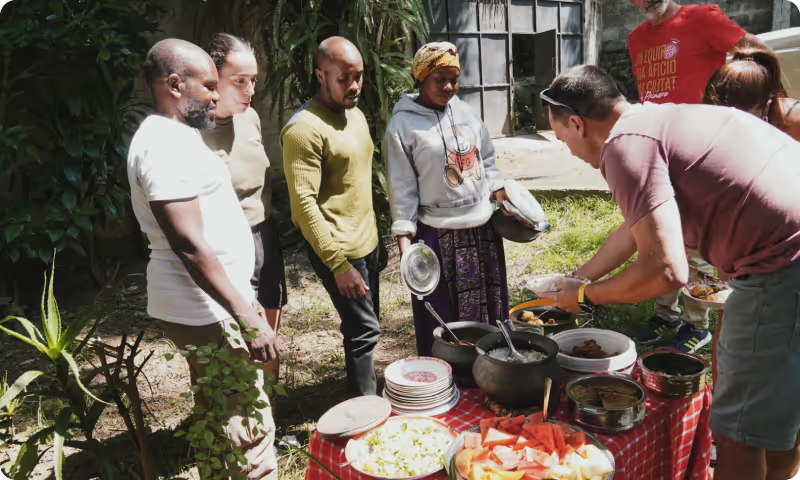
Local cuisine in Arusha
Thanks to our friend Daniel from Arusha, with whom we've maintained a very close relationship since 2015, we've been able to delve into a very special community in this city. Currently, a group of women from this neighborhood offers us a variety of typical local dishes, cooked especially for us. We usually do this activity on the day of arrival, allowing us to begin immersing ourselves in the local culture in a direct and genuine way.
I41mlvNcPCI
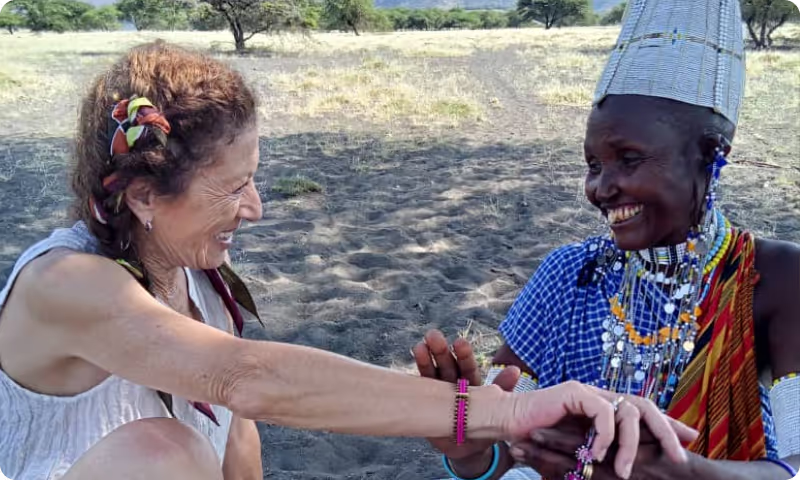
Maasai Jewelry Workshop at Lake Natron
No, we don't visit tribes. Instead, we delve deeply and respectfully into their culture, leaving behind the external and paternalistic gaze of the Western world. A group of Maasai women from the Lake Natron area offer us a jewelry workshop, where we can not only learn their artistic techniques but also create space for a one-on-one cultural exchange. Finally, this group of women has gained access to otherwise unimaginable income.
TAHgmAC3NTQ
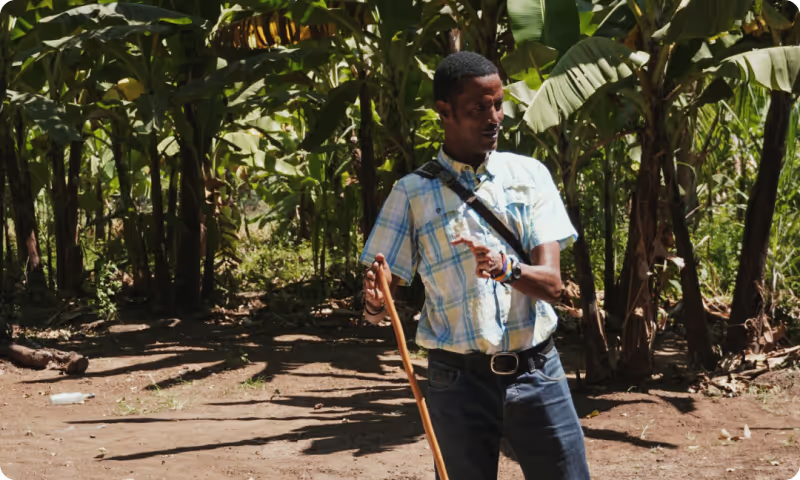
The Farmers of Mto Wa Mbu
Mto Wa Mbu is one of Tanzania's localities with the greatest agricultural variety, thanks to its geographical location. There, we are fortunate to collaborate with local farmers who show us different local plantations, allowing us to understand part of the local economy in a more tangible way. We can even taste local produce during this visit. Thanks to activities like this, farmers increase their income without abandoning their primary economic activity.
iS2YWoUiFG0
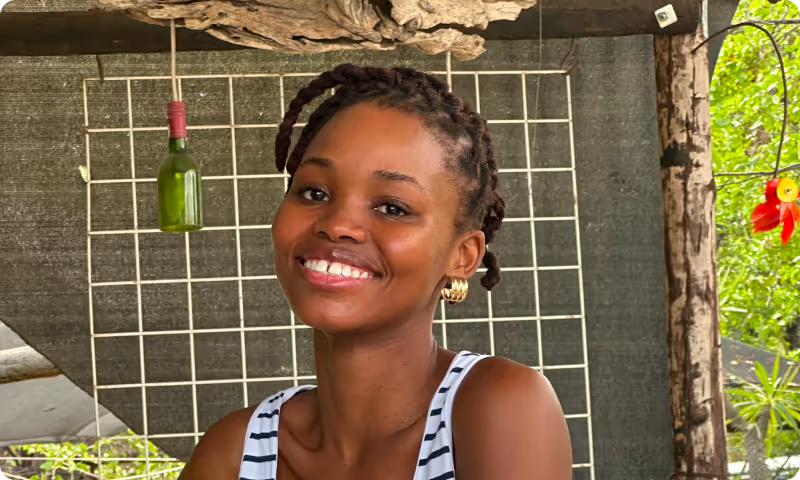
Local Cuisine in Arusha
Thanks to our friend Daniel from Arusha, with whom we've maintained a very close relationship since 2015, we've been able to delve into a very special community in this city. Currently, a group of women from this neighborhood offers us a variety of typical local dishes, cooked especially for us. We usually do this activity on the day of arrival, allowing us to begin immersing ourselves in the local culture in a direct and genuine way.
I41mlvNcPCI
Maasai Jewelry Workshop at Lake Natron
No, we don't visit tribes. We delve deeply and respectfully into their culture, leaving far behind the external and paternalistic gaze of the Western world. A group of Maasai women from the Lake Natron area offer us a jewelry workshop, where we can not only learn their artistic techniques but also create space for a one-on-one cultural exchange. Finally, this group of women has gained access to otherwise unthinkable income.
TAHgmAC3NTQ
The Farmers of Mto Wa Mbu
Mto Wa Mbu is one of Tanzania's localities with the greatest agricultural variety, thanks to its geographical location. There, we are fortunate to collaborate with local farmers who show us different local plantations, allowing us to understand part of the local economy more tangibly. We can even taste local produce during this visit. Thanks to activities like this, farmers increase their income without abandoning their main economic activity.


Conservation
Especially with wildlife experiences, it's important that as a project, we support the preservation and protection of the environment, particularly biodiversity at the destination. We collaborate directly with conservation projects and offset the carbon footprint generated by our operations and your international flights.
During your trip, you will contribute to and learn about some of the projects mentioned below.
During your trip, you will contribute to and learn about some of the projects mentioned below.
The Last Mountain Gorillas
Thanks to Dr. Gladys Kalema, the last mountain gorillas are growing in number. She became Uganda's first wildlife veterinarian at a critical time for these primates. Through her CTPH (Conservation Through Public Health) project, she has managed to find a balance between neighboring communities and the gorillas. By laying the groundwork in health and education, she has created a system that economically benefits local people through their protection of these primates. We will visit her laboratory to receive informative talks about this magnificent concept, which has expanded worldwide.
The Ecological Footprint
Of the 7 million roses sold in Catalonia for Sant Jordi, 97% are imported, mostly from Latin America and Africa. This is just one example to show that the ecological footprint is everywhere. We are aware that Watatu Travel also has one, and that's why we do the minimum we can. We offset it by purchasing carbon credits from projects like Carbon Tanzania, which generates them by ensuring the conservation of areas adjacent to the country's national parks. We know it's not the ultimate solution, but it's a step forward.

The Last Mountain Gorillas
Thanks to Dr. Gladys Kalema, the last mountain gorillas are growing in number. She became Uganda's first wildlife veterinarian at a critical time for these primates. Through her project CTPH (Conservation Through Public Health), she has managed to find a balance between neighboring communities and the gorillas. By laying the groundwork in health and education, she created a system that economically benefits local people through their protection of these primates. We will visit her laboratory for informative talks about this magnificent concept, which has expanded worldwide.
The Ecological Footprint
Of the 7 million roses sold in Catalonia for Sant Jordi, 97% are imported, mostly from Latin America and Africa. This is just one example to show that the ecological footprint is everywhere. We are aware that Watatu Travel also contributes to this, and that's why we do our utmost to mitigate it. We offset it by purchasing carbon credits from projects like Carbon Tanzania, which generates them by ensuring the conservation of areas adjacent to the country's national parks. We know it's not the ultimate solution, but it's a step forward.

Learning
We foster your curiosity during the trip with a talk from one of our partner projects and/or through our Safari Talks. The goal is for you to gain context about what you are experiencing. We will learn not only about wildlife, but also about local culture, history, and some of the destination's challenges. This added value is essential for this experience to become an agent of change for you and for those with whom you eventually share it.
During your trip, you will contribute to and learn about some of the projects mentioned below.
During your trip, you will contribute to and learn about some of the projects mentioned below.
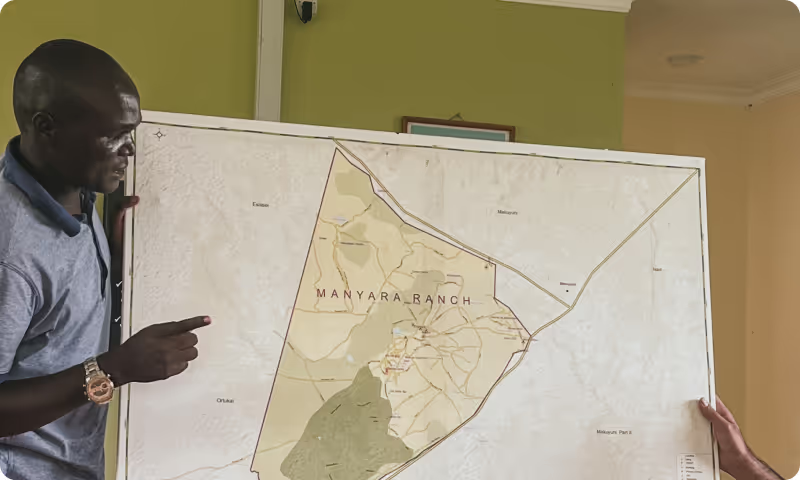
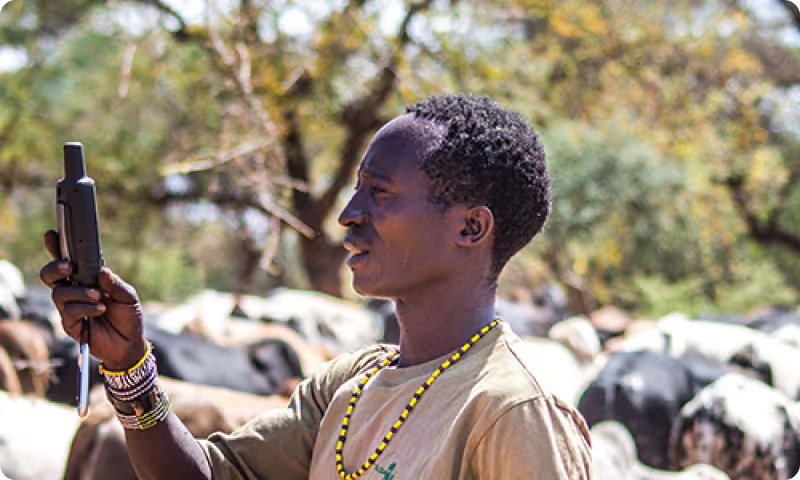
Natural Wildlife Corridors
Global population growth is destroying natural wildlife corridors. Animals use these spaces to continue their migrations in search of food and water. Thanks to the African Wildlife Foundation, we receive informative talks on the challenges of human-wildlife conflict, on-site. Moments like these help us understand the context of what we are witnessing. At the same time, we contribute income to ensure these crucial projects can continue.

Invisible Science
Have you ever wondered who is behind biodiversity protection in Africa? Specifically in Tanzania, we find TAWIRI (Tanzania Wildlife Research Institute), which is dedicated to researching wild flora and fauna for their protection. This entity provides scientific information to various government institutions that strive to keep the country a leader in this field. If you're interested, we can arrange visits to their different research centers for informative talks about the projects they are currently working on.
Natural Wildlife Corridors
Global population growth is destroying natural wildlife corridors. Animals use these spaces to continue their migrations in search of food and water. Thanks to the African Wildlife Foundation, we receive informative talks on the challenges of human-wildlife conflict, on-site. Moments like these help us understand the context of what we are witnessing. At the same time, we contribute income to ensure these crucial projects can continue.
Invisible Science
Have you ever wondered who is behind biodiversity protection in Africa? Specifically in Tanzania, we find TAWIRI (Tanzania Wildlife Research Institute), which is dedicated to researching wild flora and fauna for their protection. This entity provides scientific information to various government institutions that strive to keep the country a leader in this field. If you're interested, we can arrange visits to their different research centers for informative talks about the projects they are currently working on.

Experiències de safari basades en l’impacte social, la conservació de la biodiversitat, i l’educació als viatgers i viatgeres. Fes el teu somni realitat!


.png)