


| Parks for gorilla trekking | Bwindi Impenetrable Forest and Mgahinga Gorilla National Park |
| Group size per trek | Maximum 8 visitors per gorilla family per day |
| Time with gorillas | 1 hour once the family is located |
| Best dry seasons | June to August and December to February |
| Permit required | Yes, booked well in advance, especially for dry-season dates |
| Physical level needed | Moderate: expect mud, humidity, slopes and dense vegetation |
| Gorilla species tracked | Mountain gorilla (Gorilla beringei beringei) |
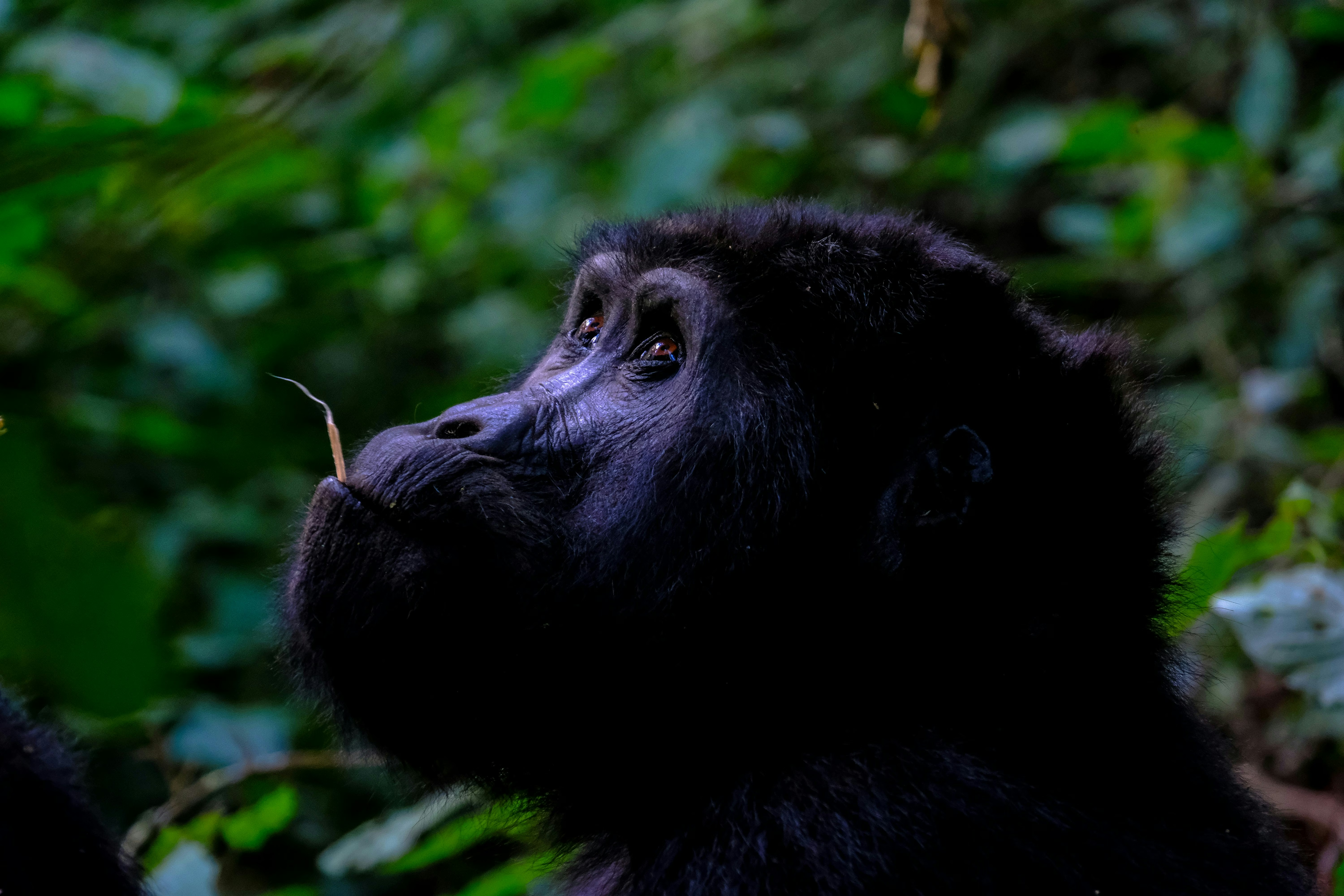
Uganda and gorillas form one of those combinations that justify a trip on their own. Few experiences in Africa are as powerful as walking through wet jungle, gaining height between mud and roots, and ending up in front of a group of mountain gorillas in near-total silence. You don't have to embellish it much: seeing them really impresses.
In addition, talk about Gorillas in Ugandait's not just a pretty picture to sell a trip. The country concentrates a key part of the population of mountain gorillas, and trekking is done in two specific parks: Bwindiand Resting. This concentration explains why so many routes of Travel to Uganda to see gorillasThey revolve around him.
If you are organizing a Travel to Uganda to see gorillas, there are four questions that go before all the others: Where to see gorillas in Uganda, how much does the permit cost, when it is convenient to go and what real difficulty the hike has. Here you have everything ordered, clear and without turns.
Uganda and gorillas: why this trip is so special
Talk about Gorillas in Ugandais to speak, above all, of Mountain Gorillas in Uganda. It is not a zoo or a panoramic view from a viewpoint. It is a regulated activity, with small groups, strict rules and limited time in front of the animals to protect them. The reward is enormous: a very intimate experience in the middle of the jungle, with the feeling of entering for a while in a world that does not revolve around the traveler.
It is also important to be clear from the beginning: See Gorillas in Ugandadoes not mean getting in a car, stopping for five minutes and continuing. Walking is part of the experience. Sometimes the meeting comes early. Others have to sweat hard before seeing the first member of the group. This component of effort is precisely what makes the final moment so strong.
For many people, a journey to see Gorillas of UgandaThis is the main reason for the journey. For others, it is the centerpiece within a broader itinerary. Both formulas work. The important thing is not to treat trekking as just any excursion.

Where to see gorillas in Uganda
If you are wondering Where to see gorillas in Uganda, the real answer is concentrated in two names: Bwindiand Resting. These are the two Ugandan parks where mountain gorillas are tracked.
Bwindi, the great name of trekking
Bwindi is anyone's heavyweight Gorilla Safari in Uganda. It is the park that appears the most on any route Gorilla Trip to Uganda, in a gorilla tour in Ugandaor in one Gorilla tour in Ugandawell thought out. It protects an essential part of the mountain gorilla population and offers more habituated families, more trekking options and more route combinations.
In practice, Bwindi is the place that almost everyone has in their head when they think of a Gorilla Park in Ugandaor in a Gorilla National Park in Uganda. It is larger, concentrates more activity and offers more possibilities. It also requires a good look at the logistics, because it is not enough to say “I am going to Bwindi”: there are different accesses and it is advisable to square the permit very well with the area where you will sleep.
Mgahinga, the smallest alternative
Mgahinga plays another league: it is smaller, more compact and very interesting for those who want a less massified alternative within a Gorilla Safari in Ugandaor a very experience-focused journey. It can fit very well if you are looking for simpler logistics or if the itinerary takes you better to that area.
When someone talks about Gorillas of Uganda, is actually usually choosing between Bwindi and Mgahinga, not from a very long list of parks. This is the first important decision.
How Gorilla Trekking Works in Uganda
The gorilla trekking in Ugandastart early. First there is a registration and a talk of rules. Then, visitors are divided into small groups and leave with guards and trackers to the assigned family. From there, it's time to walk.
And here is one of the keys to the trip: there is no identical duration for everyone. The jungle reigns. The ground rules. And the location of the group that day also matters. There are relatively smooth starts and others that turn into a good beat.
The moment of the meeting
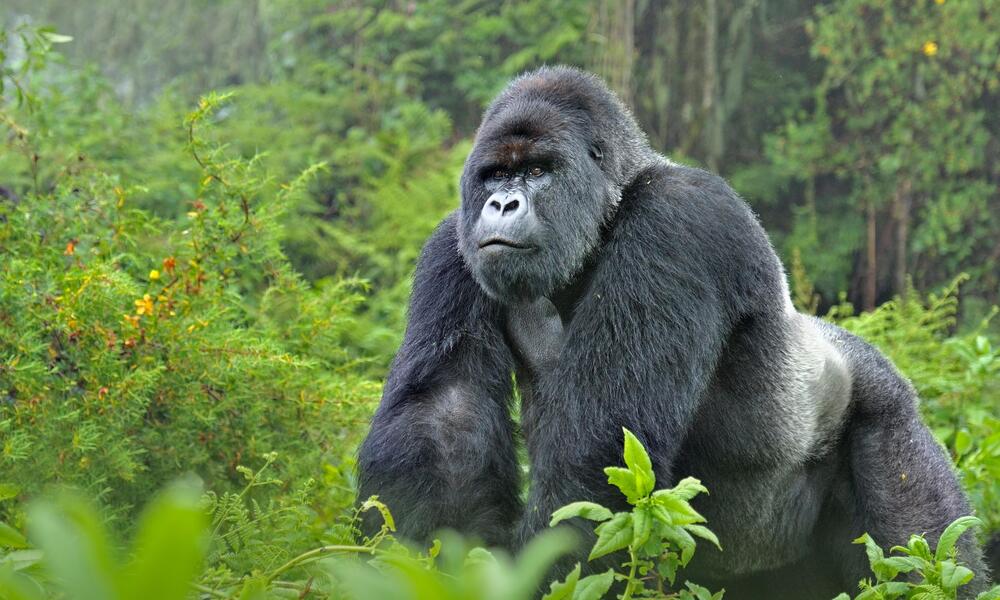
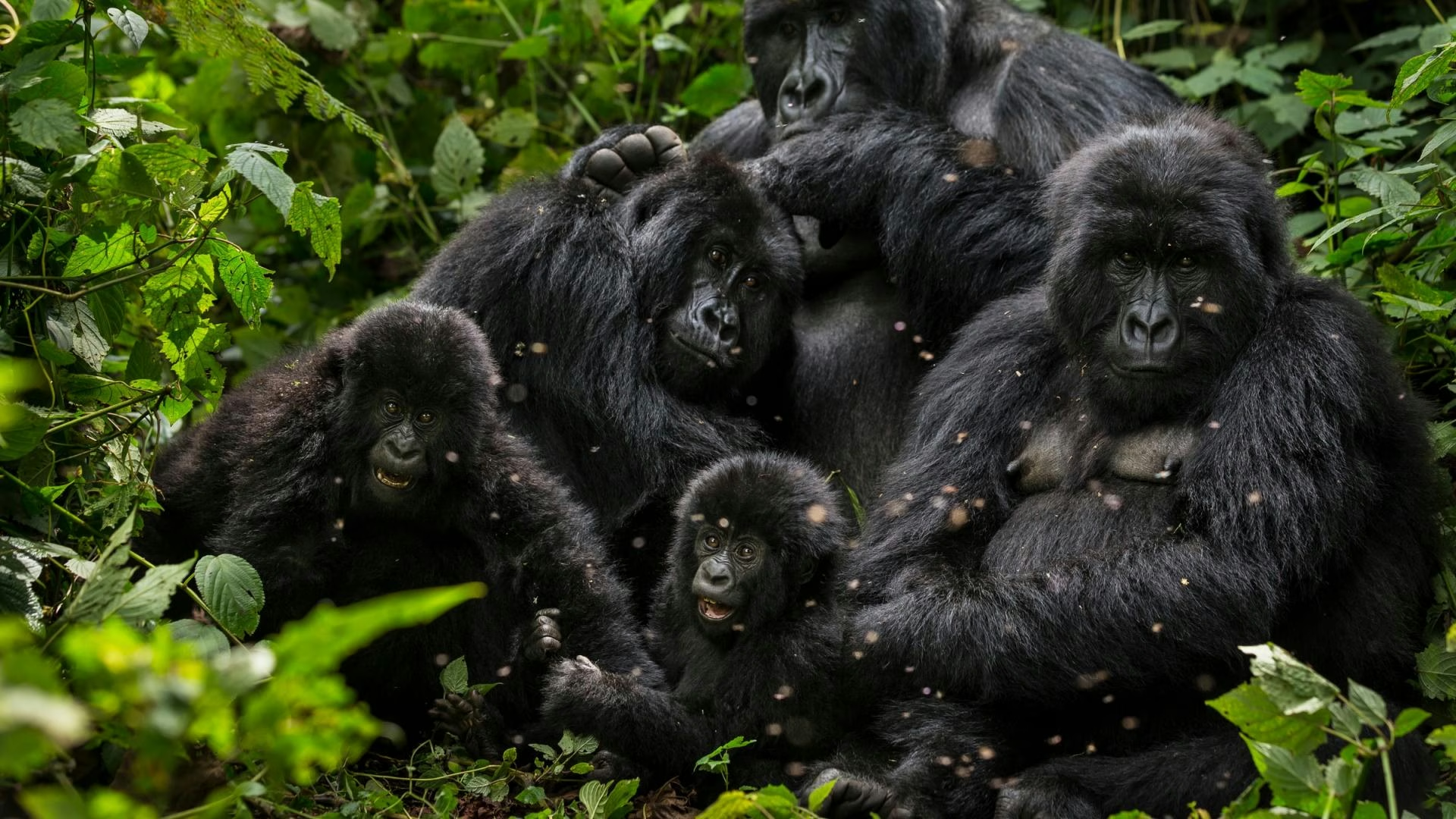
When a group finally appears in front of you, time changes pace. Here's why so many people organize a Gorilla Trip to Ugandajust for that. The presence of the dominant male, of the great silver-backed gorilla in Ugandao silver-backed gorilla in Uganda, impresses a lot. Not by aggressiveness, but by size, calmness and authority.
The loudest is not usually a great epic scene. It is usually something simpler: a glance, a brood playing, a female eating a few feet away, the sound of vegetation moving around. This mixture of proximity and respect is difficult to explain without falling into exaggeration, so better to be clear: it is an animal experience of those who remain.

Real difficulty
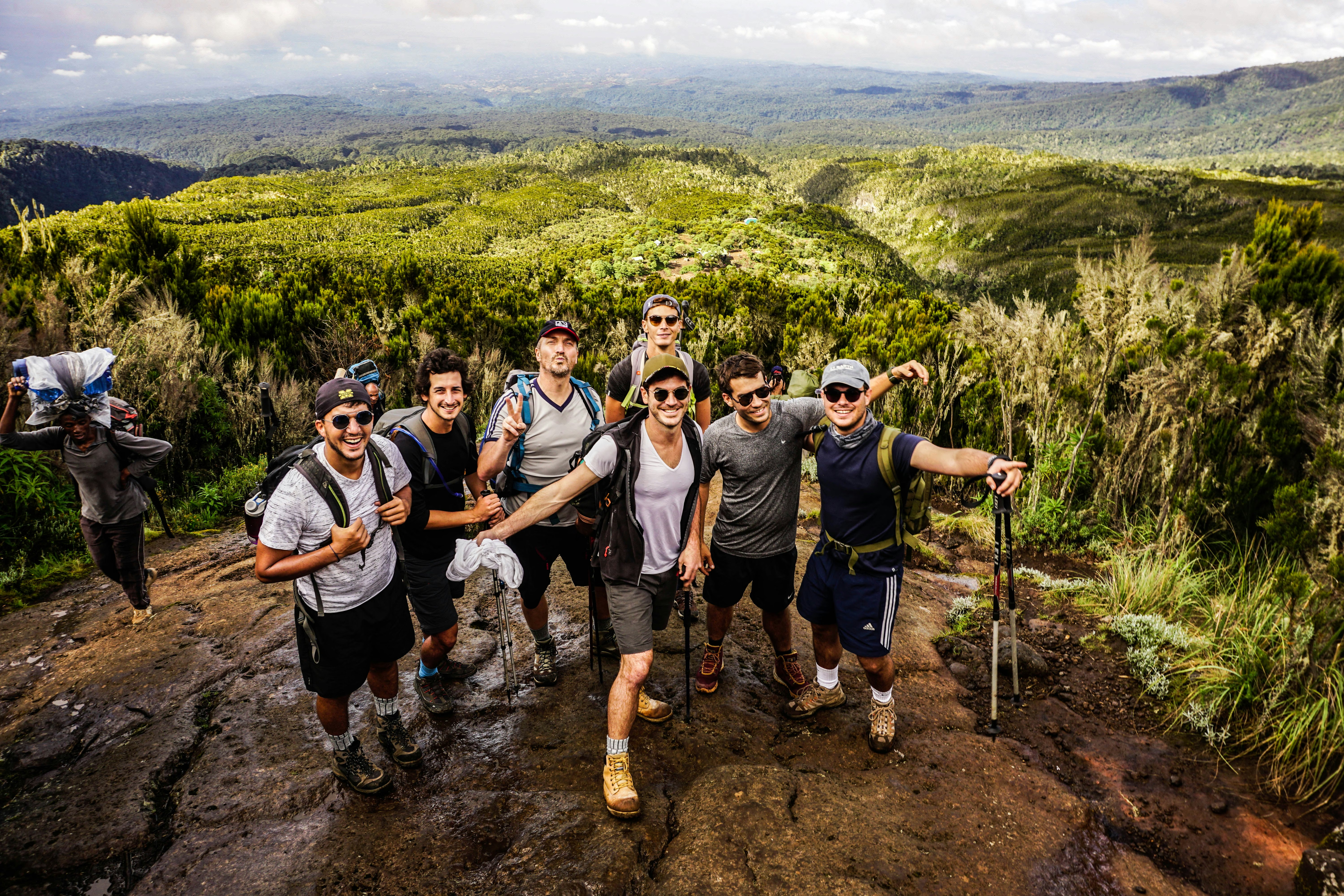
The difficulty is not in rare mountain techniques. It's on the ground. Wet jungle, mud, slope, closed vegetation, heat, humidity and irregular steps. It can be done with a normal physical form, but it is advisable to be prepared to walk for several hours and assume that the floor will not make it easy for you.
If someone sees you Visiting Gorillas in Ugandalike a comfortable walk, it's cutting out half of the film for you. It is not an extreme challenge, but also not an easy walk.
Ready for the jungle? Start with the right route
Our Gorilla Express is the most focused way to experience gorilla trekking in Uganda, without padding the itinerary. 5 days, from 1.479 € per person. Uganda - Gorilla Express
Permit to see gorillas in Uganda: price and booking
Here's the part that matters most when someone is looking how much does it cost to see gorillas in ugandaor the price to see gorillas in Uganda. The great cost of trekking is on the permit. Then come accommodation, transfers, driver if necessary, extra nights and the rest of the logistics.
What is included in the permit
The permission to see gorillas in Ugandacovers access to trekking and all the basic structure that makes the experience possible. Simply put: without permission, there is no trekking. And that permission is the piece that rules over the rest of the trip.
This does not mean that the price of a trip to Uganda to see gorillasJust stay here. Not far from it. The real budget goes up with internal transport, previous nights, long road distances and the level of comfort you want to give yourself. That is why one thing is the permit and another the total cost of some Travel to Uganda to see gorillas.
How to make the reservation
The reserve to see gorillas in UgandaIt is advisable to move it well in advance, especially if you want specific dates in the dry season or if your route depends on a specific area. In one Travel to Uganda to see gorillas, permission is not left for last. It closes soon and, from there, the rest is assembled.
My editorial advice is simple: first block date and park. Then build the journey around. Doing it the other way around usually brings displeasure.
How much does it cost to see gorillas in Uganda
If you are wondering how much does it cost to see gorillas in uganda, the helpful answer is this: it is not a cheap experience, and the permit represents the main block of the budget. Even so, it remains one of the great wildlife trips on the continent and, well thought out, offers a very powerful relationship between the intensity of the experience and the real value of the trip.
When someone is looking for price of a trip to Uganda to see gorillas, deep down you don't just want to know how much the permit is worth. He wants to understand how much it really costs to assemble the set. And here several pieces influence: permission, access to the park, transport, previous nights, guide, food and total duration of the itinerary.
Best time to see gorillas in Uganda
The great calendar question has a fairly clear answer. The Best time to see gorillas in Ugandausually coincides with the drier months, when there is less mud and the walk becomes a little friendlier. This usually fits particularly well between June and August and between December and February.
This answers the question about the Best time to see gorillas in Uganda: less mud, slightly more manageable trails and more grateful logistics.
Then can you just go dry?
No. See gorillas in UgandaIt is possible all year round. What changes is the terrain. In wetter months the jungle is heavier, the mud tightens more and the hike can be made much harder. In return, some dates outside of the classic peaks allow for more flexibility and sometimes a calmer travel feeling.
So the best time also depends on your profile:
- If you prefer to walk with less mud, aim for dry periods.
- If you don't mind getting dirty and you're looking for more date space, the wet season is still valid.
- If you want to combine safari and gorillas in Ugandawith savannah parks, it is also usually more comfortable to move around on dry windows.

Trip to Uganda to see gorillas: which route fits best
One Travel to Uganda to see gorillascan be mounted in two quite different ways.
Option 1: travel very focused on gorillas
This is the most direct formula. You arrive, spend the night near the trekking area, comply with the permit and close with some extra day of margin. This option fits very well if your absolute priority is Visiting Gorillas in Ugandawithout dispersing too much.
Option 2: safari with gorillas
Here comes the format Gorilla Safari in Uganda, 11 days, from 3.995 € per person. That is, combining primates with savannah parks and other pieces of the country. Uganda gives a lot of play for this, because it does not force you to choose between jungle and plain fauna. The counterpart is that the journey becomes longer and more expensive.
And here comes another very logical search: the price of a trip to Uganda to see gorillas. If you take a short route focused on gorillas, the permit weighs heavily on the budget. If you assemble a more complete tour, the total cost goes up, but the permit is no longer the only big block.
What to bring to visit gorillas in Uganda
Per Visiting Gorillas in UgandaIt is better to be well dressed, not too cute. What really helps is this:
- boots with serious grip,
- durable long pants,
- long sleeves,
- lightweight raincoat,
- simple gloves for grasping on branches and vegetation,
- small backpack,
- water and something to eat for before or after.
This is not the time to start anything. Not to carry an absurd backpack either. In the jungle everything that is practical is appreciated and what only looks good in the photo is severely punished.
Uganda or combine with Rwanda
The idea of visiting gorillas in Rwanda and Ugandamakes sense when the journey is long or when you want to compare access styles. But for most travelers it doesn't have to be that complicated.
If your focus is clear and you want a powerful experience, Visiting Gorillas in UgandaShe already gives a lot of herself. Uganda comes out especially strong when you are looking for nature, jungle feeling and a wider route around trekking. If, in addition, you consider combining primates with savannah, the country has a very good logic to do so.
In other words: before thinking about adding countries, make sure you squeeze well what already offers you a huge experience.

Which Bwindi sector should you choose?
Bwindi Impenetrable National Park is divided into four trekking sectors, and the choice between them matters more than most booking resources let on. Each has different families, different terrain, different lodge options, and, critically in 2027, different permit availability windows.
Buhoma: best for first-timers and the Mubare group
Buhoma is the original gorilla trekking sector, opened in 1993, and it's where we put most first-time trekkers. The reason is the Mubare group, Uganda's first habituated gorilla family and among the most comfortable with human presence of any group in Bwindi. They range within a few kilometers of the trailhead, and while there are no guarantees in the forest, Buhoma treks tend toward the shorter end of the spectrum. That said, the sector has only two habituated families (Mubare and Habinyanja), which means permit slots fill faster here than anywhere else in the park. Book Buhoma six months out for July and August, no exceptions.
For lodges, Buhoma Lodge sits directly at the sector entrance, we've watched rangers do the morning briefing from its garden terrace, and Mahogany Springs is a step up in terms of finish and river views. Both have the practical advantage of a two-minute walk to the briefing point, which matters when you have a 7 a.m. start.
Rushaga: best permit availability and most family choice
Rushaga, in Bwindi's southern section, has the highest concentration of habituated families in the entire park, currently six, including Nshongi (the largest group, with 25+ members at last count), Mishaya, Busingye and Kahungye among others. More families means more daily permits, which translates directly into better availability at shorter booking notice. If you're planning a trip in the next two to three months, Rushaga is almost always where we find space first.
The terrain here runs steep. There's no gentle way to put it: Rushaga can involve serious climbing, and the vegetation is dense even by Bwindi standards. A porter isn't optional here; it's the difference between arriving at the family breathless and barely functional versus arriving composed enough to actually absorb what you're seeing. Porter fees run USD 15–20 and go directly to the local community.
Ichumbi Gorilla Lodge is reliable mid-range, well-positioned for early starts. For something with more character, Clouds Mountain Gorilla Lodge at nearby Nkuringo has extraordinary views across the Virunga volcanoes, though it sits in its own sector (see below).
Nkuringo: the hardest trek, the best views
The Nkuringo sector operates on the southwestern edge of Bwindi and is, honestly, the most physically demanding of the four. The Nkuringo family itself is well-habituated, but reaching them involves a descent and then a climb back out that has humbled guests who sailed through Rushaga the day before. We recommend Nkuringo for returning trekkers or anyone specifically seeking a more remote feel. Fewer visitors come this far, and it shows, the trails feel quieter, the forest denser.
Clouds Mountain Gorilla Lodge here is worth naming twice: the views from the terrace at dusk, with the Virunga volcanoes in silhouette and the sounds of the forest settling below, are something we genuinely look forward to every time a client's itinerary brings us through.
Ruhija: high altitude, specialised experience
Ruhija sits at higher elevation than the other sectors, around 2,300 meters, and is the least-visited of the four. The Bitukura and Oruzogo families trek here, both well-habituated and with interesting group dynamics (Bitukura has multiple silverbacks, which creates a particular kind of tension to watch). The road to Ruhija is genuinely rough and adds time to any transfer, which is why it tends to be quieter. That's also precisely its appeal for travelers who've done Bwindi before and want something less trodden.
What happens during the hour with the gorillas?
This is the part most articles skip past, and it shouldn't be skipped. Your ranger-guide manages the hour carefully. The eight-person group is positioned so everyone has sightlines without crowding the family. If a juvenile approaches, and juveniles are curious, often uncomfortably so, the ranger steps slightly forward, not to block, but to redirect the young gorilla's attention. They do this with practiced calm, using low sounds and a relaxed posture. You watch it happen and realize these rangers have spent thousands of hours with these families.
Occasionally a silverback will mock-charge. It's loud, it's fast, and your instinct will be to run. Do not run. You crouch slightly, avoid direct eye contact, and hold still. Every ranger will brief you on this beforehand, it almost always stops within a meter or two. We've seen it happen maybe a dozen times across the treks we've led or joined, and in every case the silverback pulled up, assessed the situation, and went back to whatever he was doing. The charge is communication, not attack. Once you know that, it's extraordinary to witness rather than terrifying.
Is Mgahinga worth considering?
The Susa, no, wait. Mgahinga has the Nyakagezi group, currently the only habituated family in the park. They're a smaller, tight-knit family, and because Mgahinga sees far fewer visitors than any Bwindi sector, the trek feels genuinely wild. The volcanic landscape is also spectacular, you're trekking in the shadow of Mounts Gahinga and Sabinyo rather than through pure rainforest.
The risk that gets mentioned: the Nyakagezi group has historically crossed into Rwanda and the DRC. Permit cancellations because of family absence are rare now, the group has been resident in Uganda for several years running, but the possibility exists. We tell clients this upfront. For travelers who can absorb a single disrupted day within a longer itinerary, it's worth the risk. For someone flying in specifically for one trek, Bwindi is the safer bet.
Conclusion
If you are setting up a Travel to Uganda to see gorillas, there are three ideas that you should fix from now on. The first: the Gorillas in Ugandaare mostly seen in Bwindi and Mgahinga. The second: the permit is in the budget and should be booked soon. The third: the Best time to see gorillas in Ugandausually coincides with the driest months, although trekking is done all year round.
From there, everything improves when the trip is well planned. Good permit, good area, realistic expectations and proper clothing. Not much else is needed. Well, yes: legs, patience and desire to get out of the jungle with mud up and a smile that is quite difficult to hide.
FAQ
Where to see gorillas in Uganda?
In two parks: Bwindi and Mgahinga. Bwindi is the big name of trekking and Mgahinga is the smallest alternative within the same experience.
How much does it cost to see gorillas in Uganda?
It's not a cheap experience, and permission is the main piece of the budget. To this must be added transportation, previous nights and general logistics of the trip.
When is the best time to see gorillas in Uganda?
The dry months are usually the most comfortable for walking, especially between June and August and between December and February.
Is gorilla trekking very hard in Uganda?
It depends on the assigned family and the terrain of the day, but you have to count on mud, humidity, closed jungle and unevenness. It is not mountaineering, but it is not an easy walk either.
How far in advance should I book the permit?
The sooner the better, especially if you want specific dates in the dry season or a certain area.
Is it worth combining Rwanda and Uganda to see gorillas?
Only on long or very specific trips. For most, Uganda alone already offers a very complete and meaningful experience.
See Uganda's mountain gorillas on a fully planned trip
From permit logistics to park transfers, our Uganda routes take care of every detail so you can focus on the experience. 12 days, from 4.995 € per person. Uganda - Gorilla Express
| Parks for gorilla trekking | Bwindi Impenetrable Forest and Mgahinga Gorilla National Park |
| Group size per trek | Maximum 8 visitors per gorilla family per day |
| Time with gorillas | 1 hour once the family is located |
| Best dry seasons | June to August and December to February |
| Permit required | Yes, booked well in advance, especially for dry-season dates |
| Physical level needed | Moderate: expect mud, humidity, slopes and dense vegetation |
| Gorilla species tracked | Mountain gorilla (Gorilla beringei beringei) |
Uganda and gorillas form one of those combinations that justify a trip on their own. Few experiences in Africa are as powerful as walking through wet jungle, gaining height between mud and roots, and ending up in front of a group of mountain gorillas in near-total silence. You don't have to embellish it much: seeing them really impresses.
In addition, talk about Gorillas in Ugandait's not just a pretty picture to sell a trip. The country concentrates a key part of the population of mountain gorillas, and trekking is done in two specific parks: Bwindiand Resting. This concentration explains why so many routes of Travel to Uganda to see gorillasThey revolve around him.
If you are organizing a Travel to Uganda to see gorillas, there are four questions that go before all the others: Where to see gorillas in Uganda, how much does the permit cost, when it is convenient to go and what real difficulty the hike has. Here you have everything ordered, clear and without turns.
Uganda and gorillas: why this trip is so special
Talk about Gorillas in Ugandais to speak, above all, of Mountain Gorillas in Uganda. It is not a zoo or a panoramic view from a viewpoint. It is a regulated activity, with small groups, strict rules and limited time in front of the animals to protect them. The reward is enormous: a very intimate experience in the middle of the jungle, with the feeling of entering for a while in a world that does not revolve around the traveler.
It is also important to be clear from the beginning: See Gorillas in Ugandadoes not mean getting in a car, stopping for five minutes and continuing. Walking is part of the experience. Sometimes the meeting comes early. Others have to sweat hard before seeing the first member of the group. This component of effort is precisely what makes the final moment so strong.
For many people, a journey to see Gorillas of UgandaThis is the main reason for the journey. For others, it is the centerpiece within a broader itinerary. Both formulas work. The important thing is not to treat trekking as just any excursion.
Where to see gorillas in Uganda
If you are wondering Where to see gorillas in Uganda, the real answer is concentrated in two names: Bwindiand Resting. These are the two Ugandan parks where mountain gorillas are tracked.
Bwindi, the great name of trekking
Bwindi is anyone's heavyweight Gorilla Safari in Uganda. It is the park that appears the most on any route Gorilla Trip to Uganda, in a gorilla tour in Ugandaor in one Gorilla tour in Ugandawell thought out. It protects an essential part of the mountain gorilla population and offers more habituated families, more trekking options and more route combinations.
In practice, Bwindi is the place that almost everyone has in their head when they think of a Gorilla Park in Ugandaor in a Gorilla National Park in Uganda. It is larger, concentrates more activity and offers more possibilities. It also requires a good look at the logistics, because it is not enough to say “I am going to Bwindi”: there are different accesses and it is advisable to square the permit very well with the area where you will sleep.
Mgahinga, the smallest alternative
Mgahinga plays another league: it is smaller, more compact and very interesting for those who want a less massified alternative within a Gorilla Safari in Ugandaor a very experience-focused journey. It can fit very well if you are looking for simpler logistics or if the itinerary takes you better to that area.
When someone talks about Gorillas of Uganda, is actually usually choosing between Bwindi and Mgahinga, not from a very long list of parks. This is the first important decision.
How Gorilla Trekking Works in Uganda
The gorilla trekking in Ugandastart early. First there is a registration and a talk of rules. Then, visitors are divided into small groups and leave with guards and trackers to the assigned family. From there, it's time to walk.
And here is one of the keys to the trip: there is no identical duration for everyone. The jungle reigns. The ground rules. And the location of the group that day also matters. There are relatively smooth starts and others that turn into a good beat.
The moment of the meeting
When a group finally appears in front of you, time changes pace. Here's why so many people organize a Gorilla Trip to Ugandajust for that. The presence of the dominant male, of the great silver-backed gorilla in Ugandao silver-backed gorilla in Uganda, impresses a lot. Not by aggressiveness, but by size, calmness and authority.
The loudest is not usually a great epic scene. It is usually something simpler: a glance, a brood playing, a female eating a few feet away, the sound of vegetation moving around. This mixture of proximity and respect is difficult to explain without falling into exaggeration, so better to be clear: it is an animal experience of those who remain.
Real difficulty
The difficulty is not in rare mountain techniques. It's on the ground. Wet jungle, mud, slope, closed vegetation, heat, humidity and irregular steps. It can be done with a normal physical form, but it is advisable to be prepared to walk for several hours and assume that the floor will not make it easy for you.
If someone sees you Visiting Gorillas in Ugandalike a comfortable walk, it's cutting out half of the film for you. It is not an extreme challenge, but also not an easy walk.
Ready for the jungle? Start with the right route
Our Gorilla Express is the most focused way to experience gorilla trekking in Uganda, without padding the itinerary. 5 days, from 1.479 € per person. Uganda - Gorilla Express
Permit to see gorillas in Uganda: price and booking
Here's the part that matters most when someone is looking how much does it cost to see gorillas in ugandaor the price to see gorillas in Uganda. The great cost of trekking is on the permit. Then come accommodation, transfers, driver if necessary, extra nights and the rest of the logistics.
What is included in the permit
The permission to see gorillas in Ugandacovers access to trekking and all the basic structure that makes the experience possible. Simply put: without permission, there is no trekking. And that permission is the piece that rules over the rest of the trip.
This does not mean that the price of a trip to Uganda to see gorillasJust stay here. Not far from it. The real budget goes up with internal transport, previous nights, long road distances and the level of comfort you want to give yourself. That is why one thing is the permit and another the total cost of some Travel to Uganda to see gorillas.
How to make the reservation
The reserve to see gorillas in UgandaIt is advisable to move it well in advance, especially if you want specific dates in the dry season or if your route depends on a specific area. In one Travel to Uganda to see gorillas, permission is not left for last. It closes soon and, from there, the rest is assembled.
My editorial advice is simple: first block date and park. Then build the journey around. Doing it the other way around usually brings displeasure.
How much does it cost to see gorillas in Uganda
If you are wondering how much does it cost to see gorillas in uganda, the helpful answer is this: it is not a cheap experience, and the permit represents the main block of the budget. Even so, it remains one of the great wildlife trips on the continent and, well thought out, offers a very powerful relationship between the intensity of the experience and the real value of the trip.
When someone is looking for price of a trip to Uganda to see gorillas, deep down you don't just want to know how much the permit is worth. He wants to understand how much it really costs to assemble the set. And here several pieces influence: permission, access to the park, transport, previous nights, guide, food and total duration of the itinerary.
Best time to see gorillas in Uganda
The great calendar question has a fairly clear answer. The Best time to see gorillas in Ugandausually coincides with the drier months, when there is less mud and the walk becomes a little friendlier. This usually fits particularly well between June and August and between December and February.
This answers the question about the Best time to see gorillas in Uganda: less mud, slightly more manageable trails and more grateful logistics.
Then can you just go dry?
No. See gorillas in UgandaIt is possible all year round. What changes is the terrain. In wetter months the jungle is heavier, the mud tightens more and the hike can be made much harder. In return, some dates outside of the classic peaks allow for more flexibility and sometimes a calmer travel feeling.
So the best time also depends on your profile:
- If you prefer to walk with less mud, aim for dry periods.
- If you don't mind getting dirty and you're looking for more date space, the wet season is still valid.
- If you want to combine safari and gorillas in Ugandawith savannah parks, it is also usually more comfortable to move around on dry windows.
Trip to Uganda to see gorillas: which route fits best
One Travel to Uganda to see gorillascan be mounted in two quite different ways.
Option 1: travel very focused on gorillas
This is the most direct formula. You arrive, spend the night near the trekking area, comply with the permit and close with some extra day of margin. This option fits very well if your absolute priority is Visiting Gorillas in Ugandawithout dispersing too much.
Option 2: safari with gorillas
Here comes the format Gorilla Safari in Uganda, 11 days, from 3.995 € per person. That is, combining primates with savannah parks and other pieces of the country. Uganda gives a lot of play for this, because it does not force you to choose between jungle and plain fauna. The counterpart is that the journey becomes longer and more expensive.
And here comes another very logical search: the price of a trip to Uganda to see gorillas. If you take a short route focused on gorillas, the permit weighs heavily on the budget. If you assemble a more complete tour, the total cost goes up, but the permit is no longer the only big block.
What to bring to visit gorillas in Uganda
Per Visiting Gorillas in UgandaIt is better to be well dressed, not too cute. What really helps is this:
- boots with serious grip,
- durable long pants,
- long sleeves,
- lightweight raincoat,
- simple gloves for grasping on branches and vegetation,
- small backpack,
- water and something to eat for before or after.
This is not the time to start anything. Not to carry an absurd backpack either. In the jungle everything that is practical is appreciated and what only looks good in the photo is severely punished.
Uganda or combine with Rwanda
The idea of visiting gorillas in Rwanda and Ugandamakes sense when the journey is long or when you want to compare access styles. But for most travelers it doesn't have to be that complicated.
If your focus is clear and you want a powerful experience, Visiting Gorillas in UgandaShe already gives a lot of herself. Uganda comes out especially strong when you are looking for nature, jungle feeling and a wider route around trekking. If, in addition, you consider combining primates with savannah, the country has a very good logic to do so.
In other words: before thinking about adding countries, make sure you squeeze well what already offers you a huge experience.
Which Bwindi sector should you choose?
Bwindi Impenetrable National Park is divided into four trekking sectors, and the choice between them matters more than most booking resources let on. Each has different families, different terrain, different lodge options, and, critically in 2027, different permit availability windows.
Buhoma: best for first-timers and the Mubare group
Buhoma is the original gorilla trekking sector, opened in 1993, and it's where we put most first-time trekkers. The reason is the Mubare group, Uganda's first habituated gorilla family and among the most comfortable with human presence of any group in Bwindi. They range within a few kilometers of the trailhead, and while there are no guarantees in the forest, Buhoma treks tend toward the shorter end of the spectrum. That said, the sector has only two habituated families (Mubare and Habinyanja), which means permit slots fill faster here than anywhere else in the park. Book Buhoma six months out for July and August, no exceptions.
For lodges, Buhoma Lodge sits directly at the sector entrance, we've watched rangers do the morning briefing from its garden terrace, and Mahogany Springs is a step up in terms of finish and river views. Both have the practical advantage of a two-minute walk to the briefing point, which matters when you have a 7 a.m. start.
Rushaga: best permit availability and most family choice
Rushaga, in Bwindi's southern section, has the highest concentration of habituated families in the entire park, currently six, including Nshongi (the largest group, with 25+ members at last count), Mishaya, Busingye and Kahungye among others. More families means more daily permits, which translates directly into better availability at shorter booking notice. If you're planning a trip in the next two to three months, Rushaga is almost always where we find space first.
The terrain here runs steep. There's no gentle way to put it: Rushaga can involve serious climbing, and the vegetation is dense even by Bwindi standards. A porter isn't optional here; it's the difference between arriving at the family breathless and barely functional versus arriving composed enough to actually absorb what you're seeing. Porter fees run USD 15–20 and go directly to the local community.
Ichumbi Gorilla Lodge is reliable mid-range, well-positioned for early starts. For something with more character, Clouds Mountain Gorilla Lodge at nearby Nkuringo has extraordinary views across the Virunga volcanoes, though it sits in its own sector (see below).
Nkuringo: the hardest trek, the best views
The Nkuringo sector operates on the southwestern edge of Bwindi and is, honestly, the most physically demanding of the four. The Nkuringo family itself is well-habituated, but reaching them involves a descent and then a climb back out that has humbled guests who sailed through Rushaga the day before. We recommend Nkuringo for returning trekkers or anyone specifically seeking a more remote feel. Fewer visitors come this far, and it shows, the trails feel quieter, the forest denser.
Clouds Mountain Gorilla Lodge here is worth naming twice: the views from the terrace at dusk, with the Virunga volcanoes in silhouette and the sounds of the forest settling below, are something we genuinely look forward to every time a client's itinerary brings us through.
Ruhija: high altitude, specialised experience
Ruhija sits at higher elevation than the other sectors, around 2,300 meters, and is the least-visited of the four. The Bitukura and Oruzogo families trek here, both well-habituated and with interesting group dynamics (Bitukura has multiple silverbacks, which creates a particular kind of tension to watch). The road to Ruhija is genuinely rough and adds time to any transfer, which is why it tends to be quieter. That's also precisely its appeal for travelers who've done Bwindi before and want something less trodden.
What happens during the hour with the gorillas?
This is the part most articles skip past, and it shouldn't be skipped. Your ranger-guide manages the hour carefully. The eight-person group is positioned so everyone has sightlines without crowding the family. If a juvenile approaches, and juveniles are curious, often uncomfortably so, the ranger steps slightly forward, not to block, but to redirect the young gorilla's attention. They do this with practiced calm, using low sounds and a relaxed posture. You watch it happen and realize these rangers have spent thousands of hours with these families.
Occasionally a silverback will mock-charge. It's loud, it's fast, and your instinct will be to run. Do not run. You crouch slightly, avoid direct eye contact, and hold still. Every ranger will brief you on this beforehand, it almost always stops within a meter or two. We've seen it happen maybe a dozen times across the treks we've led or joined, and in every case the silverback pulled up, assessed the situation, and went back to whatever he was doing. The charge is communication, not attack. Once you know that, it's extraordinary to witness rather than terrifying.
Is Mgahinga worth considering?
The Susa, no, wait. Mgahinga has the Nyakagezi group, currently the only habituated family in the park. They're a smaller, tight-knit family, and because Mgahinga sees far fewer visitors than any Bwindi sector, the trek feels genuinely wild. The volcanic landscape is also spectacular, you're trekking in the shadow of Mounts Gahinga and Sabinyo rather than through pure rainforest.
The risk that gets mentioned: the Nyakagezi group has historically crossed into Rwanda and the DRC. Permit cancellations because of family absence are rare now, the group has been resident in Uganda for several years running, but the possibility exists. We tell clients this upfront. For travelers who can absorb a single disrupted day within a longer itinerary, it's worth the risk. For someone flying in specifically for one trek, Bwindi is the safer bet.
Conclusion
If you are setting up a Travel to Uganda to see gorillas, there are three ideas that you should fix from now on. The first: the Gorillas in Ugandaare mostly seen in Bwindi and Mgahinga. The second: the permit is in the budget and should be booked soon. The third: the Best time to see gorillas in Ugandausually coincides with the driest months, although trekking is done all year round.
From there, everything improves when the trip is well planned. Good permit, good area, realistic expectations and proper clothing. Not much else is needed. Well, yes: legs, patience and desire to get out of the jungle with mud up and a smile that is quite difficult to hide.
FAQ
Where to see gorillas in Uganda?
In two parks: Bwindi and Mgahinga. Bwindi is the big name of trekking and Mgahinga is the smallest alternative within the same experience.
How much does it cost to see gorillas in Uganda?
It's not a cheap experience, and permission is the main piece of the budget. To this must be added transportation, previous nights and general logistics of the trip.
When is the best time to see gorillas in Uganda?
The dry months are usually the most comfortable for walking, especially between June and August and between December and February.
Is gorilla trekking very hard in Uganda?
It depends on the assigned family and the terrain of the day, but you have to count on mud, humidity, closed jungle and unevenness. It is not mountaineering, but it is not an easy walk either.
How far in advance should I book the permit?
The sooner the better, especially if you want specific dates in the dry season or a certain area.
Is it worth combining Rwanda and Uganda to see gorillas?
Only on long or very specific trips. For most, Uganda alone already offers a very complete and meaningful experience.
See Uganda's mountain gorillas on a fully planned trip
From permit logistics to park transfers, our Uganda routes take care of every detail so you can focus on the experience. 12 days, from 4.995 € per person. Uganda - Gorilla Express