






| Location | Ngorongoro Conservation Area (NCA), northern Tanzania |
| Crater diameter | Approximately 19 km across the floor |
| Rim elevation | Around 2,200 to 2,400 m above sea level |
| Best dry season | June to October (high visibility, firm tracks) |
| Green season | November to May (lush landscapes, softer light, fewer vehicles) |
| Closest gateway city | Arusha, roughly 2 hours by road |
| UNESCO status | World Heritage Site (since 1979) |
If you dream of a safari where wildlife seems closer than ever, the Ngorongoro CraterThis is the perfect place to start. In this guide you will find, step by step, when to go, what to book, how to organize a full day inside the crater, where it is better to sleep and how to calculate the budget. In a few minutes you will have a clear plan to enjoy Ngorongoro Crater (Tanzania)with maximum safety and respect for conservation.
What is Ngorongoro Crater and why is it unique
The Ngorongoro Crateris one collapsed volcanic calderawhich forms an immense natural amphitheater full of wild life. It is located within the Ngorongoro Conservation Area (NCA), one conservation area(not exactly a national park) that integrates Maasai fauna, landscape and communities. For the traveler, this implies:
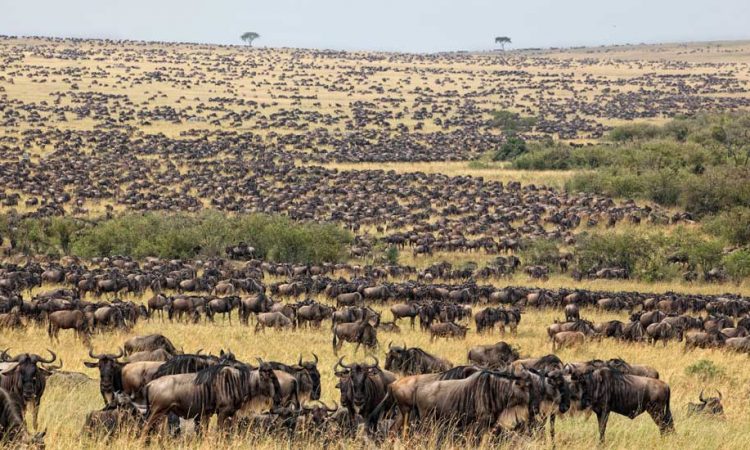
- Very high density of animalsat the bottom of the crater: large herbivores, predators and avifauna are seen in a short time.
- Living with the local cultureoutside the crater, where it is customary to see traditional grazing.
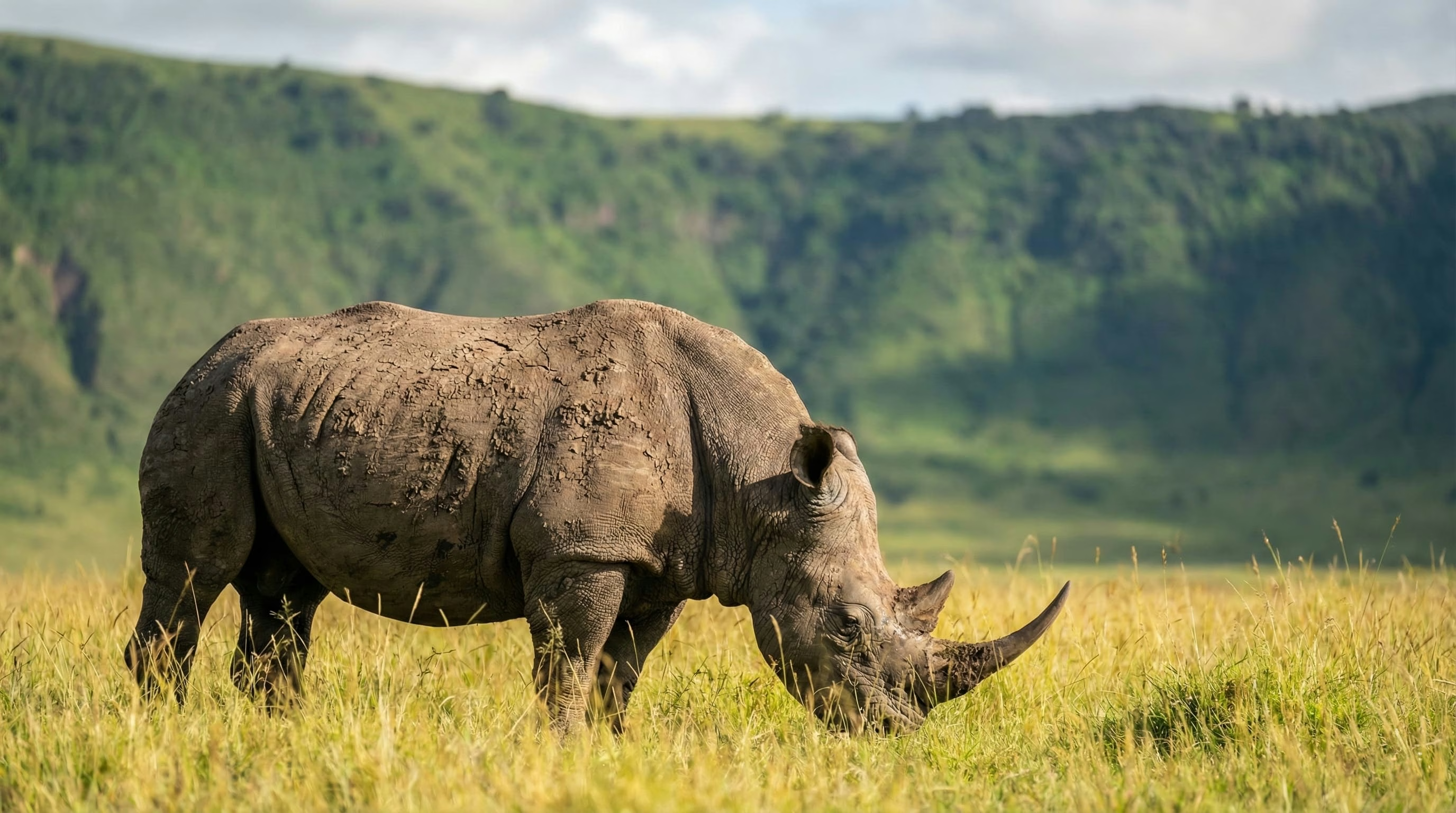
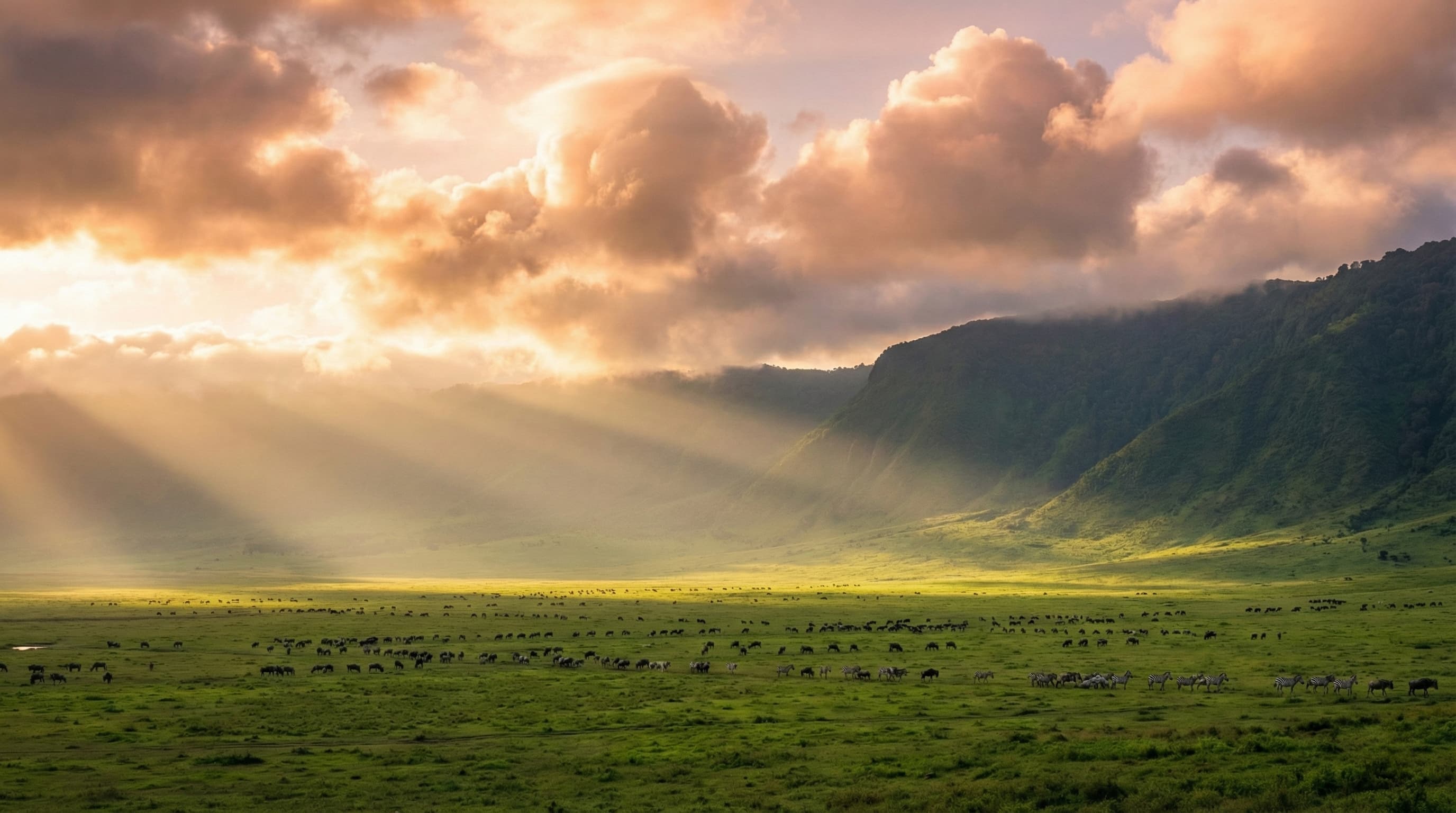
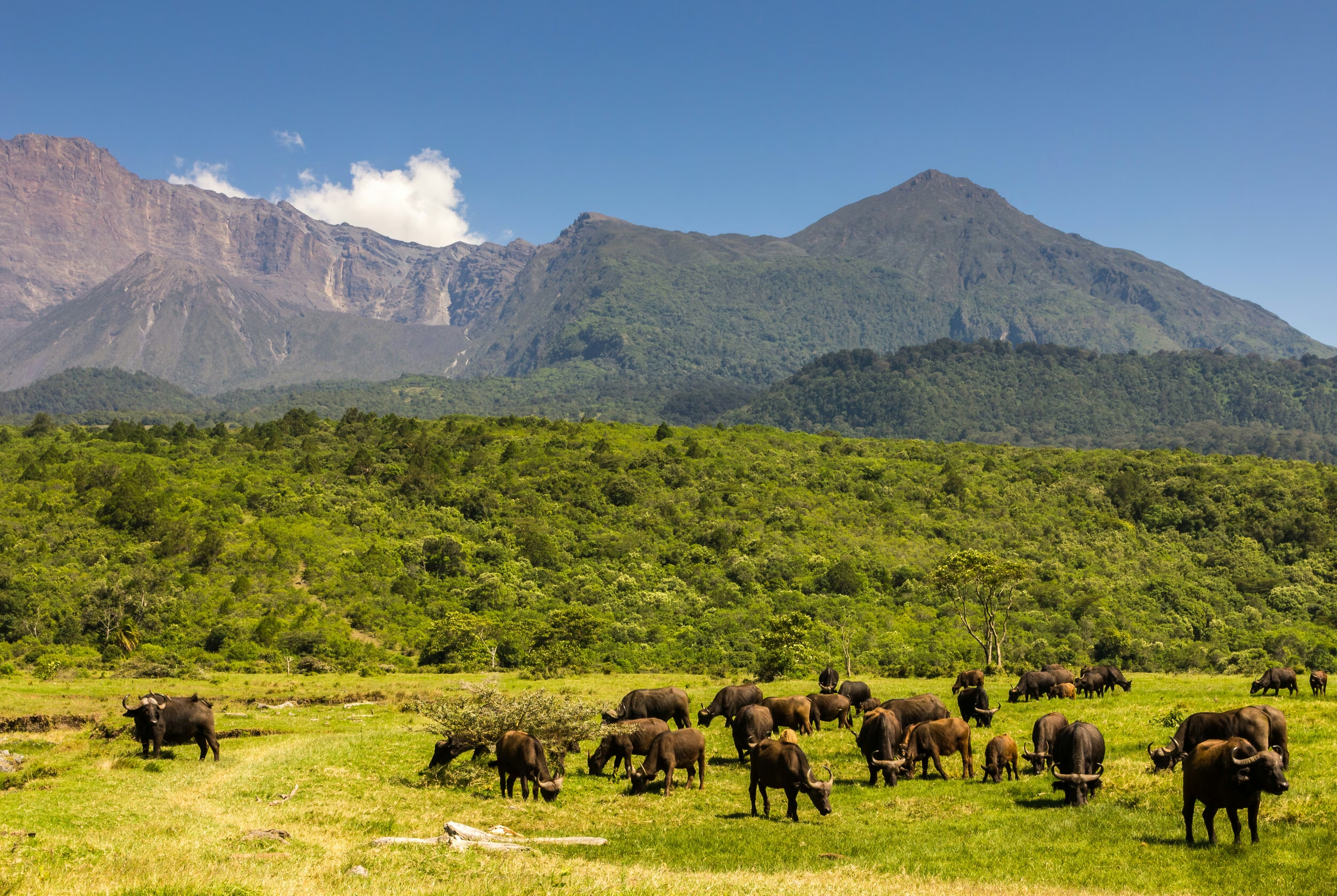
On a geographical level, imagine a “giant bowl”with tens of kilometers in diameter, one raised and cool edgeand one more temperate backgroundpresided over by Lake Magadi, which changes its hue according to the time. It is one of the best places inAfricato observe law(lions), hyenas, buffalo, hipposAnd, with a little luck, black rhinoceros. Due to its configuration, the experience is very concentrated- less travel, more observation.
Best weather and weather: when to go depending on what you want to see
Dry season (approx. June-October):high visibility, tracks in good condition and short grass. It is the most requested (and busiest) season. Ideal for clean photos and simple logistics.
Green or rainy season (approx. November-May):verdant landscapes, less dust, soft light for photography and less vehicle pressure. There may be fog on the edge and puddles in the background, but the resident faunaIt remains there; the sightings are still excellent.
Temperatures and “weather in Ngorongoro”:
- Edge of the crater (rim):cool/cold, especially at dawn and evening. Fog and wind possible. Door layers, fleece liningand cutters.
- Bottom of the crater:more temperate; in the morning, fresh air and humidity.
- Best Safari Hours: from dawn to mid-morningand last hours of the afternoon, when the fauna is more active and the light is friendlier.
Anti-Crowd Tip:Enters in the first houror past noon. Vehicle spikes are usually concentrated between 9:30am to 12:00pm.
Rules, permits and fees: what is essential before entering
The NCA has Strict standardsto protect habitats and wildlife. In summary, you will need:
- Access Permit to the Ngorongoro Conservation Areacalculated for periods of 24 hoursfrom the first access.
- Crater specific rate per vehicle(often called Crater service fee) which authorizes the undercuttingto the crater on the assigned day.
- Véhicule 4×4suitable for safari tracks.
- Professional driver/guiderecommended; for certain activities around the crater may be required ranger.
Key rules inside the crater(Always respect them):
- Do not leave the slopesmarked.
- Do not feedThe wildlife doesn't get too close.
- Leave no waste- everything that comes in, goes out with you.
- Silence and engine idlingin sensitive sightings (e.g., rhinoceros).
- No night drivinginside the crater; meets entry/exit schedules.
Operational trick: Plan your 24 hours well. If you enter the area in the afternoon and go down to the crater the next morning, check that the 24-hour window covers both momentsfor not paying too much.
Suggested itinerary for 1 day (or half) inside the crater
Dawn on the edge: viewpoints and light fog
It starts with thedawn on the rim. The fine mist above the lake creates a spectacular visual curtain. Make a 10, 15 minute stop for acclimatize to the cold, prepare camera and binoculars and check the route.
Descent to the crater: tracks and first sightings
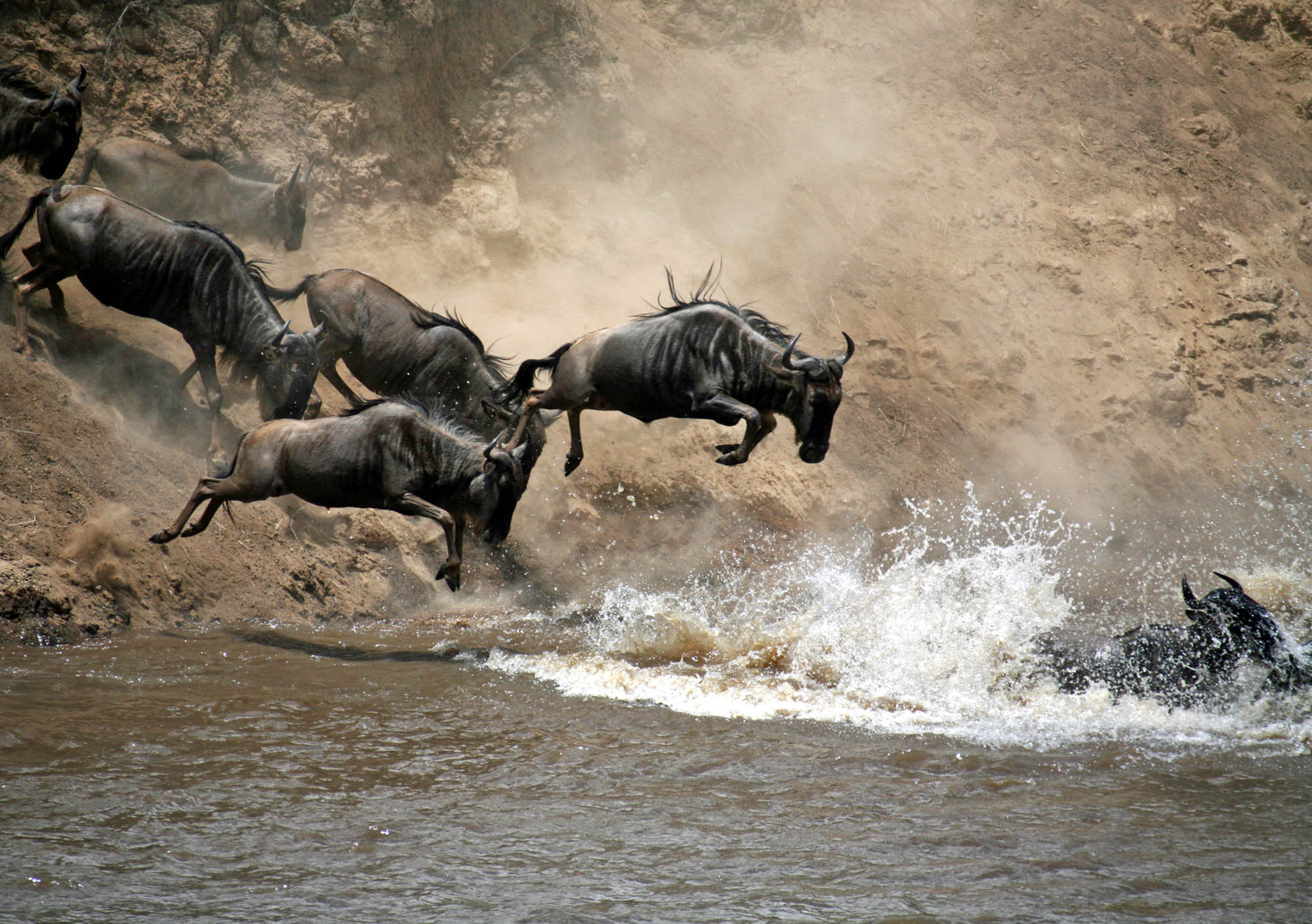
The downhill track is already part of the adventure. Once at the bottom, keep a calm and steady pace: you will see herds of zebras and nyus, jackalsand, hopefully, lionsresting in the sun. Stick to them Main tracks; guides know the usual crossing points.
Essential stops
- Hippopotamus area:ideal for a short break and photos.
- Central meadows: hyenasand raptorson patrol.
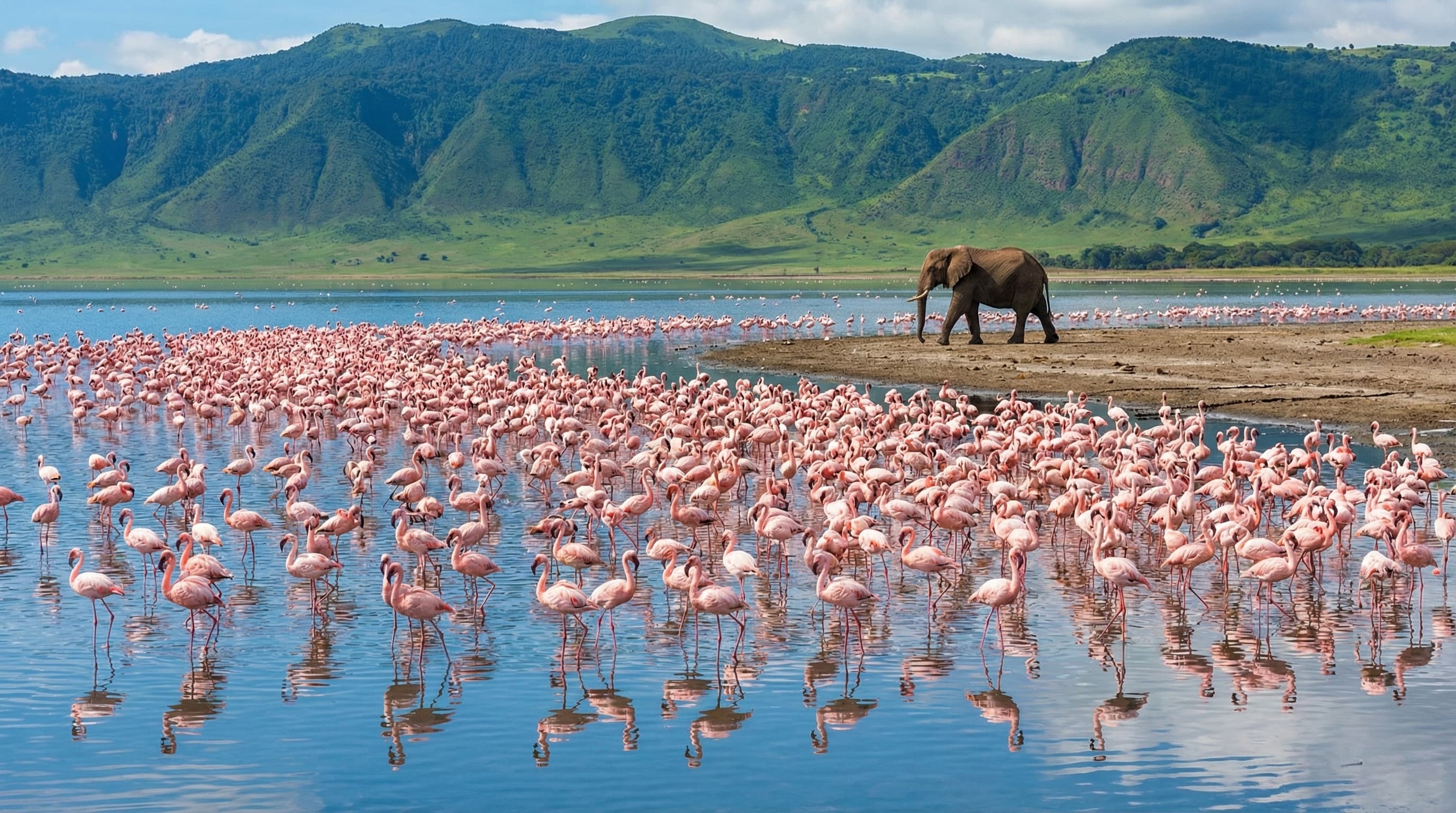
- Lake Magadi:Find the water line for flamingosand shoals; the presence varies according to the level of the lake.
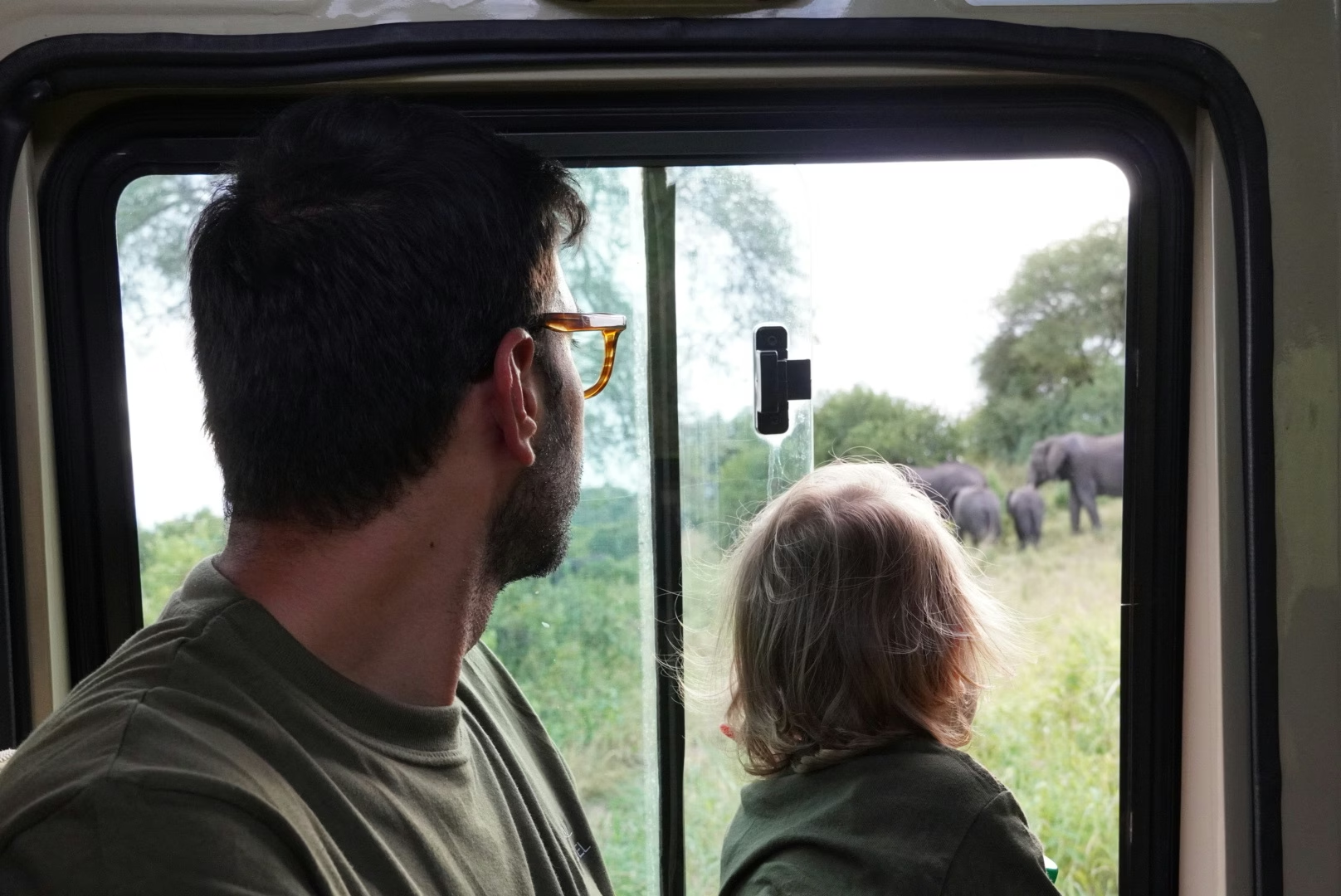
- Wet grove:They are often seen elephantsold men with imposing fangs.
Departure and return: time margins
Plan the final climbwith margin to avoid traffic jams and respect the departure time. In half a day, come in as soon as they open. On a full day, picnicto an enabled area at noon and resume when the sun loosens.
Ready to explore the crater floor?
Our Tanzania Classic Safari puts you inside Ngorongoro with a dedicated 4x4, expert guide and all permits handled for you. 6 days, from 2.095 € per person. Tanzania - Classic Safari
Accommodation by zones (without brands): sleep on the rim or in Karatu?
We will not quote hotels or chains, but yes the Criteria for choosing the area:
Sleep on the edge of the crater (rim)
Pros:dawn overlooking the amphitheater, very fast accesson the descent, a feeling of exclusivity.
Cons: more expensiveper night, chillyand wetness, more limited services.
Sleeping in Karatu (outside the NCA)
Pros:best value for money, wide range (from type stores tented lodgeup to country houses), friendlier climate and more services.
Cons: extra transferup to the front door; it is necessary matineemore to be on the downhill at opening time.
Type of accommodation:
- Lodgeson the rim: integrated architecture, great views, focus premium.
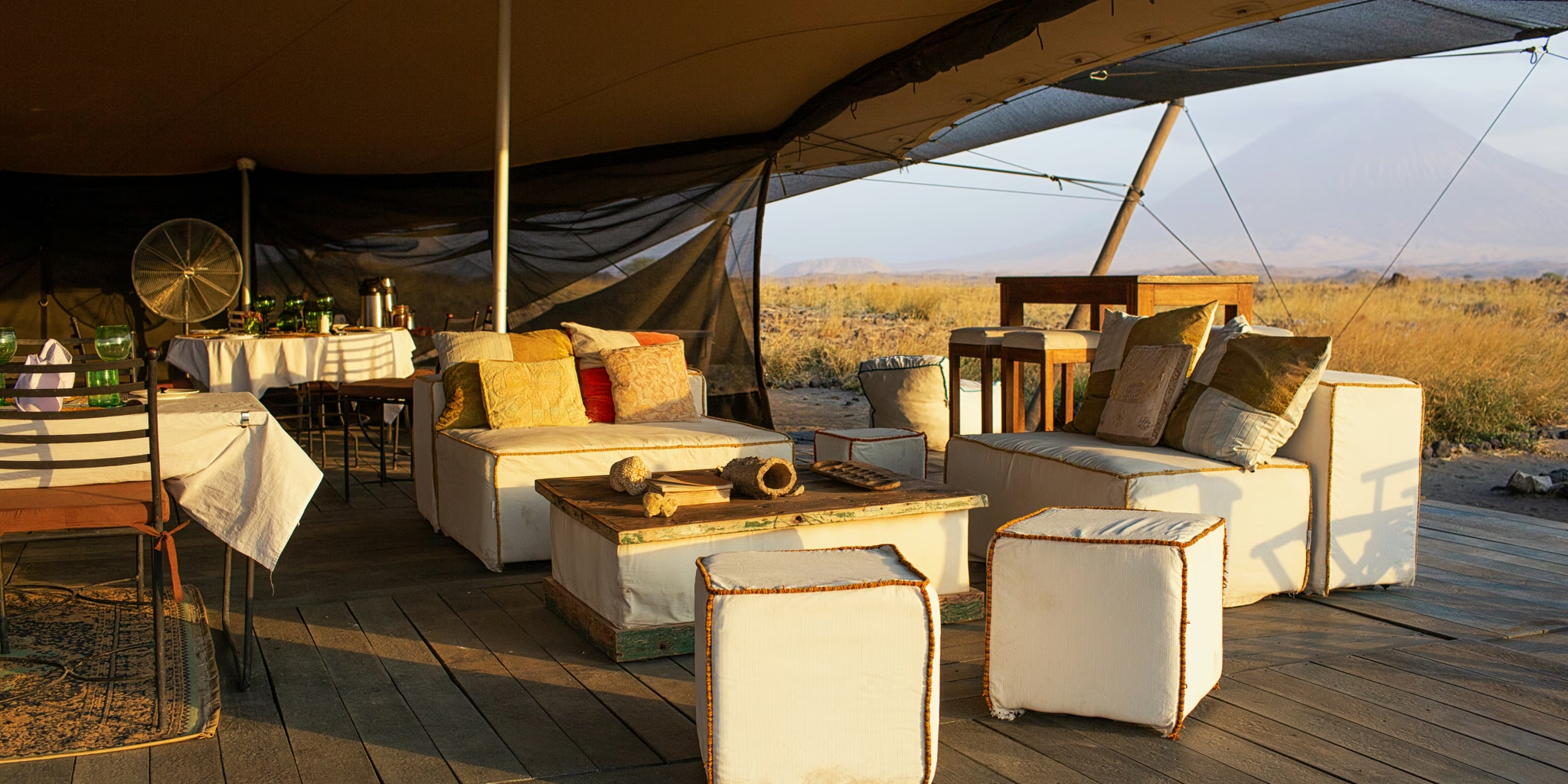
- Tented lodgesand campsOutside: safari atmosphere with budget content.
- Public Campsite (Simba Campsite A)for very independent travelers (door warm bagand warm clothes).
Quick comparison table
%20-%20visual%20selection%20(9).png)
Checklist to decide (without marks):
- You prefer views + ultra-fast accesso saveand sleep in milder weather?
- Your budget supports the cost overrun of the rim?
- Travel with nippersor as a couple? The wind from the rim can disturb the little ones.
- You will 1 dayin Ngorongoro or will you combine with Serengeti/Tarangire? Readfacilitates multi-park logistics.
Protagonist fauna and best hours for each sighting
- Lions:often lying in the sun in the middle of the morning; at dawn they can be on the move.
- Hyenas and jackals:Very active in the first hour. Curious interactions with scavengers.
- Black rhino:the most sighting scarce and valuable; Observe grassy areas near the lake with binoculars. Cool morningsand latest lightsThese are key moments.
- Elephants “tusker”:less numerous but memorable, especially in wet grove.
- Hippopotamus:active in the lagoons; good place for pause and photos.
- Avifauna and flamingos:Depends on lake level; some days are crowded, others more scattered.
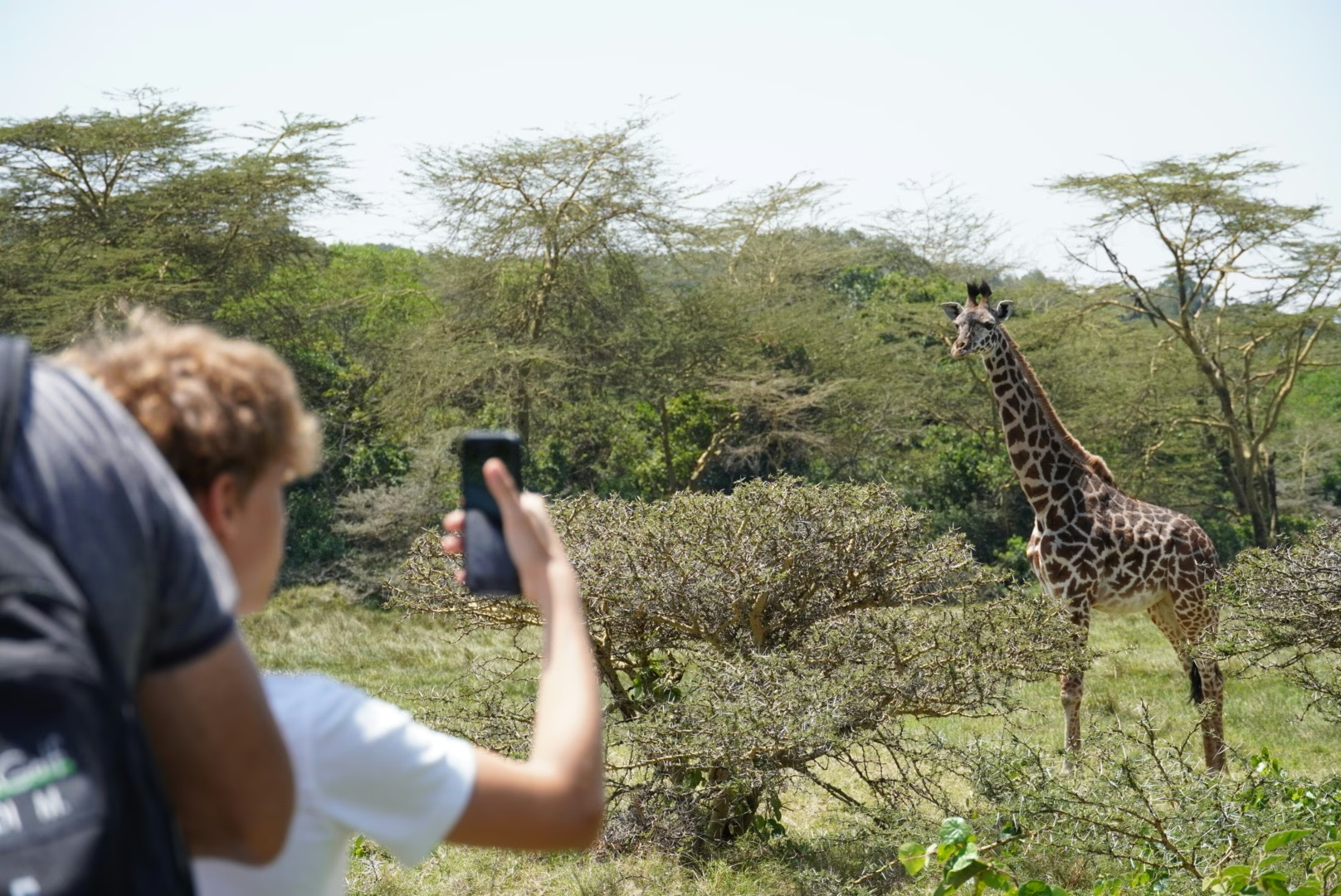
Why are there almost no giraffes inside the crater?The pronounced wallsand the ecology of the “bowl” make them much more common outsideof the crater that is inside it.
Ethics of the safari:keep distance, do not surround the animals with too many vehicles (ideal <6) and do not blocktheir ways. Always prioritize the welfare of the fauna.
How to get there and get around: Arusha, Karatu and accesses
- Distances:fromArushain the area of Ngorongoro Conservation AreaIt's a couple of hours on the road. Readis the logical basis if you sleep outside the rim.
- Access doors:the most common from Arusha/Manyara is Loduare Gate. Inside, the tracks of slackeningand ascentof the crater they usually have single senseto order the traffic.
- Véhicule:essential 4×4. If you drive on your own, check permits, fees and schedulesin advance. For one first visit, and organized safariwith driver-guide saves you paperwork and optimizes observation time.
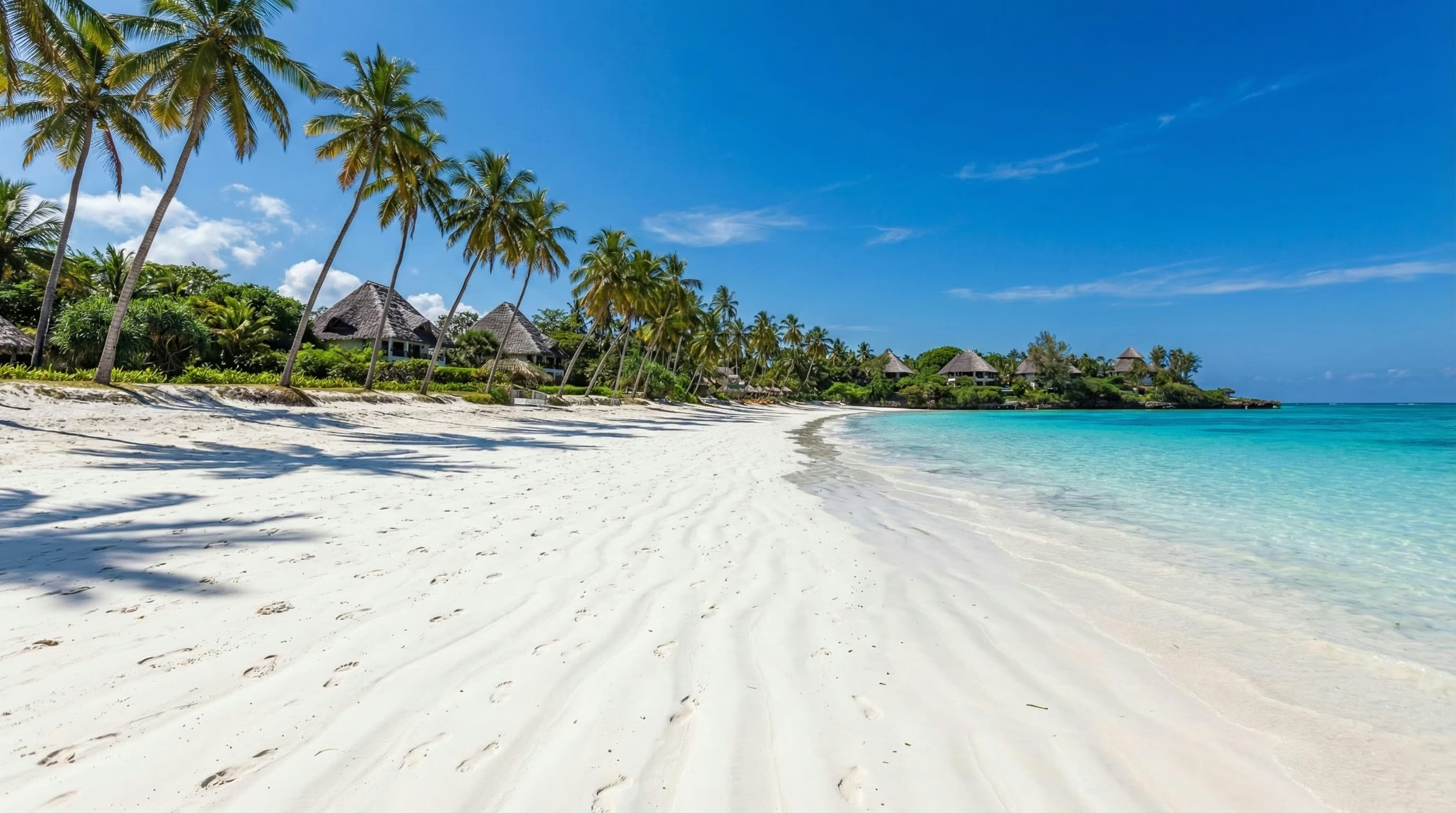
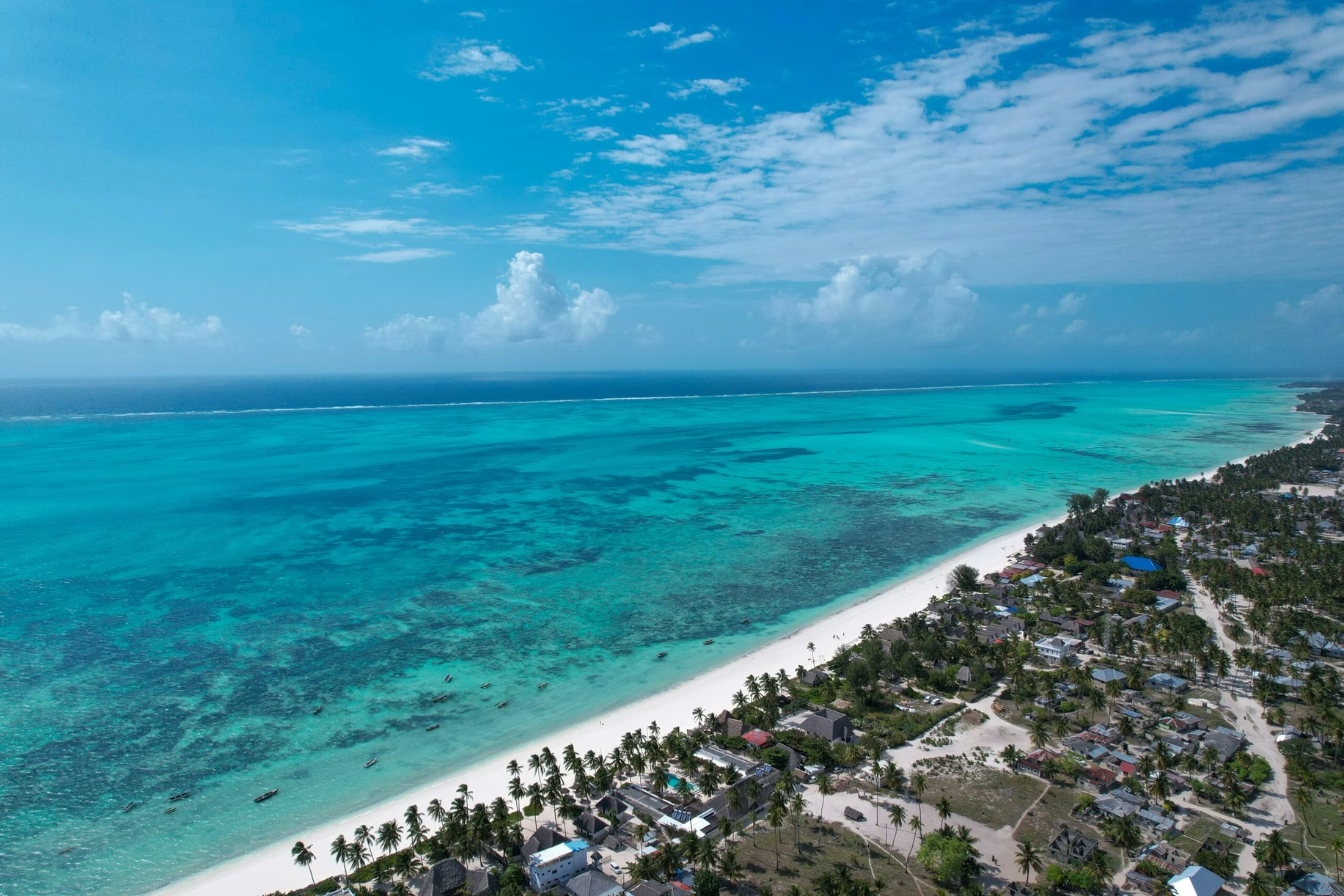
- Classic combos: Serengeti, Ngorongoro, Tarangire, Manyaraand, finally, Zanzibarto rest. With limited time, prioritize 1 full dayin the crater.
Indicative budget: where does the money go
- Access to the Conservation Area (24 h).
- Crater rate per vehicle(day of descent).
- 4×4 vehicle+driver/guide.
- Fueland maintenance.
- Picnic(There are no restaurants inside the crater).
- Gite(Rim vs. Karatu; see table).
- Tippingaccording to service.
How to optimize:
- Share vehiclebetween 4, 6 peopleto split costs.
- Travel in mid-season: good sightings with less price and fewer people.
- Adjust the 24h windowto avoid extra days.
- Book in timeif you travel July-October or Christmas.
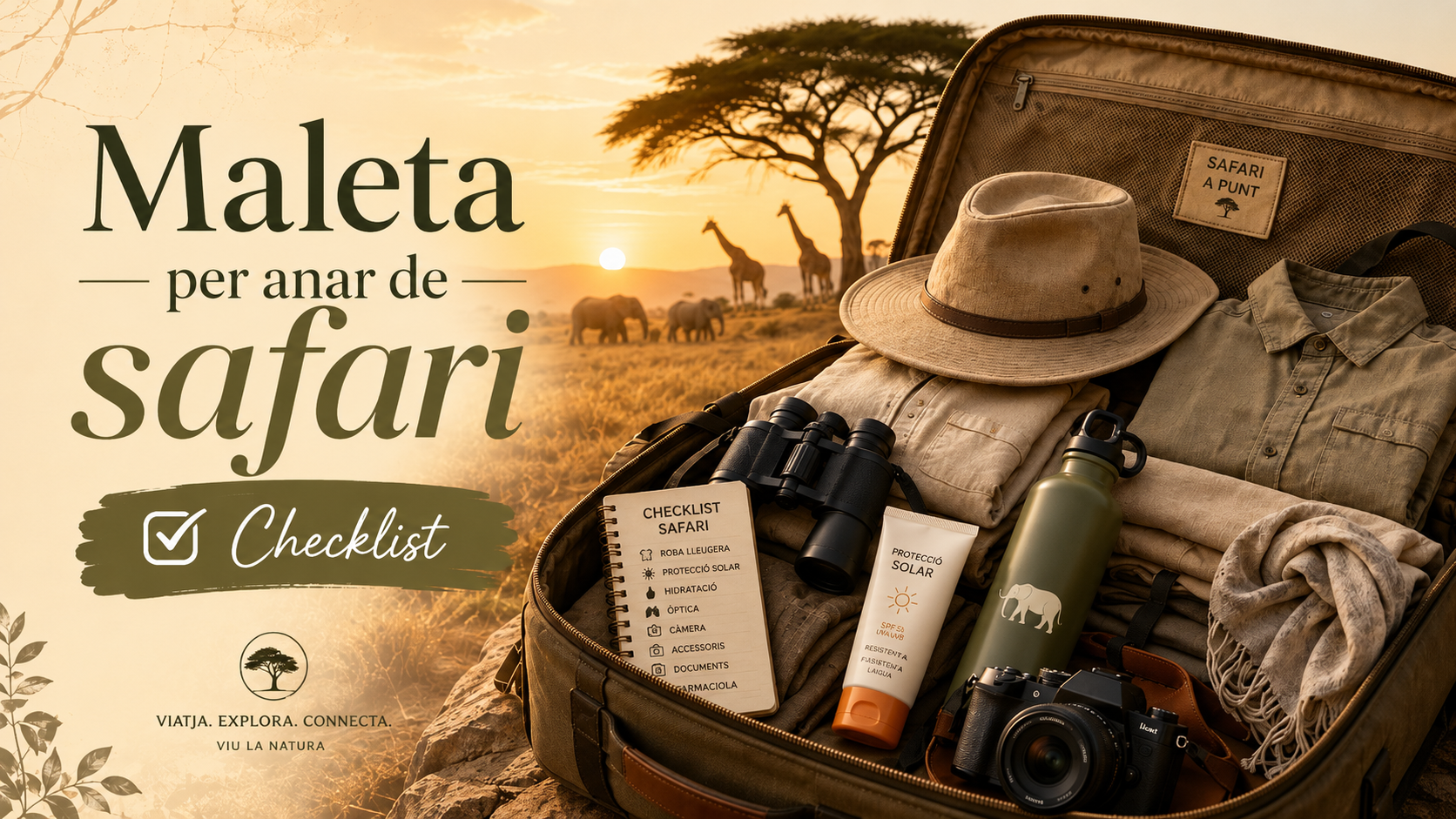
What to bring: express checklist
- Coat Layers(lining + cutters) for the rim.
- Hat and fine glovesfor cold mornings.
- Waterprooflight (rainy season).
- Sun protection(cap, high SPF) and lip balm.
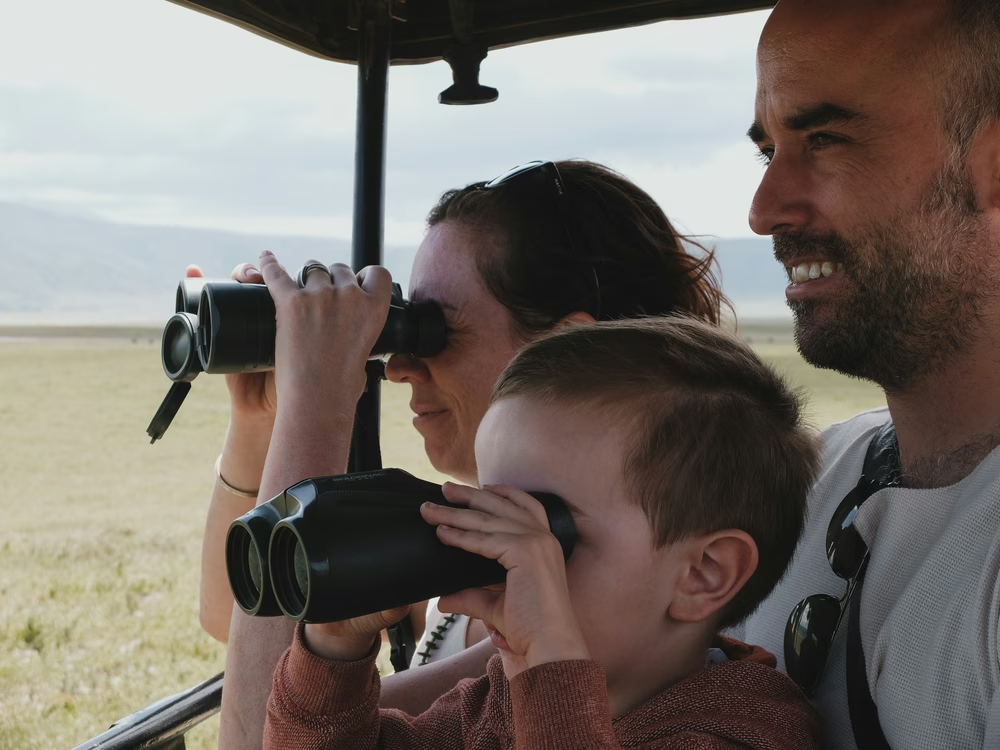
- Binoculars(min. 8×42) and dust-proof coverfor the camera.
- Reusable Bottle(avoid disposable plastic).
- Cash and cardfor expenses en route.
- Basic medicine cabinetanalgesics (analgesics, bandages, antidiarrheal, salts).
- Power bankfor mobiles/cameras.
Alternatives and extras nearby
- Olduvai Gorge:Key archaeological stop for lovers of human evolution.
- Viewpoints from the crater rim:better lights at dawn and dusk.
- Authorized guided walkson the rim with ranger (check availability and rules).
- Local culture:responsible visit to bomas, prioritizing community-managed experiences.
FAQs about Ngorongoro
How much time should I spend at Ngorongoro Crater?
With a full dayyou will have a round experience: sunrise on the rim, descent, picnic and exit in soft light. With half dayIt is possible, but you will be fairer.
Can you visit it on your own by driving yourself?
Yes, as long as comply with permits, fees and schedules. For one first visit, the organized safarisimplifies procedures and improves sightings.
What is the best time to see the rhino?
Very earlyor a last minute, when the sun goes down. Door binocularsand patience; the best sightings are usually in distance.
Is it really cold at the edge of the crater?
Yeah. The rim is high and there may be fog and wind. It wears layers and a cuttersEven in the dry season.
Is it better to sleep in the rim or Karatu if it is the first time?
If you are looking for Ultra-fast access and epic views, the Rim. If you prioritize price and convenience(climate, services), Read.
Do I need to book well in advance?
In high season(Jul, Oct and Christmas) should be insured accommodation and vehiclewith weeks/months of margin. On other dates, Moderate anticipationIt is usually enough.
Make Ngorongoro part of a bigger Tanzania adventure
Combine the crater with the Serengeti, Tarangire and more on a fully guided circuit designed for first-time visitors. 8 days, from 2.850 € per person. Tanzania - Origine
Frequently asked questions
How much time should I spend at Ngorongoro Crater?
A full day gives you the most complete experience: sunrise on the rim, a long descent to the crater floor, a midday picnic in a designated area and a leisurely late-afternoon climb back up. Half a day is possible if you enter at opening time and move efficiently, but you will feel the pressure on every stop.
Can you visit Ngorongoro Crater on your own by self-driving?
Self-drive is permitted provided you hold all required permits, pay the crater service fee and comply with NCA schedules. For a first visit, however, an organised safari with a licensed guide-driver simplifies paperwork, improves wildlife spotting and ensures you do not accidentally breach crater rules.
What is the best time of day to see the black rhino?
Your best chances are very early in the morning or in the final hour before the mandatory exit time, when the midday heat has eased. Bring binoculars with at least 8x42 magnification and exercise patience: most reliable sightings happen at a respectful distance near the western swamp area.
Is it really cold on the crater rim?
Yes, noticeably so. The rim sits at roughly 2,200 to 2,400 metres and is regularly swept by wind and low cloud, even during the dry season. Pack thermal base layers, a fleece mid-layer and a windproof outer shell. Temperatures can drop close to 5 degrees Celsius before dawn.
Is it better to sleep on the rim or in Karatu for a first visit?
The rim offers unbeatable sunrise views and the fastest descent to the crater floor, but rooms cost considerably more and conditions are cold and sometimes foggy. Karatu provides broader accommodation choice, a milder climate and better value, at the cost of an earlier wake-up to reach the descent gate in time.
How far in advance should I book for Ngorongoro?
During peak season (July to October) and over the Christmas and New Year period, secure both accommodation and your 4x4 vehicle several months ahead, as rim lodges have limited rooms and demand is high. Outside these windows, four to eight weeks of lead time is generally sufficient for most travellers.
| Location | Ngorongoro Conservation Area (NCA), northern Tanzania |
| Crater diameter | Approximately 19 km across the floor |
| Rim elevation | Around 2,200 to 2,400 m above sea level |
| Best dry season | June to October (high visibility, firm tracks) |
| Green season | November to May (lush landscapes, softer light, fewer vehicles) |
| Closest gateway city | Arusha, roughly 2 hours by road |
| UNESCO status | World Heritage Site (since 1979) |
If you dream of a safari where wildlife seems closer than ever, the Ngorongoro CraterThis is the perfect place to start. In this guide you will find, step by step, when to go, what to book, how to organize a full day inside the crater, where it is better to sleep and how to calculate the budget. In a few minutes you will have a clear plan to enjoy Ngorongoro Crater (Tanzania)with maximum safety and respect for conservation.
What is Ngorongoro Crater and why is it unique
The Ngorongoro Crateris one collapsed volcanic calderawhich forms an immense natural amphitheater full of wild life. It is located within the Ngorongoro Conservation Area (NCA), one conservation area(not exactly a national park) that integrates Maasai fauna, landscape and communities. For the traveler, this implies:
- Very high density of animalsat the bottom of the crater: large herbivores, predators and avifauna are seen in a short time.
- Living with the local cultureoutside the crater, where it is customary to see traditional grazing.
On a geographical level, imagine a “giant bowl”with tens of kilometers in diameter, one raised and cool edgeand one more temperate backgroundpresided over by Lake Magadi, which changes its hue according to the time. It is one of the best places inAfricato observe law(lions), hyenas, buffalo, hipposAnd, with a little luck, black rhinoceros. Due to its configuration, the experience is very concentrated- less travel, more observation.
Best weather and weather: when to go depending on what you want to see
Dry season (approx. June-October):high visibility, tracks in good condition and short grass. It is the most requested (and busiest) season. Ideal for clean photos and simple logistics.
Green or rainy season (approx. November-May):verdant landscapes, less dust, soft light for photography and less vehicle pressure. There may be fog on the edge and puddles in the background, but the resident faunaIt remains there; the sightings are still excellent.
Temperatures and “weather in Ngorongoro”:
- Edge of the crater (rim):cool/cold, especially at dawn and evening. Fog and wind possible. Door layers, fleece liningand cutters.
- Bottom of the crater:more temperate; in the morning, fresh air and humidity.
- Best Safari Hours: from dawn to mid-morningand last hours of the afternoon, when the fauna is more active and the light is friendlier.
Anti-Crowd Tip:Enters in the first houror past noon. Vehicle spikes are usually concentrated between 9:30am to 12:00pm.
Rules, permits and fees: what is essential before entering
The NCA has Strict standardsto protect habitats and wildlife. In summary, you will need:
- Access Permit to the Ngorongoro Conservation Areacalculated for periods of 24 hoursfrom the first access.
- Crater specific rate per vehicle(often called Crater service fee) which authorizes the undercuttingto the crater on the assigned day.
- Véhicule 4×4suitable for safari tracks.
- Professional driver/guiderecommended; for certain activities around the crater may be required ranger.
Key rules inside the crater(Always respect them):
- Do not leave the slopesmarked.
- Do not feedThe wildlife doesn't get too close.
- Leave no waste- everything that comes in, goes out with you.
- Silence and engine idlingin sensitive sightings (e.g., rhinoceros).
- No night drivinginside the crater; meets entry/exit schedules.
Operational trick: Plan your 24 hours well. If you enter the area in the afternoon and go down to the crater the next morning, check that the 24-hour window covers both momentsfor not paying too much.
Suggested itinerary for 1 day (or half) inside the crater
Dawn on the edge: viewpoints and light fog
It starts with thedawn on the rim. The fine mist above the lake creates a spectacular visual curtain. Make a 10, 15 minute stop for acclimatize to the cold, prepare camera and binoculars and check the route.
Descent to the crater: tracks and first sightings
The downhill track is already part of the adventure. Once at the bottom, keep a calm and steady pace: you will see herds of zebras and nyus, jackalsand, hopefully, lionsresting in the sun. Stick to them Main tracks; guides know the usual crossing points.
Essential stops
- Hippopotamus area:ideal for a short break and photos.
- Central meadows: hyenasand raptorson patrol.
- Lake Magadi:Find the water line for flamingosand shoals; the presence varies according to the level of the lake.
- Wet grove:They are often seen elephantsold men with imposing fangs.
Departure and return: time margins
Plan the final climbwith margin to avoid traffic jams and respect the departure time. In half a day, come in as soon as they open. On a full day, picnicto an enabled area at noon and resume when the sun loosens.
Ready to explore the crater floor?
Our Tanzania Classic Safari puts you inside Ngorongoro with a dedicated 4x4, expert guide and all permits handled for you. 6 days, from 2.095 € per person. Tanzania - Classic Safari
Accommodation by zones (without brands): sleep on the rim or in Karatu?
We will not quote hotels or chains, but yes the Criteria for choosing the area:
Sleep on the edge of the crater (rim)
Pros:dawn overlooking the amphitheater, very fast accesson the descent, a feeling of exclusivity.
Cons: more expensiveper night, chillyand wetness, more limited services.
Sleeping in Karatu (outside the NCA)
Pros:best value for money, wide range (from type stores tented lodgeup to country houses), friendlier climate and more services.
Cons: extra transferup to the front door; it is necessary matineemore to be on the downhill at opening time.
Type of accommodation:
- Lodgeson the rim: integrated architecture, great views, focus premium.
- Tented lodgesand campsOutside: safari atmosphere with budget content.
- Public Campsite (Simba Campsite A)for very independent travelers (door warm bagand warm clothes).
Quick comparison table
Checklist to decide (without marks):
- You prefer views + ultra-fast accesso saveand sleep in milder weather?
- Your budget supports the cost overrun of the rim?
- Travel with nippersor as a couple? The wind from the rim can disturb the little ones.
- You will 1 dayin Ngorongoro or will you combine with Serengeti/Tarangire? Readfacilitates multi-park logistics.
Protagonist fauna and best hours for each sighting
- Lions:often lying in the sun in the middle of the morning; at dawn they can be on the move.
- Hyenas and jackals:Very active in the first hour. Curious interactions with scavengers.
- Black rhino:the most sighting scarce and valuable; Observe grassy areas near the lake with binoculars. Cool morningsand latest lightsThese are key moments.
- Elephants “tusker”:less numerous but memorable, especially in wet grove.
- Hippopotamus:active in the lagoons; good place for pause and photos.
- Avifauna and flamingos:Depends on lake level; some days are crowded, others more scattered.
Why are there almost no giraffes inside the crater?The pronounced wallsand the ecology of the “bowl” make them much more common outsideof the crater that is inside it.
Ethics of the safari:keep distance, do not surround the animals with too many vehicles (ideal <6) and do not blocktheir ways. Always prioritize the welfare of the fauna.
How to get there and get around: Arusha, Karatu and accesses
- Distances:fromArushain the area of Ngorongoro Conservation AreaIt's a couple of hours on the road. Readis the logical basis if you sleep outside the rim.
- Access doors:the most common from Arusha/Manyara is Loduare Gate. Inside, the tracks of slackeningand ascentof the crater they usually have single senseto order the traffic.
- Véhicule:essential 4×4. If you drive on your own, check permits, fees and schedulesin advance. For one first visit, and organized safariwith driver-guide saves you paperwork and optimizes observation time.
- Classic combos: Serengeti, Ngorongoro, Tarangire, Manyaraand, finally, Zanzibarto rest. With limited time, prioritize 1 full dayin the crater.
Indicative budget: where does the money go
- Access to the Conservation Area (24 h).
- Crater rate per vehicle(day of descent).
- 4×4 vehicle+driver/guide.
- Fueland maintenance.
- Picnic(There are no restaurants inside the crater).
- Gite(Rim vs. Karatu; see table).
- Tippingaccording to service.
How to optimize:
- Share vehiclebetween 4, 6 peopleto split costs.
- Travel in mid-season: good sightings with less price and fewer people.
- Adjust the 24h windowto avoid extra days.
- Book in timeif you travel July-October or Christmas.
What to bring: express checklist
- Coat Layers(lining + cutters) for the rim.
- Hat and fine glovesfor cold mornings.
- Waterprooflight (rainy season).
- Sun protection(cap, high SPF) and lip balm.
- Binoculars(min. 8×42) and dust-proof coverfor the camera.
- Reusable Bottle(avoid disposable plastic).
- Cash and cardfor expenses en route.
- Basic medicine cabinetanalgesics (analgesics, bandages, antidiarrheal, salts).
- Power bankfor mobiles/cameras.
Alternatives and extras nearby
- Olduvai Gorge:Key archaeological stop for lovers of human evolution.
- Viewpoints from the crater rim:better lights at dawn and dusk.
- Authorized guided walkson the rim with ranger (check availability and rules).
- Local culture:responsible visit to bomas, prioritizing community-managed experiences.
FAQs about Ngorongoro
How much time should I spend at Ngorongoro Crater?
With a full dayyou will have a round experience: sunrise on the rim, descent, picnic and exit in soft light. With half dayIt is possible, but you will be fairer.
Can you visit it on your own by driving yourself?
Yes, as long as comply with permits, fees and schedules. For one first visit, the organized safarisimplifies procedures and improves sightings.
What is the best time to see the rhino?
Very earlyor a last minute, when the sun goes down. Door binocularsand patience; the best sightings are usually in distance.
Is it really cold at the edge of the crater?
Yeah. The rim is high and there may be fog and wind. It wears layers and a cuttersEven in the dry season.
Is it better to sleep in the rim or Karatu if it is the first time?
If you are looking for Ultra-fast access and epic views, the Rim. If you prioritize price and convenience(climate, services), Read.
Do I need to book well in advance?
In high season(Jul, Oct and Christmas) should be insured accommodation and vehiclewith weeks/months of margin. On other dates, Moderate anticipationIt is usually enough.
Make Ngorongoro part of a bigger Tanzania adventure
Combine the crater with the Serengeti, Tarangire and more on a fully guided circuit designed for first-time visitors. 8 days, from 2.850 € per person. Tanzania - Origine
Frequently asked questions
How much time should I spend at Ngorongoro Crater?
A full day gives you the most complete experience: sunrise on the rim, a long descent to the crater floor, a midday picnic in a designated area and a leisurely late-afternoon climb back up. Half a day is possible if you enter at opening time and move efficiently, but you will feel the pressure on every stop.
Can you visit Ngorongoro Crater on your own by self-driving?
Self-drive is permitted provided you hold all required permits, pay the crater service fee and comply with NCA schedules. For a first visit, however, an organised safari with a licensed guide-driver simplifies paperwork, improves wildlife spotting and ensures you do not accidentally breach crater rules.
What is the best time of day to see the black rhino?
Your best chances are very early in the morning or in the final hour before the mandatory exit time, when the midday heat has eased. Bring binoculars with at least 8x42 magnification and exercise patience: most reliable sightings happen at a respectful distance near the western swamp area.
Is it really cold on the crater rim?
Yes, noticeably so. The rim sits at roughly 2,200 to 2,400 metres and is regularly swept by wind and low cloud, even during the dry season. Pack thermal base layers, a fleece mid-layer and a windproof outer shell. Temperatures can drop close to 5 degrees Celsius before dawn.
Is it better to sleep on the rim or in Karatu for a first visit?
The rim offers unbeatable sunrise views and the fastest descent to the crater floor, but rooms cost considerably more and conditions are cold and sometimes foggy. Karatu provides broader accommodation choice, a milder climate and better value, at the cost of an earlier wake-up to reach the descent gate in time.
How far in advance should I book for Ngorongoro?
During peak season (July to October) and over the Christmas and New Year period, secure both accommodation and your 4x4 vehicle several months ahead, as rim lodges have limited rooms and demand is high. Outside these windows, four to eight weeks of lead time is generally sufficient for most travellers.

.jpeg)

.avif)




.avif)














.avif)


.avif)


.avif)
.avif)

.avif)

.jpeg)










.png)