





.jpeg)

Make one safari with childrencan be one of the most beautiful family experiences that exist. Seeing an elephant crossing in front of the vehicle, hearing lions at dawn or discovering giraffes among acacia trees is not much like an afternoon at the zoo. Here the animals are not waiting. They are living.
But it should also be made clear: A safari with children is not just any trip. There are mornings, dust, heat, long journeys, safety rules and waiting times. It's not all “look, a lion!” Sometimes it is “twenty minutes ago we looked at a bush because the guide says there is a leopard there.”
And this is precisely the key: because a safari trip with childrenIf it works, you have to adapt it to them. It is not about making the most ambitious itinerary, but the smartest one. Better few well-chosen parks, good breaks and a family pace than an African marathon in 4x4.
In this guide you will find real tips for Take a safari with childrenin Africa: recommended age, destinations, safety, prices, useful clothes and mistakes that are best avoided.
Is it possible to go on a safari with children? Yes, but not in any way
Yes, you can go on safari with children. And yes, it can turn out very well. But not all safaris are suitable for all ages or for all types of family.
One safari for kidsshould be thought of differently from an adult safari. Children have other rhythms, another tolerance for fatigue and another way of living the experience. They may get very excited when they see their first elephant and ten minutes later ask when it is eaten.
Normal. They are children, not Victorian explorers.
The key is to adjust three things: destination, duration and daily rhythm. An itinerary with too many parks, changes of accommodation every night and very long journeys can be cumbersome. On the other hand, a well-planned safari, with family accommodations and balanced days, can be unforgettable.
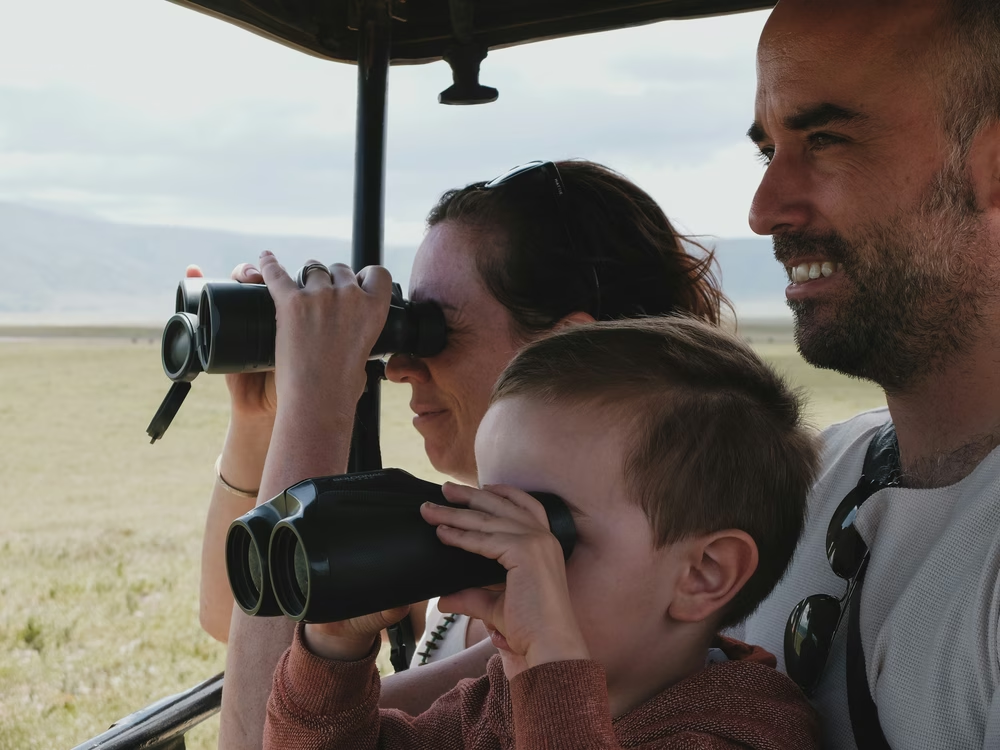
The character of the child also matters a lot. There are patient, curious and happy children with binoculars. Others get dizzy in the car, get bored quickly, or need to move a lot. No option is “better”; you just have to keep it in mind.
A good family safari does not try to make children adapt to the journey of adults. It does the opposite: design the trip for everyone to enjoy.
.jpg)
Recommended age to go on a safari with children
There is no perfect age to make a safari with children in Africa, but there are ages more comfortable than others.
With babies or very young children, the trip may be possible, but the logistics are complicated. You need to think about meals, naps, temperature changes, medical care, schedules and routes. In addition, some accommodations or activities may have a minimum age.
Among the 4 and 6 years, a safari can work if it is carefully designed. The ideal is to avoid too long days and choose comfortable accommodation, with a swimming pool or spaces to rest between outings. At this age, children can enjoy a lot, but also get tired quickly.
From the 7 or 8 years, many children begin to understand the experience better. They can use binoculars, track tracks, identify animals and participate in the journey in a more active way. For them, seeing lions, elephants, zebras or giraffes in the wild can be something they remember for a lifetime.
With teenagers, the safari can be spectacular if they feel part of the adventure. Involving them in planning helps a lot: choosing animals they want to see, looking at maps, understanding migration or bringing their own camera.
A small example: a family with a 5-year-old child should perhaps prioritize a shorter safari, with fewer transfers and stable accommodation. A family with children aged 9 and 12 can consider a somewhat more complete itinerary, combining several parks and more hours of observation.
Age does matter, yes. But the pace of travelmatters even more.
Best destinations to go on a safari with children in Africa
Choosing the right destination is one of the most important decisions. Not all countries, parks or reserves offer the same experience for families.
Safari in Kenya with children
One safari in Kenya with childrencan be a great option. Kenya has well-known parks and reserves, good tourist infrastructure and a huge variety of fauna.
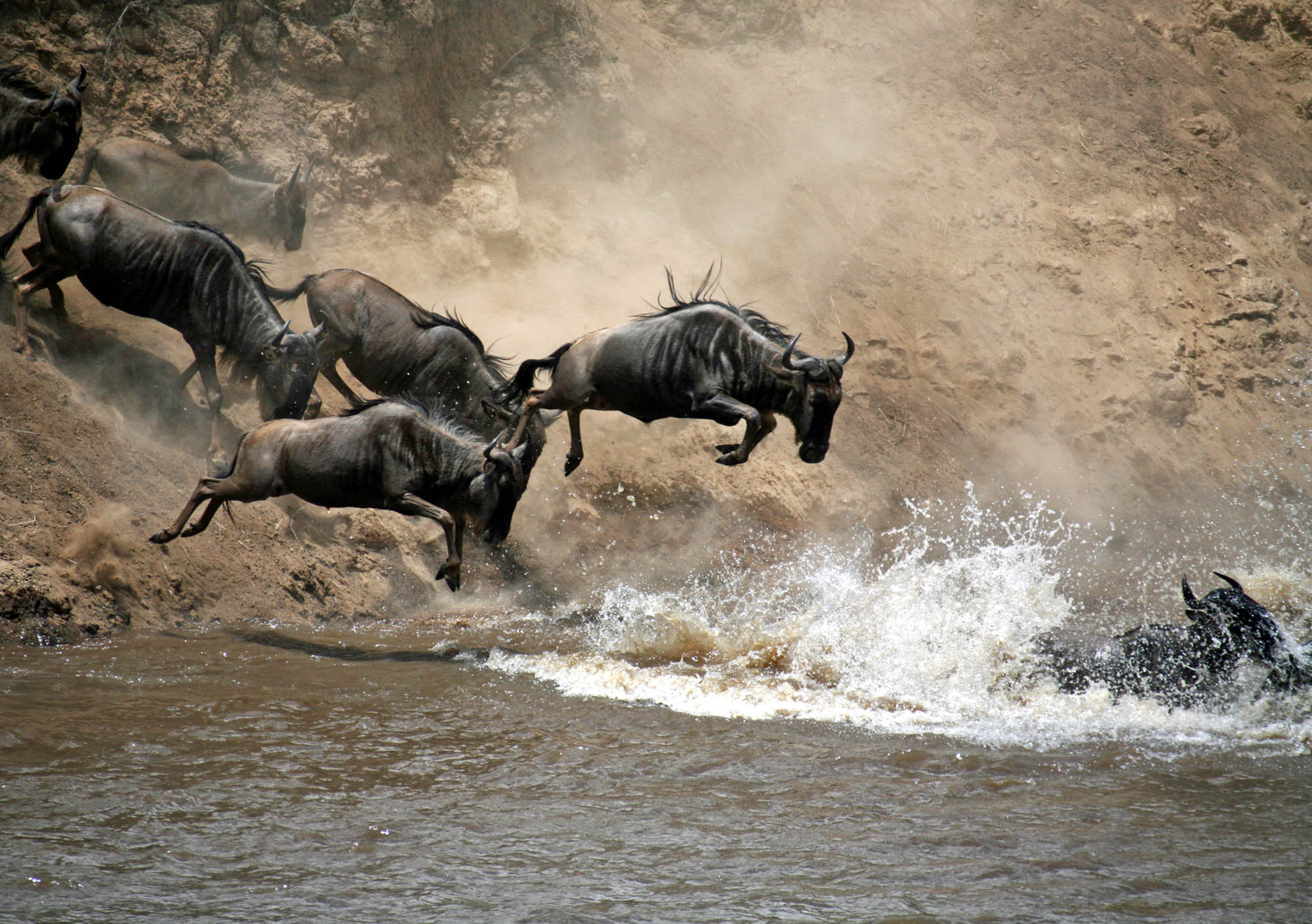
The Masai MaraIt is one of the great classics. It offers many possibilities to see lions, elephants, giraffes, zebras, hyenas and, in season, part of the great migration. For children who dream of seeing “safari animals”, it can be very exciting.
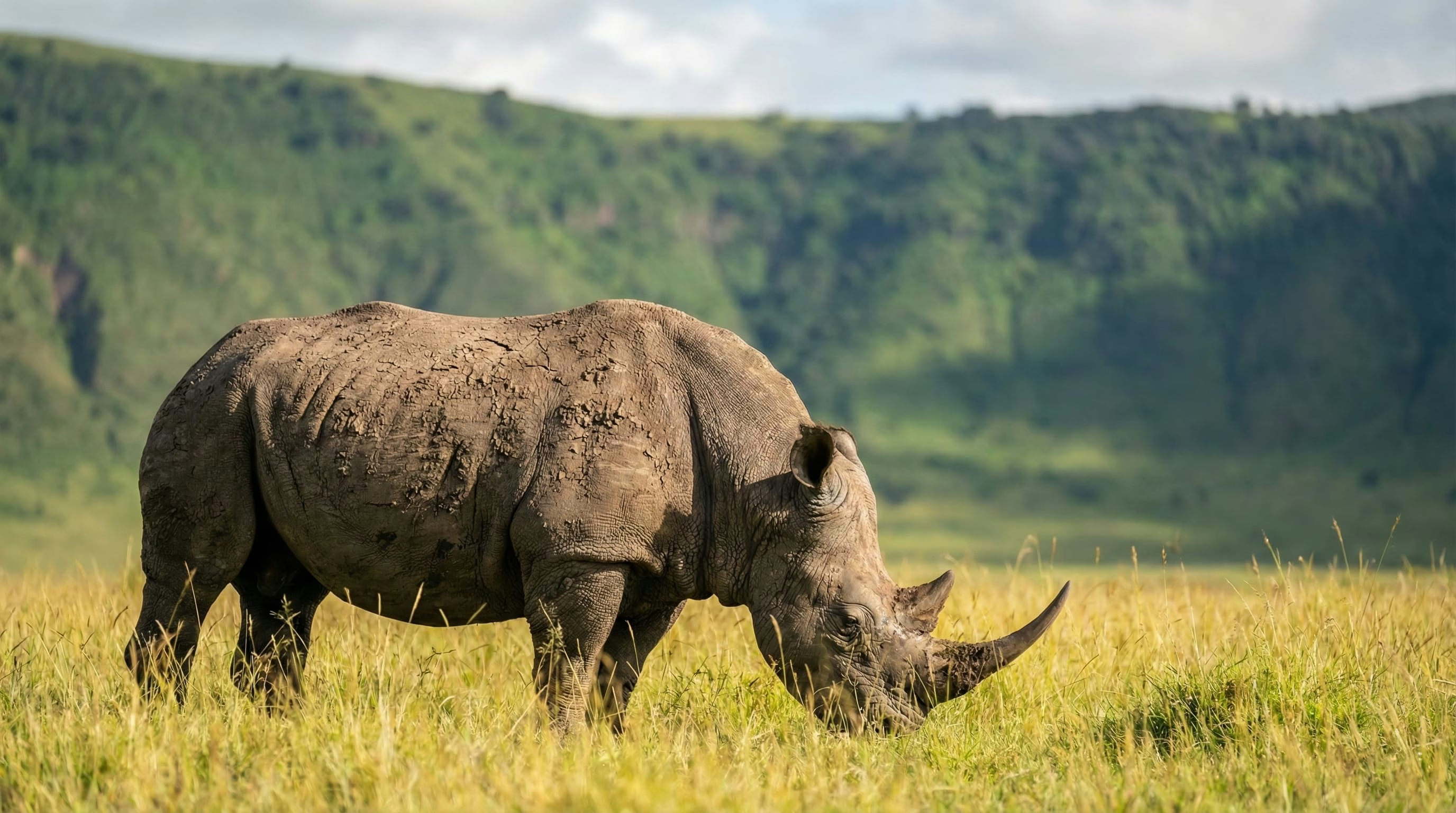
They can also fit destinations such as Both, famous for its elephants and views of Kilimanjaro, or the Lake Nakuru, known for rhinos and birds.
The point to watch out for in Kenya is relocations. Some road routes can be long. Therefore, if the budget allows, combining road trips with domestic flights can greatly improve the family experience.
Safari in Tanzania with children
One safari in Tanzania with childrenit is also a great option, especially if you want to live mythical parks like the Serengeti, Ngorongoro, Tarangire or Lake Manyara.
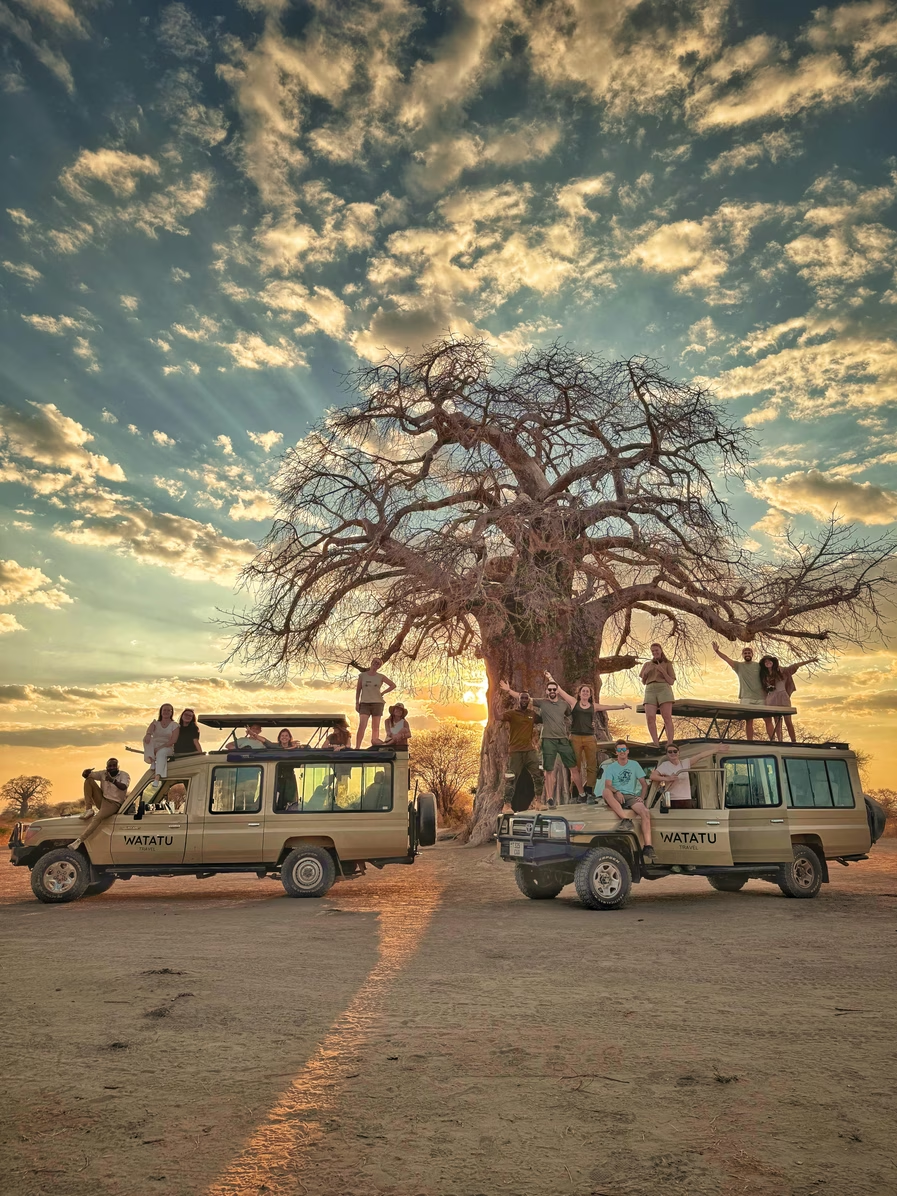
Tanzania has an impressive fauna and very varied landscapes. The Ngorongoro Crater, for example, can be very grateful for families because it concentrates many animals in a relatively delimited area. Tarangire also tends to be very fond of its elephants and baobabs.
The Serengeti is spectacular, but it should be planned well. It is huge and distances are important. For one safari with children in Tanzania, 7 days, from 2.495 € per person, it doesn't always make sense to try to see everything. Better to choose the right area according to the time and spend enough time there.
If the trip is organized calmly, Tanzania can be a top-notch family experience.
South Africa and other family friendly destinations
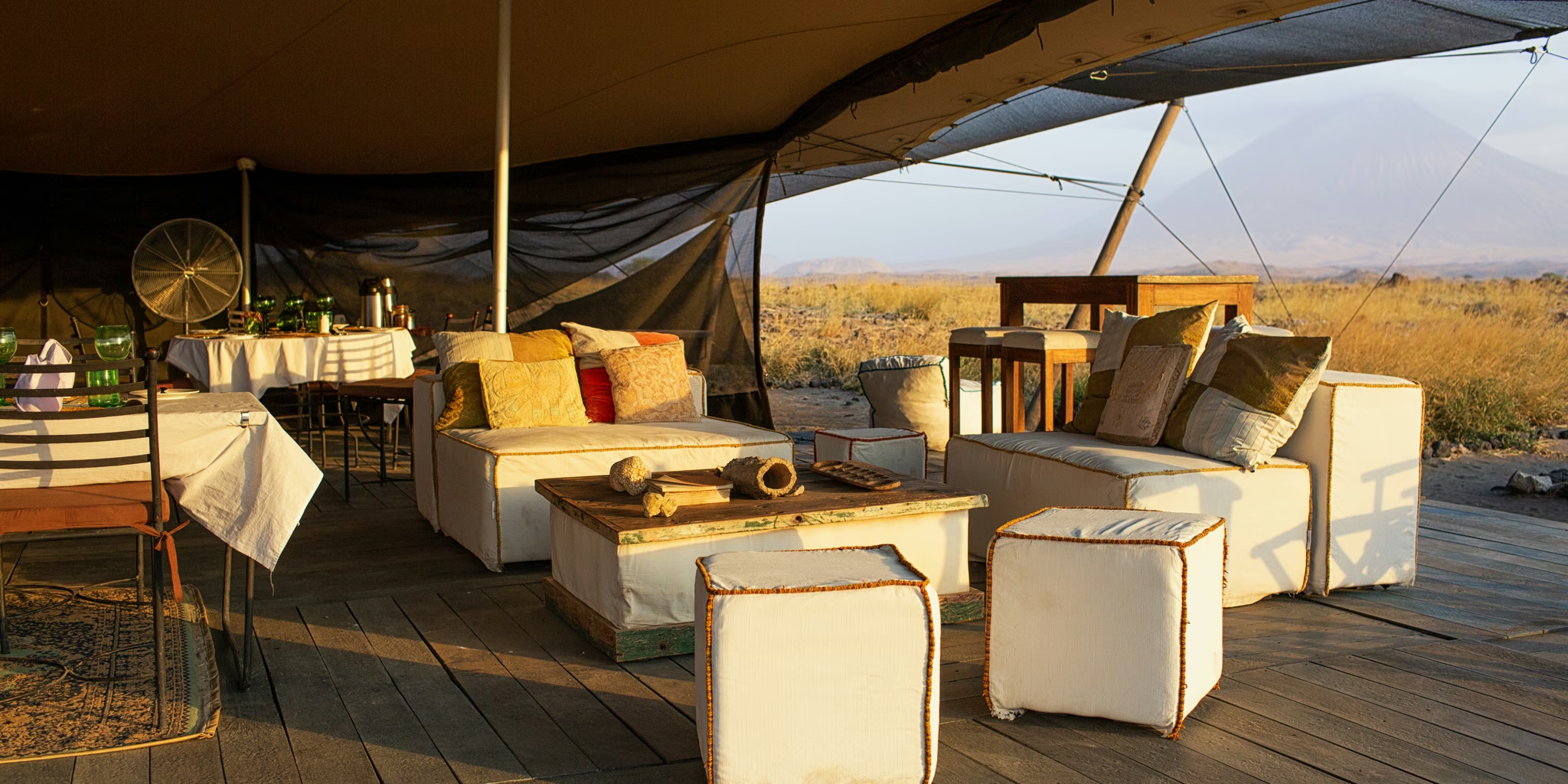
Although this post focuses more on Kenya and Tanzania, South Africa can also be an interesting alternative for families. Some private reserves and areas near Kruger Park are very prepared to receive children, with family accommodations and adapted activities.
In addition, certain areas of South Africa may be attractive for those looking for a trip with less logistical demands or with combined city, nature and safari options.
In short: the safaris with childrencan work very well in various African destinations. The key is not to choose the “most famous” country, but the one that best fits your age, budget, dates and way of traveling.
Looking for a family-friendly safari in Tanzania?
Our Tanzania Special Families route is designed around the rhythms and needs of travelling with children, with carefully chosen parks, comfortable pacing and family accommodation. 7 days, from 2.495 € per person. Tanzania - Special Families
.jpg)
Safari in Africa with children: approximate prices and what makes the trip more expensive
When someone is looking safari in africa with kids prices, he usually wants a simple answer. But here you have to be honest: prices vary a lot.
A family safari can change in price depending on the country, season, type of accommodation, number of days, entrance fees to parks, internal flights, private vehicle and level of personalization of the trip.
In general, a safari in Africa is not usually a cheap trip. And with children there are details that can enchant it, but also some that can help optimize it.
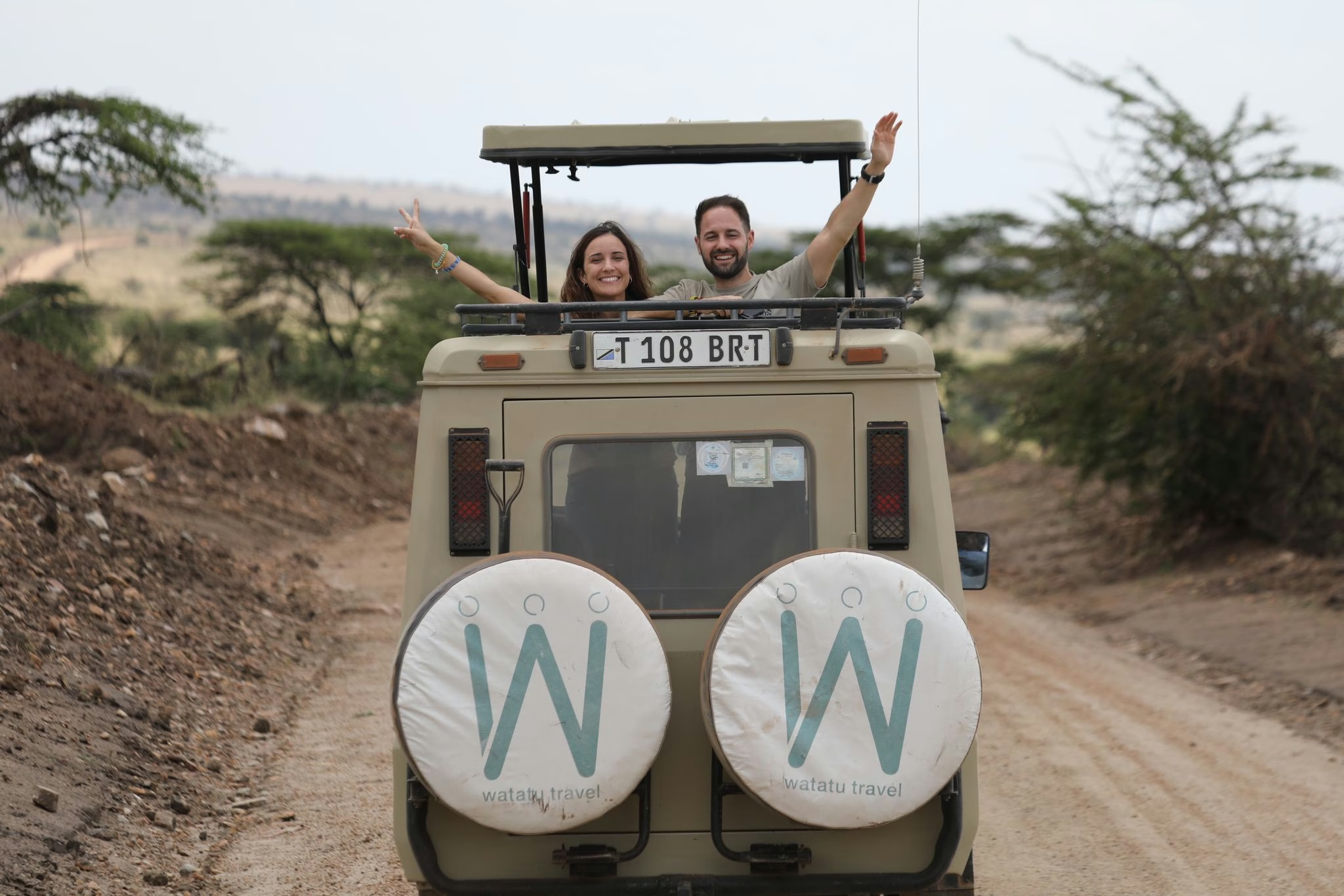
For example, traveling as a family can make it more interesting to hire a private vehicle, because the cost is shared among several travelers and you gain flexibility. You can stop when you need to, adapt schedules, and avoid sharing a vehicle with people who may want to spend seven hours waiting for a leopard.
There are also accommodations that offer discounts for children or family rooms. But they are not always applied in the same way. Some park fees have a child price; others depend on age or country.
What usually makes a family safari more expensive is:
- Travel in high season.
- Sleeping in highly demanded parks.
- Use internal flights.
- Choose high-end accommodations.
- Make long itineraries with many transfers.
- Book early.
The best recommendation is not to compare only for the final price. Compare What is included in each safari: vehicle, guide, meals, tickets, accommodation, transfers, schedules and flexibility for children.
A cheap safari that forces your child to spend too many hours in the car can be expensive in patience. And patience, in the family, comes at a high price.
What a safari day with children should be like
A day of safari usually starts early. Very soon. Animals are most active at dawn and dusk, so mornings are part of the plan.
With children, a good structure can be: morning safari, long break at noon and short departure in the afternoon. This pace usually works better than trying to spend all day inside the vehicle.
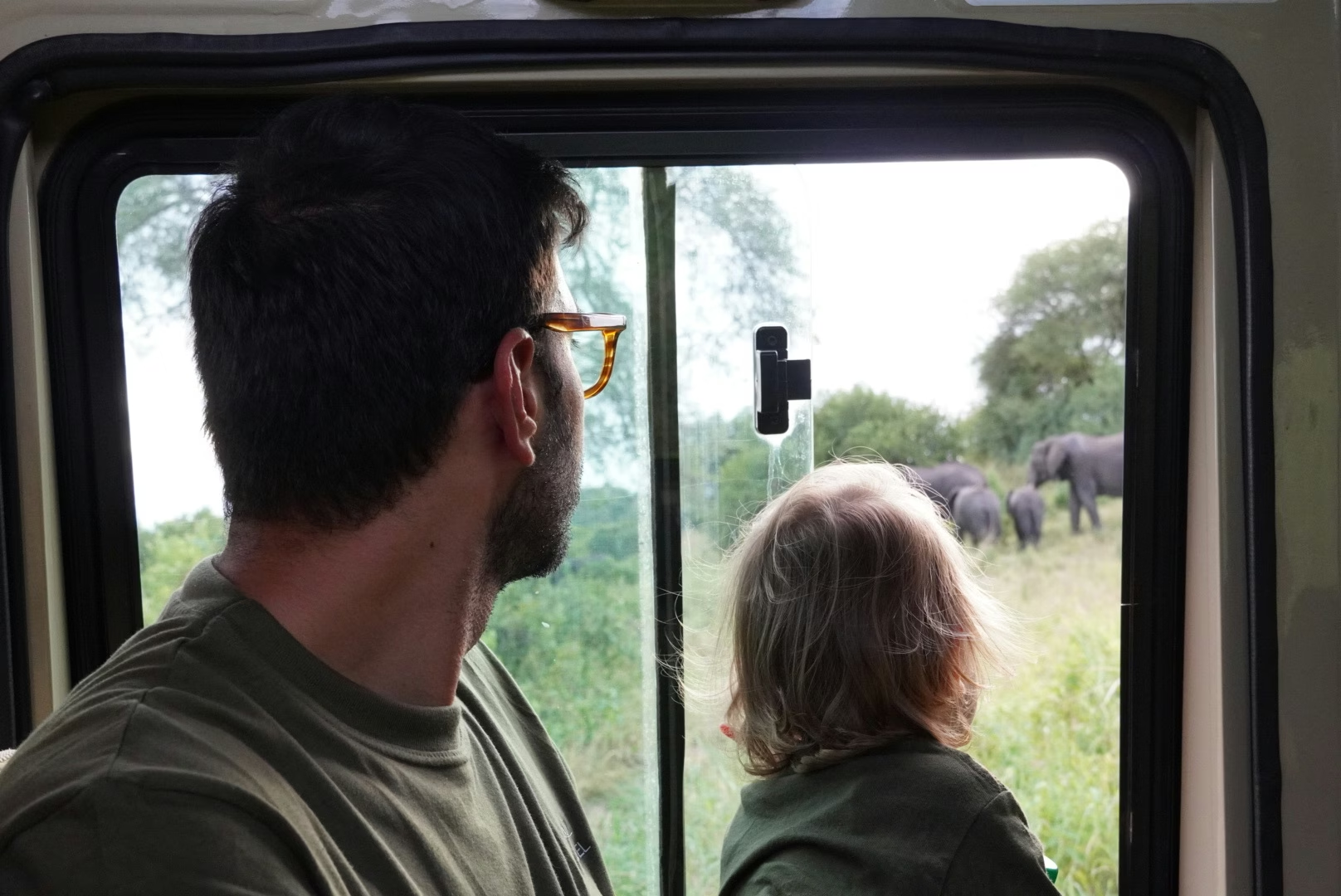
In the morning, children are usually cooler. It is a good time to look for large animals, follow footprints and enjoy the soft light. Then, returning to the accommodation for lunch, rest, swimming in the pool or simply doing nothing can save the day.
In the afternoon, a shorter departure allows you to reconnect with the safari without exhausting them.
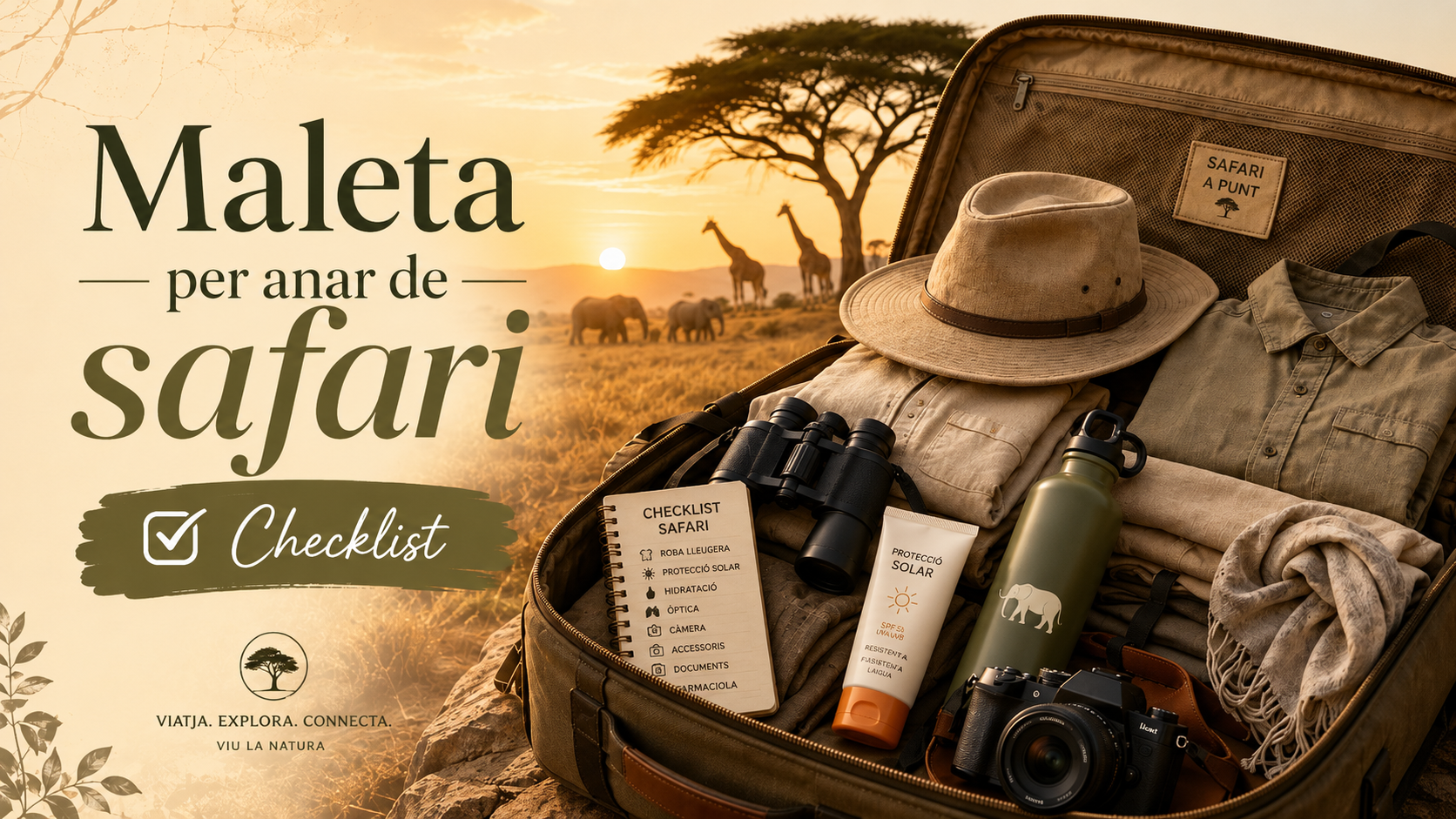
It also helps to prepare small resources:
- Lightweight binoculars.
- Children's camera or old mobile to take photos.
- Notebook to note animals seen.
- Stickers or wildlife checklist.
- Easy snacks.
- Water is always available.
- Some quiet game for the waiting moments.
It is important to assume that children will not be thrilled with every impala. At first everything is new, but then they can get tired of watching “another gazelle”. Nothing happens. The safari is also taught.
It is worth explaining them before that you do not always see animals right away. That sometimes you have to search, wait and keep silent. Turning it into a game helps a lot: “Who finds a giraffe first?”, “How many different animals do we see before eating?”, “What animal should this footprint be?”.
The goal is not for children to endure the safari. It is that participate.
Safety, health and common sense on a family safari
Safety is an essential part of any safari trip with children. A safari is a safe experience if the rules are followed, but it does not stop happening in natural spaces with wild animals.
The first rule is simple: the guide commands. If the guide says don't get off the vehicle, don't get off. If you ask for silence, silence is kept. If it indicates that you need to stay seated, it is done.
Basic rules for children:
- Do not remove your arms or anyone from the vehicle.
- Do not shout near animals.
- Don't try to get their attention.
- Do not get out of the car without permission.
- Do not run in open camps.
- Do not leave food visible or accessible.
- Always follow the instructions of the guide.
Before traveling, it is advisable to consult with a health professional or an international vaccination center. Topics such as vaccines, malaria, repellents or preventive medication should be treated in a personalized way according to the destination, the age of the children and the medical history.
It is also essential to hire one Adequate travel insurance, which covers medical care, cancellations and possible unforeseen events.
Another important point is ethics. Some searches or images show scenes of the type hugging kids on safarior very close interactions with fauna or local communities. In a real and responsible safari, it is advisable to avoid invasive, staged or disrespectful experiences.
Wild animals should be observed from a distance. People also deserve respect, context and real consent.
A good safari teaches children something very valuable: Look at nature without trying to own it.
Safari clothes and accessories for children - the fair and useful
Clothing on a safari should be comfortable, practical and thought out for temperature changes. No need to dress up as a movie explorer. In fact, many times less is more.
The ideal is to carry light, breathable and neutral-colored clothing- beige, olive green, light brown or gray. Avoid very striking colors and delicate garments. Dust will appear. Don't ask if it appears. Appears.
In the morning it can be cold, especially in an open vehicle. It can be hot at noon. So layers are key: T-shirt, sweatshirt or thin lining, light jacket and comfortable pants.
Footwear: boots or sneakers
The safari boots for boy, safari boot for boy, safari boots for girlo safari boots for kidscan be useful if you will be walking in permitted areas, visiting campgrounds, or doing gentle activities outside of the vehicle.
But for many classic safaris, where most of the time is spent in the 4x4, comfortable, closed sneakers may be enough.
The priority is that the footwear does not rub, does not give too much heat and is easy to put on and take off.
Useful add-ons
Some safari accessories for kidsthey are worth it:
- Safari Hat for Kidor cap with visor.
- Sunglasses.
- Panty or handkerchief for dust.
- Lightweight jacket.
- Children's binoculars.
- Reusable canteen or bottle.
THEsafari vest for boycan be practical if it has pockets and the child finds it comfortable, but it is not essential. If you just bring her for the photo and then complain all day, bad investment.
Clothing for girls
The safari clothes for girlso baby safari clothesshould follow the same logic: comfort before aesthetics.
The safari dresses or sets for girlscan look beautiful in a photo, but they are not always the most practical. Best comfortable pants, breathable t-shirts, sweatshirt, cap and closed shoes.
On safari, the best clothes are the ones that allow you to enjoy without thinking too much.
.jpg)
Safari activities for children during the trip
The safari activities for kidsThey don't have to be complicated. The best thing is that they are connected to the real journey.
A simple idea is to create a safari notebook. Every day they can point out the animals seen, draw footprints, write a phrase about the most exciting moment or stick a small list of species.
A checklist also works very well.safari animals for kids: lion, elephant, giraffe, zebra, hippopotamus, rhinoceros, cheetah, hyena, buffalo, crocodile, ostrich...
These little dynamics turn waiting into play. Instead of asking “how much is missing?”, they can be attentive to find the next animal.
Others safari activities for childrenDuring the trip:
- Bring a map and mark the route.
- Take pictures of animals and landscapes.
- Learn differences between footprints.
- Count how many species appear in a day.
- Choose “the favorite animal of the safari”.
- Draw the most impressive scene.
- Learn local names of some animals.
You can also prepare a small visual guide before the tripsafari animals for kids. Thus, when they arrive in Africa, they will already recognize species and enjoy them more.
The idea is not to turn safari into school chores. It's giving them tools to look better.
Common mistakes when organizing a safari trip with children
The first mistake is wanting to see too many things. Many itineraries look spectacular on paper, but with children they can be exhausting. Three parks in five days, constant changes of accommodation and hours of driving each day can ruin the experience.
On a family safari, Less can be much more.
Another mistake is to choose accommodations without checking if they accept children or if they are prepared for families. Some lodges have a minimum age. Others allow children, but do not offer family rooms, adapted menus or safe spaces.
You should also ask about the rules of the activities. Some walking safaris, night trips or car-sharing may have age restrictions.
Another common mistake is not to foresee breaks. The safari excites, but also tiresome. Sleeping well, eating calmly and having free time helps a lot.
It is also a mistake to think that more animals always means better travel. Sometimes children remember more of a quiet afternoon watching elephants in a raft than a three-hour race to try to see a distant leopard.
And, of course, there's the issue of agency. If you need support, look for a company with real experience in families. If you are looking for one agency for safari trips with children in Barcelona, for example, do not stay only with the fact that they sell safaris. Ask if they have organized family trips, what ages they recommend, how they adjust the stages and what accommodations they suggest.
A safari with children needs planning. Not rigidity, but criterion.
Quick checklist before booking a safari with children
Before booking, check these points:
- Children's age and tolerance for long journeys.
- Most suitable destination for your family.
- Time of year and climate.
- Health requirements consulted with professionals.
- Full travel insurance.
- Accommodation prepared for families.
- Possibility of private vehicle.
- Number of nights in each park.
- Realistic rhythm, with breaks.
- Experienced guide in family safaris.
- Comfortable clothes and suitable footwear.
- Binoculars, cap, snacks and quiet entertainment.
- Clear expectations: not all animals appear when a fly.
This last idea is key. A safari is not a theme park. That's why it can be so special.
FAQ about safari with children
Is it advisable to go on a safari with young children?
Yes, it can be recommended if the trip is well adapted. With young children it is advisable to choose short routes, comfortable accommodation and not very long safari trips. It is also important to confirm minimum ages in accommodations and activities.
What is the best destination to go on a safari with children in Africa?
It depends on the age of the children, the budget and the type of trip. Kenya and Tanzania are great options to see classic African wildlife. South Africa can be interesting for families looking for simpler logistics or reservations very adapted to children.
Is it better to go on a safari in Kenya with children or in Tanzania?
One safari in Kenya with childrencan be ideal if you are looking for an intense experience in fewer days, especially in areas like Masai Mara or Amboseli. One safari with children in Tanzaniacan be perfect if you want to combine Serengeti, Ngorongoro and Tarangire, although the distances may be greater.
How much does a safari in Africa with children cost?
Prices depend on the country, season, accommodations, number of days, internal flights, park fees and vehicle type. On family trips, a private vehicle can increase the cost, but it also greatly improves flexibility. The important thing is to compare what each proposal includes.
What clothes should children wear on a safari?
Comfortable, breathable clothing in neutral colors and in layers. It is also advisable to wear closed shoes, a cap or hat, sunglasses, a light jacket and something for dust. Safari boots for kids can be useful, but they're not always a must.
What activities can children do during a safari?
They can carry an animal notebook, use binoculars, take photos, mark routes on a map, identify footprints or complete a species checklist. The best activities are simple and connected to what they are seeing in nature.
Conclusion: a safari with children can be unforgettable if you slow down
One safari with childrenIt can be a spectacular journey. Not only for the animals, but for everything it teaches: patience, respect, curiosity and connection with nature.
But for it to work, you need to plan realistically. Choose your destination well, avoid too busy itineraries, book family accommodations and adapt the days to the age of your children.
You don't need to see everything. You need to see it well.
Because the best family safari is not the one that adds more parks, more kilometers and more mornings. It is what gets your children to return home remembering that elephant, that giraffe or that first roar at dawn.
And this, if done calmly, is worth much more than ticking animals off a list.
Ready to plan your family safari in Kenya?
Our Kenya Classic Safari is a tried-and-tested route with the flexibility, private vehicle and expert guiding that families need to make the most of every morning in the bush. 6 days, from 2.250 € per person. Kenya - Classic Safari
Make one safari with childrencan be one of the most beautiful family experiences that exist. Seeing an elephant crossing in front of the vehicle, hearing lions at dawn or discovering giraffes among acacia trees is not much like an afternoon at the zoo. Here the animals are not waiting. They are living.
But it should also be made clear: A safari with children is not just any trip. There are mornings, dust, heat, long journeys, safety rules and waiting times. It's not all “look, a lion!” Sometimes it is “twenty minutes ago we looked at a bush because the guide says there is a leopard there.”
And this is precisely the key: because a safari trip with childrenIf it works, you have to adapt it to them. It is not about making the most ambitious itinerary, but the smartest one. Better few well-chosen parks, good breaks and a family pace than an African marathon in 4x4.
In this guide you will find real tips for Take a safari with childrenin Africa: recommended age, destinations, safety, prices, useful clothes and mistakes that are best avoided.
Is it possible to go on a safari with children? Yes, but not in any way
Yes, you can go on safari with children. And yes, it can turn out very well. But not all safaris are suitable for all ages or for all types of family.
One safari for kidsshould be thought of differently from an adult safari. Children have other rhythms, another tolerance for fatigue and another way of living the experience. They may get very excited when they see their first elephant and ten minutes later ask when it is eaten.
Normal. They are children, not Victorian explorers.
The key is to adjust three things: destination, duration and daily rhythm. An itinerary with too many parks, changes of accommodation every night and very long journeys can be cumbersome. On the other hand, a well-planned safari, with family accommodations and balanced days, can be unforgettable.
The character of the child also matters a lot. There are patient, curious and happy children with binoculars. Others get dizzy in the car, get bored quickly, or need to move a lot. No option is “better”; you just have to keep it in mind.
A good family safari does not try to make children adapt to the journey of adults. It does the opposite: design the trip for everyone to enjoy.
Recommended age to go on a safari with children
There is no perfect age to make a safari with children in Africa, but there are ages more comfortable than others.
With babies or very young children, the trip may be possible, but the logistics are complicated. You need to think about meals, naps, temperature changes, medical care, schedules and routes. In addition, some accommodations or activities may have a minimum age.
Among the 4 and 6 years, a safari can work if it is carefully designed. The ideal is to avoid too long days and choose comfortable accommodation, with a swimming pool or spaces to rest between outings. At this age, children can enjoy a lot, but also get tired quickly.
From the 7 or 8 years, many children begin to understand the experience better. They can use binoculars, track tracks, identify animals and participate in the journey in a more active way. For them, seeing lions, elephants, zebras or giraffes in the wild can be something they remember for a lifetime.
With teenagers, the safari can be spectacular if they feel part of the adventure. Involving them in planning helps a lot: choosing animals they want to see, looking at maps, understanding migration or bringing their own camera.
A small example: a family with a 5-year-old child should perhaps prioritize a shorter safari, with fewer transfers and stable accommodation. A family with children aged 9 and 12 can consider a somewhat more complete itinerary, combining several parks and more hours of observation.
Age does matter, yes. But the pace of travelmatters even more.
Best destinations to go on a safari with children in Africa
Choosing the right destination is one of the most important decisions. Not all countries, parks or reserves offer the same experience for families.
Safari in Kenya with children
One safari in Kenya with childrencan be a great option. Kenya has well-known parks and reserves, good tourist infrastructure and a huge variety of fauna.
The Masai MaraIt is one of the great classics. It offers many possibilities to see lions, elephants, giraffes, zebras, hyenas and, in season, part of the great migration. For children who dream of seeing “safari animals”, it can be very exciting.
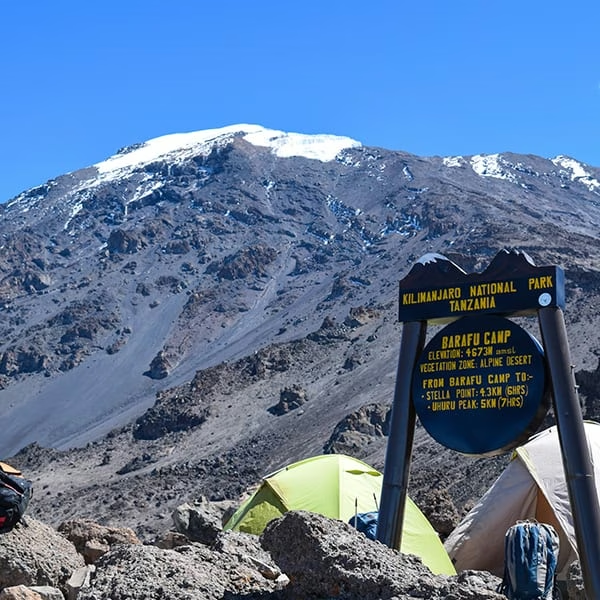
They can also fit destinations such as Both, famous for its elephants and views of Kilimanjaro, or the Lake Nakuru, known for rhinos and birds.
The point to watch out for in Kenya is relocations. Some road routes can be long. Therefore, if the budget allows, combining road trips with domestic flights can greatly improve the family experience.
Safari in Tanzania with children
One safari in Tanzania with childrenit is also a great option, especially if you want to live mythical parks like the Serengeti, Ngorongoro, Tarangire or Lake Manyara.
Tanzania has an impressive fauna and very varied landscapes. The Ngorongoro Crater, for example, can be very grateful for families because it concentrates many animals in a relatively delimited area. Tarangire also tends to be very fond of its elephants and baobabs.
The Serengeti is spectacular, but it should be planned well. It is huge and distances are important. For one safari with children in Tanzania, 7 days, from 2.495 € per person, it doesn't always make sense to try to see everything. Better to choose the right area according to the time and spend enough time there.
If the trip is organized calmly, Tanzania can be a top-notch family experience.
South Africa and other family friendly destinations
Although this post focuses more on Kenya and Tanzania, South Africa can also be an interesting alternative for families. Some private reserves and areas near Kruger Park are very prepared to receive children, with family accommodations and adapted activities.
In addition, certain areas of South Africa may be attractive for those looking for a trip with less logistical demands or with combined city, nature and safari options.
In short: the safaris with childrencan work very well in various African destinations. The key is not to choose the “most famous” country, but the one that best fits your age, budget, dates and way of traveling.
Looking for a family-friendly safari in Tanzania?
Our Tanzania Special Families route is designed around the rhythms and needs of travelling with children, with carefully chosen parks, comfortable pacing and family accommodation. 7 days, from 2.495 € per person. Tanzania - Special Families
Safari in Africa with children: approximate prices and what makes the trip more expensive
When someone is looking safari in africa with kids prices, he usually wants a simple answer. But here you have to be honest: prices vary a lot.
A family safari can change in price depending on the country, season, type of accommodation, number of days, entrance fees to parks, internal flights, private vehicle and level of personalization of the trip.
In general, a safari in Africa is not usually a cheap trip. And with children there are details that can enchant it, but also some that can help optimize it.
For example, traveling as a family can make it more interesting to hire a private vehicle, because the cost is shared among several travelers and you gain flexibility. You can stop when you need to, adapt schedules, and avoid sharing a vehicle with people who may want to spend seven hours waiting for a leopard.
There are also accommodations that offer discounts for children or family rooms. But they are not always applied in the same way. Some park fees have a child price; others depend on age or country.
What usually makes a family safari more expensive is:
- Travel in high season.
- Sleeping in highly demanded parks.
- Use internal flights.
- Choose high-end accommodations.
- Make long itineraries with many transfers.
- Book early.
The best recommendation is not to compare only for the final price. Compare What is included in each safari: vehicle, guide, meals, tickets, accommodation, transfers, schedules and flexibility for children.
A cheap safari that forces your child to spend too many hours in the car can be expensive in patience. And patience, in the family, comes at a high price.
What a safari day with children should be like
A day of safari usually starts early. Very soon. Animals are most active at dawn and dusk, so mornings are part of the plan.
With children, a good structure can be: morning safari, long break at noon and short departure in the afternoon. This pace usually works better than trying to spend all day inside the vehicle.
In the morning, children are usually cooler. It is a good time to look for large animals, follow footprints and enjoy the soft light. Then, returning to the accommodation for lunch, rest, swimming in the pool or simply doing nothing can save the day.
In the afternoon, a shorter departure allows you to reconnect with the safari without exhausting them.
It also helps to prepare small resources:
- Lightweight binoculars.
- Children's camera or old mobile to take photos.
- Notebook to note animals seen.
- Stickers or wildlife checklist.
- Easy snacks.
- Water is always available.
- Some quiet game for the waiting moments.
It is important to assume that children will not be thrilled with every impala. At first everything is new, but then they can get tired of watching “another gazelle”. Nothing happens. The safari is also taught.
It is worth explaining them before that you do not always see animals right away. That sometimes you have to search, wait and keep silent. Turning it into a game helps a lot: “Who finds a giraffe first?”, “How many different animals do we see before eating?”, “What animal should this footprint be?”.
The goal is not for children to endure the safari. It is that participate.
Safety, health and common sense on a family safari
Safety is an essential part of any safari trip with children. A safari is a safe experience if the rules are followed, but it does not stop happening in natural spaces with wild animals.
The first rule is simple: the guide commands. If the guide says don't get off the vehicle, don't get off. If you ask for silence, silence is kept. If it indicates that you need to stay seated, it is done.
Basic rules for children:
- Do not remove your arms or anyone from the vehicle.
- Do not shout near animals.
- Don't try to get their attention.
- Do not get out of the car without permission.
- Do not run in open camps.
- Do not leave food visible or accessible.
- Always follow the instructions of the guide.
Before traveling, it is advisable to consult with a health professional or an international vaccination center. Topics such as vaccines, malaria, repellents or preventive medication should be treated in a personalized way according to the destination, the age of the children and the medical history.
It is also essential to hire one Adequate travel insurance, which covers medical care, cancellations and possible unforeseen events.
Another important point is ethics. Some searches or images show scenes of the type hugging kids on safarior very close interactions with fauna or local communities. In a real and responsible safari, it is advisable to avoid invasive, staged or disrespectful experiences.
Wild animals should be observed from a distance. People also deserve respect, context and real consent.
A good safari teaches children something very valuable: Look at nature without trying to own it.
Safari clothes and accessories for children - the fair and useful
Clothing on a safari should be comfortable, practical and thought out for temperature changes. No need to dress up as a movie explorer. In fact, many times less is more.
The ideal is to carry light, breathable and neutral-colored clothing- beige, olive green, light brown or gray. Avoid very striking colors and delicate garments. Dust will appear. Don't ask if it appears. Appears.
In the morning it can be cold, especially in an open vehicle. It can be hot at noon. So layers are key: T-shirt, sweatshirt or thin lining, light jacket and comfortable pants.
Footwear: boots or sneakers
The safari boots for boy, safari boot for boy, safari boots for girlo safari boots for kidscan be useful if you will be walking in permitted areas, visiting campgrounds, or doing gentle activities outside of the vehicle.
But for many classic safaris, where most of the time is spent in the 4x4, comfortable, closed sneakers may be enough.
The priority is that the footwear does not rub, does not give too much heat and is easy to put on and take off.
Useful add-ons
Some safari accessories for kidsthey are worth it:
- Safari Hat for Kidor cap with visor.
- Sunglasses.
- Panty or handkerchief for dust.
- Lightweight jacket.
- Children's binoculars.
- Reusable canteen or bottle.
THEsafari vest for boycan be practical if it has pockets and the child finds it comfortable, but it is not essential. If you just bring her for the photo and then complain all day, bad investment.
Clothing for girls
The safari clothes for girlso baby safari clothesshould follow the same logic: comfort before aesthetics.
The safari dresses or sets for girlscan look beautiful in a photo, but they are not always the most practical. Best comfortable pants, breathable t-shirts, sweatshirt, cap and closed shoes.
On safari, the best clothes are the ones that allow you to enjoy without thinking too much.
Safari activities for children during the trip
The safari activities for kidsThey don't have to be complicated. The best thing is that they are connected to the real journey.
A simple idea is to create a safari notebook. Every day they can point out the animals seen, draw footprints, write a phrase about the most exciting moment or stick a small list of species.
A checklist also works very well.safari animals for kids: lion, elephant, giraffe, zebra, hippopotamus, rhinoceros, cheetah, hyena, buffalo, crocodile, ostrich...
These little dynamics turn waiting into play. Instead of asking “how much is missing?”, they can be attentive to find the next animal.
Others safari activities for childrenDuring the trip:
- Bring a map and mark the route.
- Take pictures of animals and landscapes.
- Learn differences between footprints.
- Count how many species appear in a day.
- Choose “the favorite animal of the safari”.
- Draw the most impressive scene.
- Learn local names of some animals.
You can also prepare a small visual guide before the tripsafari animals for kids. Thus, when they arrive in Africa, they will already recognize species and enjoy them more.
The idea is not to turn safari into school chores. It's giving them tools to look better.
Common mistakes when organizing a safari trip with children
The first mistake is wanting to see too many things. Many itineraries look spectacular on paper, but with children they can be exhausting. Three parks in five days, constant changes of accommodation and hours of driving each day can ruin the experience.
On a family safari, Less can be much more.
Another mistake is to choose accommodations without checking if they accept children or if they are prepared for families. Some lodges have a minimum age. Others allow children, but do not offer family rooms, adapted menus or safe spaces.
You should also ask about the rules of the activities. Some walking safaris, night trips or car-sharing may have age restrictions.
Another common mistake is not to foresee breaks. The safari excites, but also tiresome. Sleeping well, eating calmly and having free time helps a lot.
It is also a mistake to think that more animals always means better travel. Sometimes children remember more of a quiet afternoon watching elephants in a raft than a three-hour race to try to see a distant leopard.
And, of course, there's the issue of agency. If you need support, look for a company with real experience in families. If you are looking for one agency for safari trips with children in Barcelona, for example, do not stay only with the fact that they sell safaris. Ask if they have organized family trips, what ages they recommend, how they adjust the stages and what accommodations they suggest.
A safari with children needs planning. Not rigidity, but criterion.
Quick checklist before booking a safari with children
Before booking, check these points:
- Children's age and tolerance for long journeys.
- Most suitable destination for your family.
- Time of year and climate.
- Health requirements consulted with professionals.
- Full travel insurance.
- Accommodation prepared for families.
- Possibility of private vehicle.
- Number of nights in each park.
- Realistic rhythm, with breaks.
- Experienced guide in family safaris.
- Comfortable clothes and suitable footwear.
- Binoculars, cap, snacks and quiet entertainment.
- Clear expectations: not all animals appear when a fly.
This last idea is key. A safari is not a theme park. That's why it can be so special.
FAQ about safari with children
Is it advisable to go on a safari with young children?
Yes, it can be recommended if the trip is well adapted. With young children it is advisable to choose short routes, comfortable accommodation and not very long safari trips. It is also important to confirm minimum ages in accommodations and activities.
What is the best destination to go on a safari with children in Africa?
It depends on the age of the children, the budget and the type of trip. Kenya and Tanzania are great options to see classic African wildlife. South Africa can be interesting for families looking for simpler logistics or reservations very adapted to children.
Is it better to go on a safari in Kenya with children or in Tanzania?
One safari in Kenya with childrencan be ideal if you are looking for an intense experience in fewer days, especially in areas like Masai Mara or Amboseli. One safari with children in Tanzaniacan be perfect if you want to combine Serengeti, Ngorongoro and Tarangire, although the distances may be greater.
How much does a safari in Africa with children cost?
Prices depend on the country, season, accommodations, number of days, internal flights, park fees and vehicle type. On family trips, a private vehicle can increase the cost, but it also greatly improves flexibility. The important thing is to compare what each proposal includes.
What clothes should children wear on a safari?
Comfortable, breathable clothing in neutral colors and in layers. It is also advisable to wear closed shoes, a cap or hat, sunglasses, a light jacket and something for dust. Safari boots for kids can be useful, but they're not always a must.
What activities can children do during a safari?
They can carry an animal notebook, use binoculars, take photos, mark routes on a map, identify footprints or complete a species checklist. The best activities are simple and connected to what they are seeing in nature.
Conclusion: a safari with children can be unforgettable if you slow down
One safari with childrenIt can be a spectacular journey. Not only for the animals, but for everything it teaches: patience, respect, curiosity and connection with nature.
But for it to work, you need to plan realistically. Choose your destination well, avoid too busy itineraries, book family accommodations and adapt the days to the age of your children.
You don't need to see everything. You need to see it well.
Because the best family safari is not the one that adds more parks, more kilometers and more mornings. It is what gets your children to return home remembering that elephant, that giraffe or that first roar at dawn.
And this, if done calmly, is worth much more than ticking animals off a list.
Ready to plan your family safari in Kenya?
Our Kenya Classic Safari is a tried-and-tested route with the flexibility, private vehicle and expert guiding that families need to make the most of every morning in the bush. 6 days, from 2.250 € per person. Kenya - Classic Safari






.avif)




.avif)







.avif)

.avif)

.avif)











.png)