





Ngorongoro Crater: Wildlife, Best Time & Honest Costs
Step onto the Ngorongoro Crater floor and within an hour you will likely have ticked black rhino, lion and hippo. The caldera is 20 km across and holds around 25,000 large mammals permanently — no seasonal migration required. Two periods pull ahead of the rest: December to March for short grass and active predators, and June to October for dry conditions and waterhole concentrations.
| Quick Facts | |
|---|---|
| Best months | December–March (short grass, predators active) and June–October (dry, waterholes busy) |
| Park entry fee (2025) | USD 70 per person per day (non-resident adult) |
| Vehicle fee | USD 70 per vehicle per day |
| Closest airport | Kilimanjaro International (JRO), ~3 h drive; Arusha Airport (ARK), ~2.5 h |
| Typical day trip from Arusha | USD 250–320 pp (shared 4WD) to USD 550+ pp (private) |
| Combined with | Serengeti, Lake Manyara, Tarangire |
| Overnight on the rim | From USD 180 pp (mid-range lodge) to USD 1,200+ pp (luxury camp) |
What Animals Can You See in the Ngorongoro Crater?
The crater sustains a closed ecosystem where buffalo herds of several hundred animals are common, zebra and wildebeest graze side by side, and spotted hyenas are often more visible than lions. The lions are there — but the real draw is the black rhino. The Ngorongoro Conservation Area Authority (NCAA) estimates 20–30 individuals inside the caldera, and our guides find them most reliably near Lerai Forest before 08:30.
In February 2024, our guide Baraka spotted a rhino mother and calf less than 40 metres from the vehicle at Lerai. The calf was so small he reckoned it was born within the previous two weeks. That kind of encounter is why the Ngorongoro sits in a category of its own among Tanzania's parks.
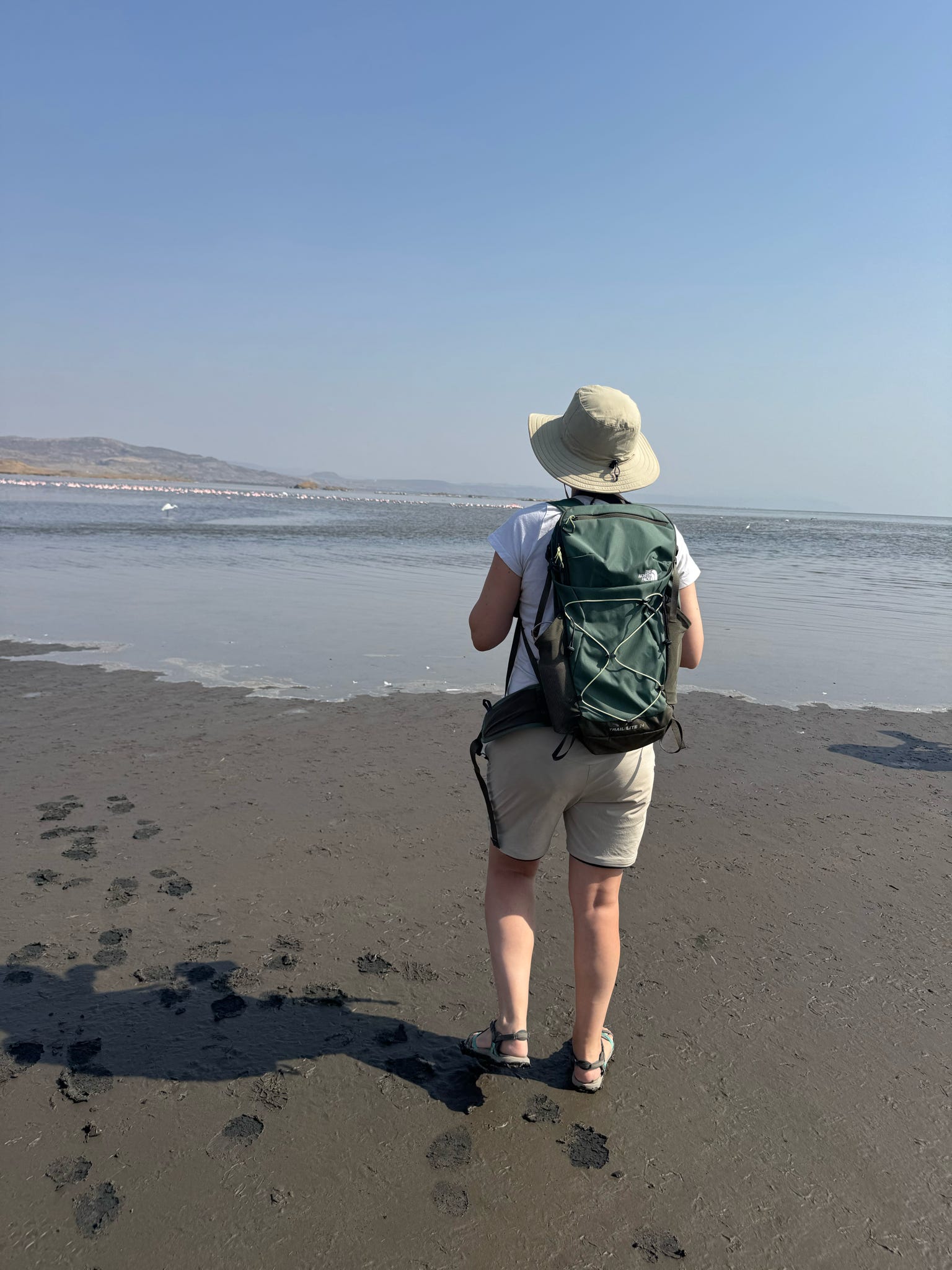
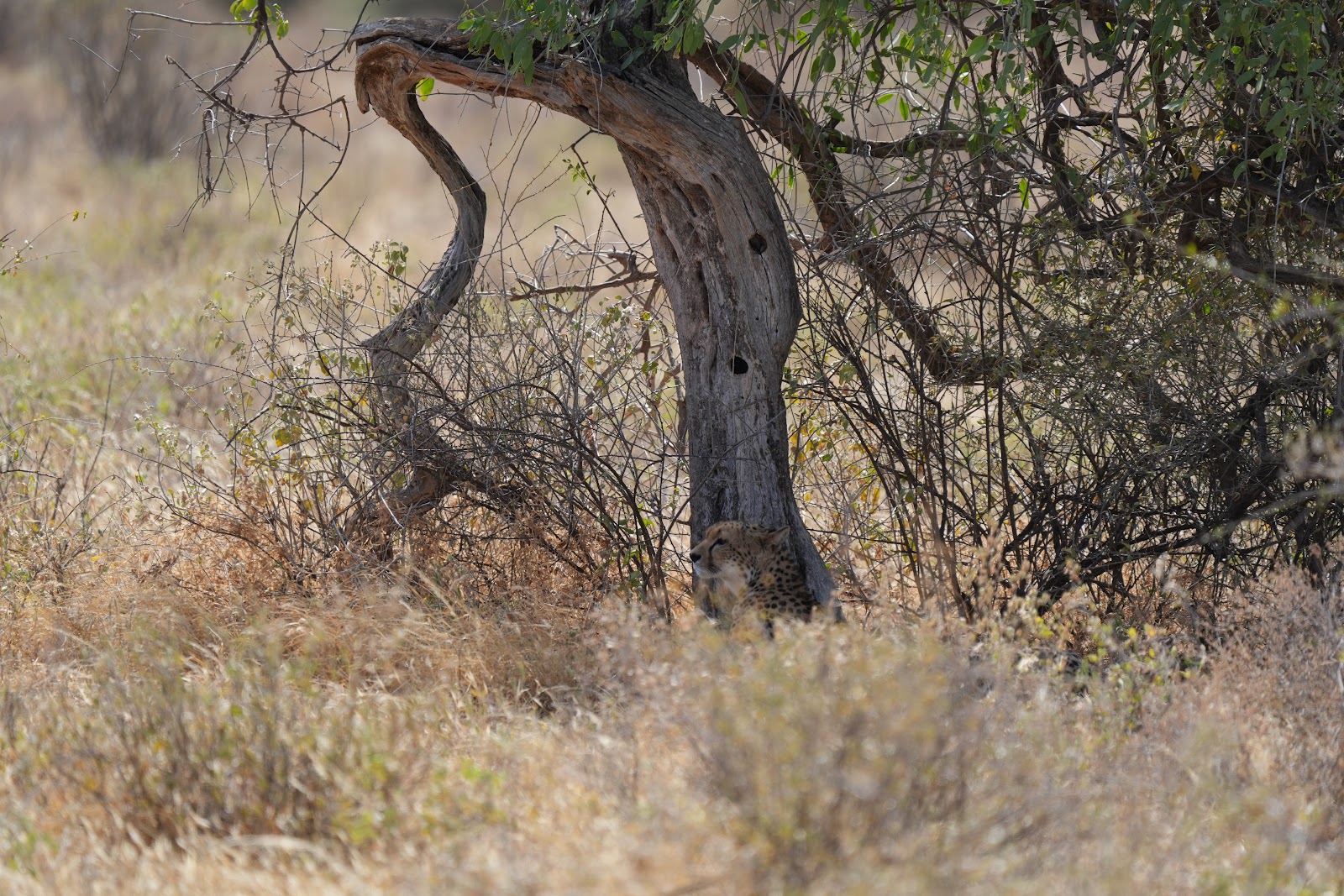
The elephants on the crater floor are almost always large old bulls with heavy tusks — females with calves stay mostly on the rim above. Hippo Pool (Mandusi) reliably delivers hippos and yellow-billed storks on every visit. Lake Magadi, the shallow soda lake at the centre, turns pink with lesser flamingos between November and March when water levels cooperate. Cheetahs hunt on the open grassland near the southeastern wall, at lower density than the Serengeti but present year-round.
When Is the Best Time to Visit Ngorongoro Crater?
No month is a wasted trip, but the experience shifts noticeably between seasons. December to March brings short grass after the rains — kills are visible from a distance, and newborn prey animals draw the big cats into open ground. June to October stays dry, crater roads hold firm, and animals concentrate around permanent waterholes.
April and May are the long rains. The crater floor turns intensely green, lodges cut rates by 20–30%, but some tracks get muddy and cloud cover limits photography light. We have done April descents and seen extraordinary things. The trade-off is real but manageable if you go in with realistic expectations.
| Month | Wildlife | Conditions | Crowds |
|---|---|---|---|
| Jan–Feb | Predators very active, flamingos on lake | Short grass, warm | Moderate |
| Mar | Wildebeest plentiful, calving ends | Short rains begin | Low–moderate |
| Apr–May | Lush, predators harder to spot | Long rains, some mud | Low |
| Jun–Aug | Dense at waterholes, rhino sightings reliable | Dry, cool mornings | High |
| Sep–Oct | Strong general wildlife | Dry, warming up | High |
| Nov–Dec | Flamingos return, newborns appear | Short rains, landscape greening | Moderate |
How Much Does a Ngorongoro Crater Safari Cost?
Crater fees alone come to USD 140 per adult (entry plus vehicle) per day for 2025, as confirmed by the NCAA. Your operator adds the guide, the 4WD and accommodation on top of that.
Budget travellers on a shared safari from Arusha typically pay USD 250–320 per person per day all-in. A mid-range private day trip runs USD 380–480 per person. Private vehicle, a solid rim lodge and two full crater descents lands at USD 550–700 per person per day. Luxury camps such as Ngorongoro Crater Lodge charge USD 1,200–2,000 per person per night with most meals included. Our honest view: a mid-range option delivers roughly 95% of the same wildlife experience for a fraction of the price.
How Many Hours Can You Spend Inside the Crater?
The NCAA caps each descent at 6 hours on the crater floor. Gates open at 06:00 and the last vehicles must exit by 18:00. Most operators run an early descent — down by 07:00, out by 13:00 — with a packed lunch at Hippo Pool. You cannot leave your vehicle except at the designated picnic areas.
Can You Visit Ngorongoro Without Staying Overnight?
A day trip from Arusha is doable, but 2.5–3 hours of driving each way on top of the 6-hour floor limit adds up to an exhausting day. One night on the rim changes things completely. You descend at first light when lions are still on the move, and you miss the convoy of vehicles that piles in after 09:00. Sopa Lodge and Ngorongoro Wildlife Lodge are solid choices at USD 180–280 per person per night half-board.
How Do You Get to the Ngorongoro Crater?
Fly into Kilimanjaro International (JRO) or Arusha Airport (ARK). From Arusha it is roughly 180 km on a paved road through Karatu — allow 2.5 to 3 hours. The NCAA entry gate is at Lodoare; from there it is another 20 minutes to the rim viewpoint and lodges. Rental cars are not permitted on the crater floor, so your operator handles the authorised 4WD. Some luxury itineraries include a charter to Manyara Airstrip, cutting road time to under an hour.
How Does Ngorongoro Differ From the Serengeti?
Ngorongoro is contained and concentrated. The caldera walls act as a natural boundary, which means high animal density and sightings that are hard to miss. The Serengeti rewards you with scale and unpredictability: open savanna stretching to the horizon and wildebeest in the hundreds of thousands moving on their own schedule.
A guest on one of our Northern Tanzania circuits put it well after doing both back-to-back: the Ngorongoro felt like watching wildlife in high definition, the Serengeti felt like standing inside the scene. The classic route runs Arusha — Tarangire (2 nights) — Lake Manyara (1 night) — Ngorongoro (1–2 nights) — Serengeti (3–4 nights) — back to Arusha. That is 8–10 days and works well as a first safari. If time is tight, Ngorongoro plus two nights in the Central Serengeti makes a focused 5-day trip from around USD 1,800 per person on a mid-range shared safari. Write to us on WhatsApp if you want us to sketch out the days for you.
FAQ
Do I need a visa to visit Tanzania?
Most nationalities need a visa. Apply online before you travel through the Tanzanian e-visa portal. The standard single-entry tourist visa costs USD 50 for most passports. Citizens of some East African Community member states enter without a visa.
Is the Ngorongoro Crater safe for self-drive?
No. Private vehicles are not permitted on the crater floor under any circumstances. You must use a registered safari operator with an authorised 4WD. Your rim lodge or tour operator arranges this as standard — nothing extra to organise on your side.
Can I see the Great Migration in Ngorongoro?
Around 15,000–20,000 wildebeest live permanently inside the crater, so predator action is constant. The Great Migration proper — the famous river crossings between the Serengeti and the Masai Mara — does not reach the crater. For that spectacle, you need the Northern Serengeti between July and September.
What vaccinations do I need for Tanzania?
Yellow fever vaccination is required if you arrive from a yellow fever endemic country. Check current entry requirements on the WHO international travel health pages. Most travel doctors also recommend hepatitis A and typhoid. Antimalarials are advised for the crater area regardless of season.
How cold does it get on the Ngorongoro rim?
The rim sits at around 2,300 m. Temperatures drop to 5–10°C at night year-round, and early mornings can feel sharply cold even in August. Pack a fleece or a light down jacket regardless of when you travel. The pre-dawn drive down in an open-sided vehicle makes the altitude felt immediately.
Are there community benefits from visiting Ngorongoro?
The Ngorongoro Conservation Area is jointly managed with Maasai communities who hold traditional grazing rights inside the caldera. A share of NCAA fees funds community development projects. Operators that hire Maasai guides and source locally — as Watatu does — put more of that money into local hands rather than stopping at the gate.
Ngorongoro Crater: Wildlife, Best Time & Honest Costs
Step onto the Ngorongoro Crater floor and within an hour you will likely have ticked black rhino, lion and hippo. The caldera is 20 km across and holds around 25,000 large mammals permanently — no seasonal migration required. Two periods pull ahead of the rest: December to March for short grass and active predators, and June to October for dry conditions and waterhole concentrations.
| Quick Facts | |
|---|---|
| Best months | December–March (short grass, predators active) and June–October (dry, waterholes busy) |
| Park entry fee (2025) | USD 70 per person per day (non-resident adult) |
| Vehicle fee | USD 70 per vehicle per day |
| Closest airport | Kilimanjaro International (JRO), ~3 h drive; Arusha Airport (ARK), ~2.5 h |
| Typical day trip from Arusha | USD 250–320 pp (shared 4WD) to USD 550+ pp (private) |
| Combined with | Serengeti, Lake Manyara, Tarangire |
| Overnight on the rim | From USD 180 pp (mid-range lodge) to USD 1,200+ pp (luxury camp) |
What Animals Can You See in the Ngorongoro Crater?
The crater sustains a closed ecosystem where buffalo herds of several hundred animals are common, zebra and wildebeest graze side by side, and spotted hyenas are often more visible than lions. The lions are there — but the real draw is the black rhino. The Ngorongoro Conservation Area Authority (NCAA) estimates 20–30 individuals inside the caldera, and our guides find them most reliably near Lerai Forest before 08:30.
In February 2024, our guide Baraka spotted a rhino mother and calf less than 40 metres from the vehicle at Lerai. The calf was so small he reckoned it was born within the previous two weeks. That kind of encounter is why the Ngorongoro sits in a category of its own among Tanzania's parks.
The elephants on the crater floor are almost always large old bulls with heavy tusks — females with calves stay mostly on the rim above. Hippo Pool (Mandusi) reliably delivers hippos and yellow-billed storks on every visit. Lake Magadi, the shallow soda lake at the centre, turns pink with lesser flamingos between November and March when water levels cooperate. Cheetahs hunt on the open grassland near the southeastern wall, at lower density than the Serengeti but present year-round.
When Is the Best Time to Visit Ngorongoro Crater?
No month is a wasted trip, but the experience shifts noticeably between seasons. December to March brings short grass after the rains — kills are visible from a distance, and newborn prey animals draw the big cats into open ground. June to October stays dry, crater roads hold firm, and animals concentrate around permanent waterholes.
April and May are the long rains. The crater floor turns intensely green, lodges cut rates by 20–30%, but some tracks get muddy and cloud cover limits photography light. We have done April descents and seen extraordinary things. The trade-off is real but manageable if you go in with realistic expectations.
| Month | Wildlife | Conditions | Crowds |
|---|---|---|---|
| Jan–Feb | Predators very active, flamingos on lake | Short grass, warm | Moderate |
| Mar | Wildebeest plentiful, calving ends | Short rains begin | Low–moderate |
| Apr–May | Lush, predators harder to spot | Long rains, some mud | Low |
| Jun–Aug | Dense at waterholes, rhino sightings reliable | Dry, cool mornings | High |
| Sep–Oct | Strong general wildlife | Dry, warming up | High |
| Nov–Dec | Flamingos return, newborns appear | Short rains, landscape greening | Moderate |
How Much Does a Ngorongoro Crater Safari Cost?
Crater fees alone come to USD 140 per adult (entry plus vehicle) per day for 2025, as confirmed by the NCAA. Your operator adds the guide, the 4WD and accommodation on top of that.
Budget travellers on a shared safari from Arusha typically pay USD 250–320 per person per day all-in. A mid-range private day trip runs USD 380–480 per person. Private vehicle, a solid rim lodge and two full crater descents lands at USD 550–700 per person per day. Luxury camps such as Ngorongoro Crater Lodge charge USD 1,200–2,000 per person per night with most meals included. Our honest view: a mid-range option delivers roughly 95% of the same wildlife experience for a fraction of the price.
How Many Hours Can You Spend Inside the Crater?
The NCAA caps each descent at 6 hours on the crater floor. Gates open at 06:00 and the last vehicles must exit by 18:00. Most operators run an early descent — down by 07:00, out by 13:00 — with a packed lunch at Hippo Pool. You cannot leave your vehicle except at the designated picnic areas.
Can You Visit Ngorongoro Without Staying Overnight?
A day trip from Arusha is doable, but 2.5–3 hours of driving each way on top of the 6-hour floor limit adds up to an exhausting day. One night on the rim changes things completely. You descend at first light when lions are still on the move, and you miss the convoy of vehicles that piles in after 09:00. Sopa Lodge and Ngorongoro Wildlife Lodge are solid choices at USD 180–280 per person per night half-board.
How Do You Get to the Ngorongoro Crater?
Fly into Kilimanjaro International (JRO) or Arusha Airport (ARK). From Arusha it is roughly 180 km on a paved road through Karatu — allow 2.5 to 3 hours. The NCAA entry gate is at Lodoare; from there it is another 20 minutes to the rim viewpoint and lodges. Rental cars are not permitted on the crater floor, so your operator handles the authorised 4WD. Some luxury itineraries include a charter to Manyara Airstrip, cutting road time to under an hour.
How Does Ngorongoro Differ From the Serengeti?
Ngorongoro is contained and concentrated. The caldera walls act as a natural boundary, which means high animal density and sightings that are hard to miss. The Serengeti rewards you with scale and unpredictability: open savanna stretching to the horizon and wildebeest in the hundreds of thousands moving on their own schedule.
A guest on one of our Northern Tanzania circuits put it well after doing both back-to-back: the Ngorongoro felt like watching wildlife in high definition, the Serengeti felt like standing inside the scene. The classic route runs Arusha — Tarangire (2 nights) — Lake Manyara (1 night) — Ngorongoro (1–2 nights) — Serengeti (3–4 nights) — back to Arusha. That is 8–10 days and works well as a first safari. If time is tight, Ngorongoro plus two nights in the Central Serengeti makes a focused 5-day trip from around USD 1,800 per person on a mid-range shared safari. Write to us on WhatsApp if you want us to sketch out the days for you.
FAQ
Do I need a visa to visit Tanzania?
Most nationalities need a visa. Apply online before you travel through the Tanzanian e-visa portal. The standard single-entry tourist visa costs USD 50 for most passports. Citizens of some East African Community member states enter without a visa.
Is the Ngorongoro Crater safe for self-drive?
No. Private vehicles are not permitted on the crater floor under any circumstances. You must use a registered safari operator with an authorised 4WD. Your rim lodge or tour operator arranges this as standard — nothing extra to organise on your side.
Can I see the Great Migration in Ngorongoro?
Around 15,000–20,000 wildebeest live permanently inside the crater, so predator action is constant. The Great Migration proper — the famous river crossings between the Serengeti and the Masai Mara — does not reach the crater. For that spectacle, you need the Northern Serengeti between July and September.
What vaccinations do I need for Tanzania?
Yellow fever vaccination is required if you arrive from a yellow fever endemic country. Check current entry requirements on the WHO international travel health pages. Most travel doctors also recommend hepatitis A and typhoid. Antimalarials are advised for the crater area regardless of season.
How cold does it get on the Ngorongoro rim?
The rim sits at around 2,300 m. Temperatures drop to 5–10°C at night year-round, and early mornings can feel sharply cold even in August. Pack a fleece or a light down jacket regardless of when you travel. The pre-dawn drive down in an open-sided vehicle makes the altitude felt immediately.
Are there community benefits from visiting Ngorongoro?
The Ngorongoro Conservation Area is jointly managed with Maasai communities who hold traditional grazing rights inside the caldera. A share of NCAA fees funds community development projects. Operators that hire Maasai guides and source locally — as Watatu does — put more of that money into local hands rather than stopping at the gate.









.png)