




When to See Each of the Big Five: A Species-by-Species Safari Guide
The question we find most useful to answer isn't 'when should I go on safari?' (we have full guides for Kenya, Tanzania, Kruger, Botswana, Zimbabwe, and Namibia for that). The more interesting question is: do lion, leopard, buffalo, elephant, and rhino all peak at the same moment? They don't. And understanding why makes the difference between a great safari and an extraordinary one.
| Best overall months | July to September (East Africa), June to August (southern Africa) |
| Easiest Big Five animal to spot | Cape buffalo: large herds near permanent water in dry season |
| Hardest Big Five animal to spot | Leopard, outside habituated areas such as Sabi Sand |
| Best single location for all five | Ngorongoro Crater, Tanzania (year-round, 260 km² contained area) |
| Wild white rhino population | Roughly 16,800 (IUCN estimate) |
| Wild black rhino population | Fewer than 6,500 (IUCN estimate) |
| Night drives available | Private reserves only (not inside Kruger, Masai Mara, Serengeti, or Etosha public areas) |
What follows is species-by-species logic, the seasonal behaviour of each animal, where to find it at its most viewable, and the practical details that most general safari guides leave out.
When Is the Best Time to See Lions?
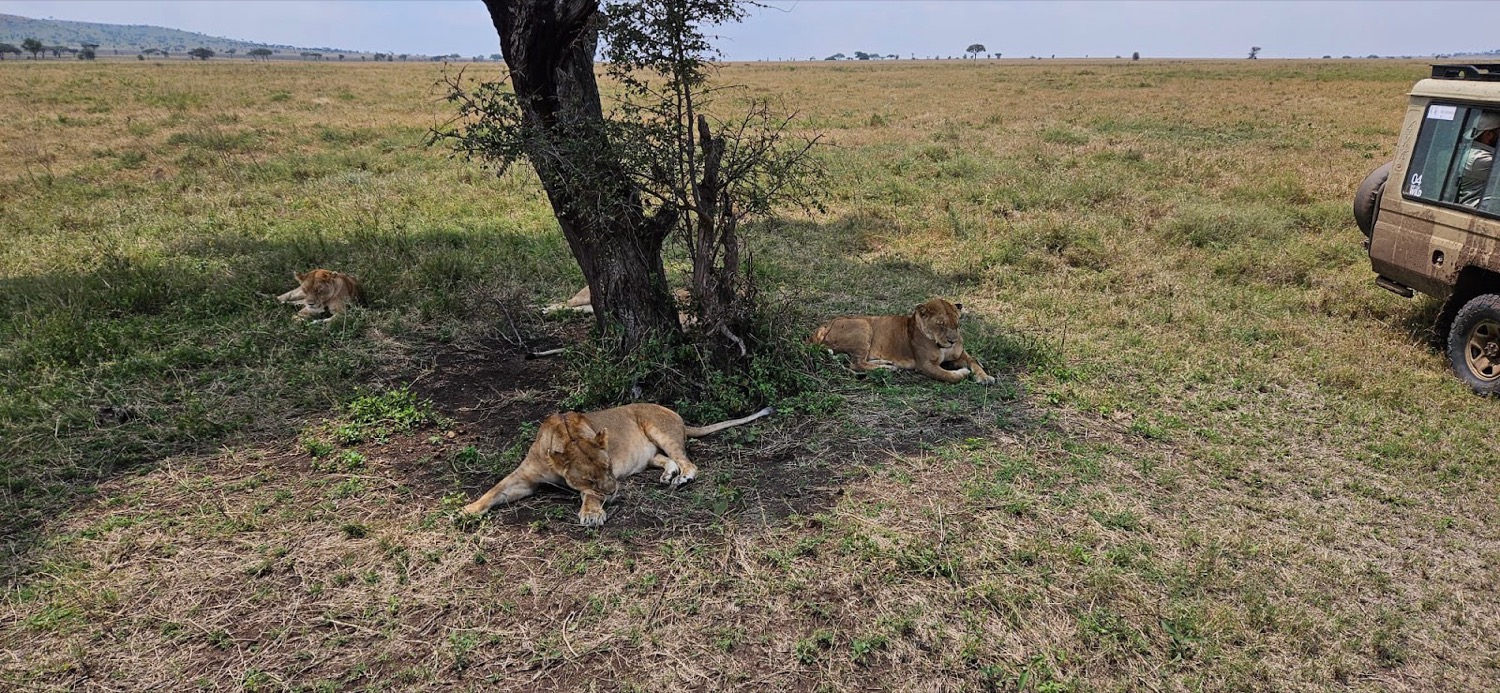
Lions are the most reliably found of the five across most of the year, but there is a meaningful gap between 'we saw a lion sleeping under a bush' and 'we watched a hunt unfold.' The dry season, June to October in East Africa, May to August in southern Africa, delivers the latter far more often. When prey species cluster around shrinking waterholes, prides don't have to work as hard or travel as far, which keeps them visible and active during daylight hours.
In the Masai Mara, late July through September adds a layer of drama that is hard to overstate: resident lion prides have learned to intercept wildebeest at the river crossings, and you can watch coordinated hunts from vehicles parked legally on the bank. Our guide David Kamau has tracked one particular Mara pride, the Rekero, for six consecutive seasons; he knows their territory well enough to predict morning ambush positions with striking accuracy. If you book a Mara trip for the crossing season, ask specifically for a guide with pride-tracking experience rather than a generalist, because the difference in what you witness is enormous.
In Kruger and the adjacent private reserves, June and July produce the clearest sightings, low grass, cold mornings that keep lions active well past sunrise, and prey pinned to the Sand and Sabie rivers. Note that Sabi Sand permits night drives, which Kruger's public camps do not; that single factor doubles your lion contact hours.
When Is the Best Time to See Leopards?
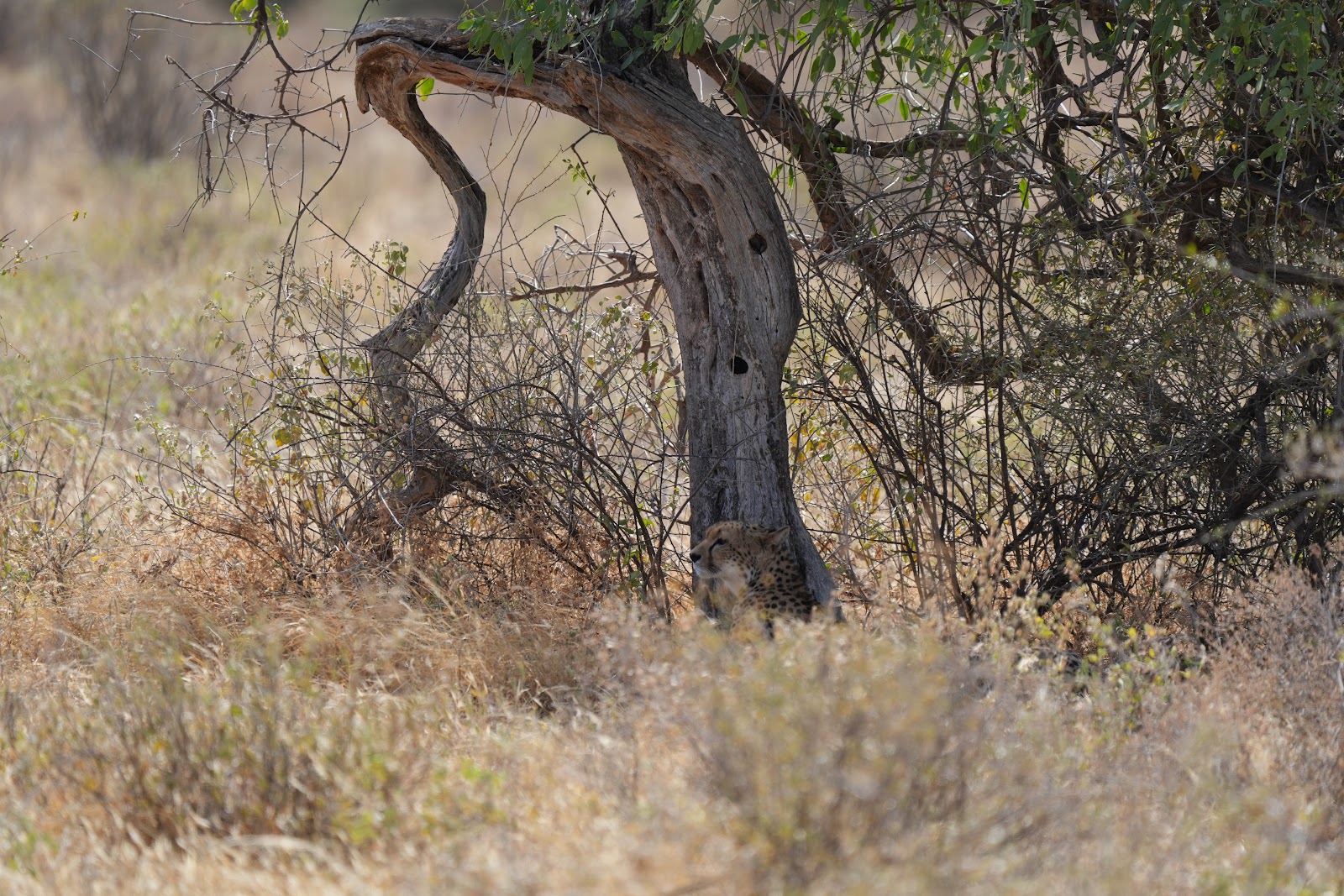
We should be honest: we have spent full five-day trips in prime leopard habitat and come back with one distant sighting. That is the animal. Leopards are genuinely solitary, largely nocturnal, and expert at using terrain that seems open but somehow conceals a 60-kilogram cat completely. The failure is part of what makes a good sighting feel like something you earned.
That said, Sabi Sand in the Greater Kruger area has changed what 'leopard sighting' means. The habituated cats there, generations that have grown up with game-drive vehicles, are so relaxed that operators consistently cite 90%+ daily leopard sighting rates during the dry season (May to September). We have watched a female leopard carry an impala carcass up an acacia while guests finished their sundowner drinks twenty metres away. It borders on surreal. The vehicles can go off-road, guides can track on foot, and the reserve's own leopard monitoring programme means staff radio positions in real time.
Outside Sabi Sand, the Laikipia Plateau in Kenya, Ol Pejeta, Lewa, Borana conservancies, gives you off-road access and night drives year-round, with dry-season months (June to October) reducing the grass height enough to make scanning productive. Entry to Ol Pejeta is around USD 100 per person per day conservancy fee, separate from accommodation; that fee directly funds the rhino protection programme discussed below.
When Is the Best Time to See Elephants?
Elephants are the forgiving one on this list, large, loud, and rarely hiding. But 'seeing elephants' and 'witnessing something genuinely moving' are different things, and the latter has specific windows.
Amboseli in January and February, when the rains have temporarily refreshed the swamps and Kilimanjaro emerges from its cloud cap in the clear morning light, produces images that explain why so many photographers treat it as a career destination. Herds of sixty or more move through the yellow fever acacias with the mountain behind them. Our guide Isaac Ntipai, who has worked Amboseli for twelve years, will tell you that the matriarchs remember exactly which swamp sections hold water in the dry months, if you want to understand elephant social intelligence, watch him watch them.
For sheer volume, Chobe's riverfront in August to October is in a different category entirely. Herds of several hundred animals cross the Chobe River daily; you follow from a boat at eye level, close enough to hear them breathe. Our Botswana safari guide covers the logistics of combining Chobe with the Okavango.
What About Cape Buffalo?
Buffalo are grazers that follow the grass, and in the dry season they cluster near permanent water in herds large enough to find from a kilometre away. They are genuinely the most straightforward of the five, most guests in Kruger or the Serengeti's western corridor tick them off within the first morning. We mention this not to dismiss them but because it should recalibrate your planning: don't waste a leopard-sighting opportunity driving to find buffalo. They will find you. Across most parks, June to October is reliable, and large aggregations of 500-plus animals are common in the southern Serengeti and along Kruger's Sabie River.
When Is the Best Time to See Rhinos, and Where?
Rhino is the one that keeps us honest. There are roughly 16,800 white rhinos remaining in the wild globally (IUCN 2027 estimate) and fewer than 6,500 black rhinos, numbers that make every sighting carry weight beyond the checklist. Poaching pressure has reshaped where you can reliably find them, and in some parks that used to offer good sightings, population collapse means the animal is functionally absent.
For white rhino, Hluhluwe-iMfolozi Park in KwaZulu-Natal is the starting point, it is the park that saved the white rhino from extinction in the twentieth century and still holds the highest wild density. Conservation fees are included in the KwaZulu-Natal Wildlife gate fee of approximately ZAR 280–350 per person (roughly USD 15–19 at 2027 rates), making it one of the most accessible Big Five parks in Africa by cost. The dry season from May to August thins the vegetation enough to spot them reliably; the rangers who lead rhino-tracking walks, a separate booking, worth every rand, know individual animals by ear shape and horn profile. Ask at reception for walking safari availability; demand exceeds supply in peak months.
Black rhino is harder and demands a different approach. Etosha National Park in Namibia has one of the more accessible black rhino populations, and the tactic that works best there is counterintuitive: park at a floodlit waterhole after dark and wait. Black rhino are intensely nocturnal and approach water late; we have sat at Okaukuejo waterhole until midnight watching a mother and calf drink while a lion watched from the shadows on the opposite bank. Etosha's entry fee runs around NAD 150–200 per person per day (roughly USD 8–11). Our Namibia safari guide covers the park's layout and best camps in detail.
In Kenya, Ol Pejeta Conservancy combines reliable black rhino sightings with a conservation model worth understanding: the conservancy uses tracking dogs, camera networks, and armed ranger teams funded partly by those conservancy fees. Keeper-led rhino experiences are available on request, a morning with the rhino monitoring team is genuinely one of the more affecting things we offer guests. For Zimbabwe's black rhino, Mana Pools offers walking safari sightings that are as close to a wild rhino encounter as it gets.
Can You See All Five in One Trip, and What Does That Actually Require?
Yes, and the honest answer is that two destinations do this most reliably. Kruger combined with Sabi Sand (South Africa, May–September) covers lion, leopard, elephant, buffalo, and white rhino, the Sabi Sand leopard guarantee and Kruger's white rhino population handle the two hardest animals. A well-designed 10-day itinerary hits all five; on a focused 7-day trip, our guides have a strong success rate but need good conditions and a flexible schedule.
The Serengeti combined with Ngorongoro Crater (Tanzania) is equally reliable. The crater floor, a 260 km² collapsed caldera, concentrates all five in a contained area. Our guide Josephat Mollel once spotted all five between 7am and 1pm on the crater floor on a January visit, in the calving season when the predator density is at its peak. Black rhino are the limiting factor in the crater; a population of around 30 individuals lives there, and sightings are possible but never guaranteed. Our Tanzania timing guide explains the seasonal layering in more detail.
Big Five Safari Logistics Worth Knowing Before You Book
A few specifics that go beyond the general 'book early' advice:
Walking safaris for rhino tracking require separate booking at Hluhluwe-iMfolozi and must be arranged directly with KwaZulu-Natal Wildlife (Ezemvelo), not through camp accommodation. They fill up weeks ahead in July and August. If rhino is your priority, confirm availability before booking flights.
Night drives are prohibited inside Kruger National Park's public sections but standard in all adjacent private reserves (Sabi Sand, Timbavati, Thornybush). This is not a minor detail, leopard and lion contact rates after dark in Sabi Sand are significantly higher than daytime equivalents, and rhino are almost exclusively nocturnal movers.
Off-road driving is prohibited in most national parks (Kruger, Masai Mara, Serengeti, Etosha) but permitted in private concessions. For leopard specifically, the ability to leave the track and position your vehicle properly changes success rates from roughly 40–50% in open parks to the 90%+ figures cited for Sabi Sand.
Black rhino tracking on foot in Zimbabwe's Mana Pools requires a qualified professional guide (ZPWMA-licensed) and must be booked through the camp; independent tracking is not permitted. Confirm in advance that your Mana Pools operator holds a current walking concession, not all do.
Ready to Plan Your Big Five Safari?
From lion hunts on the Mara to leopard encounters in the Serengeti, our Tanzania routes are designed around the seasonal rhythms covered in this guide. Talk to us and we will match you to the right window. 9 days, from 3.350 € per person. Tanzania - Crossroads of the Great Migration
Frequently asked questions
Which month is best for seeing all five Big Five animals on a single safari?
July and August offer the strongest overlap across East and southern Africa. In Tanzania, the Ngorongoro Crater concentrates all five year-round, while July to September adds the Serengeti migration. In South Africa, June to August gives dry-season visibility in Kruger and near-guaranteed leopard sightings in the adjacent Sabi Sand private reserve.
Is it realistic to see a leopard on safari, or is it mostly luck?
In most parks it involves significant luck. The exception is Sabi Sand in the Greater Kruger area, where habituated leopards are regularly found on day and night drives. Off-road access matters enormously: guides can position the vehicle at the right angle and distance, turning a brief glimpse into a prolonged, relaxed encounter. Allow at least three nights in a private reserve.
Where is the best place to see rhinos, given how few remain?
For white rhino, Hluhluwe-iMfolozi Park in KwaZulu-Natal, South Africa, has the highest wild density and offers guided walking safaris for closer contact. For black rhino, Ol Pejeta Conservancy in Kenya and Etosha National Park in Namibia are the most accessible options, with Etosha's floodlit waterholes offering reliable nocturnal sightings during the dry season.
Do I need a private reserve or will a national park give me a good Big Five experience?
National parks such as Kruger, the Masai Mara, and the Serengeti deliver strong lion, elephant, and buffalo sightings. For leopard specifically, and for rhino tracking on foot, private reserves and conservancies are significantly better: they allow off-road driving, night drives, and smaller vehicle numbers at each sighting, all of which improve both frequency and quality of encounters.
What time of day produces the best wildlife sightings for the Big Five?
Early morning (first light to around 9 am) and late afternoon (4 pm to dusk) are when lions and leopards are most active. Elephants drink at midday in the dry season, making waterholes productive at all hours. Rhinos at Etosha's floodlit waterholes are best observed at night. Buffalo are visible throughout the day, often found grazing close to permanent water sources.
How far in advance should I book a Big Five safari?
For peak months (July to September in East Africa, June to August in southern Africa), book lodges and routes at least six to nine months ahead. Walking safaris for rhino tracking at Hluhluwe-iMfolozi fill weeks in advance even outside peak season. Private reserve camps in Sabi Sand have limited beds and the best ones sell out earliest, so early planning pays off significantly.
When to See Each of the Big Five: A Species-by-Species Safari Guide
The question we find most useful to answer isn't 'when should I go on safari?' (we have full guides for Kenya, Tanzania, Kruger, Botswana, Zimbabwe, and Namibia for that). The more interesting question is: do lion, leopard, buffalo, elephant, and rhino all peak at the same moment? They don't. And understanding why makes the difference between a great safari and an extraordinary one.
| Best overall months | July to September (East Africa), June to August (southern Africa) |
| Easiest Big Five animal to spot | Cape buffalo: large herds near permanent water in dry season |
| Hardest Big Five animal to spot | Leopard, outside habituated areas such as Sabi Sand |
| Best single location for all five | Ngorongoro Crater, Tanzania (year-round, 260 km² contained area) |
| Wild white rhino population | Roughly 16,800 (IUCN estimate) |
| Wild black rhino population | Fewer than 6,500 (IUCN estimate) |
| Night drives available | Private reserves only (not inside Kruger, Masai Mara, Serengeti, or Etosha public areas) |
What follows is species-by-species logic, the seasonal behaviour of each animal, where to find it at its most viewable, and the practical details that most general safari guides leave out.
When Is the Best Time to See Lions?
Lions are the most reliably found of the five across most of the year, but there is a meaningful gap between 'we saw a lion sleeping under a bush' and 'we watched a hunt unfold.' The dry season, June to October in East Africa, May to August in southern Africa, delivers the latter far more often. When prey species cluster around shrinking waterholes, prides don't have to work as hard or travel as far, which keeps them visible and active during daylight hours.
In the Masai Mara, late July through September adds a layer of drama that is hard to overstate: resident lion prides have learned to intercept wildebeest at the river crossings, and you can watch coordinated hunts from vehicles parked legally on the bank. Our guide David Kamau has tracked one particular Mara pride, the Rekero, for six consecutive seasons; he knows their territory well enough to predict morning ambush positions with striking accuracy. If you book a Mara trip for the crossing season, ask specifically for a guide with pride-tracking experience rather than a generalist, because the difference in what you witness is enormous.
In Kruger and the adjacent private reserves, June and July produce the clearest sightings, low grass, cold mornings that keep lions active well past sunrise, and prey pinned to the Sand and Sabie rivers. Note that Sabi Sand permits night drives, which Kruger's public camps do not; that single factor doubles your lion contact hours.
When Is the Best Time to See Leopards?
We should be honest: we have spent full five-day trips in prime leopard habitat and come back with one distant sighting. That is the animal. Leopards are genuinely solitary, largely nocturnal, and expert at using terrain that seems open but somehow conceals a 60-kilogram cat completely. The failure is part of what makes a good sighting feel like something you earned.
That said, Sabi Sand in the Greater Kruger area has changed what 'leopard sighting' means. The habituated cats there, generations that have grown up with game-drive vehicles, are so relaxed that operators consistently cite 90%+ daily leopard sighting rates during the dry season (May to September). We have watched a female leopard carry an impala carcass up an acacia while guests finished their sundowner drinks twenty metres away. It borders on surreal. The vehicles can go off-road, guides can track on foot, and the reserve's own leopard monitoring programme means staff radio positions in real time.
Outside Sabi Sand, the Laikipia Plateau in Kenya, Ol Pejeta, Lewa, Borana conservancies, gives you off-road access and night drives year-round, with dry-season months (June to October) reducing the grass height enough to make scanning productive. Entry to Ol Pejeta is around USD 100 per person per day conservancy fee, separate from accommodation; that fee directly funds the rhino protection programme discussed below.
When Is the Best Time to See Elephants?
Elephants are the forgiving one on this list, large, loud, and rarely hiding. But 'seeing elephants' and 'witnessing something genuinely moving' are different things, and the latter has specific windows.
Amboseli in January and February, when the rains have temporarily refreshed the swamps and Kilimanjaro emerges from its cloud cap in the clear morning light, produces images that explain why so many photographers treat it as a career destination. Herds of sixty or more move through the yellow fever acacias with the mountain behind them. Our guide Isaac Ntipai, who has worked Amboseli for twelve years, will tell you that the matriarchs remember exactly which swamp sections hold water in the dry months, if you want to understand elephant social intelligence, watch him watch them.
For sheer volume, Chobe's riverfront in August to October is in a different category entirely. Herds of several hundred animals cross the Chobe River daily; you follow from a boat at eye level, close enough to hear them breathe. Our Botswana safari guide covers the logistics of combining Chobe with the Okavango.
What About Cape Buffalo?
Buffalo are grazers that follow the grass, and in the dry season they cluster near permanent water in herds large enough to find from a kilometre away. They are genuinely the most straightforward of the five, most guests in Kruger or the Serengeti's western corridor tick them off within the first morning. We mention this not to dismiss them but because it should recalibrate your planning: don't waste a leopard-sighting opportunity driving to find buffalo. They will find you. Across most parks, June to October is reliable, and large aggregations of 500-plus animals are common in the southern Serengeti and along Kruger's Sabie River.
When Is the Best Time to See Rhinos, and Where?
Rhino is the one that keeps us honest. There are roughly 16,800 white rhinos remaining in the wild globally (IUCN 2027 estimate) and fewer than 6,500 black rhinos, numbers that make every sighting carry weight beyond the checklist. Poaching pressure has reshaped where you can reliably find them, and in some parks that used to offer good sightings, population collapse means the animal is functionally absent.
For white rhino, Hluhluwe-iMfolozi Park in KwaZulu-Natal is the starting point, it is the park that saved the white rhino from extinction in the twentieth century and still holds the highest wild density. Conservation fees are included in the KwaZulu-Natal Wildlife gate fee of approximately ZAR 280–350 per person (roughly USD 15–19 at 2027 rates), making it one of the most accessible Big Five parks in Africa by cost. The dry season from May to August thins the vegetation enough to spot them reliably; the rangers who lead rhino-tracking walks, a separate booking, worth every rand, know individual animals by ear shape and horn profile. Ask at reception for walking safari availability; demand exceeds supply in peak months.
Black rhino is harder and demands a different approach. Etosha National Park in Namibia has one of the more accessible black rhino populations, and the tactic that works best there is counterintuitive: park at a floodlit waterhole after dark and wait. Black rhino are intensely nocturnal and approach water late; we have sat at Okaukuejo waterhole until midnight watching a mother and calf drink while a lion watched from the shadows on the opposite bank. Etosha's entry fee runs around NAD 150–200 per person per day (roughly USD 8–11). Our Namibia safari guide covers the park's layout and best camps in detail.
In Kenya, Ol Pejeta Conservancy combines reliable black rhino sightings with a conservation model worth understanding: the conservancy uses tracking dogs, camera networks, and armed ranger teams funded partly by those conservancy fees. Keeper-led rhino experiences are available on request, a morning with the rhino monitoring team is genuinely one of the more affecting things we offer guests. For Zimbabwe's black rhino, Mana Pools offers walking safari sightings that are as close to a wild rhino encounter as it gets.
Can You See All Five in One Trip, and What Does That Actually Require?
Yes, and the honest answer is that two destinations do this most reliably. Kruger combined with Sabi Sand (South Africa, May–September) covers lion, leopard, elephant, buffalo, and white rhino, the Sabi Sand leopard guarantee and Kruger's white rhino population handle the two hardest animals. A well-designed 10-day itinerary hits all five; on a focused 7-day trip, our guides have a strong success rate but need good conditions and a flexible schedule.
The Serengeti combined with Ngorongoro Crater (Tanzania) is equally reliable. The crater floor, a 260 km² collapsed caldera, concentrates all five in a contained area. Our guide Josephat Mollel once spotted all five between 7am and 1pm on the crater floor on a January visit, in the calving season when the predator density is at its peak. Black rhino are the limiting factor in the crater; a population of around 30 individuals lives there, and sightings are possible but never guaranteed. Our Tanzania timing guide explains the seasonal layering in more detail.
Big Five Safari Logistics Worth Knowing Before You Book
A few specifics that go beyond the general 'book early' advice:
Walking safaris for rhino tracking require separate booking at Hluhluwe-iMfolozi and must be arranged directly with KwaZulu-Natal Wildlife (Ezemvelo), not through camp accommodation. They fill up weeks ahead in July and August. If rhino is your priority, confirm availability before booking flights.
Night drives are prohibited inside Kruger National Park's public sections but standard in all adjacent private reserves (Sabi Sand, Timbavati, Thornybush). This is not a minor detail, leopard and lion contact rates after dark in Sabi Sand are significantly higher than daytime equivalents, and rhino are almost exclusively nocturnal movers.
Off-road driving is prohibited in most national parks (Kruger, Masai Mara, Serengeti, Etosha) but permitted in private concessions. For leopard specifically, the ability to leave the track and position your vehicle properly changes success rates from roughly 40–50% in open parks to the 90%+ figures cited for Sabi Sand.
Black rhino tracking on foot in Zimbabwe's Mana Pools requires a qualified professional guide (ZPWMA-licensed) and must be booked through the camp; independent tracking is not permitted. Confirm in advance that your Mana Pools operator holds a current walking concession, not all do.
Ready to Plan Your Big Five Safari?
From lion hunts on the Mara to leopard encounters in the Serengeti, our Tanzania routes are designed around the seasonal rhythms covered in this guide. Talk to us and we will match you to the right window. 9 days, from 3.350 € per person. Tanzania - Crossroads of the Great Migration
Frequently asked questions
Which month is best for seeing all five Big Five animals on a single safari?
July and August offer the strongest overlap across East and southern Africa. In Tanzania, the Ngorongoro Crater concentrates all five year-round, while July to September adds the Serengeti migration. In South Africa, June to August gives dry-season visibility in Kruger and near-guaranteed leopard sightings in the adjacent Sabi Sand private reserve.
Is it realistic to see a leopard on safari, or is it mostly luck?
In most parks it involves significant luck. The exception is Sabi Sand in the Greater Kruger area, where habituated leopards are regularly found on day and night drives. Off-road access matters enormously: guides can position the vehicle at the right angle and distance, turning a brief glimpse into a prolonged, relaxed encounter. Allow at least three nights in a private reserve.
Where is the best place to see rhinos, given how few remain?
For white rhino, Hluhluwe-iMfolozi Park in KwaZulu-Natal, South Africa, has the highest wild density and offers guided walking safaris for closer contact. For black rhino, Ol Pejeta Conservancy in Kenya and Etosha National Park in Namibia are the most accessible options, with Etosha's floodlit waterholes offering reliable nocturnal sightings during the dry season.
Do I need a private reserve or will a national park give me a good Big Five experience?
National parks such as Kruger, the Masai Mara, and the Serengeti deliver strong lion, elephant, and buffalo sightings. For leopard specifically, and for rhino tracking on foot, private reserves and conservancies are significantly better: they allow off-road driving, night drives, and smaller vehicle numbers at each sighting, all of which improve both frequency and quality of encounters.
What time of day produces the best wildlife sightings for the Big Five?
Early morning (first light to around 9 am) and late afternoon (4 pm to dusk) are when lions and leopards are most active. Elephants drink at midday in the dry season, making waterholes productive at all hours. Rhinos at Etosha's floodlit waterholes are best observed at night. Buffalo are visible throughout the day, often found grazing close to permanent water sources.
How far in advance should I book a Big Five safari?
For peak months (July to September in East Africa, June to August in southern Africa), book lodges and routes at least six to nine months ahead. Walking safaris for rhino tracking at Hluhluwe-iMfolozi fill weeks in advance even outside peak season. Private reserve camps in Sabi Sand have limited beds and the best ones sell out earliest, so early planning pays off significantly.





.png)