





.avif)

If you are a lover of nature and adventure, surely you have heard of Bwindi Impenetrable National Park, a place that is among the most surprising in Africa.
This natural paradise is famous for being one oflast refuges of mountain gorillas, a critically endangered species struggling to survive in this corner of the world.
But what makes Bwindi and his gorillas so special? Here we tell you everything you need to know about this unique place.
Where is Bwindi located?
Bwindi Impenetrable National Park is located in southwestern Uganda, right on the border with the Democratic Republic of the Congo. This place extends to more than 330 square km of dense rainforests and steep mountains.

Bwindi is so dense that it has earned the name “impenetrable”, and it is not difficult to understand why: the foliage is so thick that almost no sunlight enters it.
The Climate of Bwindi
Bwindi has a tropical climate,which means that it iswarm and humid all year round. If you plan to visit it, get ready for rain, as this park receives constant rainfall, especially between March and May, and from September to November.
Gorillas in Bwindi: A Unique and Endangered Species
What are Mountain Gorillas?
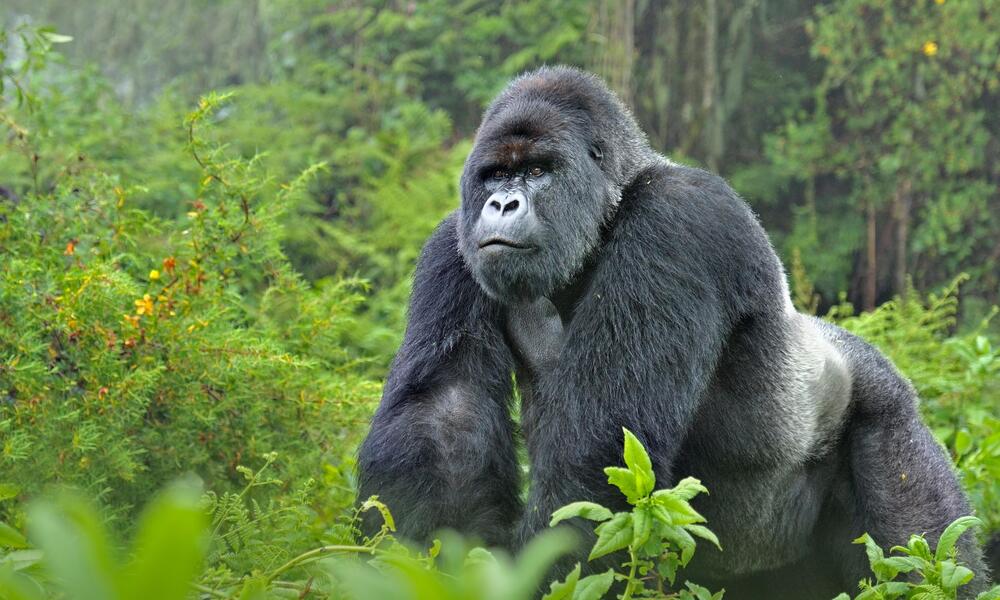
The mountain gorillas of Bwindi are one subspecies of the eastern gorilla. These majestic animals are known for their longer and thicker coat, adapted to the cold temperatures of the mountains.
.jpeg)
Unlike their relatives who live in the plains, mountain gorillas They live at altitudes ranging from 2,200 to 4,300 meters above sea level.
The Gorilla Population in Bwindi
Bwindi Impenetrable National Park is home to nearly half the world's population of mountain gorillas. According to the latest census, it is estimated thatthere are about 500 gorillas in Bwindi, of the approximately 1,000 that exist worldwide.

This figurehas increased in recent yearsThanks to the efforts of preserving, but the Bwindi gorillas continue to face serious threats.
Poaching and Habitat Loss
Mountain gorillas have beenvictims of poaching for decades. Although gorilla hunting has declined, hunters still pose a threat, as they often place traps that can seriously injure gorillas.
In addition, theexpansion of agriculture and deforestation for obtaining wood have significantly reduced their natural habitat, forcing these animals to live in increasingly small and isolated areas.
Trek into the Heart of Bwindi
Join our expert-led Uganda gorilla trekking journey and come face to face with mountain gorillas in their natural habitat. 5 days, from 1.479 € per person. Uganda - Gorilla Express
Diseases Transmitted by Humans
Another significant threat is the transmission of disease from humans to gorillas. Mountain gorillas have a immune system very similar to ours, which makes them susceptible to human diseases such as the flu, which can be lethal to them.
Conservation and Responsible Tourism to See Gorillas in Bwindi
Conservation Initiatives
Fortunately, not all is lost. Thanks to theconservation initiatives, such as the work of theUganda Wildlife Authority and several NGOs, the mountain gorilla population has shown a slow but steady recovery.
.jpeg)
These organizations focus on the habitat protection, poaching surveillance and education of local communities on the importance of conserving gorillas.
Gorilla Watching Tourism
Bwindi has become onepopular destination for tourism Watching gorillas. This type of tourism is crucial for conservation, asgenerates income that is reinvested in protection programs and provides an economic incentive for local communities to preserve the park and its inhabitants.
Likewise, it is essential that this tourism is carried out in a way responsible. Only one is allowedlimited number of visitors per day to avoid stress in gorillas and minimize the risk of disease transmission.

In summary and to conclude, whether through responsible tourism or by supporting conservation initiatives,we can all contribute to ensuring that the gorillas in Bwindi continue to thrivein their natural habitat.
If you want to encourage yourself to live this unique adventure, you can take a look at theOur travels to Uganda. It will be one An experience you will never forget!
Ready to Meet the Mountain Gorillas?
Our Uganda expeditions are designed to combine responsible wildlife encounters with unforgettable landscapes. Spots are limited, so do not wait too long. 12 days, from 4.995 € per person. Uganda - The Land of the Mountain Gorilla
Frequently asked questions
How do I get a permit to see gorillas in Bwindi?
Gorilla trekking permits in Bwindi are issued by the Uganda Wildlife Authority. They are limited in number and highly sought after, so it is strongly recommended to book several months in advance. Permits allow you to spend one hour with a habituated gorilla family, accompanied by a ranger guide at all times.
What is the best time of year to visit Bwindi Impenetrable National Park?
The best months to trek in Bwindi are during the drier seasons: June to August and December to February. Trails are less muddy and hiking is more manageable. That said, gorillas can be tracked year-round, and the park's lush greenery is equally impressive during the wetter months of March to May and September to November.
How fit do I need to be for gorilla trekking in Bwindi?
Gorilla trekking can be physically demanding. The terrain is steep and dense, and hikes can last anywhere from one to eight hours depending on where the gorilla family has moved. A moderate level of fitness is recommended. Porters are available at the trailheads and can be hired to help carry bags and provide additional support.
Are mountain gorillas dangerous to visit?
Habituated gorilla families in Bwindi are accustomed to human presence and are generally calm. However, they are wild animals and visitors must follow strict guidelines: maintain a distance of at least seven metres, avoid direct eye contact, and never eat near the gorillas. Rangers accompany every group to ensure safety for both visitors and gorillas.
What health precautions should I take before visiting Bwindi?
Visitors should consult a travel health clinic before the trip. Key recommendations typically include malaria prophylaxis, yellow fever vaccination (required for entry into Uganda), and ensuring routine vaccinations are up to date. If you feel unwell on the day of your trek, you may be asked to stay behind to protect the gorillas from potential disease transmission.
How does gorilla tourism help with conservation?
Revenue from gorilla trekking permits funds the Uganda Wildlife Authority's anti-poaching patrols, habitat management, and community development programmes around Bwindi. Local communities benefit directly through employment and income-sharing schemes, giving them a tangible economic reason to protect gorillas rather than exploit the forest for farming or logging.
If you are a lover of nature and adventure, surely you have heard of Bwindi Impenetrable National Park, a place that is among the most surprising in Africa.
This natural paradise is famous for being one oflast refuges of mountain gorillas, a critically endangered species struggling to survive in this corner of the world.
But what makes Bwindi and his gorillas so special? Here we tell you everything you need to know about this unique place.
Where is Bwindi located?
Bwindi Impenetrable National Park is located in southwestern Uganda, right on the border with the Democratic Republic of the Congo. This place extends to more than 330 square km of dense rainforests and steep mountains.
Bwindi is so dense that it has earned the name “impenetrable”, and it is not difficult to understand why: the foliage is so thick that almost no sunlight enters it.
The Climate of Bwindi
Bwindi has a tropical climate,which means that it iswarm and humid all year round. If you plan to visit it, get ready for rain, as this park receives constant rainfall, especially between March and May, and from September to November.
Gorillas in Bwindi: A Unique and Endangered Species
What are Mountain Gorillas?
The mountain gorillas of Bwindi are one subspecies of the eastern gorilla. These majestic animals are known for their longer and thicker coat, adapted to the cold temperatures of the mountains.
Unlike their relatives who live in the plains, mountain gorillas They live at altitudes ranging from 2,200 to 4,300 meters above sea level.
The Gorilla Population in Bwindi
Bwindi Impenetrable National Park is home to nearly half the world's population of mountain gorillas. According to the latest census, it is estimated thatthere are about 500 gorillas in Bwindi, of the approximately 1,000 that exist worldwide.
This figurehas increased in recent yearsThanks to the efforts of preserving, but the Bwindi gorillas continue to face serious threats.
Poaching and Habitat Loss
Mountain gorillas have beenvictims of poaching for decades. Although gorilla hunting has declined, hunters still pose a threat, as they often place traps that can seriously injure gorillas.
In addition, theexpansion of agriculture and deforestation for obtaining wood have significantly reduced their natural habitat, forcing these animals to live in increasingly small and isolated areas.
Trek into the Heart of Bwindi
Join our expert-led Uganda gorilla trekking journey and come face to face with mountain gorillas in their natural habitat. 5 days, from 1.479 € per person. Uganda - Gorilla Express
Diseases Transmitted by Humans
Another significant threat is the transmission of disease from humans to gorillas. Mountain gorillas have a immune system very similar to ours, which makes them susceptible to human diseases such as the flu, which can be lethal to them.
Conservation and Responsible Tourism to See Gorillas in Bwindi
Conservation Initiatives
Fortunately, not all is lost. Thanks to theconservation initiatives, such as the work of theUganda Wildlife Authority and several NGOs, the mountain gorilla population has shown a slow but steady recovery.
These organizations focus on the habitat protection, poaching surveillance and education of local communities on the importance of conserving gorillas.
Gorilla Watching Tourism
Bwindi has become onepopular destination for tourism Watching gorillas. This type of tourism is crucial for conservation, asgenerates income that is reinvested in protection programs and provides an economic incentive for local communities to preserve the park and its inhabitants.
Likewise, it is essential that this tourism is carried out in a way responsible. Only one is allowedlimited number of visitors per day to avoid stress in gorillas and minimize the risk of disease transmission.
In summary and to conclude, whether through responsible tourism or by supporting conservation initiatives,we can all contribute to ensuring that the gorillas in Bwindi continue to thrivein their natural habitat.
If you want to encourage yourself to live this unique adventure, you can take a look at theOur travels to Uganda. It will be one An experience you will never forget!
Ready to Meet the Mountain Gorillas?
Our Uganda expeditions are designed to combine responsible wildlife encounters with unforgettable landscapes. Spots are limited, so do not wait too long. 12 days, from 4.995 € per person. Uganda - The Land of the Mountain Gorilla
Frequently asked questions
How do I get a permit to see gorillas in Bwindi?
Gorilla trekking permits in Bwindi are issued by the Uganda Wildlife Authority. They are limited in number and highly sought after, so it is strongly recommended to book several months in advance. Permits allow you to spend one hour with a habituated gorilla family, accompanied by a ranger guide at all times.
What is the best time of year to visit Bwindi Impenetrable National Park?
The best months to trek in Bwindi are during the drier seasons: June to August and December to February. Trails are less muddy and hiking is more manageable. That said, gorillas can be tracked year-round, and the park's lush greenery is equally impressive during the wetter months of March to May and September to November.
How fit do I need to be for gorilla trekking in Bwindi?
Gorilla trekking can be physically demanding. The terrain is steep and dense, and hikes can last anywhere from one to eight hours depending on where the gorilla family has moved. A moderate level of fitness is recommended. Porters are available at the trailheads and can be hired to help carry bags and provide additional support.
Are mountain gorillas dangerous to visit?
Habituated gorilla families in Bwindi are accustomed to human presence and are generally calm. However, they are wild animals and visitors must follow strict guidelines: maintain a distance of at least seven metres, avoid direct eye contact, and never eat near the gorillas. Rangers accompany every group to ensure safety for both visitors and gorillas.
What health precautions should I take before visiting Bwindi?
Visitors should consult a travel health clinic before the trip. Key recommendations typically include malaria prophylaxis, yellow fever vaccination (required for entry into Uganda), and ensuring routine vaccinations are up to date. If you feel unwell on the day of your trek, you may be asked to stay behind to protect the gorillas from potential disease transmission.
How does gorilla tourism help with conservation?
Revenue from gorilla trekking permits funds the Uganda Wildlife Authority's anti-poaching patrols, habitat management, and community development programmes around Bwindi. Local communities benefit directly through employment and income-sharing schemes, giving them a tangible economic reason to protect gorillas rather than exploit the forest for farming or logging.










.png)