





15-Day Kenya Safari with Coast: How the Extra Days Change Everything
The ten-day Kenya circuit covers the parks. Fifteen days covers the parks and gives you two nights at the Indian Ocean, which sounds like a bonus but is actually a different kind of trip. You decompress differently, you pack differently, and the whole itinerary needs to be sequenced so the coast lands at the end, not squeezed into the middle. Here is how we build it.
| Detail | Info |
|---|---|
| Best months | July-October (Migration peak), Jan-Feb (dry, quieter) |
| Price range per person | €3,800 (mid-range) to €7,500+ (luxury camps) |
| Total duration | 15 days / 14 nights |
| Closest international airport | Nairobi Jomo Kenyatta (NBO) |
| Visa | Kenya eTA required for most nationalities, USD 30 single entry, apply at etakenya.go.ke |
| Internal flights | Light aircraft, approx. USD 200-350 per leg |
| Park fees | Included in Watatu packages (Masai Mara conservancy, Amboseli NP) |
What does a 15-day Kenya itinerary look like day by day?
Day 1 is Nairobi: one night near Wilson Airport, an afternoon at the David Sheldrick Elephant Orphanage if you land before 3 PM. Day 2 is a morning flight into the Mara, arriving at Keekorok, Ol Kiombo or Musiara airstrip depending on your conservancy. Days 3 through 7 are five nights in the Mara ecosystem. Day 8 connects back through Nairobi Wilson to Amboseli, either by road on the A104 (four to five hours, tarmac, comfortable in a 4WD) or a short charter. Days 9 through 11 are three full Amboseli days. Day 12 transfers to the coast. Days 13 and 14 are Diani or Watamu. Day 15 is your departure from Mombasa, or back through Nairobi if your international flight routes that way.
The decisions that shape this skeleton are which conservancy in the Mara, whether to road-transfer or fly to Amboseli, and which coast suits you. None of those are trivial choices, so we cover each below.
Why does the coast need to come last, not in the middle?
After twelve days of 5 AM wake-up calls, game drives in open vehicles and altitude changes between the Mara (around 1,500 m) and Amboseli's flat basin, your body genuinely needs two nights at sea level. Putting the coast in the middle breaks the wildlife momentum and you spend the beach days thinking about the parks you have not done yet. At the end, it lands differently. You are not rushing toward anything.
We also find that clients who end on the coast extend their stays more often than those who end in Nairobi. Diani in August is warm, the snorkeling at Kisite-Mpunguti Marine Park is an easy half-day, and the pace is the opposite of everything that came before it. That contrast is the point.
How do internal flights hold this itinerary together?
Road from Nairobi to the Mara is six to eight hours on rough tracks, and it costs you a full game-drive afternoon. Flying takes 45 minutes. Safarilink and AirKenya run scheduled services daily into Keekorok and Ol Kiombo; expect USD 200-280 per sector on a shared plane or USD 320-350 on a timed charter. We book all internal sectors together so you are not chasing separate confirmations.
The Nairobi-to-Amboseli leg is the one where road works well. The A104 is tarmac the whole way and the approach through Kimana gives you the first Kilimanjaro views before you even reach the park gate. Add a coffee stop in Namanga and it is a pleasant transfer, not a punishment.
Coast access from Amboseli is a Wilson connection to Mombasa or Diani, usually under two hours total. Mombasa Moi International also receives some direct services from Nairobi on Kenya Airways.
Which Masai Mara conservancy should you choose?
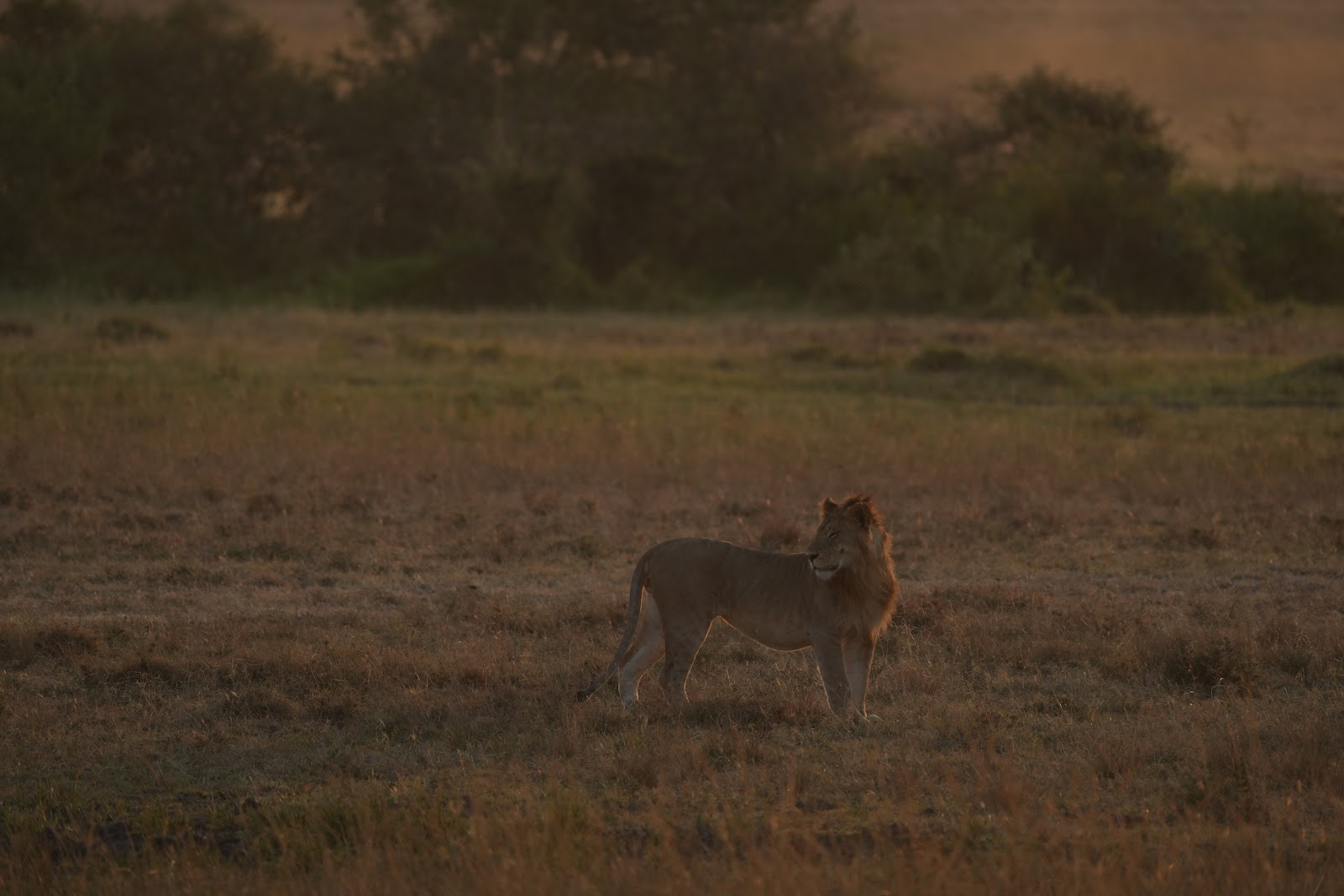
The Mara ecosystem splits between the official Narok County Reserve and the surrounding private conservancies. Naboisho is the largest and our go-to for sustained predator watching: off-road driving is allowed, vehicle numbers are capped, and the lion and cheetah density is consistently high. Olare Motorogi sits adjacent to the Mara Triangle and is where one of our guides followed a four-male cheetah coalition hunting Thomson's gazelle for 40 minutes in August without another vehicle appearing. Mara North is excellent for the Mara River crossings between July and October.
Conservancy fees run USD 90-150 per person per night on top of accommodation. The logic of conservancy versus main reserve is covered in depth in our separate article on that choice, so we will not repeat it here.
What does Amboseli add that the Mara does not cover?
The Mara is speed and scale: wildebeest in the hundreds of thousands, predators that move fast, drama you watch through binoculars at distance. Amboseli, managed by Kenya Wildlife Service across 392 km², runs at a different frequency. The elephant families in the central swamps are the largest concentrations in Kenya, over 1,600 individuals in the wider ecosystem, and they are habituated enough that vehicles can sit quietly among them at very close range. On a clear morning, Kilimanjaro fills the horizon behind them at 5,895 m. Our team counted 80-plus elephants in a single swamp view in September 2025.
Three nights is enough because Amboseli is a compact park. Two full game-drive days plus an early morning departure on day three covers the core circuits without repetition. You will not feel short-changed.
Is Diani Beach or Watamu the better finish for this trip?
Diani sits south of Mombasa and has the wider hotel range, easier logistics from Amboseli via Nairobi and Wilson, and the snorkeling at Kisite-Mpunguti is worth a half-day boat trip. Watamu, on the north coast, is quieter and narrower but the beach is genuinely beautiful, and between October and March you are in sea-turtle nesting season.
We ask clients one question: do you want a beach bar and a swim, or silence and wildlife? Diani answers the first. Watamu answers the second. Both are a 40-minute direct flight from Nairobi.
When is the best time for a Kenya itinerary covering both parks and the coast?
July to October gives you Migration peak in the Mara, dry conditions in Amboseli and calm Indian Ocean water. It is the most expensive window and the busiest, but the river crossings in August and September justify it if you have a private conservancy vehicle. Expect to pay 15-20% more across all camps during this period.
January and February cost less, the Mara is uncrowded, and Amboseli's swamps are full because calving season keeps the herds close to water. We have run the 15-day trip in February every year since 2019 and the predator sightings in the Mara have been excellent every time without exception. June is underrated: Migration numbers are building, camps are cheaper, and the afternoon light for photography is better than high season.
Avoid April and May. Long rains close some tracks completely, certain camps shut for maintenance and the Mara's black-cotton soil turns to mud that even a 4WD cannot handle comfortably.
What should I pack differently for a safari that ends at the beach?
The temperature swing deserves more attention than most people give it. Mara mornings in July sit at 5-10°C by 5 AM. Diani in the same month reaches 27-29°C before 10 AM. Layers you can remove are essential: a fleece or light down for game drives, neutral-colored safari clothes for the parks, and a completely separate beach bag for the last two days rather than trying to do everything from one bag. Neutral colors for the safari mean khaki or olive rather than white or bright blue, which matters in open vehicles. A wide-brim hat works for both environments.
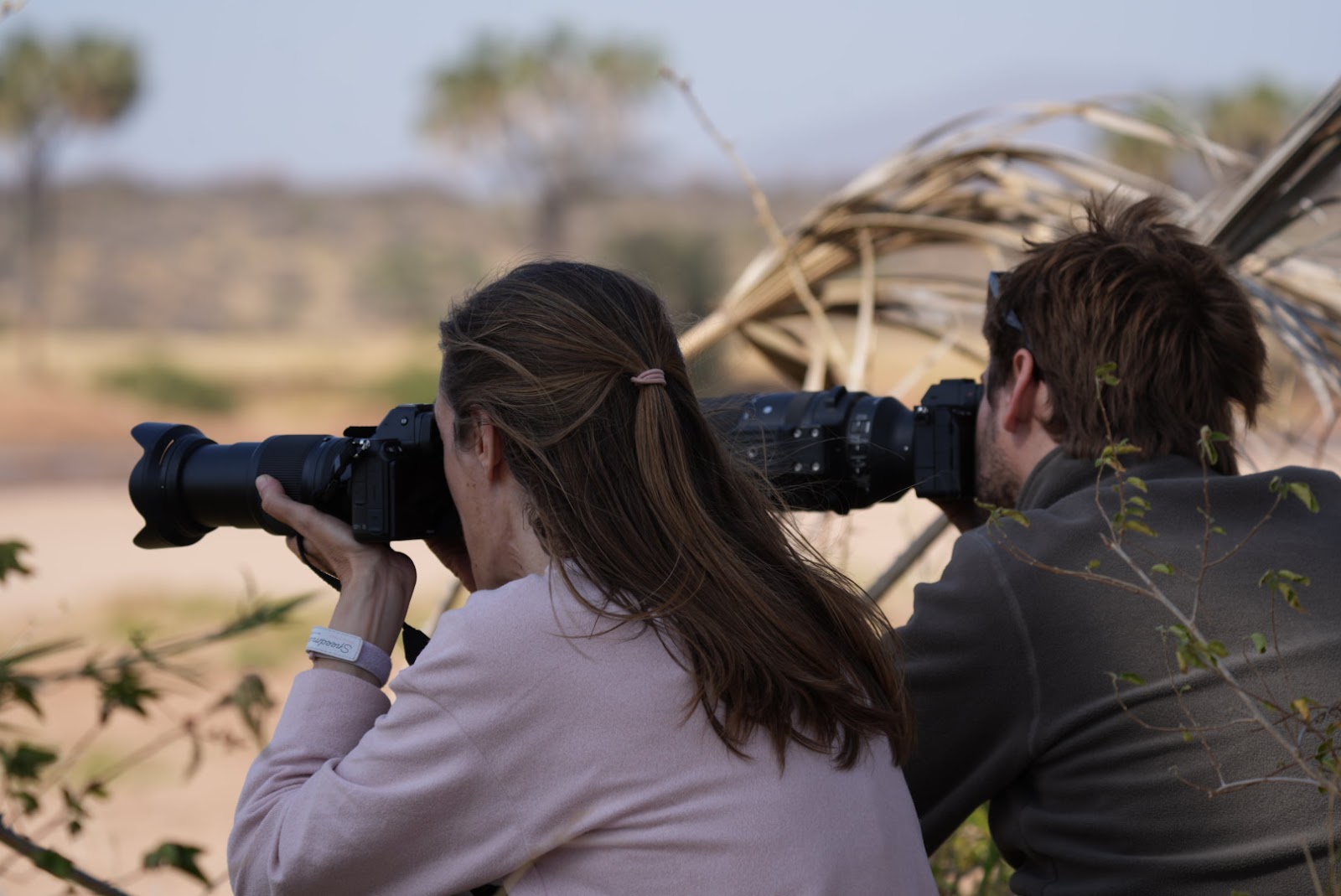
Camera kit is where people get the sequencing wrong. A 100-400 mm zoom handles the Amboseli elephant herds and coastal birds without constant lens changes. Bring a weather-sealed body if you have one: the coast humidity in October-March is high.
Frequently Asked Questions
Do I need malaria prophylaxis for a Kenya safari covering Masai Mara, Amboseli and the coast?
Yes, for all three zones. Your GP or a travel health clinic will recommend atovaquone-proguanil (Malarone) or doxycycline. The coast sits at lower altitude than the Mara highlands and carries slightly higher transmission risk, so do not stop the medication when you reach the beach. Check current health entry requirements on the Travel Health Pro Kenya page before you book flights.
Can I do this 15-day Kenya itinerary as a solo traveler?
Yes. We run small group departures capped at eight people for solo travelers, from around €4,200 per person sharing. Private solo itineraries start at €5,500. The July and October group departures are the first to fill each year, usually by February, so book early if those months work for you.
Is 15 days enough for Masai Mara, Amboseli and the Kenyan coast?
It is the right length for these three zones without padding. Five nights in the Mara, three in Amboseli and two on the coast gives each zone enough time to breathe. To add Samburu, Lake Nakuru or Ol Pejeta you need 18-21 days. Fifteen days is our most booked Kenya format because it fits a standard two-week break without sacrificing the coast.
Does Kenya require yellow fever vaccination?
Yellow fever vaccination is required if you are arriving from a yellow fever endemic country. Hepatitis A and typhoid are strongly recommended for all travelers, and tetanus should be current. Check current requirements on the Travel Health Pro Kenya page and apply for your eTA at etakenya.go.ke before you travel.
What is the official source for Kenya national park fees and entry rules?
The Kenya Wildlife Service publishes current park fees, access rules and temporary closure alerts. The Kenya Tourism Board (Magical Kenya) covers entry requirements and regional highlights. Both are worth checking alongside your operator's pre-departure briefing.
If you have dates in mind for 2027, send us a WhatsApp or check our Kenya departure calendar and we will match you to the right camps within 24 hours.
15-Day Kenya Safari with Coast: How the Extra Days Change Everything
The ten-day Kenya circuit covers the parks. Fifteen days covers the parks and gives you two nights at the Indian Ocean, which sounds like a bonus but is actually a different kind of trip. You decompress differently, you pack differently, and the whole itinerary needs to be sequenced so the coast lands at the end, not squeezed into the middle. Here is how we build it.
| Detail | Info |
|---|---|
| Best months | July-October (Migration peak), Jan-Feb (dry, quieter) |
| Price range per person | €3,800 (mid-range) to €7,500+ (luxury camps) |
| Total duration | 15 days / 14 nights |
| Closest international airport | Nairobi Jomo Kenyatta (NBO) |
| Visa | Kenya eTA required for most nationalities, USD 30 single entry, apply at etakenya.go.ke |
| Internal flights | Light aircraft, approx. USD 200-350 per leg |
| Park fees | Included in Watatu packages (Masai Mara conservancy, Amboseli NP) |
What does a 15-day Kenya itinerary look like day by day?
Day 1 is Nairobi: one night near Wilson Airport, an afternoon at the David Sheldrick Elephant Orphanage if you land before 3 PM. Day 2 is a morning flight into the Mara, arriving at Keekorok, Ol Kiombo or Musiara airstrip depending on your conservancy. Days 3 through 7 are five nights in the Mara ecosystem. Day 8 connects back through Nairobi Wilson to Amboseli, either by road on the A104 (four to five hours, tarmac, comfortable in a 4WD) or a short charter. Days 9 through 11 are three full Amboseli days. Day 12 transfers to the coast. Days 13 and 14 are Diani or Watamu. Day 15 is your departure from Mombasa, or back through Nairobi if your international flight routes that way.
The decisions that shape this skeleton are which conservancy in the Mara, whether to road-transfer or fly to Amboseli, and which coast suits you. None of those are trivial choices, so we cover each below.
Why does the coast need to come last, not in the middle?
After twelve days of 5 AM wake-up calls, game drives in open vehicles and altitude changes between the Mara (around 1,500 m) and Amboseli's flat basin, your body genuinely needs two nights at sea level. Putting the coast in the middle breaks the wildlife momentum and you spend the beach days thinking about the parks you have not done yet. At the end, it lands differently. You are not rushing toward anything.
We also find that clients who end on the coast extend their stays more often than those who end in Nairobi. Diani in August is warm, the snorkeling at Kisite-Mpunguti Marine Park is an easy half-day, and the pace is the opposite of everything that came before it. That contrast is the point.
How do internal flights hold this itinerary together?
Road from Nairobi to the Mara is six to eight hours on rough tracks, and it costs you a full game-drive afternoon. Flying takes 45 minutes. Safarilink and AirKenya run scheduled services daily into Keekorok and Ol Kiombo; expect USD 200-280 per sector on a shared plane or USD 320-350 on a timed charter. We book all internal sectors together so you are not chasing separate confirmations.
The Nairobi-to-Amboseli leg is the one where road works well. The A104 is tarmac the whole way and the approach through Kimana gives you the first Kilimanjaro views before you even reach the park gate. Add a coffee stop in Namanga and it is a pleasant transfer, not a punishment.
Coast access from Amboseli is a Wilson connection to Mombasa or Diani, usually under two hours total. Mombasa Moi International also receives some direct services from Nairobi on Kenya Airways.
Which Masai Mara conservancy should you choose?
The Mara ecosystem splits between the official Narok County Reserve and the surrounding private conservancies. Naboisho is the largest and our go-to for sustained predator watching: off-road driving is allowed, vehicle numbers are capped, and the lion and cheetah density is consistently high. Olare Motorogi sits adjacent to the Mara Triangle and is where one of our guides followed a four-male cheetah coalition hunting Thomson's gazelle for 40 minutes in August without another vehicle appearing. Mara North is excellent for the Mara River crossings between July and October.
Conservancy fees run USD 90-150 per person per night on top of accommodation. The logic of conservancy versus main reserve is covered in depth in our separate article on that choice, so we will not repeat it here.
What does Amboseli add that the Mara does not cover?
The Mara is speed and scale: wildebeest in the hundreds of thousands, predators that move fast, drama you watch through binoculars at distance. Amboseli, managed by Kenya Wildlife Service across 392 km², runs at a different frequency. The elephant families in the central swamps are the largest concentrations in Kenya, over 1,600 individuals in the wider ecosystem, and they are habituated enough that vehicles can sit quietly among them at very close range. On a clear morning, Kilimanjaro fills the horizon behind them at 5,895 m. Our team counted 80-plus elephants in a single swamp view in September 2025.
Three nights is enough because Amboseli is a compact park. Two full game-drive days plus an early morning departure on day three covers the core circuits without repetition. You will not feel short-changed.
Is Diani Beach or Watamu the better finish for this trip?
Diani sits south of Mombasa and has the wider hotel range, easier logistics from Amboseli via Nairobi and Wilson, and the snorkeling at Kisite-Mpunguti is worth a half-day boat trip. Watamu, on the north coast, is quieter and narrower but the beach is genuinely beautiful, and between October and March you are in sea-turtle nesting season.
We ask clients one question: do you want a beach bar and a swim, or silence and wildlife? Diani answers the first. Watamu answers the second. Both are a 40-minute direct flight from Nairobi.
When is the best time for a Kenya itinerary covering both parks and the coast?
July to October gives you Migration peak in the Mara, dry conditions in Amboseli and calm Indian Ocean water. It is the most expensive window and the busiest, but the river crossings in August and September justify it if you have a private conservancy vehicle. Expect to pay 15-20% more across all camps during this period.
January and February cost less, the Mara is uncrowded, and Amboseli's swamps are full because calving season keeps the herds close to water. We have run the 15-day trip in February every year since 2019 and the predator sightings in the Mara have been excellent every time without exception. June is underrated: Migration numbers are building, camps are cheaper, and the afternoon light for photography is better than high season.
Avoid April and May. Long rains close some tracks completely, certain camps shut for maintenance and the Mara's black-cotton soil turns to mud that even a 4WD cannot handle comfortably.
What should I pack differently for a safari that ends at the beach?
The temperature swing deserves more attention than most people give it. Mara mornings in July sit at 5-10°C by 5 AM. Diani in the same month reaches 27-29°C before 10 AM. Layers you can remove are essential: a fleece or light down for game drives, neutral-colored safari clothes for the parks, and a completely separate beach bag for the last two days rather than trying to do everything from one bag. Neutral colors for the safari mean khaki or olive rather than white or bright blue, which matters in open vehicles. A wide-brim hat works for both environments.
Camera kit is where people get the sequencing wrong. A 100-400 mm zoom handles the Amboseli elephant herds and coastal birds without constant lens changes. Bring a weather-sealed body if you have one: the coast humidity in October-March is high.
Frequently Asked Questions
Do I need malaria prophylaxis for a Kenya safari covering Masai Mara, Amboseli and the coast?
Yes, for all three zones. Your GP or a travel health clinic will recommend atovaquone-proguanil (Malarone) or doxycycline. The coast sits at lower altitude than the Mara highlands and carries slightly higher transmission risk, so do not stop the medication when you reach the beach. Check current health entry requirements on the Travel Health Pro Kenya page before you book flights.
Can I do this 15-day Kenya itinerary as a solo traveler?
Yes. We run small group departures capped at eight people for solo travelers, from around €4,200 per person sharing. Private solo itineraries start at €5,500. The July and October group departures are the first to fill each year, usually by February, so book early if those months work for you.
Is 15 days enough for Masai Mara, Amboseli and the Kenyan coast?
It is the right length for these three zones without padding. Five nights in the Mara, three in Amboseli and two on the coast gives each zone enough time to breathe. To add Samburu, Lake Nakuru or Ol Pejeta you need 18-21 days. Fifteen days is our most booked Kenya format because it fits a standard two-week break without sacrificing the coast.
Does Kenya require yellow fever vaccination?
Yellow fever vaccination is required if you are arriving from a yellow fever endemic country. Hepatitis A and typhoid are strongly recommended for all travelers, and tetanus should be current. Check current requirements on the Travel Health Pro Kenya page and apply for your eTA at etakenya.go.ke before you travel.
What is the official source for Kenya national park fees and entry rules?
The Kenya Wildlife Service publishes current park fees, access rules and temporary closure alerts. The Kenya Tourism Board (Magical Kenya) covers entry requirements and regional highlights. Both are worth checking alongside your operator's pre-departure briefing.
If you have dates in mind for 2027, send us a WhatsApp or check our Kenya departure calendar and we will match you to the right camps within 24 hours.








.png)