




Self-Drive South Africa Safari: The Parks Beyond Kruger Worth Planning Around
If you can drive yourself around a national park — and in South Africa you absolutely can — you'll spend less, see more, and move at your own pace. Hluhluwe-iMfolozi, Kgalagadi, and Addo each reward the self-drive approach in a different way, and none of them gets the traffic that clogs Kruger on a July weekend. Prices start around €2,800 per person with flights from Barcelona.
| Detail | Info |
|---|---|
| Best months | May–September (dry season, best visibility) |
| Price range | €2,800–€7,500 pp (flights from Barcelona included) |
| Typical duration | 10–14 days |
| Closest hub airports | Johannesburg OR Tambo (JNB), Cape Town (CPT) |
| Visa for Spanish/EU passport | Not required, 90 days on arrival |
| Currency | South African Rand (ZAR); €1 ≈ ZAR 20 in 2026 |
| Yellow fever certificate | Only if arriving from endemic country |
Why does self-driving change the South Africa safari equation?
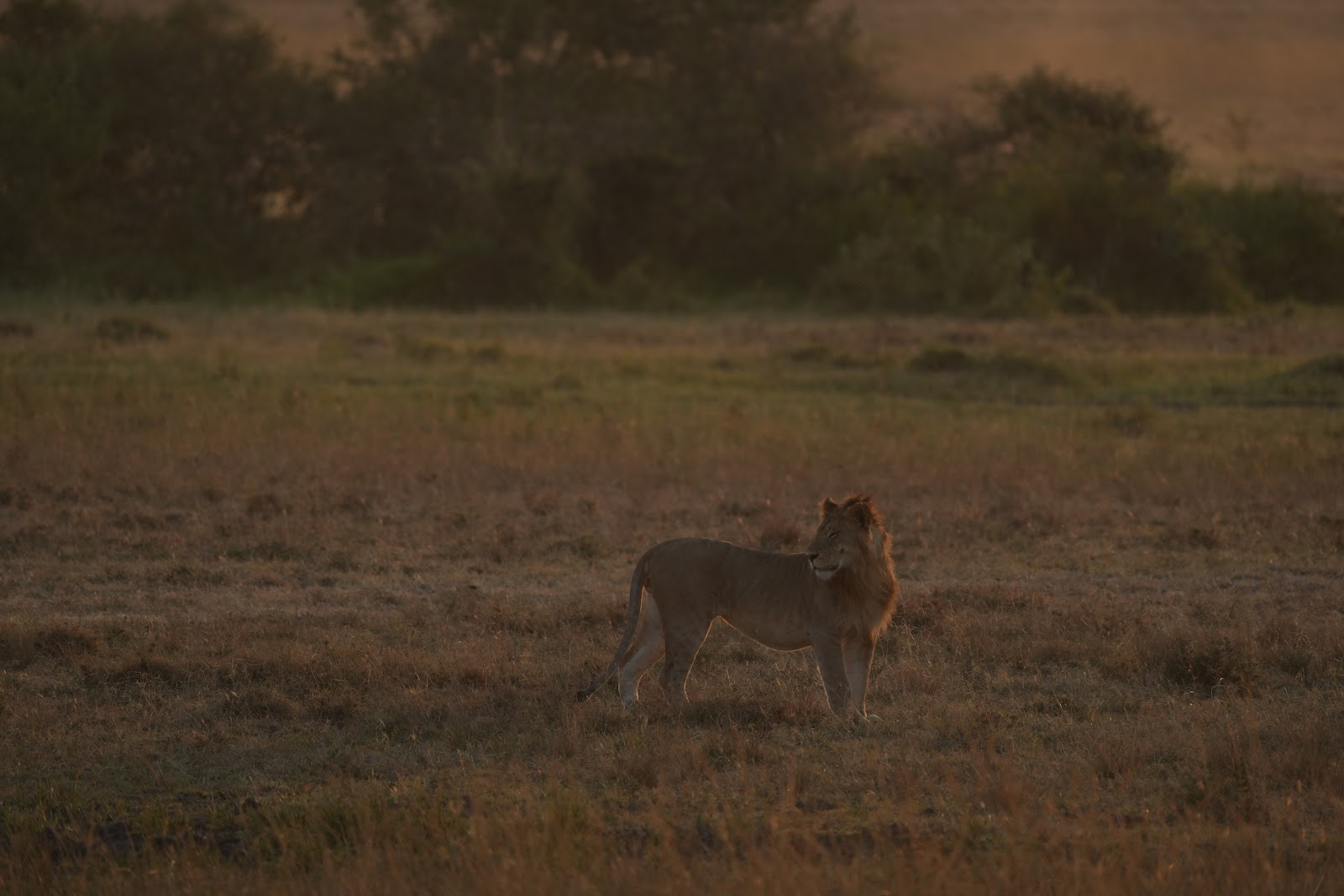
Inside SANParks-managed parks, the roads are tarred or well-graded gravel, the speed limit is 50 km/h, and you drive on the left — same as the UK. A standard hire car with decent ground clearance handles Kruger, Hluhluwe, and Addo without drama. You stop when you want. You stay at a waterhole for forty minutes watching lions drink. A guided vehicle moves on schedule.
The financial case is also straightforward. A SANParks rest camp chalet runs ZAR 1,200–2,000 per unit per night. A private lodge in the same region charges ZAR 9,000–24,000. Both are valid choices, but they're entirely different products, and for travelers who want flexibility and value, self-drive wins clearly.
Which park should you prioritise for rhinos on a self-drive?
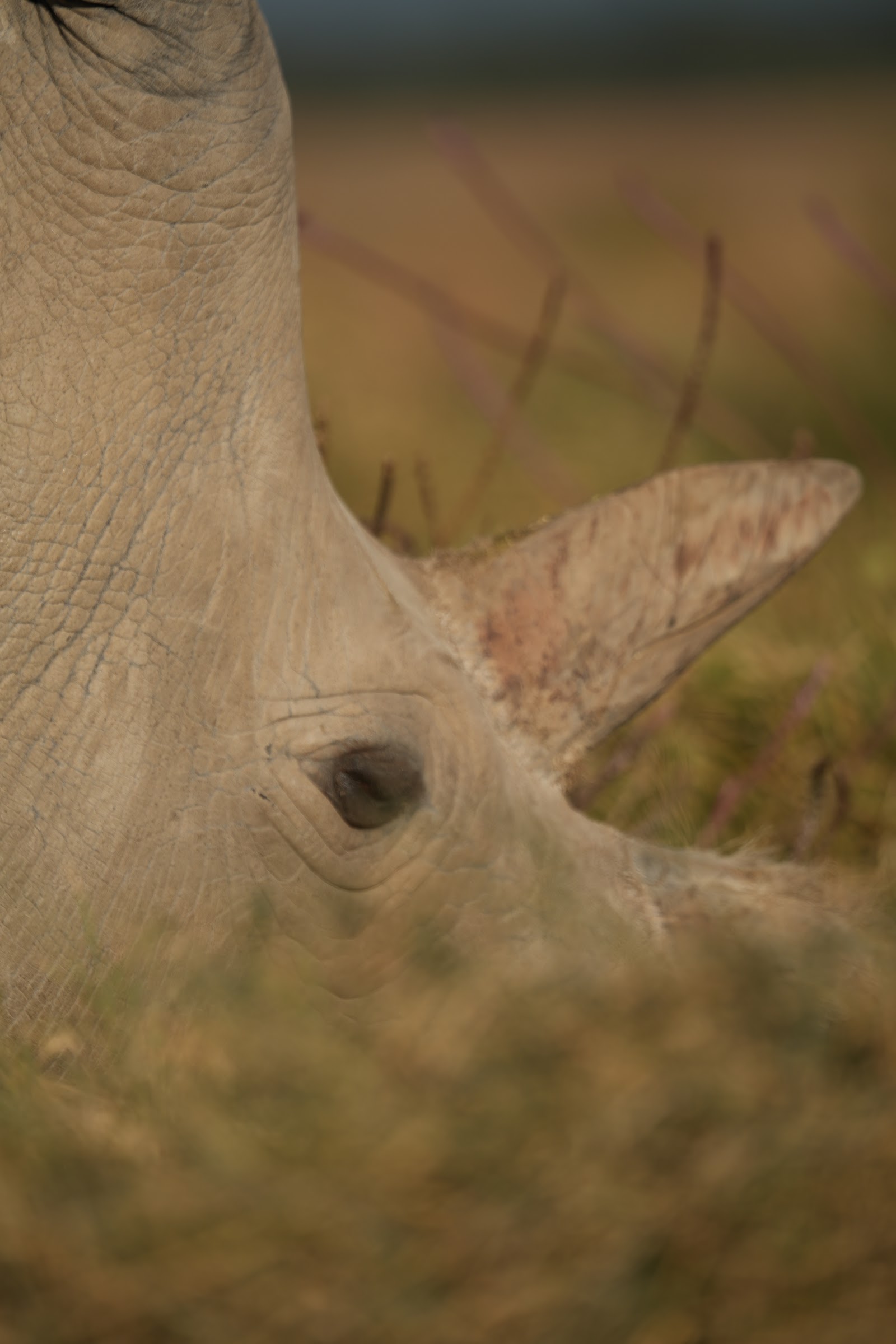
Hluhluwe-iMfolozi in KwaZulu-Natal is the clearest answer. More than 1,700 white rhinos live across rolling green hills that look nothing like classic bushveld — subtropical, dense, almost humid in places. Our team was there in June 2025 and counted eleven white rhinos on a single morning loop along the Hilltop to Sontuli road. Black rhinos are present too, though they're far shyer and tend to stay in thicker cover.
The self-drive setup is excellent. Roads are in good condition, rest camps are well maintained, and conservation fees run ZAR 520 per adult per day (around €26). Lions, leopards, elephants, and buffalo also live here, so you can tick Big Five without switching parks. A three-night stay with a hire car from Durban costs roughly €600–€950 per person, excluding flights.
Is Kgalagadi realistic for a self-drive trip?
Yes, but you need to plan the logistics honestly. Kgalagadi is a 38,000 km² desert park shared between South Africa and Botswana. The closest airport with daily connections from Johannesburg is Upington (UTN), and the main gate at Twee Rivieren sits a further four hours down a tar road from there. That's a long day of travel before you see a single animal.
A 4x4 is worth having — not because the main roads require it, but because the wilderness trails between camps do, and those trails are where the red Kalahari dunes really deliver. Black-maned lions are the headline act; cheetahs are remarkably easy to spot because the open terrain gives them nowhere to disappear. SANParks chalets for two run ZAR 1,800–2,400 per night. If the driving distance puts you off, fly-in packages from Johannesburg cost €2,200–3,500 per person for four nights. The South African Tourism Kgalagadi page has current access details worth checking before you book.
What makes Addo the best self-drive park for families?
Two things separate Addo Elephant National Park from every other major South African park for families. First, it's malaria-free — no prophylaxis decisions, no mosquito nets for small children, no early-morning medication anxiety. Second, the elephant density is extraordinary. Africa's highest concentration of elephants lives here, and on a quiet morning drive you can find fifty animals at a waterhole before breakfast.
Entry fees are ZAR 272 per adult and ZAR 136 per child under 12, per day. The park sits 75 km from Gqeberha (Port Elizabeth) airport, which has direct flights from Johannesburg. Rest camp facilities are solid — self-catering chalets, a pool, a small shop. It's not a luxury product, but families with children aged 5 and up consistently tell us it's the highlight of their South Africa trip.
How do private reserves around Kruger fit a self-drive itinerary?
They don't, technically — Sabi Sand and Timbavati run exclusively on guided game drives. But they slot neatly into a broader self-drive trip as a two or three-night interlude before you pick up your hire car. Sabi Sand shares an unfenced boundary with Kruger, so animals move freely across. Leopard sightings there are near-daily; the reserve has one of the highest leopard densities per square kilometre in Africa.
Expect $450–$1,200 per person per night, all-inclusive. That covers game drives, meals, and local drinks. We typically recommend Sabi Sand to couples who want one genuinely special camp bookending a longer self-drive loop — open the trip in luxury, then shift into independent mode for the rest.
When is the best time for a self-drive safari in South Africa?
May through September is the dry season across most of the country. Vegetation thins, animals cluster around waterholes, and road surfaces in the parks are at their best — important when you're navigating yourself. Days run 20–28°C; nights get cold at elevation, so pack a layer for Hluhluwe and Kgalagadi. July and August are peak months: book rest camps at least six months ahead or you'll find yourself on the waitlist.
| Month | Conditions | Best Self-Drive Park | Notes |
|---|---|---|---|
| May–June | Dry, cool, quieter | Hluhluwe, Kruger | Good rates, fewer vehicles on the roads |
| July–August | Dry, peak season | Kgalagadi, Sabi Sand | Book 6+ months ahead |
| September | Hot, still dry | Addo, Timbavati | Predator activity peaks before rains |
| Oct–Nov | First rains, newborns appear | Hluhluwe, Addo | Green, cheaper rates, photogenic light |
| Dec–Feb | Wet season, lush growth | iSimangaliso Wetland | Excellent birding, large mammals harder to spot |
| Mar–Apr | Rains tapering off | Eastern Cape parks | Value months, park roads in good shape |
The Western Cape runs on a Mediterranean climate — driest December to February — which sits opposite to the northern parks' dry season. A 12-day trip can open in Cape Town during its summer sunshine, then move north for a dry-season self-drive without the weather pulling against you.
What does a self-drive South Africa safari actually cost?
A budget self-drive covering two weeks — flights to Johannesburg, hire car, SANParks rest camps and campsites — runs €2,800–€3,500 per person from Barcelona. A mixed trip with two nights at a private lodge plus ten days self-driving lands at roughly €4,200–€5,500 per person with flights. Five nights at Sabi Sand or Timbavati, fully guided and all-inclusive, pushes to €5,500–€7,500 per person with flights.
Park entry fees in SANParks are ZAR 520 per adult per day at Kruger (around €26). Addo and Hluhluwe come in slightly below that. Hire car costs run €35–€80 per day depending on vehicle size. The rand has stayed weak against the euro for several years, which keeps South Africa competitive at every budget level as long as you're not spending every night in a top-end private lodge.
FAQ
Do I need malaria prevention for a South Africa self-drive safari?
Kruger, Hluhluwe, and Kgalagadi fall within malaria-risk zones. Consult a travel medicine clinic before you go — prophylaxis options vary and a specialist will match the right one to your itinerary and health profile. Addo and the Eastern Cape parks are malaria-free, which is why they anchor most family routings we put together. The NHS Fit for Travel site carries current prophylaxis guidance by region.
Do I need a 4x4 to self-drive South African national parks?
Not for Kruger, Hluhluwe, or Addo — a standard hire car with reasonable clearance covers the main roads in all three. Kgalagadi is the exception: the main tar roads are fine in any vehicle, but the wilderness trails between camps require a 4x4. If Kgalagadi is on the itinerary, upgrade the hire car.
Is it safe to drive yourself through South Africa's parks?
Inside the parks, very safe. Animals don't approach vehicles aggressively and you stay inside the car during game drives. The main caution is on public roads at night — avoid driving after dark between towns. In cities, use Bolt or Uber rather than walking in unfamiliar areas. Check the Spanish Foreign Ministry's travel advisory for current urban safety notes before departure.
How many parks can I cover self-driving in 12 days?
Three parks is the practical ceiling without making driving the main activity. A route we put together regularly: fly into Johannesburg, three nights self-driving Hluhluwe-iMfolozi, transfer south to Addo for three nights, then fly to Cape Town for four nights. Big Five, dedicated rhino time, malaria-free family section, and a city finish — all at a pace that still feels like a holiday.
What animals will I see in South Africa that I won't see in East Africa?
Large white rhino populations are the most obvious difference — East Africa has very few left in the wild. Cape mountain zebra, blesbok, and bontebok are southern endemics you won't encounter further north. Coastal wildlife adds another layer: southern right whales from July to November, African penguins at Boulders Beach near Cape Town, Cape fur seals. White lions turn up occasionally in Timbavati, a sighting that exists nowhere else.
If you want help mapping out a self-drive route that matches your pace and budget, write to us on WhatsApp. The team in Barcelona has driven these roads and can give you honest, specific advice without the sales pitch.
Self-Drive South Africa Safari: The Parks Beyond Kruger Worth Planning Around
If you can drive yourself around a national park — and in South Africa you absolutely can — you'll spend less, see more, and move at your own pace. Hluhluwe-iMfolozi, Kgalagadi, and Addo each reward the self-drive approach in a different way, and none of them gets the traffic that clogs Kruger on a July weekend. Prices start around €2,800 per person with flights from Barcelona.
| Detail | Info |
|---|---|
| Best months | May–September (dry season, best visibility) |
| Price range | €2,800–€7,500 pp (flights from Barcelona included) |
| Typical duration | 10–14 days |
| Closest hub airports | Johannesburg OR Tambo (JNB), Cape Town (CPT) |
| Visa for Spanish/EU passport | Not required, 90 days on arrival |
| Currency | South African Rand (ZAR); €1 ≈ ZAR 20 in 2026 |
| Yellow fever certificate | Only if arriving from endemic country |
Why does self-driving change the South Africa safari equation?
Inside SANParks-managed parks, the roads are tarred or well-graded gravel, the speed limit is 50 km/h, and you drive on the left — same as the UK. A standard hire car with decent ground clearance handles Kruger, Hluhluwe, and Addo without drama. You stop when you want. You stay at a waterhole for forty minutes watching lions drink. A guided vehicle moves on schedule.
The financial case is also straightforward. A SANParks rest camp chalet runs ZAR 1,200–2,000 per unit per night. A private lodge in the same region charges ZAR 9,000–24,000. Both are valid choices, but they're entirely different products, and for travelers who want flexibility and value, self-drive wins clearly.
Which park should you prioritise for rhinos on a self-drive?
Hluhluwe-iMfolozi in KwaZulu-Natal is the clearest answer. More than 1,700 white rhinos live across rolling green hills that look nothing like classic bushveld — subtropical, dense, almost humid in places. Our team was there in June 2025 and counted eleven white rhinos on a single morning loop along the Hilltop to Sontuli road. Black rhinos are present too, though they're far shyer and tend to stay in thicker cover.
The self-drive setup is excellent. Roads are in good condition, rest camps are well maintained, and conservation fees run ZAR 520 per adult per day (around €26). Lions, leopards, elephants, and buffalo also live here, so you can tick Big Five without switching parks. A three-night stay with a hire car from Durban costs roughly €600–€950 per person, excluding flights.
Is Kgalagadi realistic for a self-drive trip?
Yes, but you need to plan the logistics honestly. Kgalagadi is a 38,000 km² desert park shared between South Africa and Botswana. The closest airport with daily connections from Johannesburg is Upington (UTN), and the main gate at Twee Rivieren sits a further four hours down a tar road from there. That's a long day of travel before you see a single animal.
A 4x4 is worth having — not because the main roads require it, but because the wilderness trails between camps do, and those trails are where the red Kalahari dunes really deliver. Black-maned lions are the headline act; cheetahs are remarkably easy to spot because the open terrain gives them nowhere to disappear. SANParks chalets for two run ZAR 1,800–2,400 per night. If the driving distance puts you off, fly-in packages from Johannesburg cost €2,200–3,500 per person for four nights. The South African Tourism Kgalagadi page has current access details worth checking before you book.
What makes Addo the best self-drive park for families?
Two things separate Addo Elephant National Park from every other major South African park for families. First, it's malaria-free — no prophylaxis decisions, no mosquito nets for small children, no early-morning medication anxiety. Second, the elephant density is extraordinary. Africa's highest concentration of elephants lives here, and on a quiet morning drive you can find fifty animals at a waterhole before breakfast.
Entry fees are ZAR 272 per adult and ZAR 136 per child under 12, per day. The park sits 75 km from Gqeberha (Port Elizabeth) airport, which has direct flights from Johannesburg. Rest camp facilities are solid — self-catering chalets, a pool, a small shop. It's not a luxury product, but families with children aged 5 and up consistently tell us it's the highlight of their South Africa trip.
How do private reserves around Kruger fit a self-drive itinerary?
They don't, technically — Sabi Sand and Timbavati run exclusively on guided game drives. But they slot neatly into a broader self-drive trip as a two or three-night interlude before you pick up your hire car. Sabi Sand shares an unfenced boundary with Kruger, so animals move freely across. Leopard sightings there are near-daily; the reserve has one of the highest leopard densities per square kilometre in Africa.
Expect $450–$1,200 per person per night, all-inclusive. That covers game drives, meals, and local drinks. We typically recommend Sabi Sand to couples who want one genuinely special camp bookending a longer self-drive loop — open the trip in luxury, then shift into independent mode for the rest.
When is the best time for a self-drive safari in South Africa?
May through September is the dry season across most of the country. Vegetation thins, animals cluster around waterholes, and road surfaces in the parks are at their best — important when you're navigating yourself. Days run 20–28°C; nights get cold at elevation, so pack a layer for Hluhluwe and Kgalagadi. July and August are peak months: book rest camps at least six months ahead or you'll find yourself on the waitlist.
| Month | Conditions | Best Self-Drive Park | Notes |
|---|---|---|---|
| May–June | Dry, cool, quieter | Hluhluwe, Kruger | Good rates, fewer vehicles on the roads |
| July–August | Dry, peak season | Kgalagadi, Sabi Sand | Book 6+ months ahead |
| September | Hot, still dry | Addo, Timbavati | Predator activity peaks before rains |
| Oct–Nov | First rains, newborns appear | Hluhluwe, Addo | Green, cheaper rates, photogenic light |
| Dec–Feb | Wet season, lush growth | iSimangaliso Wetland | Excellent birding, large mammals harder to spot |
| Mar–Apr | Rains tapering off | Eastern Cape parks | Value months, park roads in good shape |
The Western Cape runs on a Mediterranean climate — driest December to February — which sits opposite to the northern parks' dry season. A 12-day trip can open in Cape Town during its summer sunshine, then move north for a dry-season self-drive without the weather pulling against you.
What does a self-drive South Africa safari actually cost?
A budget self-drive covering two weeks — flights to Johannesburg, hire car, SANParks rest camps and campsites — runs €2,800–€3,500 per person from Barcelona. A mixed trip with two nights at a private lodge plus ten days self-driving lands at roughly €4,200–€5,500 per person with flights. Five nights at Sabi Sand or Timbavati, fully guided and all-inclusive, pushes to €5,500–€7,500 per person with flights.
Park entry fees in SANParks are ZAR 520 per adult per day at Kruger (around €26). Addo and Hluhluwe come in slightly below that. Hire car costs run €35–€80 per day depending on vehicle size. The rand has stayed weak against the euro for several years, which keeps South Africa competitive at every budget level as long as you're not spending every night in a top-end private lodge.
FAQ
Do I need malaria prevention for a South Africa self-drive safari?
Kruger, Hluhluwe, and Kgalagadi fall within malaria-risk zones. Consult a travel medicine clinic before you go — prophylaxis options vary and a specialist will match the right one to your itinerary and health profile. Addo and the Eastern Cape parks are malaria-free, which is why they anchor most family routings we put together. The NHS Fit for Travel site carries current prophylaxis guidance by region.
Do I need a 4x4 to self-drive South African national parks?
Not for Kruger, Hluhluwe, or Addo — a standard hire car with reasonable clearance covers the main roads in all three. Kgalagadi is the exception: the main tar roads are fine in any vehicle, but the wilderness trails between camps require a 4x4. If Kgalagadi is on the itinerary, upgrade the hire car.
Is it safe to drive yourself through South Africa's parks?
Inside the parks, very safe. Animals don't approach vehicles aggressively and you stay inside the car during game drives. The main caution is on public roads at night — avoid driving after dark between towns. In cities, use Bolt or Uber rather than walking in unfamiliar areas. Check the Spanish Foreign Ministry's travel advisory for current urban safety notes before departure.
How many parks can I cover self-driving in 12 days?
Three parks is the practical ceiling without making driving the main activity. A route we put together regularly: fly into Johannesburg, three nights self-driving Hluhluwe-iMfolozi, transfer south to Addo for three nights, then fly to Cape Town for four nights. Big Five, dedicated rhino time, malaria-free family section, and a city finish — all at a pace that still feels like a holiday.
What animals will I see in South Africa that I won't see in East Africa?
Large white rhino populations are the most obvious difference — East Africa has very few left in the wild. Cape mountain zebra, blesbok, and bontebok are southern endemics you won't encounter further north. Coastal wildlife adds another layer: southern right whales from July to November, African penguins at Boulders Beach near Cape Town, Cape fur seals. White lions turn up occasionally in Timbavati, a sighting that exists nowhere else.
If you want help mapping out a self-drive route that matches your pace and budget, write to us on WhatsApp. The team in Barcelona has driven these roads and can give you honest, specific advice without the sales pitch.




.png)