





Masai Mara and Amboseli Together: A 10-Day Kenya Safari Circuit That Actually Works
This article is about one specific question: how do you structure a single trip that does justice to both Masai Mara and Amboseli without either becoming a rushed footnote? If you want a deep-dive on what to see in Amboseli alone, or a breakdown of what a Kenya safari costs, those pieces exist separately. Here we focus only on the combination and the day-by-day logic behind it.
The short answer: fly between the parks, spend five nights in the Mara and three in Amboseli, and build in a Nairobi arrival night. That structure works because the two parks demand genuinely different rhythms, and you need time in each to feel the difference.
| Detail | Info |
|---|---|
| Best months | July-October (Migration); Jan-Feb (dry, quieter) |
| Price range (per person) | €3,200-€7,500 depending on lodge tier |
| Trip duration | 10 days / 9 nights |
| Closest airport | Jomo Kenyatta International (NBO), Nairobi |
| Visa | Kenya eTA (USD 30) at etakenya.go.ke |
| Park authority | Kenya Wildlife Service (KWS) |
| Internal transport | Light aircraft (recommended) or 4x4 overland |
Why does this two-park combination work better than choosing just one?
Each park fills a gap the other leaves. The Mara is riverine, predator-heavy, and rewards patience in the field over multiple days. Amboseli is open volcanic flatland where elephant herds move in full view for hours and Kilimanjaro fills the northern sky. The contrast is the point: clients consistently tell us the flight between the two is the moment the trip clicks into place, because you land somewhere that feels like a completely different country.
Doing only the Mara means leaving without ever seeing a Kilimanjaro sunrise over a herd of elephants. Doing only Amboseli means missing the riverine drama of the Mara ecosystem entirely. Five nights plus three nights, connected by a one-hour flight, solves both problems cleanly.
What does the day-by-day circuit actually look like?
Day one is Nairobi arrival and recovery. Day two, use the morning for Nairobi National Park or the David Sheldrick Elephant Orphanage. A 30-minute flight from Wilson Airport on day three gets you into the Mara by lunch, and game drives start that same afternoon.
We keep five nights in the Mara because one or two drives are not enough to read the ecosystem. By the third full day you start understanding the landscape: which oxbow bends the crocodiles hold, which luggas the leopards use at midday. In September last year, one of our guides followed a fresh track for forty minutes and found three cheetah siblings mid-hunt. That only happened because we had the time to follow it. You cannot manufacture that on a two-night stop.
Morning of day eight: a light aircraft south to Amboseli Airstrip, under an hour. Two nights there is the minimum; three is better if your dates allow, because Kilimanjaro is often clouded on arrival day and you want a morning or two of clear sightings. Day ten starts before dawn for the early drive, then back to Nairobi for an evening international departure.
How is Amboseli genuinely different from the Mara, day to day?
The Mara gives you density. More animals per square kilometre, more vehicle radio chatter when something is happening, more riverine forest to push through. It is exciting and, during August peak, occasionally crowded near the crossing points.
Amboseli is the opposite in almost every way. The open dusty flats mean you spot a herd of eighty elephants from two kilometres away and spend twenty minutes approaching slowly. There is no vegetation to lose anything behind. The pace drops, and that drop feels intentional rather than disappointing. Kilimanjaro clears most mornings before 9am and clouds over by midday, so drives here start earlier and the first two hours carry the whole weight of the day. The mountain was clear on three consecutive mornings when we were last there in February, which our guide described as unusually cooperative.
Is it better to fly or drive between the two parks?
On a 10-day circuit, flying is almost always the right call. The overland route via Narok and Nairobi takes six hours minimum and costs you an entire safari day. A light aircraft from Mara to Amboseli Airstrip with Safarilink or Air Kenya runs about 55 minutes and costs USD 250-350 per person one way. The arithmetic is simple: six hours in a land cruiser versus an hour in the air, and you land in time for an afternoon drive.
We have done the overland route with groups who specifically wanted the Rift Valley viewpoint above Naivasha or a stop at Lake Nakuru. That works as a separate design choice. On a straight Mara-Amboseli circuit where game time is the priority, the plane wins.
When should you travel to get the most out of both parks?
The timing depends on which experience you weight more heavily. July to October is the Migration window in the Mara: wildebeest and zebra cross the Mara River in waves, with peak crossings typically in August and September. The best tented camps book out 10 to 12 months ahead during those months, and prices reflect the demand. Amboseli in that same window is perfectly good, though the elephants are resident year-round and you do not need to time Amboseli specifically to the Migration.
January and February are our second preference for this circuit. The Mara is quieter and drier, predators concentrate near the rivers, and Amboseli in those months offers some of the clearest Kilimanjaro sightings of the year. Prices drop noticeably from the August peak. Avoid April and May on the Mara side: the long rains make tracks difficult and some camps close entirely.
What animals can you realistically expect in each park?
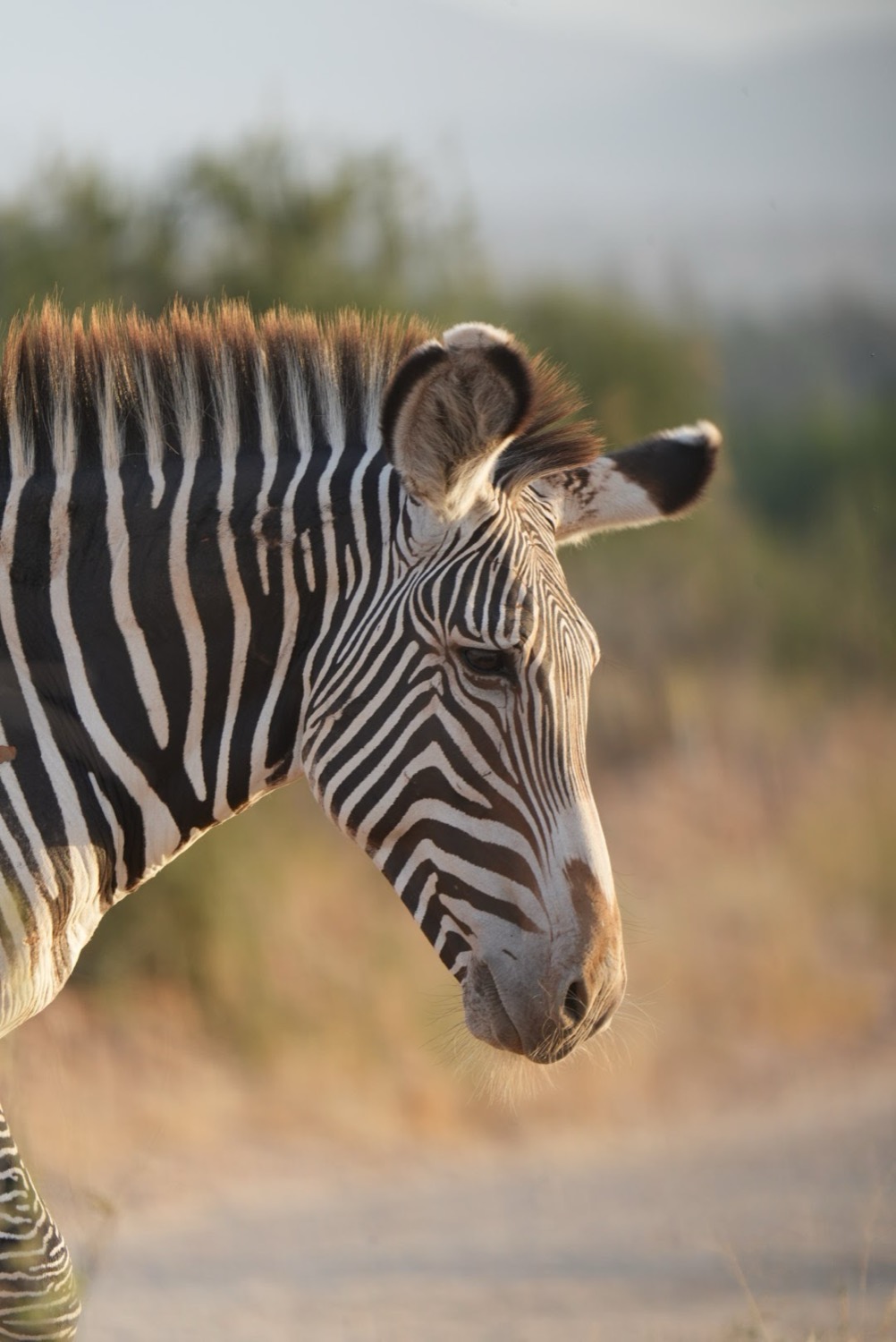
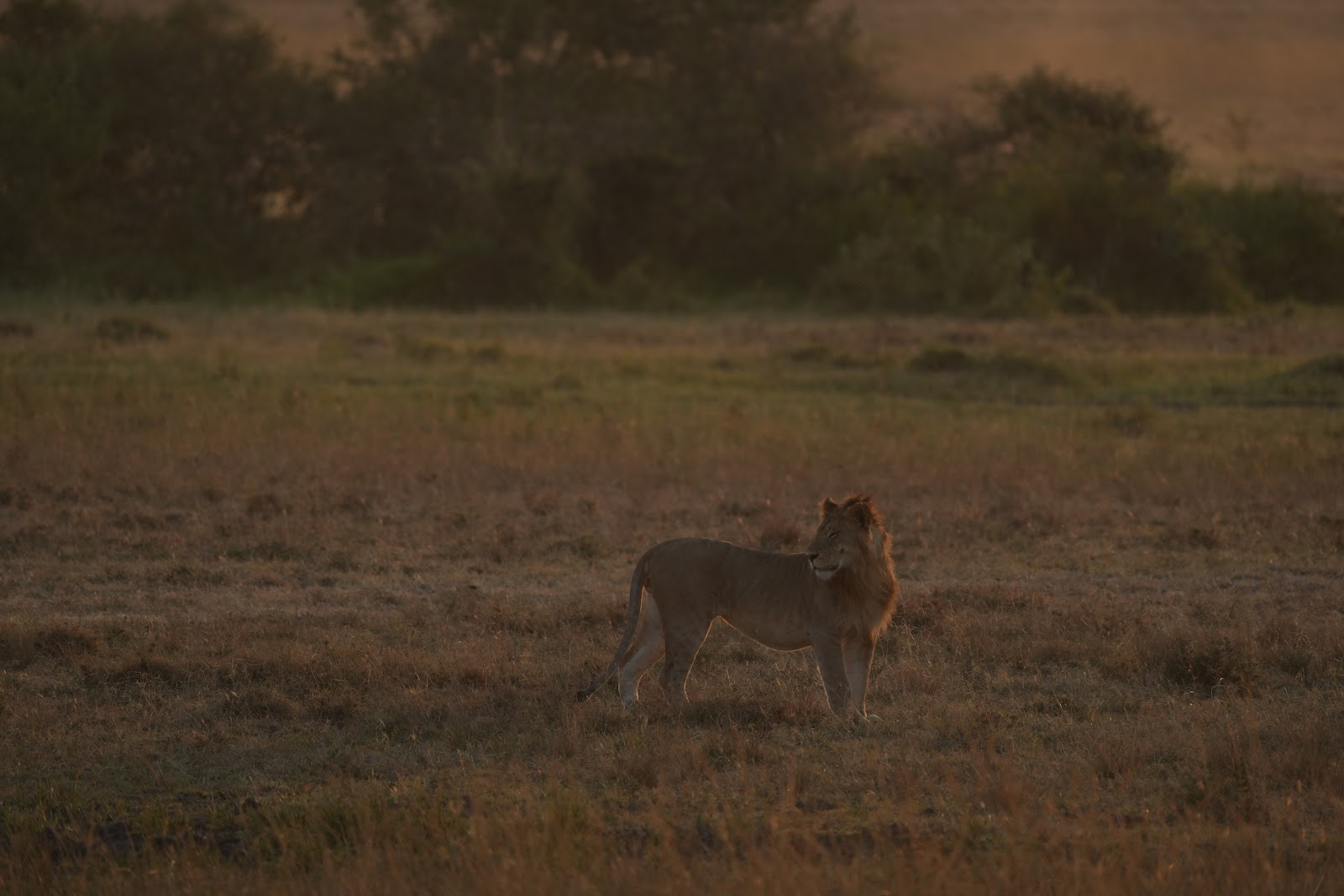
In the Mara, you are in lion and cheetah country. The river edges hold hippo and Nile crocodile year-round. Leopards are present but genuinely elusive; a sighting in the luggas at midday is something guides celebrate, not something they promise. Buffalo herds are large and move in great dusty columns. Black rhino exist in the Rhino Ridge area but sightings are never guaranteed and should not be the reason you travel.
The wildebeest between July and October are not a single crossing event. They are a sustained presence across the ecosystem: hundreds of thousands of animals grazing, backtracking, crossing and recrossing the river over a period of weeks. You do not watch it once and move on.
In Amboseli, the elephants are the reason you come. These are among the largest-tusked animals remaining in Africa, and the Amboseli Elephant Research Project has been studying individual families here since the 1970s. Some bulls are known by name to the researchers. What makes Amboseli different from elephant sightings elsewhere is the habituation: animals here are so relaxed around vehicles that you park, cut the engine, and simply watch them graze within metres. Lion and cheetah are also present, but they play a supporting role here.
What should you prepare that most people miss before departure?
The baggage rule on bush planes catches people out more than anything else. Aircraft on these safari routes allow 15 kg of hold luggage per person, soft bags only. A hard-shell suitcase will not fit in the Cessna cargo hold and you will be asked to leave it at the airstrip. One soft duffel for the hold and a small daypack for the cabin solves this completely. On the daypack: keep your camera, valuables, and any medication with you, not in the hold.
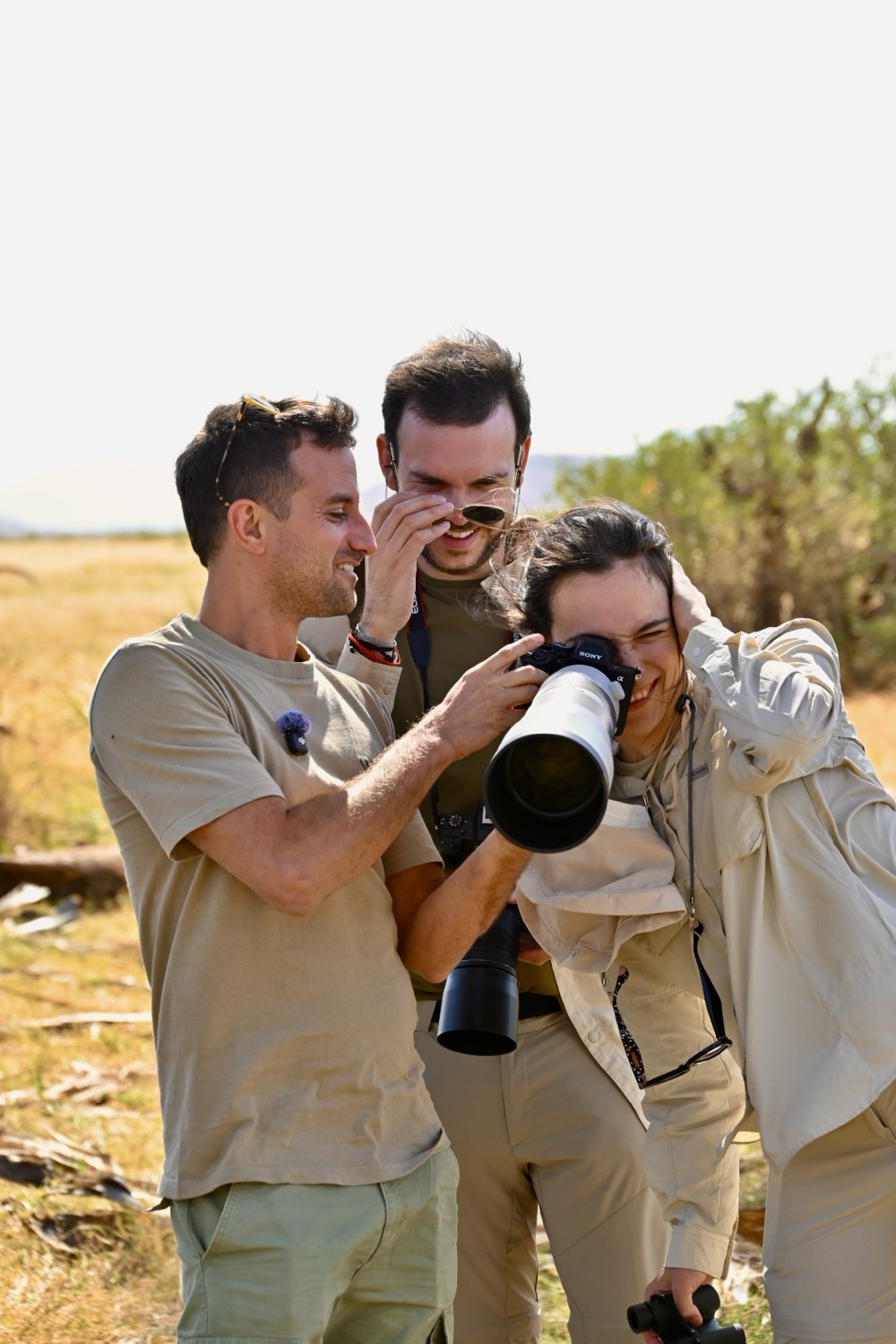
For health and documentation: if you continue from Kenya into Tanzania or Uganda, a yellow fever vaccination certificate is required at entry into those countries. Kenya itself does not currently require one, but carry it regardless. Travel insurance with medical evacuation cover is non-negotiable in East Africa; a minimum USD 200,000 evacuation limit is the threshold we advise. Camera-wise, the Mara at 7am in July produces low golden light across open grassland that rewards a long zoom lens. A 100-400mm equivalent will let you fill the frame from a respectful distance; a phone camera will not.
Getting the camp selection right for your specific travel window is what actually makes this circuit work. Write to us on WhatsApp with your dates and we will come back within 24 hours with a full structure, specific camp recommendations, and current availability.
Masai Mara and Amboseli Together: A 10-Day Kenya Safari Circuit That Actually Works
This article is about one specific question: how do you structure a single trip that does justice to both Masai Mara and Amboseli without either becoming a rushed footnote? If you want a deep-dive on what to see in Amboseli alone, or a breakdown of what a Kenya safari costs, those pieces exist separately. Here we focus only on the combination and the day-by-day logic behind it.
The short answer: fly between the parks, spend five nights in the Mara and three in Amboseli, and build in a Nairobi arrival night. That structure works because the two parks demand genuinely different rhythms, and you need time in each to feel the difference.
| Detail | Info |
|---|---|
| Best months | July-October (Migration); Jan-Feb (dry, quieter) |
| Price range (per person) | €3,200-€7,500 depending on lodge tier |
| Trip duration | 10 days / 9 nights |
| Closest airport | Jomo Kenyatta International (NBO), Nairobi |
| Visa | Kenya eTA (USD 30) at etakenya.go.ke |
| Park authority | Kenya Wildlife Service (KWS) |
| Internal transport | Light aircraft (recommended) or 4x4 overland |
Why does this two-park combination work better than choosing just one?
Each park fills a gap the other leaves. The Mara is riverine, predator-heavy, and rewards patience in the field over multiple days. Amboseli is open volcanic flatland where elephant herds move in full view for hours and Kilimanjaro fills the northern sky. The contrast is the point: clients consistently tell us the flight between the two is the moment the trip clicks into place, because you land somewhere that feels like a completely different country.
Doing only the Mara means leaving without ever seeing a Kilimanjaro sunrise over a herd of elephants. Doing only Amboseli means missing the riverine drama of the Mara ecosystem entirely. Five nights plus three nights, connected by a one-hour flight, solves both problems cleanly.
What does the day-by-day circuit actually look like?
Day one is Nairobi arrival and recovery. Day two, use the morning for Nairobi National Park or the David Sheldrick Elephant Orphanage. A 30-minute flight from Wilson Airport on day three gets you into the Mara by lunch, and game drives start that same afternoon.
We keep five nights in the Mara because one or two drives are not enough to read the ecosystem. By the third full day you start understanding the landscape: which oxbow bends the crocodiles hold, which luggas the leopards use at midday. In September last year, one of our guides followed a fresh track for forty minutes and found three cheetah siblings mid-hunt. That only happened because we had the time to follow it. You cannot manufacture that on a two-night stop.
Morning of day eight: a light aircraft south to Amboseli Airstrip, under an hour. Two nights there is the minimum; three is better if your dates allow, because Kilimanjaro is often clouded on arrival day and you want a morning or two of clear sightings. Day ten starts before dawn for the early drive, then back to Nairobi for an evening international departure.
How is Amboseli genuinely different from the Mara, day to day?
The Mara gives you density. More animals per square kilometre, more vehicle radio chatter when something is happening, more riverine forest to push through. It is exciting and, during August peak, occasionally crowded near the crossing points.
Amboseli is the opposite in almost every way. The open dusty flats mean you spot a herd of eighty elephants from two kilometres away and spend twenty minutes approaching slowly. There is no vegetation to lose anything behind. The pace drops, and that drop feels intentional rather than disappointing. Kilimanjaro clears most mornings before 9am and clouds over by midday, so drives here start earlier and the first two hours carry the whole weight of the day. The mountain was clear on three consecutive mornings when we were last there in February, which our guide described as unusually cooperative.
Is it better to fly or drive between the two parks?
On a 10-day circuit, flying is almost always the right call. The overland route via Narok and Nairobi takes six hours minimum and costs you an entire safari day. A light aircraft from Mara to Amboseli Airstrip with Safarilink or Air Kenya runs about 55 minutes and costs USD 250-350 per person one way. The arithmetic is simple: six hours in a land cruiser versus an hour in the air, and you land in time for an afternoon drive.
We have done the overland route with groups who specifically wanted the Rift Valley viewpoint above Naivasha or a stop at Lake Nakuru. That works as a separate design choice. On a straight Mara-Amboseli circuit where game time is the priority, the plane wins.
When should you travel to get the most out of both parks?
The timing depends on which experience you weight more heavily. July to October is the Migration window in the Mara: wildebeest and zebra cross the Mara River in waves, with peak crossings typically in August and September. The best tented camps book out 10 to 12 months ahead during those months, and prices reflect the demand. Amboseli in that same window is perfectly good, though the elephants are resident year-round and you do not need to time Amboseli specifically to the Migration.
January and February are our second preference for this circuit. The Mara is quieter and drier, predators concentrate near the rivers, and Amboseli in those months offers some of the clearest Kilimanjaro sightings of the year. Prices drop noticeably from the August peak. Avoid April and May on the Mara side: the long rains make tracks difficult and some camps close entirely.
What animals can you realistically expect in each park?
In the Mara, you are in lion and cheetah country. The river edges hold hippo and Nile crocodile year-round. Leopards are present but genuinely elusive; a sighting in the luggas at midday is something guides celebrate, not something they promise. Buffalo herds are large and move in great dusty columns. Black rhino exist in the Rhino Ridge area but sightings are never guaranteed and should not be the reason you travel.
The wildebeest between July and October are not a single crossing event. They are a sustained presence across the ecosystem: hundreds of thousands of animals grazing, backtracking, crossing and recrossing the river over a period of weeks. You do not watch it once and move on.
In Amboseli, the elephants are the reason you come. These are among the largest-tusked animals remaining in Africa, and the Amboseli Elephant Research Project has been studying individual families here since the 1970s. Some bulls are known by name to the researchers. What makes Amboseli different from elephant sightings elsewhere is the habituation: animals here are so relaxed around vehicles that you park, cut the engine, and simply watch them graze within metres. Lion and cheetah are also present, but they play a supporting role here.
What should you prepare that most people miss before departure?
The baggage rule on bush planes catches people out more than anything else. Aircraft on these safari routes allow 15 kg of hold luggage per person, soft bags only. A hard-shell suitcase will not fit in the Cessna cargo hold and you will be asked to leave it at the airstrip. One soft duffel for the hold and a small daypack for the cabin solves this completely. On the daypack: keep your camera, valuables, and any medication with you, not in the hold.
For health and documentation: if you continue from Kenya into Tanzania or Uganda, a yellow fever vaccination certificate is required at entry into those countries. Kenya itself does not currently require one, but carry it regardless. Travel insurance with medical evacuation cover is non-negotiable in East Africa; a minimum USD 200,000 evacuation limit is the threshold we advise. Camera-wise, the Mara at 7am in July produces low golden light across open grassland that rewards a long zoom lens. A 100-400mm equivalent will let you fill the frame from a respectful distance; a phone camera will not.
Getting the camp selection right for your specific travel window is what actually makes this circuit work. Write to us on WhatsApp with your dates and we will come back within 24 hours with a full structure, specific camp recommendations, and current availability.






.png)