




Family Safari in Africa with Kids: Which Destination Actually Fits Your Family?
Tanzania or Kenya? South Africa for toddlers? The short answer: Tanzania (Northern Circuit, 10–12 nights, €5,000–€8,000/adult, flights included) works best for families with kids aged 6–14 during June–October. South Africa's private reserves are the only realistic call for children under 5. Kenya sits in between—excellent wildlife, easier logistics from Nairobi, slightly lower entry cost.
This article is a destination-selector, not a general safari planning guide. For packing lists, vaccination schedules, and practical day-to-day advice, see our dedicated pieces: What to Pack for an African Safari and Africa Safari Vaccinations Guide.
Which African destination suits your family's age profile best?
Age is the first filter—not budget, not season. Get this wrong and the trip falls apart before the first game drive.
Tanzania – Most camps on the Northern Circuit accept children from 5 years on shared vehicles, some from 3 on exclusive bookings. The circuit—Tarangire, Lake Manyara, Serengeti, Ngorongoro—works as a 10–12 day loop because the distances between parks are manageable and the variety keeps kids absorbed. Tarangire is underrated for families: enormous baobab trees, huge elephant herds, far fewer vehicles than the central Serengeti. Àgueda, our Arusha-based guide who has led family departures since 2018, had a Spanish family with twin 7-year-olds at Lamai Serengeti in August 2023 when a wildebeest crossing started thirty metres from the vehicle. One of the twins burst into tears—overwhelmed, not frightened—and still messages Àgueda about it. That's the Serengeti's specific magic and no wildlife documentary prepares kids for the sound and the smell of it.
Kenya – The 6-year minimum at most Mara lodges is firm. The bigger practical point, though, is how much smoother Nairobi connections have become. Direct KLM and Kenya Airways flights from Amsterdam and London land you at Jomo Kenyatta by early morning; a connecting charter to the Mara airstrip takes 45 minutes. No overnight road transfer. With tired children, that saves the entire first day. Amboseli is worth considering separately—two hours' drive from Nairobi, or a short charter—and it runs meaningfully cheaper than the Mara. Elephants in front of Kilimanjaro, a more compact landscape that holds younger children's attention, and age flexibility that the Mara doesn't offer. If your children are 4–6 and you're not ready to commit to a South Africa budget, Amboseli is the answer most operators won't volunteer.
South Africa – Here's what we've seen repeatedly: families arrive having been turned away from East African camps—a toddler who just missed the age cutoff, twins of different ages where one qualifies and one doesn't—and South Africa resets the whole trip. The fenced private concessions of Sabi Sands and Timbavati mean children can move around camp freely. A private vehicle means you stop whenever someone needs a snack or a toilet or just a moment to breathe. The Big Five are all there. What you're trading is spectacle of scale—no million-wildebeest crossing—but for a family whose youngest is 2 or 3, that trade is completely worth making. Johannesburg to Hoedspruit is a 90-minute domestic flight; the Garden Route can extend the trip without complicating logistics at all.
Botswana – Premium pricing (€6,000–€10,000 per adult, 10 nights) and a 6-year minimum on most shared drives. Worth flagging because the Chobe riverfront—elephant sightings by boat rather than vehicle—is a genuinely different format and far less physically demanding than a full day's game drive. Best reserved for families returning for a second safari who want fewer lodges, fewer roads, and more stillness.
Rwanda – Gorilla trekking: strictly 15 and above, no exceptions, no flexibility. For families with teenagers, combining Volcanoes National Park with a Nyungwe chimpanzee walk is extraordinary. Not the right destination if your youngest is under 12.
Here's a quick reference to compare all five side by side:
| Destination | Min. Age (shared drives) | Best Months | Approx. Cost/Adult (10 nights, flights from BCN) | Family Edge |
|---|---|---|---|---|
| Tanzania – Northern Circuit | 5–6 years | Jun–Oct, Jan–Feb | €5,000–€8,000 | Greatest wildlife variety; best mid-range camp density |
| Kenya – Maasai Mara / Amboseli | 6 years (Mara); flexible (Amboseli) | Jul–Oct (Mara); year-round (Amboseli) | €4,500–€7,500 | Easiest Nairobi connections; Amboseli lower cost and age-flexible |
| South Africa – Kruger Private Reserves | No restriction (private vehicle) | May–Sep | €3,500–€6,000 | Only realistic option under age 5; self-drive possible |
| Botswana – Chobe | 6 years | Jun–Oct | €6,000–€10,000 | Boat safaris; largest elephant herds; ultra-exclusive |
| Rwanda – Volcanoes NP | 15 years (gorillas) | Jun–Sep, Dec–Feb | €6,000–€9,000 | Gorilla and chimp trekking for teenagers |
What is the minimum age for a family safari in Africa?
Tanzania and Kenya generally require children to be at least 5–6 years old on shared game drives. Rwanda's gorilla trekking is strictly 15 and above. South Africa's private reserves are the exception: most Sabi Sands and Timbavati concessions have no mandatory minimum age if you book a private vehicle. For toddlers and babies, South Africa is the only workable choice in East or Southern Africa.
When is the best time of year for a family safari in Africa?
June to October is the dry season across East and Southern Africa—short grass, animals concentrated at waterholes, lower malaria transmission, and for kids that means sightings come faster and the waiting between them is shorter. January and February suit families well in Tanzania (short dry season, newborn animals everywhere) and align with European school holidays if you extend slightly past Reyes or half-term. Avoid April–May in East Africa and November–December in Southern Africa: roads become difficult and game viewing frustrating in ways that erode a child's enthusiasm faster than anything else.
How much does a family safari in Africa cost?
A 10-night mid-range trip in Tanzania for two adults and two children (ages 8 and 12), flights from Barcelona included, runs €18,000–€26,000 total. The main variables: flights (€900–€1,400 per person return), lodge rates (€350–€600 per adult/night, with 25–50% child discounts at most camps), and park fees ($70–$100/adult/day in Serengeti; $20–$40 for under-16s). South Africa comes in lower—€12,000–€18,000 for the same family—partly because domestic connections are cheaper and partly because the private reserve model is more compact. Botswana is the most expensive tier at €25,000–€40,000 for four.
How do we choose a camp that genuinely works for children?
Junior ranger programmes are the differentiator. Not every lodge that calls itself 'family-friendly' runs structured activities—some mean little more than a children's menu. When vetting camps, ask three specific questions: Is there a dedicated children's activity programme, and what ages does it cover? Can we have a private guide and vehicle rather than shared drives? Is the camp fenced—relevant for very young children's freedom of movement within the grounds? In the Northern Circuit, Nomad's Lamai Serengeti and the Elewana camps have consistently delivered on these for the families we send. In the Mara, &Beyond Bateleur Camp and Angama Mara both run structured family programmes worth asking about by name.
Is Africa safe for families with young children?
Safari areas in Tanzania, Kenya, and South Africa are very safe within lodge and park boundaries. The risk is wildlife, not crime—hippos move through camp at night, elephants push through perimeter fences, and children must be escorted by adults after dark without exception. Every lodge covers this in the arrival briefing; parents who follow the protocols have nothing additional to worry about. Crime risk inside national parks and private reserves is negligible. In South Africa's gateway cities, standard urban awareness applies—though in our experience most families pass through Johannesburg in under three hours between international and domestic terminals and never really engage with the city at all.
FAQ – Family Safari in Africa with Kids
- Can we bring a baby or toddler under 3 on safari?
- Yes—in South Africa. The private reserves of Sabi Sands and Timbavati are the only realistic option for children under 3; most East African camps have firm minimum-age rules with no room to negotiate. Book an exclusive-use villa or private vehicle and confirm the age policy with the specific camp before paying any deposit, because rules vary even within the same reserve.
- Do children get discounts at African safari lodges?
- Most lodges offer 25–50% off the adult rate for children aged 5–12, and under-5s often stay free when sharing with parents. Always ask explicitly—the discount structure is rarely volunteered upfront.
- How long should a family safari be?
- Ten to twelve nights lets you cover 2–3 parks without rushing. Seven nights works for teenagers but tends to feel tight with younger children who need at least one real rest day built in—not optional, not a half-day, an actual day where no one has to be anywhere at 6am.
- Do kids get bored on safari?
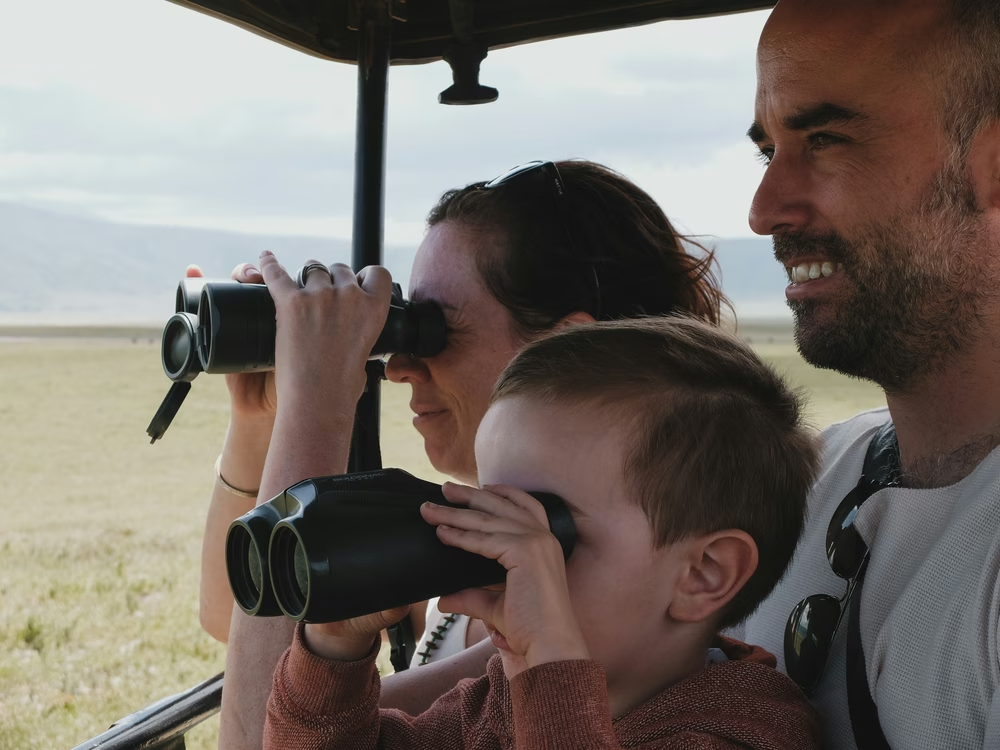
- Far less than most parents expect, but the right camp makes an enormous difference. Junior ranger programmes, a personal pair of binoculars, and a wildlife checklist keep children focused. Limit consecutive full-day drives to two; 3–4 hour drives work better than all-day sessions for under-10s.
- What vaccinations do children need for an African safari?
- See our full vaccination guide for up-to-date requirements by destination. Consult a travel medicine clinic at least 6–8 weeks before departure.
- Can we combine a beach holiday with a family safari?
- Tanzania's Zanzibar and Kenya's Diani Beach pair naturally with a safari—the classic format is 8–10 nights game parks followed by 4–5 nights beach. We design these combined itineraries regularly for families with children of all ages, and the beach section consistently turns out to be where kids process and talk about everything they saw in the parks.
Family Safari in Africa with Kids: Which Destination Actually Fits Your Family?
Tanzania or Kenya? South Africa for toddlers? The short answer: Tanzania (Northern Circuit, 10–12 nights, €5,000–€8,000/adult, flights included) works best for families with kids aged 6–14 during June–October. South Africa's private reserves are the only realistic call for children under 5. Kenya sits in between—excellent wildlife, easier logistics from Nairobi, slightly lower entry cost.
This article is a destination-selector, not a general safari planning guide. For packing lists, vaccination schedules, and practical day-to-day advice, see our dedicated pieces: What to Pack for an African Safari and Africa Safari Vaccinations Guide.
Which African destination suits your family's age profile best?
Age is the first filter—not budget, not season. Get this wrong and the trip falls apart before the first game drive.
Tanzania – Most camps on the Northern Circuit accept children from 5 years on shared vehicles, some from 3 on exclusive bookings. The circuit—Tarangire, Lake Manyara, Serengeti, Ngorongoro—works as a 10–12 day loop because the distances between parks are manageable and the variety keeps kids absorbed. Tarangire is underrated for families: enormous baobab trees, huge elephant herds, far fewer vehicles than the central Serengeti. Àgueda, our Arusha-based guide who has led family departures since 2018, had a Spanish family with twin 7-year-olds at Lamai Serengeti in August 2023 when a wildebeest crossing started thirty metres from the vehicle. One of the twins burst into tears—overwhelmed, not frightened—and still messages Àgueda about it. That's the Serengeti's specific magic and no wildlife documentary prepares kids for the sound and the smell of it.
Kenya – The 6-year minimum at most Mara lodges is firm. The bigger practical point, though, is how much smoother Nairobi connections have become. Direct KLM and Kenya Airways flights from Amsterdam and London land you at Jomo Kenyatta by early morning; a connecting charter to the Mara airstrip takes 45 minutes. No overnight road transfer. With tired children, that saves the entire first day. Amboseli is worth considering separately—two hours' drive from Nairobi, or a short charter—and it runs meaningfully cheaper than the Mara. Elephants in front of Kilimanjaro, a more compact landscape that holds younger children's attention, and age flexibility that the Mara doesn't offer. If your children are 4–6 and you're not ready to commit to a South Africa budget, Amboseli is the answer most operators won't volunteer.
South Africa – Here's what we've seen repeatedly: families arrive having been turned away from East African camps—a toddler who just missed the age cutoff, twins of different ages where one qualifies and one doesn't—and South Africa resets the whole trip. The fenced private concessions of Sabi Sands and Timbavati mean children can move around camp freely. A private vehicle means you stop whenever someone needs a snack or a toilet or just a moment to breathe. The Big Five are all there. What you're trading is spectacle of scale—no million-wildebeest crossing—but for a family whose youngest is 2 or 3, that trade is completely worth making. Johannesburg to Hoedspruit is a 90-minute domestic flight; the Garden Route can extend the trip without complicating logistics at all.
Botswana – Premium pricing (€6,000–€10,000 per adult, 10 nights) and a 6-year minimum on most shared drives. Worth flagging because the Chobe riverfront—elephant sightings by boat rather than vehicle—is a genuinely different format and far less physically demanding than a full day's game drive. Best reserved for families returning for a second safari who want fewer lodges, fewer roads, and more stillness.
Rwanda – Gorilla trekking: strictly 15 and above, no exceptions, no flexibility. For families with teenagers, combining Volcanoes National Park with a Nyungwe chimpanzee walk is extraordinary. Not the right destination if your youngest is under 12.
Here's a quick reference to compare all five side by side:
| Destination | Min. Age (shared drives) | Best Months | Approx. Cost/Adult (10 nights, flights from BCN) | Family Edge |
|---|---|---|---|---|
| Tanzania – Northern Circuit | 5–6 years | Jun–Oct, Jan–Feb | €5,000–€8,000 | Greatest wildlife variety; best mid-range camp density |
| Kenya – Maasai Mara / Amboseli | 6 years (Mara); flexible (Amboseli) | Jul–Oct (Mara); year-round (Amboseli) | €4,500–€7,500 | Easiest Nairobi connections; Amboseli lower cost and age-flexible |
| South Africa – Kruger Private Reserves | No restriction (private vehicle) | May–Sep | €3,500–€6,000 | Only realistic option under age 5; self-drive possible |
| Botswana – Chobe | 6 years | Jun–Oct | €6,000–€10,000 | Boat safaris; largest elephant herds; ultra-exclusive |
| Rwanda – Volcanoes NP | 15 years (gorillas) | Jun–Sep, Dec–Feb | €6,000–€9,000 | Gorilla and chimp trekking for teenagers |
What is the minimum age for a family safari in Africa?
Tanzania and Kenya generally require children to be at least 5–6 years old on shared game drives. Rwanda's gorilla trekking is strictly 15 and above. South Africa's private reserves are the exception: most Sabi Sands and Timbavati concessions have no mandatory minimum age if you book a private vehicle. For toddlers and babies, South Africa is the only workable choice in East or Southern Africa.
When is the best time of year for a family safari in Africa?
June to October is the dry season across East and Southern Africa—short grass, animals concentrated at waterholes, lower malaria transmission, and for kids that means sightings come faster and the waiting between them is shorter. January and February suit families well in Tanzania (short dry season, newborn animals everywhere) and align with European school holidays if you extend slightly past Reyes or half-term. Avoid April–May in East Africa and November–December in Southern Africa: roads become difficult and game viewing frustrating in ways that erode a child's enthusiasm faster than anything else.
How much does a family safari in Africa cost?
A 10-night mid-range trip in Tanzania for two adults and two children (ages 8 and 12), flights from Barcelona included, runs €18,000–€26,000 total. The main variables: flights (€900–€1,400 per person return), lodge rates (€350–€600 per adult/night, with 25–50% child discounts at most camps), and park fees ($70–$100/adult/day in Serengeti; $20–$40 for under-16s). South Africa comes in lower—€12,000–€18,000 for the same family—partly because domestic connections are cheaper and partly because the private reserve model is more compact. Botswana is the most expensive tier at €25,000–€40,000 for four.
How do we choose a camp that genuinely works for children?
Junior ranger programmes are the differentiator. Not every lodge that calls itself 'family-friendly' runs structured activities—some mean little more than a children's menu. When vetting camps, ask three specific questions: Is there a dedicated children's activity programme, and what ages does it cover? Can we have a private guide and vehicle rather than shared drives? Is the camp fenced—relevant for very young children's freedom of movement within the grounds? In the Northern Circuit, Nomad's Lamai Serengeti and the Elewana camps have consistently delivered on these for the families we send. In the Mara, &Beyond Bateleur Camp and Angama Mara both run structured family programmes worth asking about by name.
Is Africa safe for families with young children?
Safari areas in Tanzania, Kenya, and South Africa are very safe within lodge and park boundaries. The risk is wildlife, not crime—hippos move through camp at night, elephants push through perimeter fences, and children must be escorted by adults after dark without exception. Every lodge covers this in the arrival briefing; parents who follow the protocols have nothing additional to worry about. Crime risk inside national parks and private reserves is negligible. In South Africa's gateway cities, standard urban awareness applies—though in our experience most families pass through Johannesburg in under three hours between international and domestic terminals and never really engage with the city at all.
FAQ – Family Safari in Africa with Kids
- Can we bring a baby or toddler under 3 on safari?
- Yes—in South Africa. The private reserves of Sabi Sands and Timbavati are the only realistic option for children under 3; most East African camps have firm minimum-age rules with no room to negotiate. Book an exclusive-use villa or private vehicle and confirm the age policy with the specific camp before paying any deposit, because rules vary even within the same reserve.
- Do children get discounts at African safari lodges?
- Most lodges offer 25–50% off the adult rate for children aged 5–12, and under-5s often stay free when sharing with parents. Always ask explicitly—the discount structure is rarely volunteered upfront.
- How long should a family safari be?
- Ten to twelve nights lets you cover 2–3 parks without rushing. Seven nights works for teenagers but tends to feel tight with younger children who need at least one real rest day built in—not optional, not a half-day, an actual day where no one has to be anywhere at 6am.
- Do kids get bored on safari?
- Far less than most parents expect, but the right camp makes an enormous difference. Junior ranger programmes, a personal pair of binoculars, and a wildlife checklist keep children focused. Limit consecutive full-day drives to two; 3–4 hour drives work better than all-day sessions for under-10s.
- What vaccinations do children need for an African safari?
- See our full vaccination guide for up-to-date requirements by destination. Consult a travel medicine clinic at least 6–8 weeks before departure.
- Can we combine a beach holiday with a family safari?
- Tanzania's Zanzibar and Kenya's Diani Beach pair naturally with a safari—the classic format is 8–10 nights game parks followed by 4–5 nights beach. We design these combined itineraries regularly for families with children of all ages, and the beach section consistently turns out to be where kids process and talk about everything they saw in the parks.





.png)