






The Serengeti-to-Ruaha Safari: A 15-Day Route That Crosses into Southern Tanzania
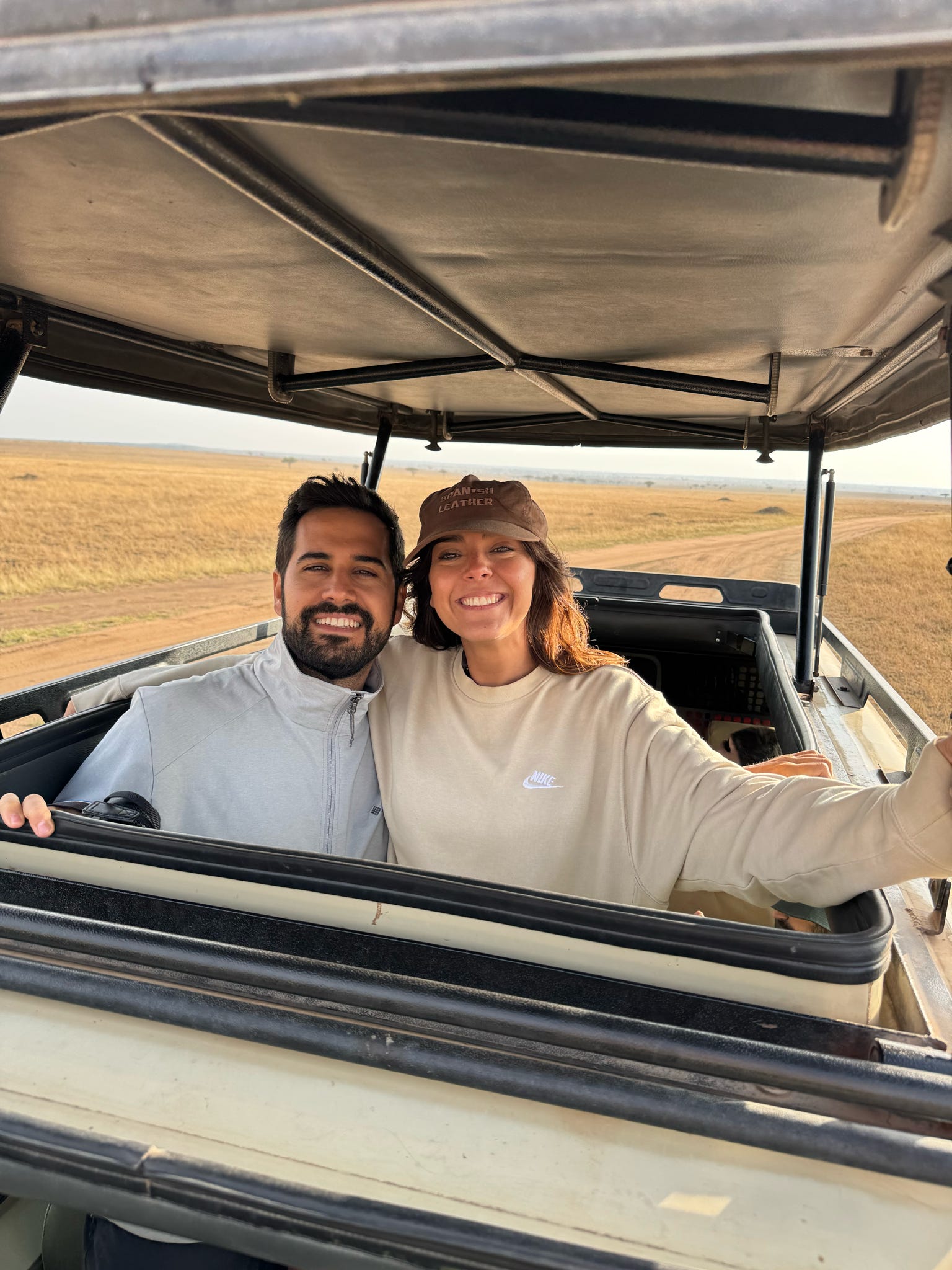
Most 15-day Tanzania itineraries loop through the north and stop. This one adds a charter flight south to Ruaha, the country's largest national park, and that single decision is what separates it from every northern-only circuit. Budget €4,800 to €9,500 per person, land at Kilimanjaro, and plan your departure from Dar es Salaam after two weeks that cover genuinely different ecosystems, not just more of the same.
| Best months | June to October (dry season, game dense at water sources); January to February (calving season, lighter crowds) |
|---|---|
| Price range | €4,800 to €9,500 per person, mid-range to luxury, full board |
| Duration | 15 days / 14 nights in-country |
| Closest airports | Kilimanjaro (JRO) arrival; Dar es Salaam (DAR) departure suits a Ruaha finish |
| Visa | e-Visa required; apply at Tanzania Immigration Services; ~USD 50 |
| Park authority | TANAPA manages Tarangire, Serengeti and Ruaha; Ngorongoro falls under the Ngorongoro Conservation Area Authority |
| Flights from Barcelona | BCN to JRO via Amsterdam, Addis Ababa or Nairobi; roughly €700 to €1,200 return |
What does this 15-day route look like day by day?
The sequence runs Arusha to Tarangire to Ngorongoro to Serengeti, then a charter flight south to Ruaha and out through Dar es Salaam. That order keeps transfers logical, avoids backtracking and saves a full day compared to any reverse arrangement.
- Day 1: Arrive Kilimanjaro, overnight Arusha
- Days 2 to 4: Tarangire National Park, 3 nights, elephant herds and baobab landscape
- Days 5 to 6: Ngorongoro Conservation Area, 2 nights, full day on the Crater floor
- Days 7 to 10: Central and Northern Serengeti, 4 nights, migration placement varies by month
- Day 11: Charter flight from Serengeti airstrip to Msembe or Jongomero, Ruaha
- Days 11 to 14: Ruaha National Park, 4 nights: lion prides, wild dogs, greater kudu, roan antelope
- Day 15: Charter or scheduled flight to Dar es Salaam, international connection
Four nights in Ruaha is the minimum. Three nights and the charter cost stops making sense relative to the time you actually spend in the bush.
Why start in Tarangire instead of Ngorongoro?
In the dry season, Tarangire holds the highest elephant density in Tanzania. We counted more than 500 animals around the river in a single afternoon in July 2024. Starting there eases groups into safari rhythm before the more intense Crater and Serengeti days, and the road from Arusha is well-tarmacked so your first game drive begins on arrival rather than after two hours of corrugated track.
Our team has opened with Tarangire for four consecutive Julys. The reaction at the end of day two is nearly always the same: people say they think they have already seen everything Tanzania has. Then Serengeti arrives on day seven and resets expectations entirely. That escalating arc keeps energy high through the final days in Ruaha, and on a 15-day trip that momentum matters.
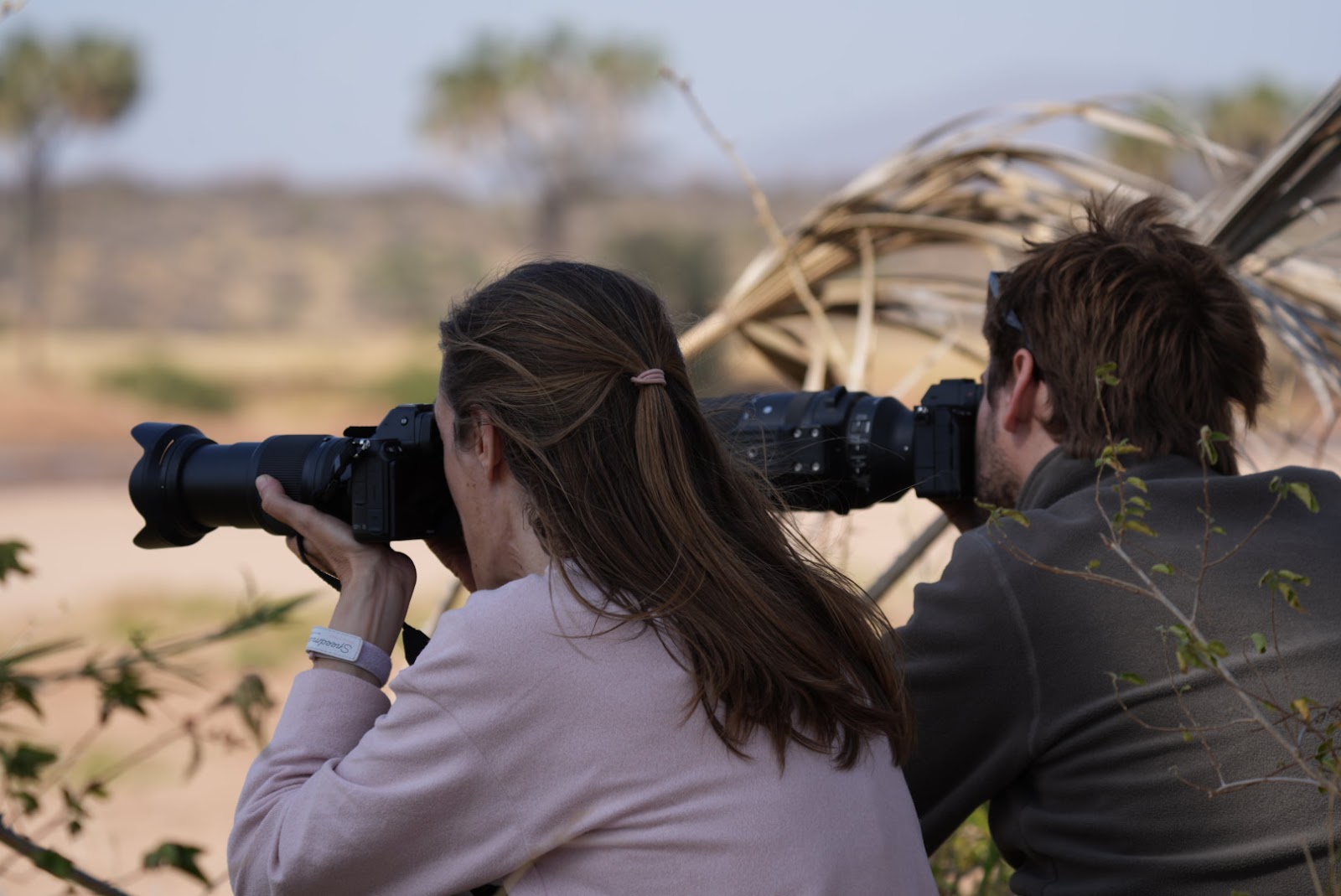
One practical note worth building into your game drive plan: the baobab forests photograph beautifully in late afternoon light. If photography is a priority, ask your guide to position for the southern circuit around 4pm rather than heading back to camp early.
When is the best time for this Serengeti-to-Ruaha route?
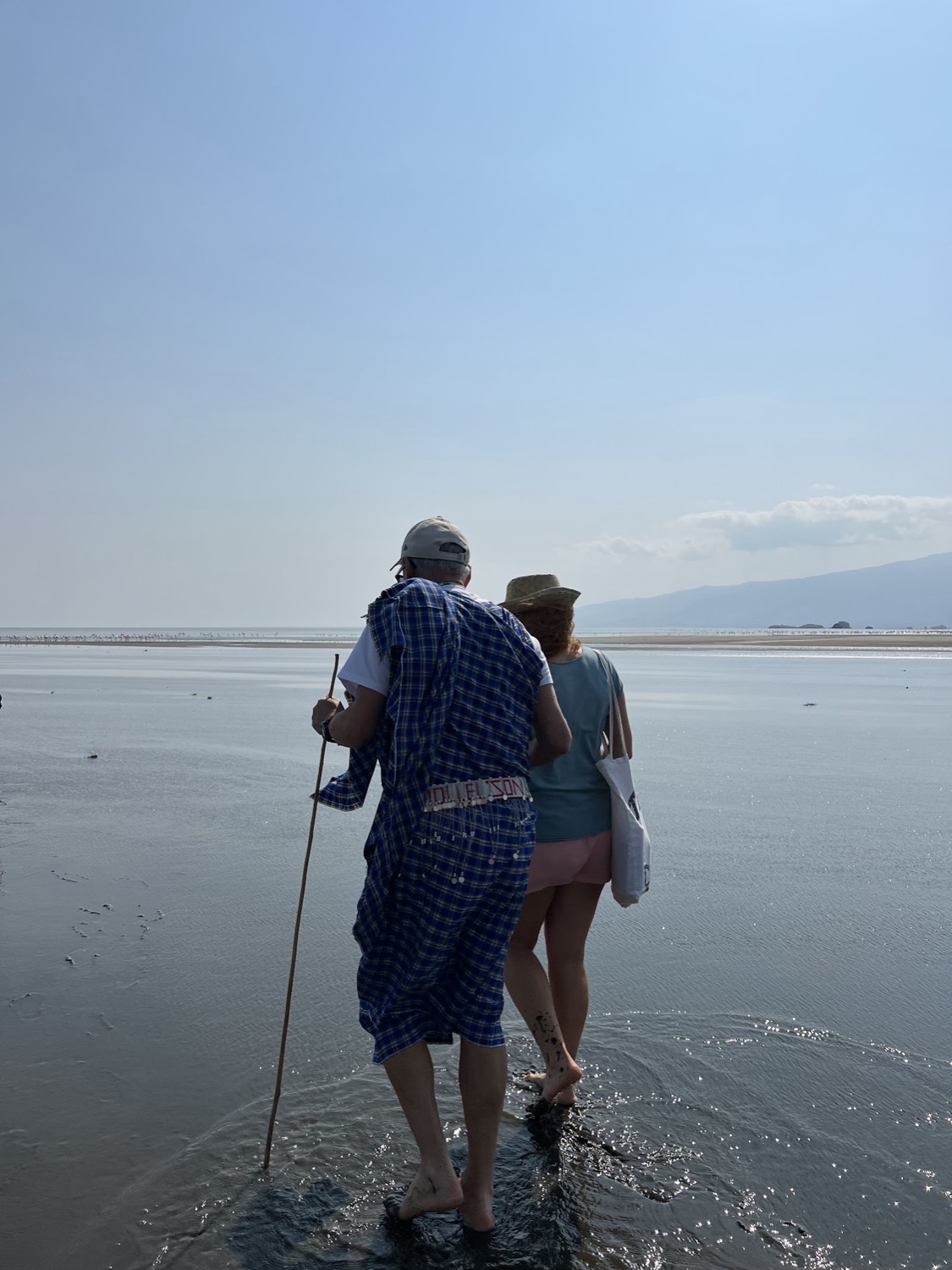
June to October is the classic window. Animals concentrate at water sources across all four parks, and Ruaha peaks in the dry season precisely because the river shrinks dramatically, pushing hippos and crocodiles into tight, photogenic pools. The western circuits around Mwagusi and the Ruaha River are at their best from late June through September.
January to February is our second choice. The short rains have ended, Ngorongoro Crater fills with zebra and wildebeest, and the Serengeti calving season, roughly late January through February, delivers thousands of newborn wildebeest alongside the predators that follow them. Visitor numbers on the northern circuit run noticeably lower than in July or August.
Avoid Ruaha in April and May. Access roads can close after sustained rain, several camps shut entirely for the season, and the Coastal Aviation charter to Msembe may not operate on schedule. The northern parks are more resilient in the green season but the Ruaha leg becomes genuinely uncertain.
How much does this 15-day itinerary cost?
All figures per person sharing a double tent or room, international flights excluded.
| Category | Typical camp examples | Price per person (15 days) | What is included |
|---|---|---|---|
| Mid-range | Kubu Kubu, Karatu lodge, basic Ruaha camp | €4,800 to €6,200 | Full board, park fees, game drives, domestic flights |
| Upper mid-range | Lemala camps, Asilia Highlands, Kwihala (Ruaha) | €6,500 to €8,000 | All above plus conservation fees, laundry, bush walks |
| Luxury | Singita Grumeti, &Beyond Ngorongoro, Jongomero | €9,000 to €15,000+ | All above plus premium spirits, private vehicles, senior guides |
The charter flight south is the biggest single cost driver after accommodation. On a shared Coastal Aviation or Air Excel service from a Serengeti airstrip to Msembe, expect USD 350 to USD 600 per person. A private aircraft runs USD 1,200 to USD 2,000. Book that leg early: capacity is limited in June through August and seats go faster than most people expect.
Park fees accumulate across 14 nights. Serengeti charges USD 70 per person per day for non-resident adults (TANAPA 2025 rate). Ngorongoro has a conservation fee of USD 70.80 per person plus a vehicle fee. Tarangire and Ruaha are each USD 53.10 per person per day. Across the full trip that adds roughly USD 700 to USD 850 per person. TANAPA publishes current Ruaha entry fees on its official site. We include all fees in our quoted price so there are no surprises at the gate.
Is Ruaha worth the extra logistics?
Ruaha receives a fraction of Serengeti's visitor numbers. On our June 2026 trip we ran three consecutive days on the remote western circuits without seeing another vehicle. The park's predator density is genuinely different from anything on the northern loop.
Our guide Baraka, who has worked Ruaha for eleven years, puts it this way: "In Serengeti you find lions every day. In Ruaha you find lions that have never learned to ignore a vehicle. They walk straight past you." The resident prides here number 20 or more individuals in some groups, a scale that simply does not exist in the north. Wild dogs are resident too, with one of the country's healthiest populations. One afternoon in September 2025 we watched a pack of 17 chase impala for 40 minutes along the river bank before the impala outpaced them into thick scrub. Leopard sightings along the Great Ruaha River at dusk are almost routine by day three. And greater kudu, roan antelope, sable: species that rarely appear in the northern parks show up here in numbers that surprise even experienced safari-goers.
Do I need a yellow fever vaccination for Tanzania?
How we do it
If you want to travel it with us: 8 days, from 1.858 € per person. Tanzania - Kilimanjaro Machame
Tanzania does not require a yellow fever certificate unless you are arriving from a country with transmission risk. Kenya, a common transit hub, may require proof if you pass through. Check current requirements via the WHO vaccination requirements tool.
We recommend the jab regardless, along with anti-malarial prophylaxis for all four parks. Ruaha sits at lower altitude than Ngorongoro and mosquito exposure is higher, especially in the shoulder months of June and October.
What wildlife can I realistically expect to see on this route?
The four parks together cover almost every iconic East African species, but they do not distribute them evenly. Serengeti and Ngorongoro are where you tick the Big Five. Tarangire delivers elephant herds on a scale that shocks most first-timers, sometimes 300 animals moving through a single baobab grove in the late afternoon. The Crater is black rhino country: around 30 resident individuals and the best chance of a close sighting anywhere in Tanzania.
Then Ruaha flips the script. Lion sightings there are daily or near-daily, same as Serengeti, but the social dynamics are different. Prides of 20-plus interact with neighbouring groups in ways you just do not see on the northern circuit. Leopard: on a 14-night dry-season trip you can realistically expect two to four sightings across the whole route, with Ruaha's river corridor often delivering the most relaxed individuals. Cheetah concentrate on the open Serengeti plains; they are rare in Ruaha. Elephant are present every single day in Tarangire and again in Ruaha, which makes the Ngorongoro and Serengeti days feel like a brief interruption to what becomes a running theme of the trip.
Wild dog in Ruaha: roughly 60 to 70 percent of dry-season trips produce a sighting, based on tracking data from the camp guides we work with. That is a higher rate than anywhere else we send clients in East Africa.
FAQ
Can I combine this itinerary with a Zanzibar beach extension?
The natural ending is to fly from Dar es Salaam to Zanzibar after Ruaha, adding four to seven nights. Domestic flights run multiple times daily and cost USD 60 to USD 120. A mid-range beachfront property adds roughly €400 to €900 per person. Stone Town deserves one night before the beach, particularly if you have not visited before: the UNESCO old city and the food scene at Forodhani Gardens alone justify the stop.
Is this route suitable for first-time safari-goers?
Yes, though 15 days is a real commitment. First-timers sometimes underestimate safari fatigue, especially after long game drives in the heat. This itinerary addresses that by building in at least two nights per location rather than one-night stops. The northern loop is well-served by infrastructure. Ruaha adds a wilderness depth that newcomers consistently name as the part that surprised them most, and not in a logistically difficult way: the camps handle everything and the airstrip transfers are straightforward.
How long is the drive from Arusha to Tarangire?
Around two hours on good tarmac to the park gate, then up to 45 minutes inside depending on where your camp sits. It is the easiest transfer on the northern circuit, which is another reason we start here rather than pushing straight to Ngorongoro on day one.
Are single-traveller supplements high on this route?
Typically 30 to 60 percent on top of the per-person twin-share price. On a mid-range trip that means an extra €1,500 to €3,000. We can sometimes pair solo travellers in the same vehicle, each paying for their own tent, which cuts vehicle costs significantly. Ask us directly if budget is a real factor: it is often solvable.
What currency should I bring?
US dollars in cash, preferably bills printed after 2009 as older notes are often refused at lodges and park gates. Major cards work at most properties but not everywhere, and never at park entry points. Budget USD 150 to USD 250 for tips across the trip. A guide working hard over 14 days typically receives USD 15 to USD 20 per day from the group.
Your next step
If you want to travel it with us: 8 days, from 1.858 € per person. Tanzania - Kilimanjaro Machame
The Serengeti-to-Ruaha Safari: A 15-Day Route That Crosses into Southern Tanzania
Most 15-day Tanzania itineraries loop through the north and stop. This one adds a charter flight south to Ruaha, the country's largest national park, and that single decision is what separates it from every northern-only circuit. Budget €4,800 to €9,500 per person, land at Kilimanjaro, and plan your departure from Dar es Salaam after two weeks that cover genuinely different ecosystems, not just more of the same.
| Best months | June to October (dry season, game dense at water sources); January to February (calving season, lighter crowds) |
|---|---|
| Price range | €4,800 to €9,500 per person, mid-range to luxury, full board |
| Duration | 15 days / 14 nights in-country |
| Closest airports | Kilimanjaro (JRO) arrival; Dar es Salaam (DAR) departure suits a Ruaha finish |
| Visa | e-Visa required; apply at Tanzania Immigration Services; ~USD 50 |
| Park authority | TANAPA manages Tarangire, Serengeti and Ruaha; Ngorongoro falls under the Ngorongoro Conservation Area Authority |
| Flights from Barcelona | BCN to JRO via Amsterdam, Addis Ababa or Nairobi; roughly €700 to €1,200 return |
What does this 15-day route look like day by day?
The sequence runs Arusha to Tarangire to Ngorongoro to Serengeti, then a charter flight south to Ruaha and out through Dar es Salaam. That order keeps transfers logical, avoids backtracking and saves a full day compared to any reverse arrangement.
- Day 1: Arrive Kilimanjaro, overnight Arusha
- Days 2 to 4: Tarangire National Park, 3 nights, elephant herds and baobab landscape
- Days 5 to 6: Ngorongoro Conservation Area, 2 nights, full day on the Crater floor
- Days 7 to 10: Central and Northern Serengeti, 4 nights, migration placement varies by month
- Day 11: Charter flight from Serengeti airstrip to Msembe or Jongomero, Ruaha
- Days 11 to 14: Ruaha National Park, 4 nights: lion prides, wild dogs, greater kudu, roan antelope
- Day 15: Charter or scheduled flight to Dar es Salaam, international connection
Four nights in Ruaha is the minimum. Three nights and the charter cost stops making sense relative to the time you actually spend in the bush.
Why start in Tarangire instead of Ngorongoro?
In the dry season, Tarangire holds the highest elephant density in Tanzania. We counted more than 500 animals around the river in a single afternoon in July 2024. Starting there eases groups into safari rhythm before the more intense Crater and Serengeti days, and the road from Arusha is well-tarmacked so your first game drive begins on arrival rather than after two hours of corrugated track.
Our team has opened with Tarangire for four consecutive Julys. The reaction at the end of day two is nearly always the same: people say they think they have already seen everything Tanzania has. Then Serengeti arrives on day seven and resets expectations entirely. That escalating arc keeps energy high through the final days in Ruaha, and on a 15-day trip that momentum matters.
One practical note worth building into your game drive plan: the baobab forests photograph beautifully in late afternoon light. If photography is a priority, ask your guide to position for the southern circuit around 4pm rather than heading back to camp early.
When is the best time for this Serengeti-to-Ruaha route?
June to October is the classic window. Animals concentrate at water sources across all four parks, and Ruaha peaks in the dry season precisely because the river shrinks dramatically, pushing hippos and crocodiles into tight, photogenic pools. The western circuits around Mwagusi and the Ruaha River are at their best from late June through September.
January to February is our second choice. The short rains have ended, Ngorongoro Crater fills with zebra and wildebeest, and the Serengeti calving season, roughly late January through February, delivers thousands of newborn wildebeest alongside the predators that follow them. Visitor numbers on the northern circuit run noticeably lower than in July or August.
Avoid Ruaha in April and May. Access roads can close after sustained rain, several camps shut entirely for the season, and the Coastal Aviation charter to Msembe may not operate on schedule. The northern parks are more resilient in the green season but the Ruaha leg becomes genuinely uncertain.
How much does this 15-day itinerary cost?
All figures per person sharing a double tent or room, international flights excluded.
| Category | Typical camp examples | Price per person (15 days) | What is included |
|---|---|---|---|
| Mid-range | Kubu Kubu, Karatu lodge, basic Ruaha camp | €4,800 to €6,200 | Full board, park fees, game drives, domestic flights |
| Upper mid-range | Lemala camps, Asilia Highlands, Kwihala (Ruaha) | €6,500 to €8,000 | All above plus conservation fees, laundry, bush walks |
| Luxury | Singita Grumeti, &Beyond Ngorongoro, Jongomero | €9,000 to €15,000+ | All above plus premium spirits, private vehicles, senior guides |
The charter flight south is the biggest single cost driver after accommodation. On a shared Coastal Aviation or Air Excel service from a Serengeti airstrip to Msembe, expect USD 350 to USD 600 per person. A private aircraft runs USD 1,200 to USD 2,000. Book that leg early: capacity is limited in June through August and seats go faster than most people expect.
Park fees accumulate across 14 nights. Serengeti charges USD 70 per person per day for non-resident adults (TANAPA 2025 rate). Ngorongoro has a conservation fee of USD 70.80 per person plus a vehicle fee. Tarangire and Ruaha are each USD 53.10 per person per day. Across the full trip that adds roughly USD 700 to USD 850 per person. TANAPA publishes current Ruaha entry fees on its official site. We include all fees in our quoted price so there are no surprises at the gate.
Is Ruaha worth the extra logistics?
Ruaha receives a fraction of Serengeti's visitor numbers. On our June 2026 trip we ran three consecutive days on the remote western circuits without seeing another vehicle. The park's predator density is genuinely different from anything on the northern loop.
Our guide Baraka, who has worked Ruaha for eleven years, puts it this way: "In Serengeti you find lions every day. In Ruaha you find lions that have never learned to ignore a vehicle. They walk straight past you." The resident prides here number 20 or more individuals in some groups, a scale that simply does not exist in the north. Wild dogs are resident too, with one of the country's healthiest populations. One afternoon in September 2025 we watched a pack of 17 chase impala for 40 minutes along the river bank before the impala outpaced them into thick scrub. Leopard sightings along the Great Ruaha River at dusk are almost routine by day three. And greater kudu, roan antelope, sable: species that rarely appear in the northern parks show up here in numbers that surprise even experienced safari-goers.
Do I need a yellow fever vaccination for Tanzania?
How we do it
If you want to travel it with us: 8 days, from 1.858 € per person. Tanzania - Kilimanjaro Machame
Tanzania does not require a yellow fever certificate unless you are arriving from a country with transmission risk. Kenya, a common transit hub, may require proof if you pass through. Check current requirements via the WHO vaccination requirements tool.
We recommend the jab regardless, along with anti-malarial prophylaxis for all four parks. Ruaha sits at lower altitude than Ngorongoro and mosquito exposure is higher, especially in the shoulder months of June and October.
What wildlife can I realistically expect to see on this route?
The four parks together cover almost every iconic East African species, but they do not distribute them evenly. Serengeti and Ngorongoro are where you tick the Big Five. Tarangire delivers elephant herds on a scale that shocks most first-timers, sometimes 300 animals moving through a single baobab grove in the late afternoon. The Crater is black rhino country: around 30 resident individuals and the best chance of a close sighting anywhere in Tanzania.
Then Ruaha flips the script. Lion sightings there are daily or near-daily, same as Serengeti, but the social dynamics are different. Prides of 20-plus interact with neighbouring groups in ways you just do not see on the northern circuit. Leopard: on a 14-night dry-season trip you can realistically expect two to four sightings across the whole route, with Ruaha's river corridor often delivering the most relaxed individuals. Cheetah concentrate on the open Serengeti plains; they are rare in Ruaha. Elephant are present every single day in Tarangire and again in Ruaha, which makes the Ngorongoro and Serengeti days feel like a brief interruption to what becomes a running theme of the trip.
Wild dog in Ruaha: roughly 60 to 70 percent of dry-season trips produce a sighting, based on tracking data from the camp guides we work with. That is a higher rate than anywhere else we send clients in East Africa.
FAQ
Can I combine this itinerary with a Zanzibar beach extension?
The natural ending is to fly from Dar es Salaam to Zanzibar after Ruaha, adding four to seven nights. Domestic flights run multiple times daily and cost USD 60 to USD 120. A mid-range beachfront property adds roughly €400 to €900 per person. Stone Town deserves one night before the beach, particularly if you have not visited before: the UNESCO old city and the food scene at Forodhani Gardens alone justify the stop.
Is this route suitable for first-time safari-goers?
Yes, though 15 days is a real commitment. First-timers sometimes underestimate safari fatigue, especially after long game drives in the heat. This itinerary addresses that by building in at least two nights per location rather than one-night stops. The northern loop is well-served by infrastructure. Ruaha adds a wilderness depth that newcomers consistently name as the part that surprised them most, and not in a logistically difficult way: the camps handle everything and the airstrip transfers are straightforward.
How long is the drive from Arusha to Tarangire?
Around two hours on good tarmac to the park gate, then up to 45 minutes inside depending on where your camp sits. It is the easiest transfer on the northern circuit, which is another reason we start here rather than pushing straight to Ngorongoro on day one.
Are single-traveller supplements high on this route?
Typically 30 to 60 percent on top of the per-person twin-share price. On a mid-range trip that means an extra €1,500 to €3,000. We can sometimes pair solo travellers in the same vehicle, each paying for their own tent, which cuts vehicle costs significantly. Ask us directly if budget is a real factor: it is often solvable.
What currency should I bring?
US dollars in cash, preferably bills printed after 2009 as older notes are often refused at lodges and park gates. Major cards work at most properties but not everywhere, and never at park entry points. Budget USD 150 to USD 250 for tips across the trip. A guide working hard over 14 days typically receives USD 15 to USD 20 per day from the group.
Your next step
If you want to travel it with us: 8 days, from 1.858 € per person. Tanzania - Kilimanjaro Machame









.png)