




South Africa Safari: Best National Parks Beyond Kruger, When to Go and What to See
South Africa's parks beyond Kruger are not alternatives to it. They each solve something Kruger cannot: Hluhluwe-iMfolozi holds the world's best rhino sighting record, Addo packs over 600 elephants into 1,640 km², Kgalagadi delivers black-maned lions on red sand tracks with no other vehicle in sight, and Pilanesberg puts Big Five wildlife 180 km from Johannesburg without a domestic flight. Self-drive budgets start around 180 EUR per person per day; private lodges run 350 to 650 EUR per night or beyond.
| Detail | Info |
|---|---|
| Best months | May to September (dry season) |
| Budget self-drive | From 180 EUR/person/day |
| Private lodge range | 350 to 650+ EUR/person/night |
| Closest hub airport | Johannesburg (O.R. Tambo) or Cape Town |
| Visa (EU/Spanish passport) | No visa required, 90-day stay on arrival |
| Currency | South African Rand (ZAR); 1 EUR approx. 20 ZAR |
| Driving side | Left |
Why do these parks fill gaps that Kruger leaves open?
Kruger covers 19,485 km² and draws enormous visitor numbers. Around rest camps like Skukuza in peak season, convoys of hire cars can trail a single leopard for an hour. The parks below are quieter, more specific in what they offer, and each one makes sense depending on your itinerary shape rather than on any ranking. Our team drove Kgalagadi in June 2025 and counted four black-maned lions on one afternoon road with zero other vehicles.
Flying into Cape Town? Addo is four hours east along the N2. Landing at OR Tambo with two days to spare? Pilanesberg is a 180 km drive. Routing through Durban? Hluhluwe sits three hours north. Think of the map first, then decide which park fits the trip you are actually taking.
Hluhluwe-iMfolozi: the one place you can see both rhino species in a morning
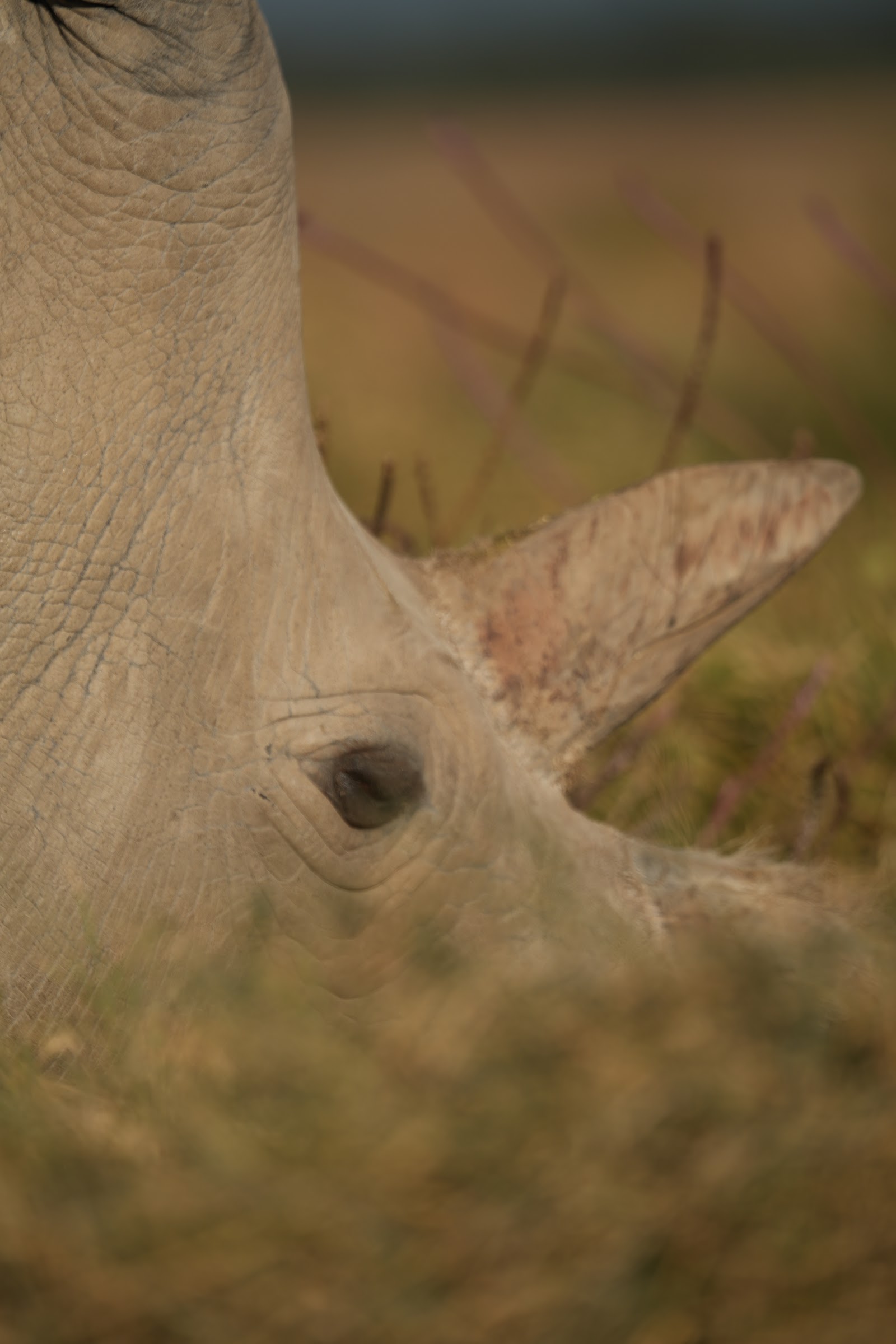
Hluhluwe-iMfolozi in KwaZulu-Natal is South Africa's oldest proclaimed reserve. It is where the southern white rhino was pulled back from extinction, and it remains the single strongest destination on the continent for seeing black and white rhino on the same visit. The Big Five are all present. Entry costs around 372 ZAR per person per day (roughly 18 EUR). Self-catering chalets inside the park start from about 1,200 ZAR per night (60 EUR).
The park sits 280 km north of Durban, about three hours by road, and pairs naturally with iSimangaliso Wetland Park, a UNESCO World Heritage Site known for hippo, crocs and nesting leatherback turtles. June to October is the sweet spot: vegetation thins, animals cluster around waterholes, and mornings can drop to 8°C in July so pack a layer. The light for photography at that time of year is cool and clean in a way that the green season simply is not.
Addo Elephant: safaris without malaria risk and 600 elephants to prove it
Addo makes the most sense if you are combining safari with Cape Town or the Garden Route. The park protects the densest elephant population on Earth: over 600 animals in roughly 1,640 km². Entry is around 304 ZAR per person (15 EUR). At the main camp there is a floodlit waterhole visible from the restaurant terrace at night, and it is entirely normal to sit there with a cold Windhoek and watch 40 elephants arrive, argue over space and disappear again into the dark.
Beyond elephants, Addo holds lion, leopard, buffalo and black rhino. The marine section off the coast adds southern right whales between July and November, plus great whites year-round. Rest camp accommodation starts at about 900 ZAR per night (45 EUR) for a basic chalet. Addo and Pilanesberg are the two Big Five parks in South Africa with no malaria risk, which opens them up to families with young children and travellers who prefer to avoid prophylactics.
What makes Kgalagadi unlike any other safari in the country?
Kgalagadi straddles South Africa and Botswana in the Kalahari desert. Everything here is adapted to survive on almost no surface water: lions covering enormous home ranges, sociable weavers building communal nests the size of a small car stacked 30 high, bat-eared foxes, gemsbok that can raise their body temperature to avoid sweating. Predator sightings per kilometre of road track consistently higher than in Kruger.
The park is remote by design. Upington, the closest town, is a 260 km drive on corrugated dirt roads. Fly into Upington airport or self-drive from Cape Town (870 km, best split over two days with a Karoo overnight). Entry runs around 372 ZAR per person per day. Inside, SANParks camps like Twee Rivieren offer chalets from about 1,400 ZAR per night (70 EUR). April to September is the window. October temperatures can hit 45°C and predators retreat to shade before 7 AM.
Pilanesberg: the park that earns its place on a tight schedule
Pilanesberg National Park sits inside an ancient volcanic crater 180 km northwest of Johannesburg. No domestic flight, no full safari day lost to transfers. The Big Five are all present in 580 km² of varied bushveld, and the crater topography channels animals toward predictable areas in a way that flatland parks rarely do.
Self-drive entry costs around 200 ZAR per person (10 EUR). Day visits work if time is short. Private lodges like Bakubung Bush Lodge run about 400 to 550 EUR per person per night all-inclusive with game drives. For a Johannesburg city break with a safari morning, or a pre-departure drive before an evening flight, Pilanesberg absorbs easily into a trip that was never primarily about game viewing.
When does each park perform best across the year?
May to September is dry season across all South African parks, and the strongest window for game viewing. Grass stays low, waterholes concentrate animals, and days are clear. July and August are peak months: mornings drop to 5°C in Kgalagadi and Hluhluwe, which keeps predators active later and pulls herds to water earlier. October and November offer strong sightings with lower lodge prices, though afternoon storms build from mid-November onward.
December to March brings lush green vegetation, good birding and newborn animals everywhere, but dense bush makes large mammals harder to spot. July or August for a first visit. November in Addo or Hluhluwe if you have already done peak dry season and want a different landscape, one where the light goes golden by 5 PM and the parks are quieter.
| Month | Season | Game Viewing | Price Level |
|---|---|---|---|
| May to June | Start of dry | Very good | Mid |
| July to August | Peak dry | Excellent | High |
| September to October | Late dry/shoulder | Very good | Mid |
| November to March | Wet | Moderate | Lower |
| April | Transition | Good | Mid-low |
How much does a self-drive itinerary through these parks actually cost?
Self-drive is the most affordable route. Budget 180 to 220 EUR per person per day covering park entry, SANParks accommodation, car hire and food. A 10-night self-drive through Addo, Hluhluwe and Pilanesberg from Johannesburg runs roughly 1,800 to 2,500 EUR per person total, international flights excluded. Guided tours with private lodges sit between 350 and 650 EUR per person per night all-inclusive. Watatu's 12-night South Africa itineraries combining three parks start from about 3,800 EUR per person including guides, transport, park fees and accommodation, with international flights always quoted separately so you can compare fares directly.
Do you need a 4x4 for South Africa's national parks?
In Kruger, Hluhluwe and Addo, no. Main roads are tar or compacted gravel and a standard saloon handles them without drama. Kgalagadi is different: the roads between camps are corrugated red sand and a high-clearance 4x4 is necessary, not optional. Car hire at Upington airport covers proper 4x4 options; budget an extra 40 to 70 EUR per day over a regular hire car. A downloaded offline map (Maps.me or Google offline) matters more than a built-in GPS across all four parks.
What animals will you actually see, park by park?
The Big Five are present in Kruger, Hluhluwe, Addo and Pilanesberg. Kgalagadi has no elephant but delivers predator encounters at a rate that surprises most people on their first visit there. Addo's elephant herds are the continental benchmark: 50 or 60 animals at a single waterhole is a real possibility in the dry season. Hluhluwe's rhino sightings, both species, are the main reason to make the KwaZulu-Natal detour. Cheetah appear in Kgalagadi and Pilanesberg; wild dogs show up occasionally in Hluhluwe.
South Africa also carries over 900 bird species nationally. Addo's marine zone and iSimangaliso add penguin, whale and turtle encounters that sit in a different category from anything on the East African safari circuit, and they are worth building an itinerary around rather than treating as an afterthought.
FAQ: South Africa Safari Beyond Kruger
- Do I need vaccinations to visit South Africa's national parks?
- No specific vaccinations are required for EU or Spanish passport holders entering South Africa. Yellow fever proof is only needed if you arrive from a country with active transmission. Malaria risk exists in northern Kruger and parts of KwaZulu-Natal including Hluhluwe. Kgalagadi and Addo are malaria-free. Check the CDC travel health page for South Africa and consult a travel health clinic before you travel.
- Can I combine multiple South African parks in one trip?
- Yes, and routing matters. A 14-day trip works well starting at Addo in the Eastern Cape, moving north to KwaZulu-Natal for Hluhluwe and iSimangaliso, then finishing at Pilanesberg near Johannesburg before departure. South Africa is roughly twice the size of Spain, so budget for internal flights of about 80 to 150 EUR per sector between the Eastern Cape and KwaZulu-Natal legs, or plan long drives with overnight stops.
- Is South Africa safe for self-drive safari?
- Inside national parks, yes. SANParks reserves are fenced, roads are signed and camps are well-run. Cities require more attention: avoid driving at night in Johannesburg or Durban city centres, keep doors locked in traffic and follow standard urban precautions. Our team self-drives South Africa regularly and the parks themselves are relaxed and easy to navigate.
- Which park works best for a family travelling with children?
- Addo Elephant and Pilanesberg are the clearest choices. Both are malaria-free, have solid rest camp facilities and offer enough game density that children stay engaged without sitting through long empty stretches of road. Pilanesberg's crater geography means the whole park takes about an hour to cross. Several lodges there run dedicated children's game drives from age 6.
- How far in advance should I book?
- For July and August travel, 6 to 9 months ahead. SANParks accommodation books out fast online, and Kgalagadi camps in particular fill during South African school holidays. For shoulder months like May or October, 3 to 4 months is usually enough. Write to us on WhatsApp or check our South Africa itineraries and we will tell you exactly what is available.
South Africa Safari: Best National Parks Beyond Kruger, When to Go and What to See
South Africa's parks beyond Kruger are not alternatives to it. They each solve something Kruger cannot: Hluhluwe-iMfolozi holds the world's best rhino sighting record, Addo packs over 600 elephants into 1,640 km², Kgalagadi delivers black-maned lions on red sand tracks with no other vehicle in sight, and Pilanesberg puts Big Five wildlife 180 km from Johannesburg without a domestic flight. Self-drive budgets start around 180 EUR per person per day; private lodges run 350 to 650 EUR per night or beyond.
| Detail | Info |
|---|---|
| Best months | May to September (dry season) |
| Budget self-drive | From 180 EUR/person/day |
| Private lodge range | 350 to 650+ EUR/person/night |
| Closest hub airport | Johannesburg (O.R. Tambo) or Cape Town |
| Visa (EU/Spanish passport) | No visa required, 90-day stay on arrival |
| Currency | South African Rand (ZAR); 1 EUR approx. 20 ZAR |
| Driving side | Left |
Why do these parks fill gaps that Kruger leaves open?
Kruger covers 19,485 km² and draws enormous visitor numbers. Around rest camps like Skukuza in peak season, convoys of hire cars can trail a single leopard for an hour. The parks below are quieter, more specific in what they offer, and each one makes sense depending on your itinerary shape rather than on any ranking. Our team drove Kgalagadi in June 2025 and counted four black-maned lions on one afternoon road with zero other vehicles.
Flying into Cape Town? Addo is four hours east along the N2. Landing at OR Tambo with two days to spare? Pilanesberg is a 180 km drive. Routing through Durban? Hluhluwe sits three hours north. Think of the map first, then decide which park fits the trip you are actually taking.
Hluhluwe-iMfolozi: the one place you can see both rhino species in a morning
Hluhluwe-iMfolozi in KwaZulu-Natal is South Africa's oldest proclaimed reserve. It is where the southern white rhino was pulled back from extinction, and it remains the single strongest destination on the continent for seeing black and white rhino on the same visit. The Big Five are all present. Entry costs around 372 ZAR per person per day (roughly 18 EUR). Self-catering chalets inside the park start from about 1,200 ZAR per night (60 EUR).
The park sits 280 km north of Durban, about three hours by road, and pairs naturally with iSimangaliso Wetland Park, a UNESCO World Heritage Site known for hippo, crocs and nesting leatherback turtles. June to October is the sweet spot: vegetation thins, animals cluster around waterholes, and mornings can drop to 8°C in July so pack a layer. The light for photography at that time of year is cool and clean in a way that the green season simply is not.
Addo Elephant: safaris without malaria risk and 600 elephants to prove it
Addo makes the most sense if you are combining safari with Cape Town or the Garden Route. The park protects the densest elephant population on Earth: over 600 animals in roughly 1,640 km². Entry is around 304 ZAR per person (15 EUR). At the main camp there is a floodlit waterhole visible from the restaurant terrace at night, and it is entirely normal to sit there with a cold Windhoek and watch 40 elephants arrive, argue over space and disappear again into the dark.
Beyond elephants, Addo holds lion, leopard, buffalo and black rhino. The marine section off the coast adds southern right whales between July and November, plus great whites year-round. Rest camp accommodation starts at about 900 ZAR per night (45 EUR) for a basic chalet. Addo and Pilanesberg are the two Big Five parks in South Africa with no malaria risk, which opens them up to families with young children and travellers who prefer to avoid prophylactics.
What makes Kgalagadi unlike any other safari in the country?
Kgalagadi straddles South Africa and Botswana in the Kalahari desert. Everything here is adapted to survive on almost no surface water: lions covering enormous home ranges, sociable weavers building communal nests the size of a small car stacked 30 high, bat-eared foxes, gemsbok that can raise their body temperature to avoid sweating. Predator sightings per kilometre of road track consistently higher than in Kruger.
The park is remote by design. Upington, the closest town, is a 260 km drive on corrugated dirt roads. Fly into Upington airport or self-drive from Cape Town (870 km, best split over two days with a Karoo overnight). Entry runs around 372 ZAR per person per day. Inside, SANParks camps like Twee Rivieren offer chalets from about 1,400 ZAR per night (70 EUR). April to September is the window. October temperatures can hit 45°C and predators retreat to shade before 7 AM.
Pilanesberg: the park that earns its place on a tight schedule
Pilanesberg National Park sits inside an ancient volcanic crater 180 km northwest of Johannesburg. No domestic flight, no full safari day lost to transfers. The Big Five are all present in 580 km² of varied bushveld, and the crater topography channels animals toward predictable areas in a way that flatland parks rarely do.
Self-drive entry costs around 200 ZAR per person (10 EUR). Day visits work if time is short. Private lodges like Bakubung Bush Lodge run about 400 to 550 EUR per person per night all-inclusive with game drives. For a Johannesburg city break with a safari morning, or a pre-departure drive before an evening flight, Pilanesberg absorbs easily into a trip that was never primarily about game viewing.
When does each park perform best across the year?
May to September is dry season across all South African parks, and the strongest window for game viewing. Grass stays low, waterholes concentrate animals, and days are clear. July and August are peak months: mornings drop to 5°C in Kgalagadi and Hluhluwe, which keeps predators active later and pulls herds to water earlier. October and November offer strong sightings with lower lodge prices, though afternoon storms build from mid-November onward.
December to March brings lush green vegetation, good birding and newborn animals everywhere, but dense bush makes large mammals harder to spot. July or August for a first visit. November in Addo or Hluhluwe if you have already done peak dry season and want a different landscape, one where the light goes golden by 5 PM and the parks are quieter.
| Month | Season | Game Viewing | Price Level |
|---|---|---|---|
| May to June | Start of dry | Very good | Mid |
| July to August | Peak dry | Excellent | High |
| September to October | Late dry/shoulder | Very good | Mid |
| November to March | Wet | Moderate | Lower |
| April | Transition | Good | Mid-low |
How much does a self-drive itinerary through these parks actually cost?
Self-drive is the most affordable route. Budget 180 to 220 EUR per person per day covering park entry, SANParks accommodation, car hire and food. A 10-night self-drive through Addo, Hluhluwe and Pilanesberg from Johannesburg runs roughly 1,800 to 2,500 EUR per person total, international flights excluded. Guided tours with private lodges sit between 350 and 650 EUR per person per night all-inclusive. Watatu's 12-night South Africa itineraries combining three parks start from about 3,800 EUR per person including guides, transport, park fees and accommodation, with international flights always quoted separately so you can compare fares directly.
Do you need a 4x4 for South Africa's national parks?
In Kruger, Hluhluwe and Addo, no. Main roads are tar or compacted gravel and a standard saloon handles them without drama. Kgalagadi is different: the roads between camps are corrugated red sand and a high-clearance 4x4 is necessary, not optional. Car hire at Upington airport covers proper 4x4 options; budget an extra 40 to 70 EUR per day over a regular hire car. A downloaded offline map (Maps.me or Google offline) matters more than a built-in GPS across all four parks.
What animals will you actually see, park by park?
The Big Five are present in Kruger, Hluhluwe, Addo and Pilanesberg. Kgalagadi has no elephant but delivers predator encounters at a rate that surprises most people on their first visit there. Addo's elephant herds are the continental benchmark: 50 or 60 animals at a single waterhole is a real possibility in the dry season. Hluhluwe's rhino sightings, both species, are the main reason to make the KwaZulu-Natal detour. Cheetah appear in Kgalagadi and Pilanesberg; wild dogs show up occasionally in Hluhluwe.
South Africa also carries over 900 bird species nationally. Addo's marine zone and iSimangaliso add penguin, whale and turtle encounters that sit in a different category from anything on the East African safari circuit, and they are worth building an itinerary around rather than treating as an afterthought.
FAQ: South Africa Safari Beyond Kruger
- Do I need vaccinations to visit South Africa's national parks?
- No specific vaccinations are required for EU or Spanish passport holders entering South Africa. Yellow fever proof is only needed if you arrive from a country with active transmission. Malaria risk exists in northern Kruger and parts of KwaZulu-Natal including Hluhluwe. Kgalagadi and Addo are malaria-free. Check the CDC travel health page for South Africa and consult a travel health clinic before you travel.
- Can I combine multiple South African parks in one trip?
- Yes, and routing matters. A 14-day trip works well starting at Addo in the Eastern Cape, moving north to KwaZulu-Natal for Hluhluwe and iSimangaliso, then finishing at Pilanesberg near Johannesburg before departure. South Africa is roughly twice the size of Spain, so budget for internal flights of about 80 to 150 EUR per sector between the Eastern Cape and KwaZulu-Natal legs, or plan long drives with overnight stops.
- Is South Africa safe for self-drive safari?
- Inside national parks, yes. SANParks reserves are fenced, roads are signed and camps are well-run. Cities require more attention: avoid driving at night in Johannesburg or Durban city centres, keep doors locked in traffic and follow standard urban precautions. Our team self-drives South Africa regularly and the parks themselves are relaxed and easy to navigate.
- Which park works best for a family travelling with children?
- Addo Elephant and Pilanesberg are the clearest choices. Both are malaria-free, have solid rest camp facilities and offer enough game density that children stay engaged without sitting through long empty stretches of road. Pilanesberg's crater geography means the whole park takes about an hour to cross. Several lodges there run dedicated children's game drives from age 6.
- How far in advance should I book?
- For July and August travel, 6 to 9 months ahead. SANParks accommodation books out fast online, and Kgalagadi camps in particular fill during South African school holidays. For shoulder months like May or October, 3 to 4 months is usually enough. Write to us on WhatsApp or check our South Africa itineraries and we will tell you exactly what is available.




.png)