

South Africa 15-Day Itinerary: The Open-Jaw Logic That Makes It Work
Fly into Johannesburg, out of Cape Town. That single routing choice is what turns a 15-day Kruger-Garden Route-Cape Town trip from a logistical puzzle into something that moves with its own momentum, each segment feeding naturally into the next without backtracking 1,400 km east at the end. Budget €3,200–€5,500 per person depending on lodge tier, and target May to September for Kruger's dry season. The Garden Route timing is a separate call, because it hinges on whether you want whales off Hermanus or the fynbos flowering season in the Western Cape.
| Detail | Info |
|---|---|
| Best months | May–September (Kruger dry season; Cape Town mild) |
| Price range | €3,200–€5,500 pp (excl. international flights) |
| Duration | 15 days / 14 nights |
| Visa (EU/Spanish passport) | No visa required, 90 days on arrival |
| Entry airports | Johannesburg O.R. Tambo (JNB) in, Cape Town (CPT) out |
| Internal flights | JNB–Kruger (MQP) + Kruger–George or Cape Town (approx. €150–€280 each) |
| Currency | South African Rand (ZAR); €1 ≈ ZAR 20–21 |
What exactly does the open-jaw routing do that a standard return to Joburg cannot?
A return to Johannesburg forces you to deadhead 1,400 km east after Cape Town, at a cost that matches or exceeds the open-jaw fare, and burns a travel day doing it. The open-jaw threads the route geographically: JNB arrival, north-east to Kruger, south to George, west along the Garden Route coast into Cape Town, then home. The country's shape works with you rather than against you.
With a group in June 2024 we ran the actual numbers. The open-jaw saved them around €80 per person on internal repositioning flights, and they arrived home without a wasted transit day tacked onto the end. That saving tends to go straight toward one better night at a camp or a decent meal in the Winelands. It is a small number that earns itself back in trip quality.
The sequence, concretely: land at O.R. Tambo International, connect to Kruger Mpumalanga (MQP) or Hoedspruit for your safari segment, then fly south to George for the Garden Route, and drive or fly west into Cape Town for the final stretch. One direction. No retracing.
How does this itinerary differ from a 10-day South Africa trip or a generic Cape Town add-on?
Most 10-day South Africa itineraries sacrifice either Kruger depth or the Garden Route entirely to keep the schedule manageable. What 15 days buys is five nights in Kruger rather than three, which matters: three nights leaves you just starting to read the bush when it is time to pack. The Garden Route at three nights is not a drive-through; it is enough for Tsitsikamma's suspension bridge, the Knysna lagoon and a genuine morning at the Heads before the tour boats arrive.
The difference from a standard 'Cape Town plus safari' combination is the open-jaw structure itself. Cape Town add-ons typically bolt a city stay onto a Kruger trip and fly back to Joburg. This itinerary treats the routing as the itinerary, using geography to sequence destinations without redundancy. That distinction shapes every booking decision from the first flight to the last car hire.
How many nights in Kruger is actually enough?
Five nights gives you four full game-drive days. In the dry season that is a realistic window for the Big Five, particularly in the southern section around Lower Sabie and Satara. Six nights is what we prefer when budgets allow it.
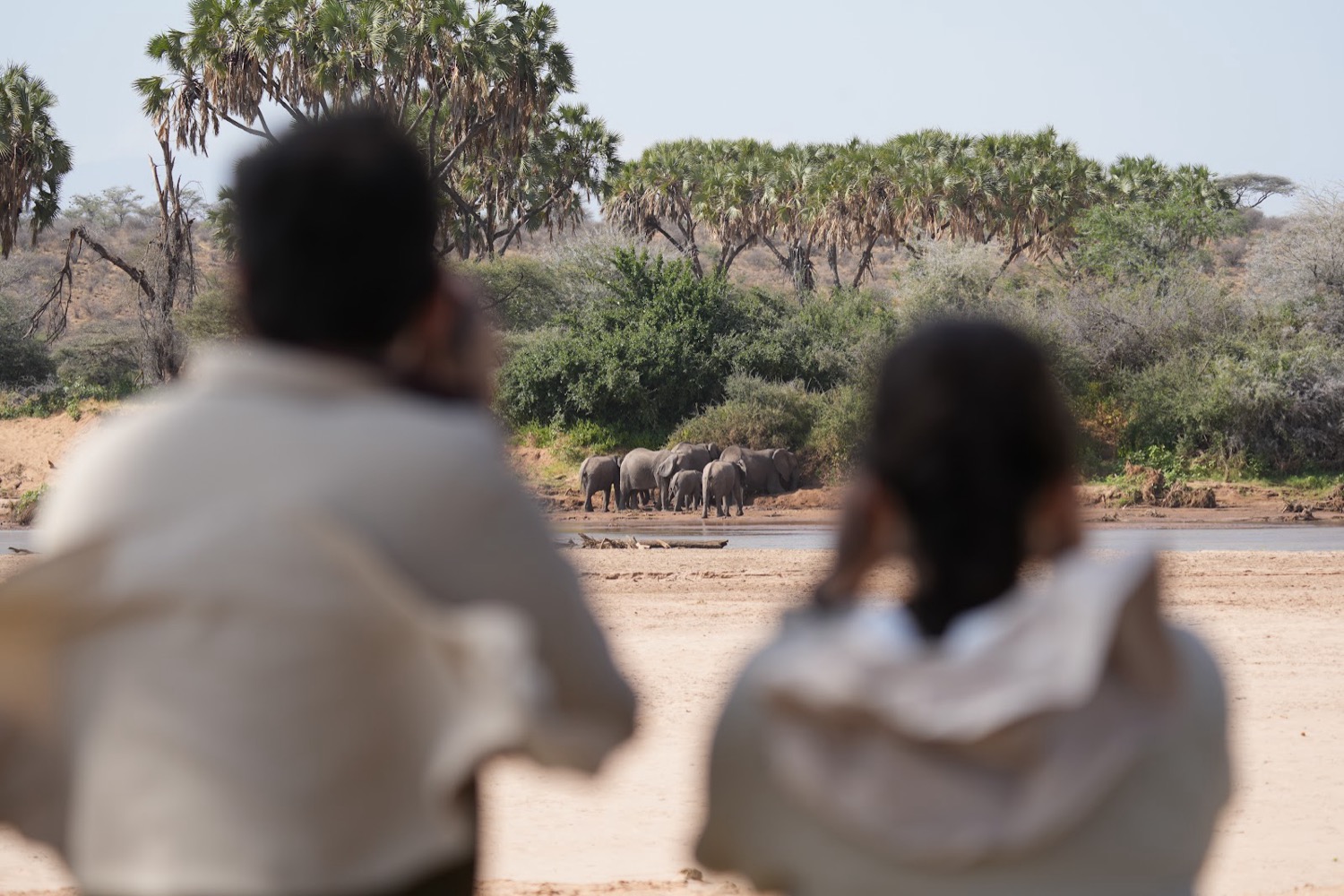
At Satara last July, one of our groups watched a lioness drag a kill past the perimeter fence at dusk, close enough to hear the crunch of bone. It is the kind of thing that happens at a SANParks rest camp that no amount of pre-trip research prepares you for. These mid-range public camps get dismissed as budget options, but self-driving at dawn with no other vehicles around offers something private concessions cannot replicate. Private lodges in Sabi Sands run €350–€700 per person per night all-inclusive, with off-road access and walking safaris. Both experiences are worth having. They are different in kind, not different in quality.
Lower Sabie sits along the Sabie River in Kruger's south and delivers elephant and hippo on the banks almost every evening. Satara's open plains in the central zone are where the lion density is highest. Choosing between them depends mostly on whether you book early enough, because June and July dates at both camps go 10–12 months out.
Should you include the Garden Route or go straight from Kruger to Cape Town?
This is the real fork in the itinerary. June to November brings southern right whales off Hermanus and along the Garden Route coast. September and October add the fynbos flowering season across the Western Cape. Either of those windows gives the Garden Route a specific purpose beyond scenic driving, which shifts it from optional to genuinely time-sensitive.
Outside those months, three nights based in Wilderness or Knysna still earns its place. Rent a car at George airport from roughly ZAR 600 per day for a compact, pick up the N2 westward and stop at the lookout above the Outeniqua Pass. The stretch between Wilderness and Mossel Bay takes about two hours of driving and absorbs another hour if you stop anywhere sensible.
The case for skipping it entirely is mainly financial: three Garden Route nights, the rental car and the extra internal flight add roughly €400–€700 per person. If Kruger and Cape Town are the priorities and the budget is fixed, that money often goes further toward a night in a private concession at Sabi Sands than toward a coastal drive you can do on a separate trip.
What does a 15-day South Africa itinerary cost per person?
| Category | Budget option | Mid-range | Comfort/luxury |
|---|---|---|---|
| Kruger (5 nights) | €150–€200 pp/night (SANParks camp) | €250–€400 pp/night (mid lodge) | €500–€900 pp/night (private concession) |
| Garden Route (3 nights) | €60–€100 pp/night (guesthouse) | €120–€200 pp/night (boutique) | €250–€400 pp/night (eco-lodge) |
| Cape Town (5 nights) | €70–€120 pp/night (apartment) | €150–€280 pp/night (hotel) | €350–€600 pp/night (design hotel) |
| Internal flights | €300–€560 total (JNB–MQP + Kruger or George–CPT) | ||
| Car rental (Garden Route + Cape Town, approx. 8 days) | €200–€400 total | ||
| Park fees (Kruger) | ~€25 pp/day (SANParks conservation fee) | ||
| Total estimate pp | ~€1,600–€2,200 | ~€3,200–€4,500 | ~€5,500–€9,000+ |
International flights are not included above. Add €700–€1,200 from Barcelona return. The rand's exchange rate currently makes South Africa 20–25% cheaper than a comparable East Africa circuit at the same lodge tier, which surprises most first-timers who budget by instinct. For current entry and official tourism information, South African Tourism's official site has practical planning tools worth bookmarking.
Day-by-day: how does the route actually flow?
Days 1–2: The flight from Barcelona lands you in a country where it is already getting dark by 5 pm in June. Most overnight connections arrive at O.R. Tambo early morning, and that first Joburg sunrise through the terminal glass, low winter light across the highveld, is the moment you understand you are not in Europe anymore. If you have a morning before the connecting flight to Hoedspruit, the Apartheid Museum near Nasrec is four hours that reframe everything you see for the rest of the trip. Worth landing a day early for it.
Days 3–7 (5 nights): Kruger. Morning and late-afternoon game drives. In a SANParks camp you self-drive from first light; the roads are paved or well-graded gravel throughout the park, so a standard car handles it comfortably from May to September. Satara sits in the central section's lion territory. A guided bush walk with an armed ranger costs around ZAR 500–700 per person and changes how you look at every subsequent drive.
Days 8–10 (3 nights): Garden Route. Fly Kruger to George, connecting via JNB if there is no direct service. Pick up the rental car and keep the day loose. Day 8 belongs to Wilderness, the Touw River lagoon and getting used to the sound of the Indian Ocean after five nights of bush sounds. Day 9: the Knysna Heads at mid-morning before the tourist boats arrive, then the Featherbed ferry across the lagoon in the afternoon. Day 10: Tsitsikamma, the suspension bridge at Storms River Mouth, then start moving west.
Days 11–15 (5 nights): Cape Town. Table Mountain by cable car on the first clear morning, ZAR 450 return. The Cape Peninsula drive to Cape Point and the Boulders penguin colony fills a full day at a pace that does not feel rushed. One day for Stellenbosch or Franschhoek if wine is part of the itinerary. De Waterkant and the Bo-Kaap at night cost nothing to walk through and consistently outperform any pre-booked tour of either neighbourhood.
Day 15: Fly home from Cape Town. Most European connections depart overnight, which fits cleanly after a final full day in the city.
What do you need to know about health and safety before you go?
No vaccinations are mandatory for EU travellers arriving from Europe, but travel health clinics routinely recommend hepatitis A and up-to-date boosters. Malaria is a real consideration in the Kruger lowveld from October to April. From May to September the risk drops considerably. Travelling in June or July, prophylaxis is optional but some clients take it anyway for peace of mind. Talk to your doctor four to six weeks before departure.
Cape Town and the Garden Route are relaxed by South African standards. The practical rule everywhere: keep valuables out of sight in a parked car. Kruger is fenced, and the SANParks camps manage their own security well. The cities require standard urban awareness, nothing more exotic than that.
When is the best time of year for this itinerary?
June and July are the months we come back to most often. Kruger is dry, vegetation is low, animals concentrate at waterholes, and daytime temperatures sit around 15–28°C in the lowveld. Cape Town in June is cooler and occasionally wet but very liveable, and the restaurants are not at Christmas capacity. September works well if you want warmer Cape weather: you get the fynbos flowering in the Western Cape, southern right whales are still in Hermanus, and prices have not hit peak.
December and January are worth avoiding if possible. Kruger goes lush and spotting becomes harder. Cape Town hits its most crowded and expensive window. South African school holidays and Easter push accommodation rates up across the whole route, so if those are your only available weeks, build in more nights to compensate for the pace.
FAQ
Can you do this 15-day South Africa trip independently or do you need a tour operator?
All three sections are doable independently if you're comfortable self-driving and booking direct. SANParks handles all camp reservations online and Kruger's main roads need nothing more than a standard car. The Garden Route and Cape Town require only a rental car and hotel bookings. Where a specialist earns their fee is at the private concession lodges, where negotiated rates and access to specific traversing areas are not available on the open market.
Do you need a 4x4 for Kruger National Park?
No. All main Kruger roads are paved or well-compacted gravel, manageable in a standard sedan or compact SUV. Extra ground clearance helps on a few camp access tracks during the wet season, but from May to September it is not required. Save that budget elsewhere.
Is 15 days enough for Kruger, the Garden Route and Cape Town?
15 days is a solid working minimum. You get real time in each place without feeling pressed. Extending to 18 days lets you add two nights in Cape Town or a Winelands detour. Drop below 15 and you start cutting segments that genuinely change what the trip feels like.
What is the visa situation for Spanish travellers going to South Africa?
Spanish passport holders need no visa for stays up to 90 days. You receive a stamp on arrival. Your passport must be valid for at least 30 days beyond your departure date and have a minimum of two blank pages. No pre-application is required.
How far in advance should you book Kruger camps?
For SANParks camps in June and July, aim for 6–12 months ahead. Lower Sabie and Satara sell out fastest. South African residents can book from 11 months out; international visitors from 10 months. Private concessions have more availability, but peak-season slots at well-known traversing areas go early. Three months before is already late for the popular dry-season dates.
South Africa 15-Day Itinerary: The Open-Jaw Logic That Makes It Work
Fly into Johannesburg, out of Cape Town. That single routing choice is what turns a 15-day Kruger-Garden Route-Cape Town trip from a logistical puzzle into something that moves with its own momentum, each segment feeding naturally into the next without backtracking 1,400 km east at the end. Budget €3,200–€5,500 per person depending on lodge tier, and target May to September for Kruger's dry season. The Garden Route timing is a separate call, because it hinges on whether you want whales off Hermanus or the fynbos flowering season in the Western Cape.
| Detail | Info |
|---|---|
| Best months | May–September (Kruger dry season; Cape Town mild) |
| Price range | €3,200–€5,500 pp (excl. international flights) |
| Duration | 15 days / 14 nights |
| Visa (EU/Spanish passport) | No visa required, 90 days on arrival |
| Entry airports | Johannesburg O.R. Tambo (JNB) in, Cape Town (CPT) out |
| Internal flights | JNB–Kruger (MQP) + Kruger–George or Cape Town (approx. €150–€280 each) |
| Currency | South African Rand (ZAR); €1 ≈ ZAR 20–21 |
What exactly does the open-jaw routing do that a standard return to Joburg cannot?
A return to Johannesburg forces you to deadhead 1,400 km east after Cape Town, at a cost that matches or exceeds the open-jaw fare, and burns a travel day doing it. The open-jaw threads the route geographically: JNB arrival, north-east to Kruger, south to George, west along the Garden Route coast into Cape Town, then home. The country's shape works with you rather than against you.
With a group in June 2024 we ran the actual numbers. The open-jaw saved them around €80 per person on internal repositioning flights, and they arrived home without a wasted transit day tacked onto the end. That saving tends to go straight toward one better night at a camp or a decent meal in the Winelands. It is a small number that earns itself back in trip quality.
The sequence, concretely: land at O.R. Tambo International, connect to Kruger Mpumalanga (MQP) or Hoedspruit for your safari segment, then fly south to George for the Garden Route, and drive or fly west into Cape Town for the final stretch. One direction. No retracing.
How does this itinerary differ from a 10-day South Africa trip or a generic Cape Town add-on?
Most 10-day South Africa itineraries sacrifice either Kruger depth or the Garden Route entirely to keep the schedule manageable. What 15 days buys is five nights in Kruger rather than three, which matters: three nights leaves you just starting to read the bush when it is time to pack. The Garden Route at three nights is not a drive-through; it is enough for Tsitsikamma's suspension bridge, the Knysna lagoon and a genuine morning at the Heads before the tour boats arrive.
The difference from a standard 'Cape Town plus safari' combination is the open-jaw structure itself. Cape Town add-ons typically bolt a city stay onto a Kruger trip and fly back to Joburg. This itinerary treats the routing as the itinerary, using geography to sequence destinations without redundancy. That distinction shapes every booking decision from the first flight to the last car hire.
How many nights in Kruger is actually enough?
Five nights gives you four full game-drive days. In the dry season that is a realistic window for the Big Five, particularly in the southern section around Lower Sabie and Satara. Six nights is what we prefer when budgets allow it.
At Satara last July, one of our groups watched a lioness drag a kill past the perimeter fence at dusk, close enough to hear the crunch of bone. It is the kind of thing that happens at a SANParks rest camp that no amount of pre-trip research prepares you for. These mid-range public camps get dismissed as budget options, but self-driving at dawn with no other vehicles around offers something private concessions cannot replicate. Private lodges in Sabi Sands run €350–€700 per person per night all-inclusive, with off-road access and walking safaris. Both experiences are worth having. They are different in kind, not different in quality.
Lower Sabie sits along the Sabie River in Kruger's south and delivers elephant and hippo on the banks almost every evening. Satara's open plains in the central zone are where the lion density is highest. Choosing between them depends mostly on whether you book early enough, because June and July dates at both camps go 10–12 months out.
Should you include the Garden Route or go straight from Kruger to Cape Town?
This is the real fork in the itinerary. June to November brings southern right whales off Hermanus and along the Garden Route coast. September and October add the fynbos flowering season across the Western Cape. Either of those windows gives the Garden Route a specific purpose beyond scenic driving, which shifts it from optional to genuinely time-sensitive.
Outside those months, three nights based in Wilderness or Knysna still earns its place. Rent a car at George airport from roughly ZAR 600 per day for a compact, pick up the N2 westward and stop at the lookout above the Outeniqua Pass. The stretch between Wilderness and Mossel Bay takes about two hours of driving and absorbs another hour if you stop anywhere sensible.
The case for skipping it entirely is mainly financial: three Garden Route nights, the rental car and the extra internal flight add roughly €400–€700 per person. If Kruger and Cape Town are the priorities and the budget is fixed, that money often goes further toward a night in a private concession at Sabi Sands than toward a coastal drive you can do on a separate trip.
What does a 15-day South Africa itinerary cost per person?
| Category | Budget option | Mid-range | Comfort/luxury |
|---|---|---|---|
| Kruger (5 nights) | €150–€200 pp/night (SANParks camp) | €250–€400 pp/night (mid lodge) | €500–€900 pp/night (private concession) |
| Garden Route (3 nights) | €60–€100 pp/night (guesthouse) | €120–€200 pp/night (boutique) | €250–€400 pp/night (eco-lodge) |
| Cape Town (5 nights) | €70–€120 pp/night (apartment) | €150–€280 pp/night (hotel) | €350–€600 pp/night (design hotel) |
| Internal flights | €300–€560 total (JNB–MQP + Kruger or George–CPT) | ||
| Car rental (Garden Route + Cape Town, approx. 8 days) | €200–€400 total | ||
| Park fees (Kruger) | ~€25 pp/day (SANParks conservation fee) | ||
| Total estimate pp | ~€1,600–€2,200 | ~€3,200–€4,500 | ~€5,500–€9,000+ |
International flights are not included above. Add €700–€1,200 from Barcelona return. The rand's exchange rate currently makes South Africa 20–25% cheaper than a comparable East Africa circuit at the same lodge tier, which surprises most first-timers who budget by instinct. For current entry and official tourism information, South African Tourism's official site has practical planning tools worth bookmarking.
Day-by-day: how does the route actually flow?
Days 1–2: The flight from Barcelona lands you in a country where it is already getting dark by 5 pm in June. Most overnight connections arrive at O.R. Tambo early morning, and that first Joburg sunrise through the terminal glass, low winter light across the highveld, is the moment you understand you are not in Europe anymore. If you have a morning before the connecting flight to Hoedspruit, the Apartheid Museum near Nasrec is four hours that reframe everything you see for the rest of the trip. Worth landing a day early for it.
Days 3–7 (5 nights): Kruger. Morning and late-afternoon game drives. In a SANParks camp you self-drive from first light; the roads are paved or well-graded gravel throughout the park, so a standard car handles it comfortably from May to September. Satara sits in the central section's lion territory. A guided bush walk with an armed ranger costs around ZAR 500–700 per person and changes how you look at every subsequent drive.
Days 8–10 (3 nights): Garden Route. Fly Kruger to George, connecting via JNB if there is no direct service. Pick up the rental car and keep the day loose. Day 8 belongs to Wilderness, the Touw River lagoon and getting used to the sound of the Indian Ocean after five nights of bush sounds. Day 9: the Knysna Heads at mid-morning before the tourist boats arrive, then the Featherbed ferry across the lagoon in the afternoon. Day 10: Tsitsikamma, the suspension bridge at Storms River Mouth, then start moving west.
Days 11–15 (5 nights): Cape Town. Table Mountain by cable car on the first clear morning, ZAR 450 return. The Cape Peninsula drive to Cape Point and the Boulders penguin colony fills a full day at a pace that does not feel rushed. One day for Stellenbosch or Franschhoek if wine is part of the itinerary. De Waterkant and the Bo-Kaap at night cost nothing to walk through and consistently outperform any pre-booked tour of either neighbourhood.
Day 15: Fly home from Cape Town. Most European connections depart overnight, which fits cleanly after a final full day in the city.
What do you need to know about health and safety before you go?
No vaccinations are mandatory for EU travellers arriving from Europe, but travel health clinics routinely recommend hepatitis A and up-to-date boosters. Malaria is a real consideration in the Kruger lowveld from October to April. From May to September the risk drops considerably. Travelling in June or July, prophylaxis is optional but some clients take it anyway for peace of mind. Talk to your doctor four to six weeks before departure.
Cape Town and the Garden Route are relaxed by South African standards. The practical rule everywhere: keep valuables out of sight in a parked car. Kruger is fenced, and the SANParks camps manage their own security well. The cities require standard urban awareness, nothing more exotic than that.
When is the best time of year for this itinerary?
June and July are the months we come back to most often. Kruger is dry, vegetation is low, animals concentrate at waterholes, and daytime temperatures sit around 15–28°C in the lowveld. Cape Town in June is cooler and occasionally wet but very liveable, and the restaurants are not at Christmas capacity. September works well if you want warmer Cape weather: you get the fynbos flowering in the Western Cape, southern right whales are still in Hermanus, and prices have not hit peak.
December and January are worth avoiding if possible. Kruger goes lush and spotting becomes harder. Cape Town hits its most crowded and expensive window. South African school holidays and Easter push accommodation rates up across the whole route, so if those are your only available weeks, build in more nights to compensate for the pace.
FAQ
Can you do this 15-day South Africa trip independently or do you need a tour operator?
All three sections are doable independently if you're comfortable self-driving and booking direct. SANParks handles all camp reservations online and Kruger's main roads need nothing more than a standard car. The Garden Route and Cape Town require only a rental car and hotel bookings. Where a specialist earns their fee is at the private concession lodges, where negotiated rates and access to specific traversing areas are not available on the open market.
Do you need a 4x4 for Kruger National Park?
No. All main Kruger roads are paved or well-compacted gravel, manageable in a standard sedan or compact SUV. Extra ground clearance helps on a few camp access tracks during the wet season, but from May to September it is not required. Save that budget elsewhere.
Is 15 days enough for Kruger, the Garden Route and Cape Town?
15 days is a solid working minimum. You get real time in each place without feeling pressed. Extending to 18 days lets you add two nights in Cape Town or a Winelands detour. Drop below 15 and you start cutting segments that genuinely change what the trip feels like.
What is the visa situation for Spanish travellers going to South Africa?
Spanish passport holders need no visa for stays up to 90 days. You receive a stamp on arrival. Your passport must be valid for at least 30 days beyond your departure date and have a minimum of two blank pages. No pre-application is required.
How far in advance should you book Kruger camps?
For SANParks camps in June and July, aim for 6–12 months ahead. Lower Sabie and Satara sell out fastest. South African residents can book from 11 months out; international visitors from 10 months. Private concessions have more availability, but peak-season slots at well-known traversing areas go early. Three months before is already late for the popular dry-season dates.