






Safari Aitana Animal Park: What to See and Everything You Need to Know (2026)
You're winding up a narrow mountain road somewhere between Benidorm and Alcoy, the Mediterranean glinting behind you, and suddenly a giraffe is staring at you through the car window. That's Safari Aitana in a nutshell — completely unexpected, and well worth the detour.
We've visited with families, with couples, and once with a group of eight who thought they were just stopping for lunch on the way to the coast. Nobody complained. Our most recent visit was in October 2024, when the autumn light over the Serra d'Aitana was extraordinary and the crowds had thinned right out.
What Is Safari Aitana?
Safari Aitana is a drive-through and walk-through wildlife park located in the Serra d'Aitana mountains in Alicante province, at around 800 metres above sea level. It sits near the village of Penàguila and covers roughly 200 hectares of Mediterranean scrubland. The altitude means it stays noticeably cooler than the coast in summer — a real bonus if you're visiting in July or August.
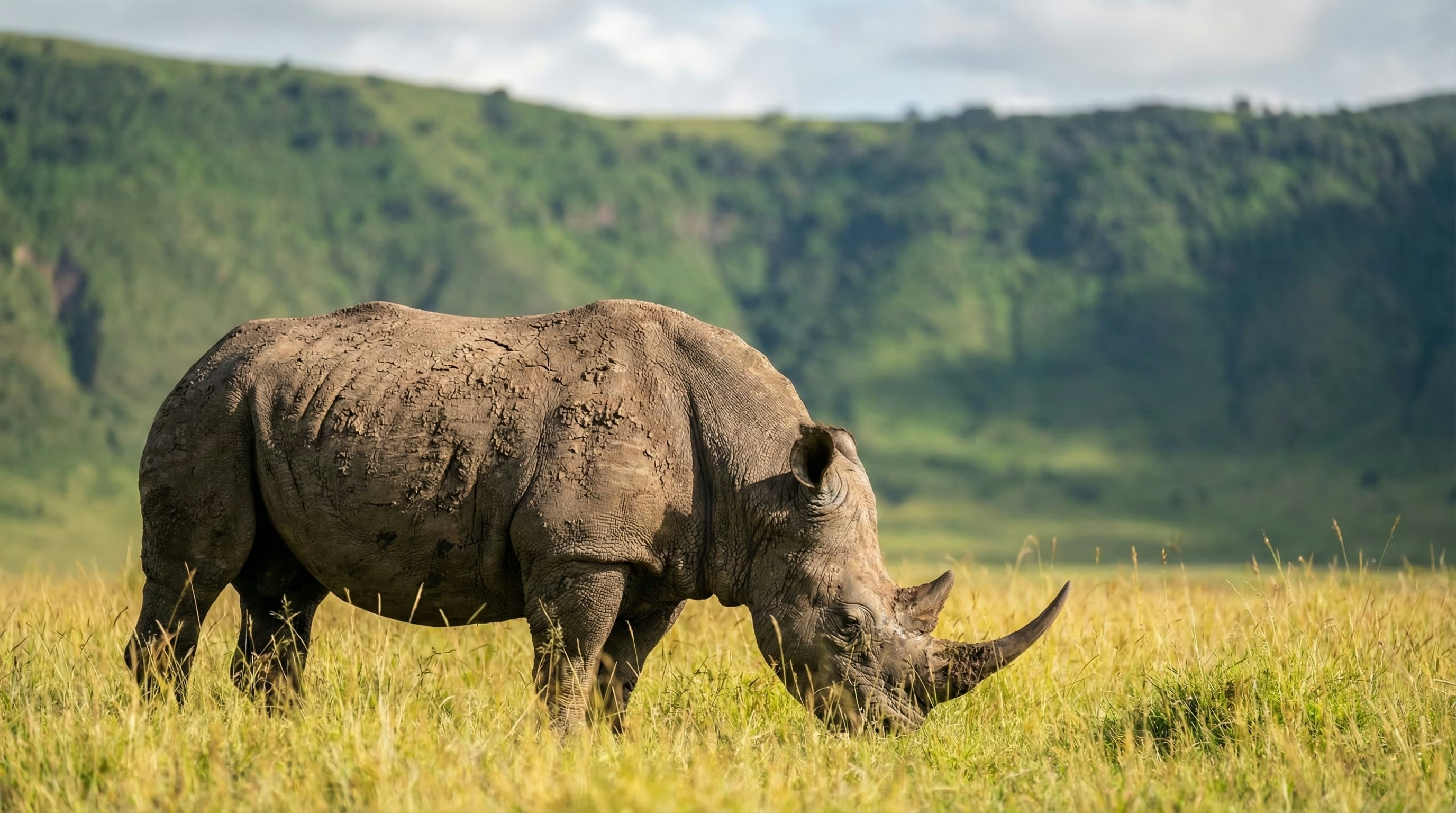
It's not a zoo in the traditional sense. Most of the animals roam across open enclosures, and during the safari drive section you genuinely share the road with rhinos, zebras, hippos and a rather territorial group of ostriches. It's the closest thing to an African-style drive-through safari you'll find in southern Spain.
What Animals Can You See at Safari Aitana?
The park is home to over 1,500 animals from more than 200 species. The safari drive section features the big draws: white rhinos, hippos, giraffes, zebras, camels, ostriches and various antelope species. These animals move freely around the road, which means every visit plays out differently.
On our October 2024 visit, a young white rhino — the keeper who waved us through the gate later told us it was an 18-month-old male — spent a good twenty minutes investigating the front bumper of the car ahead of us. We had our windows up, engine off. The animal was close enough that we could hear it breathing through the glass, a low, wet sound, and feel a faint vibration when it pressed its snout against the bodywork. Not something you forget quickly.
Beyond the drive, the walk-through section adds primates including chimpanzees and macaques, big cats in secure but spacious enclosures, wolves, bears, and a petting area for younger children. There's also a reptile house worth the detour, and a bird-of-prey show that runs several times daily.
Highlight Animals Worth Prioritising
- White rhinos — the park has a well-established group and they have no fear of vehicles; budget extra time here
- Giraffes — you can hand-feed them from a dedicated platform, a paid extra but one of the more memorable moments available
- Chimpanzees — their enclosure is large and the viewing area puts you at eye level
- Hippos — there's an underwater viewing window; go early in the morning when they're more active
How Does the Visit Work?
The park splits into two main experiences. First, the Safari Drive: you travel through the open reserve in your own car — or in one of the park's guided vehicles if you prefer. The road is one-way, which keeps things moving and reduces the stress of oncoming traffic when a rhino is occupying your lane. The circuit takes between 45 minutes and two hours depending on animal positions and how often you stop. Windows closed throughout; the park staff remind you at the gate and mean it. The ostriches, in particular, will put their head inside a car without a moment's hesitation.
Second, the Zoo Section: once you've parked, you explore on foot. This is where you'll find the big cats, primates, the petting area, restaurants, and the shows. A full visit covering both sections realistically takes four to five hours. There is shade in the zoo section — the big cat and primate areas are partially covered — but the paths between enclosures are exposed, so in summer bring a hat.
On the parking logistics: the main car park is flat, well-signposted from the gate, and free. We've never had trouble finding a space on a weekday; summer weekends are a different matter.
What Are the Ticket Prices for Safari Aitana in 2026?
At time of writing, based on our last visit and the park's published rates, adult tickets run approximately €28–€32 for the full experience (safari drive plus zoo section). Children aged 3–11 pay roughly €20–€24, and under-3s enter free. There's an additional charge of around €8–€10 per person if you want to use a park vehicle rather than your own car.
These figures are based on our October 2024 visit and publicly available rates at time of writing. Prices change seasonally — confirm on the official Safari Aitana website before booking.
Family tickets offer decent savings for two adults and two or more children. Booking online in advance usually brings a small discount and, more importantly, avoids the ticket queue on busy weekends.
When Is the Best Time to Visit Safari Aitana?
Spring (March to May) and early autumn (September to October) are the sweet spots. The light is good for photography, temperatures are comfortable, and the animals tend to be more active than in the heat of summer. October 2024, as we mentioned, was particularly good — the park was quiet on a Tuesday morning and we had the rhino circuit almost to ourselves for the first hour.
That said, the mountain altitude softens even July and August considerably: expect temperatures 8–10°C lower than coastal Benidorm on the same day. Summer weekends in August, when Spanish families are on holiday en masse, are the busiest days of the year. If that's when you're visiting, arrive at opening time.
How Do You Get to Safari Aitana?
The park is located off the CV-70 between Guadalest and Alcoy. From Benidorm it's about a 35-minute drive; from Alicante city, around 50 minutes. There's no practical public transport option — this is firmly a car-trip destination.
The access road is narrow and winding in sections but perfectly manageable in a standard hire car or family saloon. We have done it in a Seat León and a Renault Scenic without any drama. Large motorhomes should check with the park directly before attempting it. One practical note: the approach from the Guadalest side is more scenic and slightly easier to navigate than coming from the Alcoy direction, where a couple of the bends are tighter than they appear on the map.
Practical Tips for Your Visit
Things we've learned across several visits that aren't obvious from the website:
- Keep windows fully closed during the safari drive. It sounds obvious but it gets forgotten, especially by children on a warm day — and the ostriches will not hesitate.
- Rhinos tend to congregate on the left-hand side of the road during morning hours, near the water troughs. Position yourself accordingly for photographs.
- Bring your own food if you want to picnic. There are designated picnic areas in the zoo section, and the restaurant prices are what you'd expect at any commercial attraction. Good food, steep markup.
- Wear comfortable, closed shoes — the zoo section involves more walking than the map suggests, and some of the paths between enclosures are uneven stone or compacted earth.
- The giraffe feeding costs around €3–€4 per person on top of entry. With children it's worth every cent. Without children, still worth it once.
- Download the park map from their website before you leave home. On-site signage is adequate near the main areas but thin in the outer sections.
- Hire cars are perfectly fine for the safari drive, but check your rental agreement — a few operators have clauses about off-road or animal-contact situations, though the Safari Aitana road is paved throughout.
Is Safari Aitana Worth Visiting?
For families on the Costa Blanca, it's hard to beat as a full-day inland excursion — the combination of drive-through wildlife, mountain air and the sheer improbability of watching rhinos against a backdrop of Mediterranean pine puts it in a category of its own in this part of Spain. Wildlife enthusiasts will find the animal collection more serious than they expect. And anyone who has spent a week on the beach and wants one afternoon that feels genuinely different will find it here.
The animal welfare picture is mixed, as it is at most parks of this type. The rhino and hippo facilities are notably spacious; some of the smaller enclosures are less impressive. The park participates in several breeding programmes for endangered species, which is worth knowing. We'd rather visit with clear eyes than either dismiss it or oversell it.
Frequently Asked Questions
Can you do the Safari Aitana drive in a hire car?
Yes — the safari road is fully paved and a standard hire car handles it without any issues. Check your rental agreement if you're concerned, though in practice hire cars make up a significant proportion of the vehicles on the circuit. The park staff have no objection.
Is there shade in the zoo section during summer?
Partial shade. The big cat and primate enclosures have covered viewing areas, and there are trees along some of the main paths. However, several of the paths between enclosures are fully exposed. Bring a hat and sunscreen, especially for children, and take the indoor reptile house as a natural mid-visit cool-down stop.
How much do tickets to Safari Aitana cost in 2026?
Based on rates at our last visit and publicly available information, adult tickets run approximately €28–€32 and children's tickets (ages 3–11) around €20–€24. Under-3s enter free. Prices are seasonal — always verify on the official website before booking.
When is the best time to visit Safari Aitana?
Spring and early autumn are ideal — comfortable temperatures, good light, fewer crowds. Weekday mornings are the quietest at any time of year. Summer visits work better than you'd expect thanks to the mountain altitude, but August weekends are very busy. October is particularly good if you have the flexibility.
What animals can you see at Safari Aitana?
Over 200 species including white rhinos, giraffes, hippos, zebras, lions, tigers, chimpanzees, wolves and bears. The drive-through section features large free-roaming animals; the walk-through zoo section adds big cats, primates, a reptile house and a bird-of-prey show.
Safari Aitana Animal Park: What to See and Everything You Need to Know (2026)
You're winding up a narrow mountain road somewhere between Benidorm and Alcoy, the Mediterranean glinting behind you, and suddenly a giraffe is staring at you through the car window. That's Safari Aitana in a nutshell — completely unexpected, and well worth the detour.
We've visited with families, with couples, and once with a group of eight who thought they were just stopping for lunch on the way to the coast. Nobody complained. Our most recent visit was in October 2024, when the autumn light over the Serra d'Aitana was extraordinary and the crowds had thinned right out.
What Is Safari Aitana?
Safari Aitana is a drive-through and walk-through wildlife park located in the Serra d'Aitana mountains in Alicante province, at around 800 metres above sea level. It sits near the village of Penàguila and covers roughly 200 hectares of Mediterranean scrubland. The altitude means it stays noticeably cooler than the coast in summer — a real bonus if you're visiting in July or August.
It's not a zoo in the traditional sense. Most of the animals roam across open enclosures, and during the safari drive section you genuinely share the road with rhinos, zebras, hippos and a rather territorial group of ostriches. It's the closest thing to an African-style drive-through safari you'll find in southern Spain.
What Animals Can You See at Safari Aitana?
The park is home to over 1,500 animals from more than 200 species. The safari drive section features the big draws: white rhinos, hippos, giraffes, zebras, camels, ostriches and various antelope species. These animals move freely around the road, which means every visit plays out differently.
On our October 2024 visit, a young white rhino — the keeper who waved us through the gate later told us it was an 18-month-old male — spent a good twenty minutes investigating the front bumper of the car ahead of us. We had our windows up, engine off. The animal was close enough that we could hear it breathing through the glass, a low, wet sound, and feel a faint vibration when it pressed its snout against the bodywork. Not something you forget quickly.
Beyond the drive, the walk-through section adds primates including chimpanzees and macaques, big cats in secure but spacious enclosures, wolves, bears, and a petting area for younger children. There's also a reptile house worth the detour, and a bird-of-prey show that runs several times daily.
Highlight Animals Worth Prioritising
- White rhinos — the park has a well-established group and they have no fear of vehicles; budget extra time here
- Giraffes — you can hand-feed them from a dedicated platform, a paid extra but one of the more memorable moments available
- Chimpanzees — their enclosure is large and the viewing area puts you at eye level
- Hippos — there's an underwater viewing window; go early in the morning when they're more active
How Does the Visit Work?
The park splits into two main experiences. First, the Safari Drive: you travel through the open reserve in your own car — or in one of the park's guided vehicles if you prefer. The road is one-way, which keeps things moving and reduces the stress of oncoming traffic when a rhino is occupying your lane. The circuit takes between 45 minutes and two hours depending on animal positions and how often you stop. Windows closed throughout; the park staff remind you at the gate and mean it. The ostriches, in particular, will put their head inside a car without a moment's hesitation.
Second, the Zoo Section: once you've parked, you explore on foot. This is where you'll find the big cats, primates, the petting area, restaurants, and the shows. A full visit covering both sections realistically takes four to five hours. There is shade in the zoo section — the big cat and primate areas are partially covered — but the paths between enclosures are exposed, so in summer bring a hat.
On the parking logistics: the main car park is flat, well-signposted from the gate, and free. We've never had trouble finding a space on a weekday; summer weekends are a different matter.
What Are the Ticket Prices for Safari Aitana in 2026?
At time of writing, based on our last visit and the park's published rates, adult tickets run approximately €28–€32 for the full experience (safari drive plus zoo section). Children aged 3–11 pay roughly €20–€24, and under-3s enter free. There's an additional charge of around €8–€10 per person if you want to use a park vehicle rather than your own car.
These figures are based on our October 2024 visit and publicly available rates at time of writing. Prices change seasonally — confirm on the official Safari Aitana website before booking.
Family tickets offer decent savings for two adults and two or more children. Booking online in advance usually brings a small discount and, more importantly, avoids the ticket queue on busy weekends.
When Is the Best Time to Visit Safari Aitana?
Spring (March to May) and early autumn (September to October) are the sweet spots. The light is good for photography, temperatures are comfortable, and the animals tend to be more active than in the heat of summer. October 2024, as we mentioned, was particularly good — the park was quiet on a Tuesday morning and we had the rhino circuit almost to ourselves for the first hour.
That said, the mountain altitude softens even July and August considerably: expect temperatures 8–10°C lower than coastal Benidorm on the same day. Summer weekends in August, when Spanish families are on holiday en masse, are the busiest days of the year. If that's when you're visiting, arrive at opening time.
How Do You Get to Safari Aitana?
The park is located off the CV-70 between Guadalest and Alcoy. From Benidorm it's about a 35-minute drive; from Alicante city, around 50 minutes. There's no practical public transport option — this is firmly a car-trip destination.
The access road is narrow and winding in sections but perfectly manageable in a standard hire car or family saloon. We have done it in a Seat León and a Renault Scenic without any drama. Large motorhomes should check with the park directly before attempting it. One practical note: the approach from the Guadalest side is more scenic and slightly easier to navigate than coming from the Alcoy direction, where a couple of the bends are tighter than they appear on the map.
Practical Tips for Your Visit
Things we've learned across several visits that aren't obvious from the website:
- Keep windows fully closed during the safari drive. It sounds obvious but it gets forgotten, especially by children on a warm day — and the ostriches will not hesitate.
- Rhinos tend to congregate on the left-hand side of the road during morning hours, near the water troughs. Position yourself accordingly for photographs.
- Bring your own food if you want to picnic. There are designated picnic areas in the zoo section, and the restaurant prices are what you'd expect at any commercial attraction. Good food, steep markup.
- Wear comfortable, closed shoes — the zoo section involves more walking than the map suggests, and some of the paths between enclosures are uneven stone or compacted earth.
- The giraffe feeding costs around €3–€4 per person on top of entry. With children it's worth every cent. Without children, still worth it once.
- Download the park map from their website before you leave home. On-site signage is adequate near the main areas but thin in the outer sections.
- Hire cars are perfectly fine for the safari drive, but check your rental agreement — a few operators have clauses about off-road or animal-contact situations, though the Safari Aitana road is paved throughout.
Is Safari Aitana Worth Visiting?
For families on the Costa Blanca, it's hard to beat as a full-day inland excursion — the combination of drive-through wildlife, mountain air and the sheer improbability of watching rhinos against a backdrop of Mediterranean pine puts it in a category of its own in this part of Spain. Wildlife enthusiasts will find the animal collection more serious than they expect. And anyone who has spent a week on the beach and wants one afternoon that feels genuinely different will find it here.
The animal welfare picture is mixed, as it is at most parks of this type. The rhino and hippo facilities are notably spacious; some of the smaller enclosures are less impressive. The park participates in several breeding programmes for endangered species, which is worth knowing. We'd rather visit with clear eyes than either dismiss it or oversell it.
Frequently Asked Questions
Can you do the Safari Aitana drive in a hire car?
Yes — the safari road is fully paved and a standard hire car handles it without any issues. Check your rental agreement if you're concerned, though in practice hire cars make up a significant proportion of the vehicles on the circuit. The park staff have no objection.
Is there shade in the zoo section during summer?
Partial shade. The big cat and primate enclosures have covered viewing areas, and there are trees along some of the main paths. However, several of the paths between enclosures are fully exposed. Bring a hat and sunscreen, especially for children, and take the indoor reptile house as a natural mid-visit cool-down stop.
How much do tickets to Safari Aitana cost in 2026?
Based on rates at our last visit and publicly available information, adult tickets run approximately €28–€32 and children's tickets (ages 3–11) around €20–€24. Under-3s enter free. Prices are seasonal — always verify on the official website before booking.
When is the best time to visit Safari Aitana?
Spring and early autumn are ideal — comfortable temperatures, good light, fewer crowds. Weekday mornings are the quietest at any time of year. Summer visits work better than you'd expect thanks to the mountain altitude, but August weekends are very busy. October is particularly good if you have the flexibility.
What animals can you see at Safari Aitana?
Over 200 species including white rhinos, giraffes, hippos, zebras, lions, tigers, chimpanzees, wolves and bears. The drive-through section features large free-roaming animals; the walk-through zoo section adds big cats, primates, a reptile house and a bird-of-prey show.


.jpeg)
.avif)



.png)