






Seven days. That number comes up constantly: sometimes from a magazine, sometimes from a colleague who did a quick Amboseli add-on after a Nairobi conference. It's not wrong exactly, but it's rarely the whole story. The honest answer depends on where you're going, what kind of traveller you are, which season you're landing in, and what the trip actually needs to do for you. So let's get into it properly.
| Minimum days recommended | 4 nights / 5 days |
| Ideal first safari length | 7 to 10 days |
| Best season for Masai Mara crossings | July to October |
| Best season for Serengeti calving | January to February (Ndutu area) |
| Most budget-friendly self-drive option | Kruger National Park, South Africa (from ~$50/night) |
| Safari plus beach total | 11 to 12 days (7 safari + 4-5 beach) |
What Is the Minimum Number of Days for an African Safari?
Four full days on the ground is the realistic minimum, four mornings and four late afternoons in the bush, which are the two windows when predators hunt, elephants move, and the light does extraordinary things to the landscape. Below that, you're spending more time in transit than watching anything.
We regularly work with clients squeezing three nights around a business trip through Nairobi. They love it, genuinely. But they all come back wanting more, and they're right to want it. Three nights is a taster. Four nights is where it starts to settle into something real.
How Many Days Is Ideal for a First Safari?
For a first trip, seven to ten days is the range we recommend most often. That's enough time to properly visit two ecosystems, the Serengeti combined with Ngorongoro Crater in Tanzania, for example, or the Masai Mara plus Lake Nakuru in Kenya, without the itinerary feeling like a relay race.
Something shifts around day three or four that we've watched happen with dozens of first-time clients. We saw it clearly last February with a group of four we had at Ndutu Safari Lodge, on the southern Serengeti plains during calving season. By their first afternoon they were photographing everything frantically. By day four they'd stopped reaching for cameras on every sighting and started just watching, a female cheetah teaching her two cubs to stalk. Nobody spoke. That moment doesn't happen on a three-night itinerary. You need time to slow down enough to receive it.
Recommended Days by Destination
These are working minimums based on actual itineraries we've run, not theoretical ranges:
- Kenya (Masai Mara), 5 nights minimum; 7–8 if combining with Amboseli or Samburu's dry-country wildlife
- Tanzania (Serengeti + Ngorongoro), 7–10 nights; the Serengeti alone deserves 4 nights, ideally split between the north and the central Seronera corridor
- Botswana (Okavango Delta + Chobe), 7–10 nights; camp transfers by light aircraft take half-days and the remoteness is part of the point
- South Africa (Kruger / private reserves), 5–7 nights; Sabi Sand's self-drive infrastructure means you can move efficiently without losing quality
- Rwanda (gorilla trekking), 3–5 nights focused on gorillas; pairs best with a longer East Africa circuit rather than standing alone
- Zimbabwe (Hwange + Mana Pools), 7–10 nights; Mana Pools specifically rewards slow travel, budget 3–4 nights there alone
Does a Longer Safari Mean More Animals?
Not automatically, but it gives you better odds, more context, and no pressure to rush. On a ten-day Serengeti trip in February during calving season, you might see everything you'd hoped for by day five. But day eight could bring something you'd never have anticipated. In February 2027 we had three separate groups on the Ndutu plains simultaneously; all three reported seeing a wild dog pack, an event that takes patience and luck in equal measure. Two of those groups had ten-plus nights. The third had six. They missed it by one day.
The best game drives are often the quiet ones where nothing dramatic happens for hours, and then something does. On a short itinerary, that moment tends to arrive on your last morning, just as the vehicle turns back toward camp for the airport transfer.
How Does Budget Shape How Many Safari Days to Book?
This is where planning gets very real, and where we go into much more depth in our dedicated safari budgeting guide. The short version: safari costs in 2027 vary by an enormous margin depending on destination and camp tier.
In Tanzania's Serengeti, a mid-range camp like Kubu Kubu Tented Lodge runs around $500–$650 per person per night all-inclusive in 2027 high season. Step up to Singita Mara River Tented Camp in the northern Serengeti and you're looking at $1,800–$2,400 per person per night. In Kenya's Masai Mara, Olakira Migration Camp sits in the middle tier at roughly $750–$950 per person per night all-in during the migration period. South Africa's private reserves offer genuinely strong value, Sabi Sand camps like Dulini run $600–$900 per person per night with exceptional leopard sightings included.
When budget is a real constraint, the smarter move is usually seven focused nights in one country rather than ten days spread across three with expensive internal flights consuming your allowance. A well-structured week in the Masai Mara covering the central conservancies, the Mara Triangle, and the river crossing areas is a complete safari, not a compromise.
Looking for a focused week on safari without the cost of multi-country transfers?
Our Tanzania Classic Safari gives you six immersive days in the field, covering the essential ecosystems at a price that makes the most of your budget. Kenya
How Many Safari Days Do You Need to See the Big Five?
In the right place at the right time, three to four days can realistically produce all five, lion, leopard, elephant, buffalo, rhino. Kruger's private concessions and Sabi Sand are probably the most consistently reliable. Ngorongoro Crater concentrates wildlife in a way that makes sightings almost inevitable on a good day.
That said (and we say this to every client who mentions it), the Big Five checklist tends to make game drives anxious rather than absorbing. The clients who arrive wanting to tick boxes often leave feeling they nearly missed something. The ones who let go of the list always have better stories.
How Does Season Affect How Many Days You Need?
Peak season brings denser concentrations and more predictable sightings. During Kenya's Great Migration river crossings, typically July through October, five or six nights in the Masai Mara gives you a reasonable chance of witnessing a crossing, though nothing is guaranteed. During the green season, animals disperse across wider territory, which often means richer bird life, fewer visitors, and the need for an extra day or two to cover more ground.
For 2027 specifically: we're advising clients heading to Tanzania in January and February, calving season on the southern Serengeti, to book a minimum of eight nights. The spectacle at Ndutu during peak calving is extraordinary in scale, but it rewards patience over rushing.
Can You Combine a Safari with a Beach Holiday?
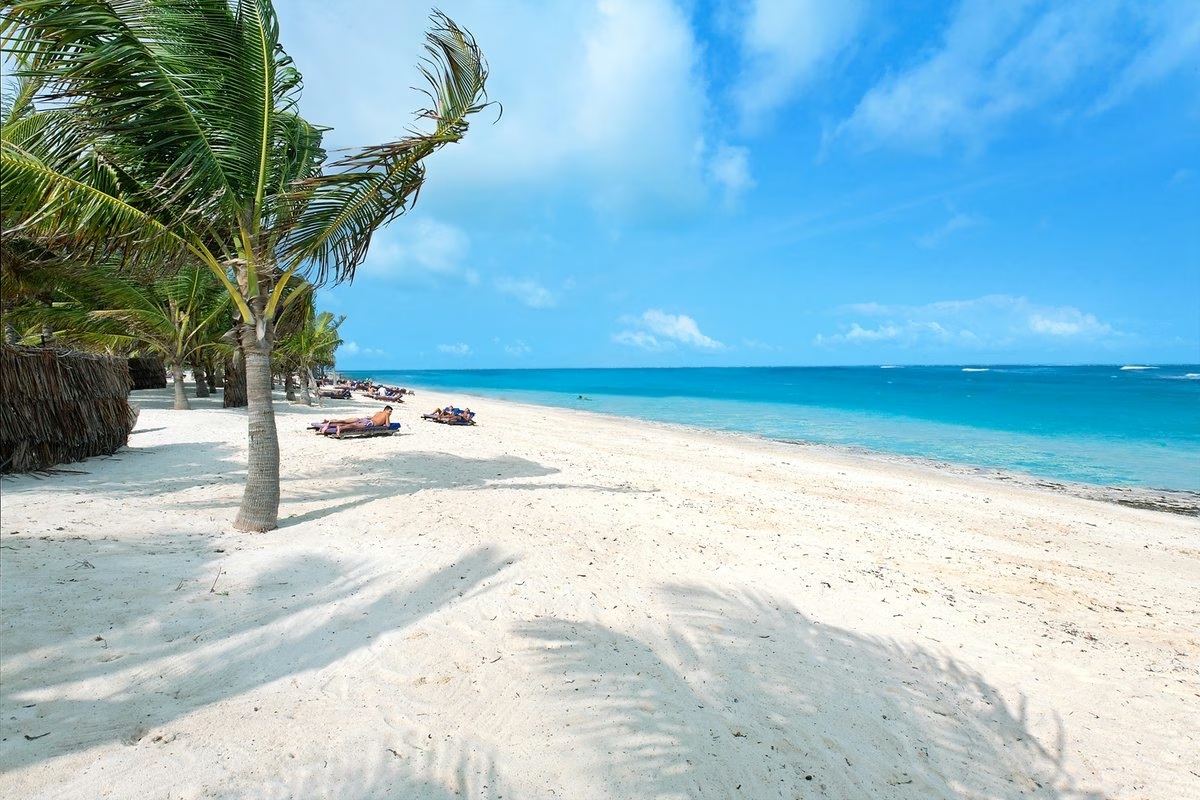
Many of our favourite itineraries do exactly this. Seven nights on safari in Tanzania or Kenya followed by four or five nights on Zanzibar or the Kenyan coast brings the total to eleven or twelve days, and it works. The beach feels properly earned after early mornings. The contrast between the dust and silence of the bush and the Indian Ocean is something clients mention years later. Flights from the Serengeti to Zanzibar take under an hour; the Kenyan coast connects quickly from Nairobi Wilson Airport.
Frequently Asked Questions About Safari Duration
Is one week enough for a safari in Africa?
Yes, seven nights is a solid, satisfying safari if you resist the temptation to cover too much ground. Kenya or Tanzania in a week, focused on one or two areas, is very doable and deeply rewarding.
How many game drives can you do per day on safari?
Most camps run two drives daily:
- Morning drive, departing around 6 am, returning mid-morning
- Afternoon drive, departing around 4 pm, returning after dark with spotlighting
Some reserves, particularly private concessions in Botswana and South Africa, also offer guided bush walks at midday and night drives after dinner. National parks in Kenya and Tanzania generally restrict night driving.
Can children go on safari, and does that affect trip length?
Children are welcome on safari, and many families find it transforms how their kids engage with the natural world. For younger children, we cover this properly in our safari with kids guide, including age minimums by camp and how to structure days around shorter attention spans. In terms of duration: five to six nights tends to work better than longer for under-eights.
Is 14 days too long for a safari?
Not at all. Two weeks lets you combine two or three countries without feeling rushed, a Tanzania plus Rwanda circuit, or Kenya into Botswana, gives you genuine depth rather than highlights. The clients who do fourteen days almost never wish they'd done fewer.
What's the most budget-friendly way to do an African safari?
We cover this in detail in our budget safari guide. The short answer: self-drive in South Africa's Kruger National Park, staying at SANParks restcamps from around $50–$150 per night, is the most accessible entry point. Group joining safaris in Kenya and Tanzania typically run $150–$300 per person per day and can deliver excellent wildlife experiences without the premium camp price tag.
Ready to plan your safari? Let's find the right number of days for you.
Our Tanzania: The Breeding of the Great Migration itinerary is built around the Ndutu calving season, with eight days designed to give you the full spectacle without a single wasted morning. Kenya
Seven days. That number comes up constantly: sometimes from a magazine, sometimes from a colleague who did a quick Amboseli add-on after a Nairobi conference. It's not wrong exactly, but it's rarely the whole story. The honest answer depends on where you're going, what kind of traveller you are, which season you're landing in, and what the trip actually needs to do for you. So let's get into it properly.
| Minimum days recommended | 4 nights / 5 days |
| Ideal first safari length | 7 to 10 days |
| Best season for Masai Mara crossings | July to October |
| Best season for Serengeti calving | January to February (Ndutu area) |
| Most budget-friendly self-drive option | Kruger National Park, South Africa (from ~$50/night) |
| Safari plus beach total | 11 to 12 days (7 safari + 4-5 beach) |
What Is the Minimum Number of Days for an African Safari?
Four full days on the ground is the realistic minimum, four mornings and four late afternoons in the bush, which are the two windows when predators hunt, elephants move, and the light does extraordinary things to the landscape. Below that, you're spending more time in transit than watching anything.
We regularly work with clients squeezing three nights around a business trip through Nairobi. They love it, genuinely. But they all come back wanting more, and they're right to want it. Three nights is a taster. Four nights is where it starts to settle into something real.
How Many Days Is Ideal for a First Safari?
For a first trip, seven to ten days is the range we recommend most often. That's enough time to properly visit two ecosystems, the Serengeti combined with Ngorongoro Crater in Tanzania, for example, or the Masai Mara plus Lake Nakuru in Kenya, without the itinerary feeling like a relay race.
Something shifts around day three or four that we've watched happen with dozens of first-time clients. We saw it clearly last February with a group of four we had at Ndutu Safari Lodge, on the southern Serengeti plains during calving season. By their first afternoon they were photographing everything frantically. By day four they'd stopped reaching for cameras on every sighting and started just watching, a female cheetah teaching her two cubs to stalk. Nobody spoke. That moment doesn't happen on a three-night itinerary. You need time to slow down enough to receive it.
Recommended Days by Destination
These are working minimums based on actual itineraries we've run, not theoretical ranges:
- Kenya (Masai Mara), 5 nights minimum; 7–8 if combining with Amboseli or Samburu's dry-country wildlife
- Tanzania (Serengeti + Ngorongoro), 7–10 nights; the Serengeti alone deserves 4 nights, ideally split between the north and the central Seronera corridor
- Botswana (Okavango Delta + Chobe), 7–10 nights; camp transfers by light aircraft take half-days and the remoteness is part of the point
- South Africa (Kruger / private reserves), 5–7 nights; Sabi Sand's self-drive infrastructure means you can move efficiently without losing quality
- Rwanda (gorilla trekking), 3–5 nights focused on gorillas; pairs best with a longer East Africa circuit rather than standing alone
- Zimbabwe (Hwange + Mana Pools), 7–10 nights; Mana Pools specifically rewards slow travel, budget 3–4 nights there alone
Does a Longer Safari Mean More Animals?
Not automatically, but it gives you better odds, more context, and no pressure to rush. On a ten-day Serengeti trip in February during calving season, you might see everything you'd hoped for by day five. But day eight could bring something you'd never have anticipated. In February 2027 we had three separate groups on the Ndutu plains simultaneously; all three reported seeing a wild dog pack, an event that takes patience and luck in equal measure. Two of those groups had ten-plus nights. The third had six. They missed it by one day.
The best game drives are often the quiet ones where nothing dramatic happens for hours, and then something does. On a short itinerary, that moment tends to arrive on your last morning, just as the vehicle turns back toward camp for the airport transfer.
How Does Budget Shape How Many Safari Days to Book?
This is where planning gets very real, and where we go into much more depth in our dedicated safari budgeting guide. The short version: safari costs in 2027 vary by an enormous margin depending on destination and camp tier.
In Tanzania's Serengeti, a mid-range camp like Kubu Kubu Tented Lodge runs around $500–$650 per person per night all-inclusive in 2027 high season. Step up to Singita Mara River Tented Camp in the northern Serengeti and you're looking at $1,800–$2,400 per person per night. In Kenya's Masai Mara, Olakira Migration Camp sits in the middle tier at roughly $750–$950 per person per night all-in during the migration period. South Africa's private reserves offer genuinely strong value, Sabi Sand camps like Dulini run $600–$900 per person per night with exceptional leopard sightings included.
When budget is a real constraint, the smarter move is usually seven focused nights in one country rather than ten days spread across three with expensive internal flights consuming your allowance. A well-structured week in the Masai Mara covering the central conservancies, the Mara Triangle, and the river crossing areas is a complete safari, not a compromise.
Looking for a focused week on safari without the cost of multi-country transfers?
Our Tanzania Classic Safari gives you six immersive days in the field, covering the essential ecosystems at a price that makes the most of your budget. Kenya
How Many Safari Days Do You Need to See the Big Five?
In the right place at the right time, three to four days can realistically produce all five, lion, leopard, elephant, buffalo, rhino. Kruger's private concessions and Sabi Sand are probably the most consistently reliable. Ngorongoro Crater concentrates wildlife in a way that makes sightings almost inevitable on a good day.
That said (and we say this to every client who mentions it), the Big Five checklist tends to make game drives anxious rather than absorbing. The clients who arrive wanting to tick boxes often leave feeling they nearly missed something. The ones who let go of the list always have better stories.
How Does Season Affect How Many Days You Need?
Peak season brings denser concentrations and more predictable sightings. During Kenya's Great Migration river crossings, typically July through October, five or six nights in the Masai Mara gives you a reasonable chance of witnessing a crossing, though nothing is guaranteed. During the green season, animals disperse across wider territory, which often means richer bird life, fewer visitors, and the need for an extra day or two to cover more ground.
For 2027 specifically: we're advising clients heading to Tanzania in January and February, calving season on the southern Serengeti, to book a minimum of eight nights. The spectacle at Ndutu during peak calving is extraordinary in scale, but it rewards patience over rushing.
Can You Combine a Safari with a Beach Holiday?
Many of our favourite itineraries do exactly this. Seven nights on safari in Tanzania or Kenya followed by four or five nights on Zanzibar or the Kenyan coast brings the total to eleven or twelve days, and it works. The beach feels properly earned after early mornings. The contrast between the dust and silence of the bush and the Indian Ocean is something clients mention years later. Flights from the Serengeti to Zanzibar take under an hour; the Kenyan coast connects quickly from Nairobi Wilson Airport.
Frequently Asked Questions About Safari Duration
Is one week enough for a safari in Africa?
Yes, seven nights is a solid, satisfying safari if you resist the temptation to cover too much ground. Kenya or Tanzania in a week, focused on one or two areas, is very doable and deeply rewarding.
How many game drives can you do per day on safari?
Most camps run two drives daily:
- Morning drive, departing around 6 am, returning mid-morning
- Afternoon drive, departing around 4 pm, returning after dark with spotlighting
Some reserves, particularly private concessions in Botswana and South Africa, also offer guided bush walks at midday and night drives after dinner. National parks in Kenya and Tanzania generally restrict night driving.
Can children go on safari, and does that affect trip length?
Children are welcome on safari, and many families find it transforms how their kids engage with the natural world. For younger children, we cover this properly in our safari with kids guide, including age minimums by camp and how to structure days around shorter attention spans. In terms of duration: five to six nights tends to work better than longer for under-eights.
Is 14 days too long for a safari?
Not at all. Two weeks lets you combine two or three countries without feeling rushed, a Tanzania plus Rwanda circuit, or Kenya into Botswana, gives you genuine depth rather than highlights. The clients who do fourteen days almost never wish they'd done fewer.
What's the most budget-friendly way to do an African safari?
We cover this in detail in our budget safari guide. The short answer: self-drive in South Africa's Kruger National Park, staying at SANParks restcamps from around $50–$150 per night, is the most accessible entry point. Group joining safaris in Kenya and Tanzania typically run $150–$300 per person per day and can deliver excellent wildlife experiences without the premium camp price tag.
Ready to plan your safari? Let's find the right number of days for you.
Our Tanzania: The Breeding of the Great Migration itinerary is built around the Ndutu calving season, with eight days designed to give you the full spectacle without a single wasted morning. Kenya










.png)